
strong feeling, can experience the feeling of adventure when diving straight through the water curtain, feel the sting of water when it hits the head, the shoulder. The feeling from a place filled with light, immersed in the darkness of the cave. The safety of diving into the water curtain is quite high with life jackets for visitors to wear and professional swimmers arranged nearby. In addition, the waterfall is also special because behind the falling water there is a large cave. Therefore, people can go inside the water flowing from one side to the other without getting their clothes wet. When standing from inside the cave looking out at the long walls of water surrounding the front, the dim light illuminates the strangely shaped rocks.
(Source: www.vietnam.tourism.gov.vn)
Many types of tourism are developed based on the characteristics of water resources. For example
For example, mineral water serves medical tourism, poetic rivers with small flow rates are suitable for boat tourism activities, and waterfalls can be associated with adventure tourism.
Sea tourism has favorable conditions thanks to the cool climate allowing long rests, thanks to the sandy beaches along the coast so that you can both swim, sunbathe, and bathe in the fresh air. In general, the minimum acceptable temperature limit in the surface water is 18 0 C, for children it is above 20 0 C. Along with the above basic criteria, attention should be paid to the frequency and nature of the waves, the cleanliness of the water. The sea with slow coastal currents, clear water and moderate waves is suitable for swimming; large waves are suitable for surfing; clear water and many beautiful flora and fauna are suitable for scuba diving...
Among the water resources, mineral water must be mentioned. This is a valuable resource for health tourism and treatment.
Mineral water is natural water (mainly underground water) containing some special physical components (chemical elements, gases, radioactive elements,...) or has some physical properties (high temperature, pH,...) that have physiological effects on humans.
Up to now, there have been no unified regulations in the world on the lower limits of some criteria (such as chemical elements, mineralization, gas composition,...) for classification.
Distinguish mineral water from normal water.
One of the most important uses of mineral water is for healing. Mineral water sources are an indispensable premise for the development of medical tourism. The healing properties of mineral water sources were discovered since the time of the Roman Empire. In the world, countries rich in famous mineral water sources are also countries that develop medical tourism such as Switzerland, Russia, Hungary, Italy, Germany, Czech Republic and Slovakia...
To facilitate treatment, people have divided mineral water into the following groups:
- Carbonic mineral water is a precious mineral water group, which has the effect of quenching thirst and curing some diseases such as high blood pressure, mild atherosclerosis, and diseases of the peripheral nervous system. Famous sources of precious carbonic mineral water in the world are Vichi (France), Boczomi (Grudia), Wisbaden (Germany). In Vietnam, the most typical is Vinh Hao mineral water, exploited since 1928 until now with bottled mineral water products, exported to some countries in Southeast Asia, curing diabetes, liver, and food allergies.
- The group of silica mineral water is effective for digestive, neurological, rheumatic, gynecological diseases, etc. In the world, the famous silica mineral water is the Kuldur mineral water source (Russia). In Vietnam, the typical sources are Kim Boi mineral water source (Hoa Binh) and Hoi Van (Phu Cat, Binh Dinh). In these two places, sanatoriums have been built to treat diseases using silica mineral water.
- The bromine-iodine-boron mineral water group is effective in treating skin, neurological, gynecological diseases... Famous in the world are the mineral water sources Margeutheia and Fricarichshal (Germany). In Vietnam, there are two sources of this type of mineral water in Quang Hanh (Quang Ninh), Tien Lang (Hai Phong).
In addition, there are many other groups of mineral water (hydrosulfide, arsenic-fluoride, lithium; radioactive group...) with the ability to cure many different diseases.
Mineral water is a synthetic resource whose economic value and medical tourism are clearly demonstrated. In the world, the demand for tourism combined with convalescence, medical treatment, and the use of mineral water for refreshment has increased significantly. Medical tourism and convalescence at mineral water sources is increasingly attracting a large number of international tourists. Switzerland has over 7.5 million people, and each year welcomes 34 million visitors to stay at mineral water treatment resorts.
Annually, it brings in 10% of the national income. In France, Germany, and Italy, every year, millions of people travel for medical treatment at mineral water sources. Many famous tourist centers and tourist cities are associated with mineral water sources. Many famous tourist centers and tourist cities are associated with precious mineral water sources, typically Sotri, Caclovi Vari, Wisbaden, Vichy...
Water resources not only have a direct impact on tourism activities, as mentioned above. In addition, it also indirectly affects tourism through its impact on other components of the living environment, especially the climate around large water reservoirs,...
Table 8: Some main mineral water sources in Vietnam
Name
Province, city | Ingredient | Uses | |
Tien Lang | Hai Phong | - Br, I, Bo - Average temperature 45 o C | Cure chronic fungus, allergies seasonal skin… |
Tien Hai | Peace | - Minerals | Bottled mineral water |
Chicken Channel | Ninh Binh | - NaCl, KCl, CaCl 2 MgO - Average temperature 53 0 C | Treats arthritis, neuritis, stomach, stimulates activity liver and gallbladder movements |
Ky Phu | Ninh Binh | - CaCl 2 , MgO - Average temperature 35 0 C | Treatment of digestive and gynecological diseases science, mercury contamination |
Light Hanh | Quang Ninh | - Br, I, Bo - Average temperature 45 0 C | Anti-dehydration, cure stomach ache stomach, liver, constipation... |
Kim Boi | Peace | - SiO 2 - Average temperature 37 0 C | Cure rheumatism, stomach and colon colon |
My Lam | Tuyen Quang | - Yes - Average temperature 40 0 C | Regulates digestion, bones and muscles, rheumatism, colon, spine |
State | Quang Binh | - Si (H 2 SiO 2 ) - Average temperature 105 0 C | Anti-inflammatory, anti-disease skin, sciatica, osteomyelitis, rheumatism |
Trooc | Quang Binh | - Yes - Average temperature 43 0 C | Anti-inflammatory, anti-disease skin, sciatica, |
Maybe you are interested!
-
 Some Main Mineral Water Sources in Vietnam
 -
 Studies on Leakage Water Treatment by Ozone in Vietnam
 -
 Competitive Image Matrix Table For Mineral Water Products In Binh Dinh Market
 -
 The main problems hindering the development of real estate business in Vietnam - 23
 -
 Assessment of the Current Status of Water Sources Directly Affecting the Thuong River Flowing Through Bac Giang Province.
osteoarthritis, rheumatism | |||||
Slave | Quang Binh | - NaCa2O - Average temperature 66 0 C | Anti-inflammatory, gynecological, chronic rheumatism | ||
Tan Lam | Quang Tri | - H 2 SiO 3 - Average temperature 48 0 C | Bath to treat rheumatism | ||
Huong Hoa | Quang Tri | - CaCO 3 , NaS 2 - Average temperature 65 0 C | Bath to treat rheumatism, anti-obesity | ||
Thanh Tan | Excess Hue | Heaven | – | - CaCO 3, NaCl - Average temperature 68 0 C | Diuretic, anti-inflammatory, regulating digest |
My An | Excess Hue | Heaven | – | - SO 2 , slightly salty | Anti-inflammatory, gynecological, osteomyelitis |
Smell Jar | Excess Hue | Heaven | – | - Average temperature 69 0 C | Diuretic, cures liver and gallbladder diseases |
Hoi Van | Pacify | - Yes - Average temperature 79 0 C | Treatment of digestive diseases, gynecology, infertility | ||
Vinh Hao | Binh Thuan | - CO 2 , Fe, Al,... - Average temperature 37 0 C | Cure liver, kidney and stomach pain | ||
Binh Chau | Ba Ria – Vung Tau Ship | -Cl - Temperature 64-84 0 C | Cure hemangioma, rheumatism, blood circulation blood circulation | ||
Gu Ga | Lam Dong | -Cl - Average temperature 37 0 C | Cure hemangioma, rheumatism, blood circulation blood circulation | ||
Dakmin | Dak Lak | - CO 2 - Average temperature 60 0 C | Cure high blood pressure, nervous system terrible | ||
Kondrai, Kondu, Toothache | Gia Lai | - Yes - Average temperature 60 0 C | Cure digestive diseases, rheumatism | ||
d. Flora and fauna
Nowadays, as people's living standards are increasingly improving, the need for rest, sightseeing and entertainment becomes urgent. The taste for tourism is also increasingly diverse.
diverse and rich. In addition to some traditional forms such as sightseeing, cultural and historical relics of mankind, some new forms have appeared, with great appeal to tourists. That is tourism in nature reserves with the visitors being animals and plants. Visiting the world of lively animals and plants in harmony with nature makes people love life more.
The reason why some African countries, Eastern Europe and Southeast Asia attract a large number of tourists is partly because they know how to exploit natural potentials, including animal and plant resources and their diversity.
Not all living resources are the objects of tourism. To serve different tourism purposes, the following criteria have been proposed:
- Criteria for serving tourism purposes
+ Rich, unique and typical vegetation.
+ There are species typical of the region, endemic species, rare species in the world and in the country.
+ There are some animals (mammals, birds, reptiles, insects, fish,...) that are abundant or typical of the region.
+ There are types that can be exploited as specialties to serve the needs of tourists.
+ There are types that can be exploited as specialties to serve the needs of tourists.
+ Real, colorful animals are attractive and pleasing to the eye. Some common species are easy to observe with the naked eye, binoculars or by listening to their chirping and calls and can be photographed.
+ Roads (convenient trails for visitors to walk, observe and have fun.
- Criteria for sport hunting tourism:
+ Regulations on hunting species must be common species, not affecting the quantity and gene pool; active animals (underwater, on land, in trees) must be agile, have relatively easy terrain, and be far from residential areas. In addition, the area for sport hunting must be relatively large, ensuring the range of the bullets and ensuring absolute safety for tourists. Prohibit the use of military guns, mines and dangerous explosives.
In fact, under current conditions, many countries have recommended not to develop this type of tourism in order to protect natural resources and prevent the habit of destroying animals.
- For scientific research tourism purposes:
+ A place with rich and diverse flora and fauna.
+ Where rare species still exist.
+ A place where you can walk around, observe and take pictures.
+ There are regulations on sample collection by the management agency...
Figure 1.3: Some illustrations of flora and fauna resources
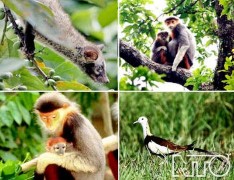
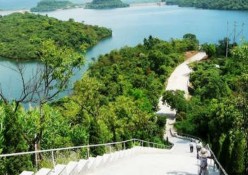
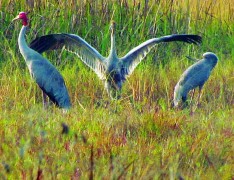
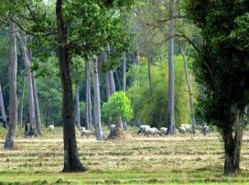
Vegetation, especially natural forest blocks and also park-like artificial forests in suburban areas with the prevalence of local species combined with other species adapted to the climate, performs a multifaceted function - cleaning the air, blocking the wind, increasing humidity. In addition, it has the effect of naturally reducing noise, creating a cozy feeling. It is necessary to protect and develop protective forests, plant populations along rivers and lakes in the plains and valleys because they are very valuable for weekend tourism. For tourists, plant species that are not found on land
Their countries often have strong appeal. That is why European tourists often like to go to places with tropical forests, many layers with diverse vegetation. In Vietnam, biosphere reserves and national parks are also of high value for tourism activities and attract a large number of visitors. By early 2010, our country had 8 world biosphere reserves and were distributed from North to South.
Table 1.9: Biosphere reserves in Vietnam
Area name
Acreage (ha) | Year of recognition | Characteristic ecosystem | |
Can Gio mangrove forest | 71,370 | 2000 | - Mangrove forest |
Floodplain by the Red River | 105,557 | 2004 | - Waterfowl, flooded forests salty |
Cat Ba | 26,241 | 2004 | - Evergreen forest on limestone mountains - Endemic animals: White-headed langur |
Cat Tien | 728,756 | 2001 | - Southern tropical rainforest - Endemic animals: one-horned rhinoceros |
Kien Giang beach area | 1,188,105 | 2006 | - Melaleuca forest, mangrove, sea, coral |
Western Nghe An | 1,103,285 | 2007 | - Lowland evergreen forests - Sao la endemic animal |
Cham Island | 8,265 | 2009 | - Coral, seaweed |
Ca Mau Cape | 371,506 | 2009 | - Coastal waterfowl, mangroves |
2.2.2 Conditions on human tourism resources
Humanistic tourism potential is the cultural and historical objects and phenomena created by humans in life. Compared with natural tourism potential, humanistic tourism potential has more cognitive effects, entertainment value is secondary. Humanistic tourism potential is often concentrated in large cities, which are traffic hubs and places where tourism facilities are concentrated. Most of the people's tourism resources are not seasonal, do not depend on natural conditions, so their frequency of operation is very large (number of visitors, number of days of visitors).
Nowadays, the State pays attention to promoting the strengths of humanistic tourism potential to develop tourism. The Vietnam Tourism Law clearly states: "The Vietnamese State identifies tourism as a comprehensive and important economic sector with profound cultural content...". Developing humanistic tourism (Cultural tourism) is a way to educate patriotism, awareness of responsibility for protecting national public assets, and promoting the image of the country to the world.
a. World cultural heritage and historical and cultural relics
World cultural heritage and historical-cultural relics are considered one of the most important human tourism resources. This is a resource for developing and expanding tourism activities. This type of resource is closely linked to the surrounding environment, showing the liveliness of the past that has shaped and enriched life. Through the ages, world cultural heritage and historical relics have shaped culture, religion and human society. Protecting, restoring and embellishing the achievements of mankind in historical periods is not only the responsibility of mankind to preserve, but also to create conditions for those invaluable values to be exploited, including for tourism purposes.
- World cultural heritage
In the ancient world, there are 7 wonders created by the hands and minds of many generations located at the cradles of human civilization. This is a testament to the great creativity of mankind since ancient times. There are wonders such as:
(1) The ancient Egyptian pyramids
(2) Hanging Gardens of Babylon (present-day Iraq)
(3) The giant statue of Helios on the island of Rhodes (Greece)
(4) Mausoleum of King Mausoleum in Haliccarnassus
(5) Temple of Artemis in Ephesus
(6) Statue of Zeus in Olympia, Greece
(7) The world's tallest lighthouse and the first library of mankind Alexandria in Egypt
In recent years, after a period of voting conducted via the internet and telephone with the participation of about 100 million people around the world, the new seven wonders of the world were announced on Saturday, July 7, 2007. They are the Great Wall of China.