
60%
50%
40%
30%
20%
10%
0%
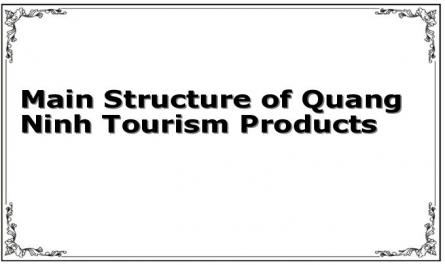
Tourism products Tourism products Tourism products Tourism products Tourism products
sea island
culture, spirituality
Ecology
resort, border humidity, shopping
real
shop
deciding on the choice of tourist destination; indirectly affecting the level of satisfaction and loyalty of tourists. To build the image of the destination, Quang Ninh has created outstanding tourism products associated with the core values of natural and human resources to provide convincingly to tourists. It can be affirmed that Quang Ninh is a unique attraction in terms of natural and human resources; an economic and commercial center; a tourist service center; a place with a secure, safe environment and friendliness and hospitality.
50%
20% | ||||||||||
10% 10% 10% | ||||||||||
Maybe you are interested!
-
 Developing tourism products of Quang Ninh - Vietnam - 2
 -
 Identify Rating Levels and Rating Scales
zt2i3t4l5ee
zt2a3gstourism,quan lan,quang ninh,ecology,ecotourism,minh chau,van don,geography,geographical basis,tourism development,science
zt2a3ge
zc2o3n4t5e6n7ts
of the islanders. Therefore, this indicator will be divided into two sub-indicators:
a1. Natural tourism attractiveness a2. Cultural tourism attractiveness
b. Tourist capacity
The two island communes in Quan Lan have different capacities to receive tourists. Minh Chau Commune is home to many standard hotels and resorts, attracting high-income domestic and international tourists. Meanwhile, Quan Lan Commune has many motels mainly built and operated by local people, so the scale and quality are not high, and will be suitable for ordinary tourists such as students.
c. Time of exploitation of Quan Lan Island Commune:
Quan Lan tourism is seasonal due to weather and climate conditions and festivals only take place on certain days of the year, specifically in spring. In Quan Lan commune, the period from April to June and from September to November is considered the best time to visit Quan Lan because the cultural tourism activities are mainly associated with festivals taking place during this time.
Minh Chau island commune:
Tourism exploitation time is all year round, because this is a place with a number of tourist attractions with diverse ecosystems such as Bai Tu Long National Park Research Center, Tram forest, Turtle Laying Beach, so besides coming to the beach for tourism and vacation in the summer, Minh Chau will attract research groups to come for tourism combined with research at other times of the year.
d. Sustainability
The sustainability of ecotourism sites in Quan Lan and Minh Chau communes depends on the sensitivity of the ecosystems to climate changes.
landscape. In general, these tourist destinations have a fairly high level of sustainability, because they are natural ecosystems, planned and protected. However, if a large number of tourists gather at certain times, it can exceed the carrying capacity and affect the sustainability of the environment (polluted beaches, damaged trees, animals moving away from their habitats, etc.), then the sustainability of the above ecosystems (natural ecosystems, human ecosystems) will also be affected and become less sustainable.
e. Location and accessibility
Both island communes have ports to take tourists to visit from Van Don wharf:
- Quan Lan – Van Don traffic route:
Phuc Thinh – Viet Anh high-speed boat and Quang Minh high-speed boat, depart at 8am and 2pm from Van Don to Quan Lan, and at 7am and 1pm from Quan Lan to Van Don. There are also wooden boats departing at 7am and 1pm.
- Van Don - Minh Chau traffic route:
Chung Huong high-speed train, Minh Chau train, morning 7:30 and afternoon 13:30 from Van Don to Minh Chau, morning 6:30 and afternoon 13:00 from Minh Chau to Van Don.
f. Infrastructure
Despite receiving investment attention, the issue of infrastructure and technical facilities for tourism on Quan Lan Island is still an issue that needs to be resolved because it has a direct impact on the implementation of ecotourism activities. The minimum conditions for serving tourists such as accommodation, electricity, water, communication, especially medical services, and security work need to be given top priority. Ecotourism spots in Minh Chau commune are assessed to have better infrastructure and technical facilities for tourism because there are quite complete and synchronous conditions for serving tourists, meeting many needs of domestic and foreign tourists.
3.2.1.4. Determine assessment levels and assessment scales
Corresponding to the levels of each criterion, the index is the score of those levels in the order of 4, 3, 2, 1 decreasing according to the standard of each level: very attractive (4), attractive (3), average (2), less attractive (1).
3.2.1.5. Determining the coefficients of the criteria
For the assessment of DLST in the two communes of Quan Lan and Minh Chau islands, the students added evaluation coefficients to show the importance of the criteria and indicators as follows:
Coefficient 3 with criteria: Attractiveness, Exploitation time. These are the 2 most important criteria for attracting tourists to tourism in general and eco-tourism in particular, so they have the highest coefficient.
Coefficient 2 with criteria: Capacity, Infrastructure, Location and accessibility . Because the assessment area is an island commune of Van Don district, the above criteria are selected by the author with appropriate coefficients at the average level.
Coefficient 1 with criteria: Sustainability. Quan Lan has natural and human-made ecotourism sites, with high biodiversity and little impact from local human factors. Most of the ecotourism sites are still wild, so they are highly sustainable.
3.2.1.6. Results of DLST assessment on Quan Lan island
a. Assessment of the potential for natural tourism development
For Minh Chau commune:
+ Natural tourism attractiveness is determined to be very attractive (4 points) and the most important coefficient (coefficient 3), so the score of the Attractiveness criterion is 4 x 3 = 12.
+ Capacity is determined as average (2 points) and the coefficient is quite important (coefficient 2), then the score of Capacity criterion is 2 x 2 = 4.
+ Exploitation time is long (4 points), the most important coefficient (coefficient 3) so the score of the Exploitation time criterion is 4 x 3 = 12.
+ Sustainability is determined as sustainable (4 points), the important coefficient is the average coefficient (coefficient 1), so the score of the Sustainability criterion is 4 x 1 = 4 points
+ Location and accessibility are determined to be quite favorable (2 points), the coefficient is quite important (coefficient 2), the criterion score is 2 x 2 = 4 points.
+ Infrastructure is assessed as good (3 points), the coefficient is quite important (coefficient 2), then the score of the Infrastructure criterion is 3 x 2 = 6 points.
The total score for evaluating DLST in Minh Chau commune according to 6 evaluation criteria is determined as: 12 + 4 + 12 + 4 + 4 + 6 = 42 points
Similar assessment for Quan Lan commune, we have the following table:
Table 3.3: Assessment of the potential for natural ecotourism development in Quan Lan and Minh Chau communes
Attractiveness of self-tourismof course
Capacity
Mining time
Sustainability
Location and accessibility
Infrastructure
Result
Point
DarkMulti
Point
DarkMulti
Point
DarkMulti
Point
DarkMulti
Point
DarkMulti
Point
DarkMulti
CommuneMinh Chau
12
12
4
8
12
12
4
4
4
8
6
8
42/52
Quan CommuneLan
6
12
6
8
9
12
4
4
4
8
4
8
33/52
b. Assessment of the potential for humanistic tourism development
For Quan Lan commune:
+ The attractiveness of human tourism is determined to be very attractive (4 points) and the most important coefficient (coefficient 3), so the score of the Attractiveness criterion is 4 x 3 = 12.
+ Capacity is determined to be large (3 points) and the coefficient is quite important (coefficient 2), then the score of the Capacity criterion is 3 x 2 = 6.
+ Mining time is average (3 points), the most important coefficient (coefficient 3) so the score of the Mining time criterion is 3 x 3 = 9.
+ Sustainability is determined as sustainable (4 points), the important coefficient is the average coefficient (coefficient 1), so the score of the Sustainability criterion is 4 x 1 = 4 points.
+ Location and accessibility are determined to be quite favorable (2 points), the coefficient is quite important (coefficient 2), the criterion score is 2 x 2 = 4 points.
+ Infrastructure is rated as average (2 points), the coefficient is quite important (coefficient 2), then the score of the Infrastructure criterion is 2 x 2 = 4 points.
The total score for evaluating DLST in Quan Lan commune according to 6 evaluation criteria is determined as: 12 + 6 + 6 + 4 + 4 + 4 = 36 points.
Similar assessment with Minh Chau commune we have the following table:
Table 3.4: Assessment of the potential for developing humanistic eco-tourism in Quan Lan and Minh Chau communes
Attractiveness of human tourismliterature
Capacity
Mining time
Sustainability
Location and accessibility
Infrastructure
Result
Point
DarkMulti
Point
DarkMulti
Point
DarkMulti
Point
DarkMulti
Point
DarkMulti
Point
DarkMulti
Quan CommuneLan
12
12
6
8
9
12
4
4
4
8
4
8
39/52
Minh CommuneChau
6
12
4
8
12
12
4
4
4
8
6
8
36/52
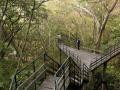
Basically, both Minh Chau and Quan Lan localities have quite favorable conditions for developing ecotourism. However, Quan Lan commune has more advantages to develop ecotourism in a humanistic direction, because this is an area with many famous historical relics such as Quan Lan Communal House, Quan Lan Pagoda, Temple worshiping the hero Tran Khanh Du, ... along with local festivals held annually such as the wind praying ceremony (March 15), Quan Lan festival (June 10-19); due to its location near the port and long exploitation time, the beaches in Quan Lan commune (especially Quan Lan beach) are no longer hygienic and clean to ensure the needs of tourists coming to relax and swim; this is also an area with many beautiful landscapes such as Got Beo wind pass, Ong Phong head, Voi Voi cave, but the ability to access these places is still very limited (dirt hill road, lots of gravel and rocks), especially during rainy and windy times; In addition, other natural resources such as mangrove forests and sea worms have not been really exploited for tourism purposes and ecotourism development. On the contrary, Minh Chau commune has more advantages in developing ecotourism in the direction of natural tourism, this is an area with diverse ecosystems such as at Rua De Beach, Bai Tu Long National Park Conservation Center...; Minh Chau beach is highly appreciated for its natural beauty and cleanliness, ranked in the top ten most beautiful beaches in Vietnam; Minh Chau commune is also home to Tram forest with a large area and a purity of up to 90%, suitable for building bridges through the forest (a very effective type of natural ecotourism currently applied by many countries) for tourists to sightsee, as well as for the purpose of studying and researching.
Figure 3.1: Thenmala Forest Bridge (India) Source: https://www.thenmalaecotourism.com/(August 21, 2019)
3.2.2. Using SWOT matrix to evaluate Quan Lan island tourism
General assessment of current tourism activities of Quan Lan island is shown through the following SWOT matrix:
Table 3.5: SWOT matrix evaluating tourism activities on Quan Lan island
Internal agent
Strengths- There is a lot of potential for tourism development, especially natural ecotourism and humanistic ecotourism.- The unskilled labor force is relatively abundant.- resource environmentunpolluted, still
Weaknesses- Poorly developed infrastructure, especially traffic routes to tourist destinations on the island.- The team of professional staff is still weak.- Tourism products in general
quite wild, originalintact
general and DLST in particularalone is monotonous.
External agents
Opportunity- Tourism is a key industry in the socio-economic development strategy of the province and Van Don economic zone.- Quan Lan was selected as a pilot area for eco-tourism development within the framework of the green growth project between Quang Ninh province and the Japanese organization JICA.- The flow of tourists and especially ecotourism in the world tends toincreasing
Challenge- Weather and climate change abnormally.- Competition in tourism products is increasingly fierce, especially with other localities in the province such as Ha Long, Mong Cai...- Awareness of tourists, especially domestic tourists, about ecotourism and nature conservation is not high.
Through summary analysis using SWOT matrix we see that:
To exploit strengths and take advantage of opportunities, it is necessary to:
- Diversify products and service types (build more tourism routes aimed at specific needs of tourists: experiential tourism immersed in nature, spiritual cultural tourism...)
- Effective exploitation of resources and differentiated products (natural resources and human resources)
div.maincontent .p { color: black; font-family:"Times New Roman", serif; font-style: normal; font-weight: normal; text-decoration: none; font-size: 14pt; margin:0pt; } div.maincontent p { color: black; font-family:"Times New Roman", serif; font-style: normal; font-weight: normal; text-decoration: none; font-size: 14pt; margin:0pt; } div.maincontent .s1 { color: black; font-family:"Times New Roman", serif; font-style: normal; font-weight: normal; text-decoration: none; font-size: 13pt; } div.maincontent .s2 { color: black; font-family:"Times New Roman", serif; font-style: normal; font-weight: normal; text-decoration: none; font-size: 13pt; } div.maincontent .s3 { color: #0D0D0D; font-family:"Times New Roman", serif; font-style: normal; font-weight: bold; text-decoration: none; font-size: 14pt; } div.maincontent .s4 { color: black; font-family:"Times New Roman", serif; font-style: italic; font-weight: normal; text-decoration: none; font-size: 14pt; } div.maincontent .s5 { color: black; font-family:"Times New Roman", serif; font-style: italic; font-weight: bold; text-decoration: none; font-size: 14pt; } div.maincontent .s6 { color: black; font-family:"Times New Roman", serif; font-style: italic; font-weight: normal; text-decoration: none; font-size: 14pt; vertical-align: -3pt; } div.maincontent .s7 { color: black; font-family:"Times New Roman", serif; font-style: italic; font-weight: normal; text-decoration: none; font-size: 14pt; vertical-align: -2pt; } div.maincontent .s8 { color: black; font-family:"Times New Roman", serif; font-style: italic; font-weight: normal; text-decoration: none; font-size: 14pt; vertical-align: -1pt; } div.maincontent .s9 { color: black; font-family:"Times New Roman", serif; font-style: normal; font-weight: normal; text-decoration: none; font-size: 14pt; } div.maincontent .s10 { color: black; font-family:"Times New Roman", serif; font-style: normal; font-weight: bold; text-decoration: none; font-size: 14pt; } div.maincontent .s11 { color: black; font-family:"Times New Roman", serif; font-style: normal; font-weight: normal; text-decoration: none; font-size: 14pt; } div.maincontent .s12 { color: black; font-family:Symbol, serif; font-style: normal; font-weight: normal; text-decoration: none; font-size: 14pt; } div.maincontent .s13 { color: black; font-family:Wingdings; font-style: normal; font-weight: normal; text-decoration: none; font-size: 14pt; } div.maincontent .s14 { color: black; font-family:"Times New Roman", serif; font-style: normal; font-weight: normal; text-decoration: none; font-size: 9pt; vertical-align: 5pt; } div.maincontent .s15 { color: black; font-family:"Times New Roman", serif; font-style: normal; font-weight: normal; text-decoration: none; font-size: 9pt; vertical-align: 5pt; } div.maincontent .s16 { color: black; font-family:Cambria, serif; font-style: italic; font-weight: normal; text-decoration: none; font-size: 14pt; } div.maincontent .s17 { color: #080808; font-family:"Times New Roman", serif; font-style: normal; font-weight: bold; text-decoration: none; font-size: 14pt; } div.maincontent .s18 { color: #080808; font-family:"Times New Roman", serif; font-style: normal; font-weight: normal; text-decoration: none; font-size: 14pt; } div.maincontent .s19 { color: black; font-family:"Times New Roman", serif; font-style: normal; font-weight: normal; text-decoration: none; font-size: 11pt; } div.maincontent .s20 { color: black; font-family:"Times New Roman", serif; font-style: normal; font-weight: normal; text-decoration: none; font-size: 10pt; } div.maincontent .s21 { color: black; font-family:"Times New Roman", serif; font-style: normal; font-weight: bold; text-decoration: none; font-size: 11pt; } div.maincontent .s22 { color: black; font-family:"Times New Roman", serif; font-style: normal; font-weight: normal; text-decoration: none; font-size: 11pt; } div.maincontent .s23 { color: black; font-family:"Times New Roman", serif; font-style: italic; font-weight: normal; text-decoration: none; font-size: 14pt; } div.maincontent .s24 { color: #212121; font-family:"Times New Roman", serif; font-style: normal; font-weight: normal; tex
Identify Rating Levels and Rating Scales
zt2i3t4l5ee
zt2a3gstourism,quan lan,quang ninh,ecology,ecotourism,minh chau,van don,geography,geographical basis,tourism development,science
zt2a3ge
zc2o3n4t5e6n7ts
of the islanders. Therefore, this indicator will be divided into two sub-indicators:
a1. Natural tourism attractiveness a2. Cultural tourism attractiveness
b. Tourist capacity
The two island communes in Quan Lan have different capacities to receive tourists. Minh Chau Commune is home to many standard hotels and resorts, attracting high-income domestic and international tourists. Meanwhile, Quan Lan Commune has many motels mainly built and operated by local people, so the scale and quality are not high, and will be suitable for ordinary tourists such as students.
c. Time of exploitation of Quan Lan Island Commune:
Quan Lan tourism is seasonal due to weather and climate conditions and festivals only take place on certain days of the year, specifically in spring. In Quan Lan commune, the period from April to June and from September to November is considered the best time to visit Quan Lan because the cultural tourism activities are mainly associated with festivals taking place during this time.
Minh Chau island commune:
Tourism exploitation time is all year round, because this is a place with a number of tourist attractions with diverse ecosystems such as Bai Tu Long National Park Research Center, Tram forest, Turtle Laying Beach, so besides coming to the beach for tourism and vacation in the summer, Minh Chau will attract research groups to come for tourism combined with research at other times of the year.
d. Sustainability
The sustainability of ecotourism sites in Quan Lan and Minh Chau communes depends on the sensitivity of the ecosystems to climate changes.
landscape. In general, these tourist destinations have a fairly high level of sustainability, because they are natural ecosystems, planned and protected. However, if a large number of tourists gather at certain times, it can exceed the carrying capacity and affect the sustainability of the environment (polluted beaches, damaged trees, animals moving away from their habitats, etc.), then the sustainability of the above ecosystems (natural ecosystems, human ecosystems) will also be affected and become less sustainable.
e. Location and accessibility
Both island communes have ports to take tourists to visit from Van Don wharf:
- Quan Lan – Van Don traffic route:
Phuc Thinh – Viet Anh high-speed boat and Quang Minh high-speed boat, depart at 8am and 2pm from Van Don to Quan Lan, and at 7am and 1pm from Quan Lan to Van Don. There are also wooden boats departing at 7am and 1pm.
- Van Don - Minh Chau traffic route:
Chung Huong high-speed train, Minh Chau train, morning 7:30 and afternoon 13:30 from Van Don to Minh Chau, morning 6:30 and afternoon 13:00 from Minh Chau to Van Don.
f. Infrastructure
Despite receiving investment attention, the issue of infrastructure and technical facilities for tourism on Quan Lan Island is still an issue that needs to be resolved because it has a direct impact on the implementation of ecotourism activities. The minimum conditions for serving tourists such as accommodation, electricity, water, communication, especially medical services, and security work need to be given top priority. Ecotourism spots in Minh Chau commune are assessed to have better infrastructure and technical facilities for tourism because there are quite complete and synchronous conditions for serving tourists, meeting many needs of domestic and foreign tourists.
3.2.1.4. Determine assessment levels and assessment scales
Corresponding to the levels of each criterion, the index is the score of those levels in the order of 4, 3, 2, 1 decreasing according to the standard of each level: very attractive (4), attractive (3), average (2), less attractive (1).
3.2.1.5. Determining the coefficients of the criteria
For the assessment of DLST in the two communes of Quan Lan and Minh Chau islands, the students added evaluation coefficients to show the importance of the criteria and indicators as follows:
Coefficient 3 with criteria: Attractiveness, Exploitation time. These are the 2 most important criteria for attracting tourists to tourism in general and eco-tourism in particular, so they have the highest coefficient.
Coefficient 2 with criteria: Capacity, Infrastructure, Location and accessibility . Because the assessment area is an island commune of Van Don district, the above criteria are selected by the author with appropriate coefficients at the average level.
Coefficient 1 with criteria: Sustainability. Quan Lan has natural and human-made ecotourism sites, with high biodiversity and little impact from local human factors. Most of the ecotourism sites are still wild, so they are highly sustainable.
3.2.1.6. Results of DLST assessment on Quan Lan island
a. Assessment of the potential for natural tourism development
For Minh Chau commune:
+ Natural tourism attractiveness is determined to be very attractive (4 points) and the most important coefficient (coefficient 3), so the score of the Attractiveness criterion is 4 x 3 = 12.
+ Capacity is determined as average (2 points) and the coefficient is quite important (coefficient 2), then the score of Capacity criterion is 2 x 2 = 4.
+ Exploitation time is long (4 points), the most important coefficient (coefficient 3) so the score of the Exploitation time criterion is 4 x 3 = 12.
+ Sustainability is determined as sustainable (4 points), the important coefficient is the average coefficient (coefficient 1), so the score of the Sustainability criterion is 4 x 1 = 4 points
+ Location and accessibility are determined to be quite favorable (2 points), the coefficient is quite important (coefficient 2), the criterion score is 2 x 2 = 4 points.
+ Infrastructure is assessed as good (3 points), the coefficient is quite important (coefficient 2), then the score of the Infrastructure criterion is 3 x 2 = 6 points.
The total score for evaluating DLST in Minh Chau commune according to 6 evaluation criteria is determined as: 12 + 4 + 12 + 4 + 4 + 6 = 42 points
Similar assessment for Quan Lan commune, we have the following table:
Table 3.3: Assessment of the potential for natural ecotourism development in Quan Lan and Minh Chau communes
Attractiveness of self-tourismof course
Capacity
Mining time
Sustainability
Location and accessibility
Infrastructure
Result
Point
DarkMulti
Point
DarkMulti
Point
DarkMulti
Point
DarkMulti
Point
DarkMulti
Point
DarkMulti
CommuneMinh Chau
12
12
4
8
12
12
4
4
4
8
6
8
42/52
Quan CommuneLan
6
12
6
8
9
12
4
4
4
8
4
8
33/52
b. Assessment of the potential for humanistic tourism development
For Quan Lan commune:
+ The attractiveness of human tourism is determined to be very attractive (4 points) and the most important coefficient (coefficient 3), so the score of the Attractiveness criterion is 4 x 3 = 12.
+ Capacity is determined to be large (3 points) and the coefficient is quite important (coefficient 2), then the score of the Capacity criterion is 3 x 2 = 6.
+ Mining time is average (3 points), the most important coefficient (coefficient 3) so the score of the Mining time criterion is 3 x 3 = 9.
+ Sustainability is determined as sustainable (4 points), the important coefficient is the average coefficient (coefficient 1), so the score of the Sustainability criterion is 4 x 1 = 4 points.
+ Location and accessibility are determined to be quite favorable (2 points), the coefficient is quite important (coefficient 2), the criterion score is 2 x 2 = 4 points.
+ Infrastructure is rated as average (2 points), the coefficient is quite important (coefficient 2), then the score of the Infrastructure criterion is 2 x 2 = 4 points.
The total score for evaluating DLST in Quan Lan commune according to 6 evaluation criteria is determined as: 12 + 6 + 6 + 4 + 4 + 4 = 36 points.
Similar assessment with Minh Chau commune we have the following table:
Table 3.4: Assessment of the potential for developing humanistic eco-tourism in Quan Lan and Minh Chau communes
Attractiveness of human tourismliterature
Capacity
Mining time
Sustainability
Location and accessibility
Infrastructure
Result
Point
DarkMulti
Point
DarkMulti
Point
DarkMulti
Point
DarkMulti
Point
DarkMulti
Point
DarkMulti
Quan CommuneLan
12
12
6
8
9
12
4
4
4
8
4
8
39/52
Minh CommuneChau
6
12
4
8
12
12
4
4
4
8
6
8
36/52
Basically, both Minh Chau and Quan Lan localities have quite favorable conditions for developing ecotourism. However, Quan Lan commune has more advantages to develop ecotourism in a humanistic direction, because this is an area with many famous historical relics such as Quan Lan Communal House, Quan Lan Pagoda, Temple worshiping the hero Tran Khanh Du, ... along with local festivals held annually such as the wind praying ceremony (March 15), Quan Lan festival (June 10-19); due to its location near the port and long exploitation time, the beaches in Quan Lan commune (especially Quan Lan beach) are no longer hygienic and clean to ensure the needs of tourists coming to relax and swim; this is also an area with many beautiful landscapes such as Got Beo wind pass, Ong Phong head, Voi Voi cave, but the ability to access these places is still very limited (dirt hill road, lots of gravel and rocks), especially during rainy and windy times; In addition, other natural resources such as mangrove forests and sea worms have not been really exploited for tourism purposes and ecotourism development. On the contrary, Minh Chau commune has more advantages in developing ecotourism in the direction of natural tourism, this is an area with diverse ecosystems such as at Rua De Beach, Bai Tu Long National Park Conservation Center...; Minh Chau beach is highly appreciated for its natural beauty and cleanliness, ranked in the top ten most beautiful beaches in Vietnam; Minh Chau commune is also home to Tram forest with a large area and a purity of up to 90%, suitable for building bridges through the forest (a very effective type of natural ecotourism currently applied by many countries) for tourists to sightsee, as well as for the purpose of studying and researching.
Figure 3.1: Thenmala Forest Bridge (India) Source: https://www.thenmalaecotourism.com/(August 21, 2019)
3.2.2. Using SWOT matrix to evaluate Quan Lan island tourism
General assessment of current tourism activities of Quan Lan island is shown through the following SWOT matrix:
Table 3.5: SWOT matrix evaluating tourism activities on Quan Lan island
Internal agent
Strengths- There is a lot of potential for tourism development, especially natural ecotourism and humanistic ecotourism.- The unskilled labor force is relatively abundant.- resource environmentunpolluted, still
Weaknesses- Poorly developed infrastructure, especially traffic routes to tourist destinations on the island.- The team of professional staff is still weak.- Tourism products in general
quite wild, originalintact
general and DLST in particularalone is monotonous.
External agents
Opportunity- Tourism is a key industry in the socio-economic development strategy of the province and Van Don economic zone.- Quan Lan was selected as a pilot area for eco-tourism development within the framework of the green growth project between Quang Ninh province and the Japanese organization JICA.- The flow of tourists and especially ecotourism in the world tends toincreasing
Challenge- Weather and climate change abnormally.- Competition in tourism products is increasingly fierce, especially with other localities in the province such as Ha Long, Mong Cai...- Awareness of tourists, especially domestic tourists, about ecotourism and nature conservation is not high.
Through summary analysis using SWOT matrix we see that:
To exploit strengths and take advantage of opportunities, it is necessary to:
- Diversify products and service types (build more tourism routes aimed at specific needs of tourists: experiential tourism immersed in nature, spiritual cultural tourism...)
- Effective exploitation of resources and differentiated products (natural resources and human resources)
div.maincontent .p { color: black; font-family:"Times New Roman", serif; font-style: normal; font-weight: normal; text-decoration: none; font-size: 14pt; margin:0pt; } div.maincontent p { color: black; font-family:"Times New Roman", serif; font-style: normal; font-weight: normal; text-decoration: none; font-size: 14pt; margin:0pt; } div.maincontent .s1 { color: black; font-family:"Times New Roman", serif; font-style: normal; font-weight: normal; text-decoration: none; font-size: 13pt; } div.maincontent .s2 { color: black; font-family:"Times New Roman", serif; font-style: normal; font-weight: normal; text-decoration: none; font-size: 13pt; } div.maincontent .s3 { color: #0D0D0D; font-family:"Times New Roman", serif; font-style: normal; font-weight: bold; text-decoration: none; font-size: 14pt; } div.maincontent .s4 { color: black; font-family:"Times New Roman", serif; font-style: italic; font-weight: normal; text-decoration: none; font-size: 14pt; } div.maincontent .s5 { color: black; font-family:"Times New Roman", serif; font-style: italic; font-weight: bold; text-decoration: none; font-size: 14pt; } div.maincontent .s6 { color: black; font-family:"Times New Roman", serif; font-style: italic; font-weight: normal; text-decoration: none; font-size: 14pt; vertical-align: -3pt; } div.maincontent .s7 { color: black; font-family:"Times New Roman", serif; font-style: italic; font-weight: normal; text-decoration: none; font-size: 14pt; vertical-align: -2pt; } div.maincontent .s8 { color: black; font-family:"Times New Roman", serif; font-style: italic; font-weight: normal; text-decoration: none; font-size: 14pt; vertical-align: -1pt; } div.maincontent .s9 { color: black; font-family:"Times New Roman", serif; font-style: normal; font-weight: normal; text-decoration: none; font-size: 14pt; } div.maincontent .s10 { color: black; font-family:"Times New Roman", serif; font-style: normal; font-weight: bold; text-decoration: none; font-size: 14pt; } div.maincontent .s11 { color: black; font-family:"Times New Roman", serif; font-style: normal; font-weight: normal; text-decoration: none; font-size: 14pt; } div.maincontent .s12 { color: black; font-family:Symbol, serif; font-style: normal; font-weight: normal; text-decoration: none; font-size: 14pt; } div.maincontent .s13 { color: black; font-family:Wingdings; font-style: normal; font-weight: normal; text-decoration: none; font-size: 14pt; } div.maincontent .s14 { color: black; font-family:"Times New Roman", serif; font-style: normal; font-weight: normal; text-decoration: none; font-size: 9pt; vertical-align: 5pt; } div.maincontent .s15 { color: black; font-family:"Times New Roman", serif; font-style: normal; font-weight: normal; text-decoration: none; font-size: 9pt; vertical-align: 5pt; } div.maincontent .s16 { color: black; font-family:Cambria, serif; font-style: italic; font-weight: normal; text-decoration: none; font-size: 14pt; } div.maincontent .s17 { color: #080808; font-family:"Times New Roman", serif; font-style: normal; font-weight: bold; text-decoration: none; font-size: 14pt; } div.maincontent .s18 { color: #080808; font-family:"Times New Roman", serif; font-style: normal; font-weight: normal; text-decoration: none; font-size: 14pt; } div.maincontent .s19 { color: black; font-family:"Times New Roman", serif; font-style: normal; font-weight: normal; text-decoration: none; font-size: 11pt; } div.maincontent .s20 { color: black; font-family:"Times New Roman", serif; font-style: normal; font-weight: normal; text-decoration: none; font-size: 10pt; } div.maincontent .s21 { color: black; font-family:"Times New Roman", serif; font-style: normal; font-weight: bold; text-decoration: none; font-size: 11pt; } div.maincontent .s22 { color: black; font-family:"Times New Roman", serif; font-style: normal; font-weight: normal; text-decoration: none; font-size: 11pt; } div.maincontent .s23 { color: black; font-family:"Times New Roman", serif; font-style: italic; font-weight: normal; text-decoration: none; font-size: 14pt; } div.maincontent .s24 { color: #212121; font-family:"Times New Roman", serif; font-style: normal; font-weight: normal; tex -
 Proposing a Model for Developing Community-Based Tourism in Quan Lan Commune, Van Don, Quang Ninh.
 -
 Sustainable tourism development in Ha Long Bay, Quang Ninh province - 16
 -
 Meditation tourism – current status and development solutions in Quang Ninh - 6
Source: Department of Culture, Sports and Tourism of Quang Ninh (2015)
Figure 3.4. Main structure of Quang Ninh tourism products
- Accessibility to tourist destinations: According to statistics, the majority of international tourists come to Quang Ninh by air (via Noi Bai airport), accounting for 69.6%, the rest by other means. International visitors can also go through border gates, ports, airports and then continue to use different means of transport to get to Quang Ninh. Recently, there are 1-3 round-trip flights between Hanoi and Ha Long every day, 5-10 scenic flights over the bay by seaplane from Noi Bai airport to Ha Long. Tourists traveling from Hanoi to Ha Long only take about 30 minutes of flight and can see Ha Long Bay from above. But in reality, tourists have to travel from Hanoi to Noi Bai, then fly in a circle, instead of taking a direct flight, making the travel time by seaplane to Ha Long insignificantly different from that of a car. The second obstacle for tourists is that according to the regulations of the Ministry of National Defense, tourists on seaplanes are not allowed to take photos or film, and tourists do not have the opportunity to admire the beautiful scenery of Ha Long Bay; therefore, tourists feel dissatisfied with the services provided.
For exit and entry procedures through Mong Cai border gate, tourists spend a lot of money and time on exit and entry procedures, just need to go through a travel company.
or send a representative to contact the border guards directly at the exit gate (Bac Luan International Border Gate). Tourists will be guided and receive an entry card to visit the border gate area every day (from 9:00-11:00 and from 14:00-16:00). This is also one of the favorable conditions to strongly attract Chinese tourists to the tourist destination of Quang Ninh.
Regarding visa requirements for entry into Vietnam, there have also been certain changes and improvements. Visa issuance is less complicated; there are bilateral agreements exempting visas for citizens of ASEAN countries, unilateral visa exemptions for some citizens from key tourism markets of Vietnam. However, visa procedures are still cumbersome, international tourists still face many difficulties, negatives and waste a lot of time when entering Vietnam in general and Quang Ninh in particular.
Quang Ninh's transportation system is very rich, including road traffic, inland waterways, railways, sea routes and airports. Among the three main national highways connecting Quang Ninh with other provinces, the Hanoi - Ha Long route, typically the Hanoi - Hai Phong expressway (the largest and most modern expressway in Vietnam) has shortened the distance from Hanoi to Quang Ninh and shortened the travel time of tourists. This is a very favorable thing, contributing to attracting more international tourists to Quang Ninh. However, the traffic situation in Vietnam and the destination of Quang Ninh still has many shortcomings: the phenomenon of " digging and filling " without planning occurs everywhere; the phenomenon of traffic jams; speeding, reckless driving, ... causing a sense of insecurity for international tourists has significantly affected the psychology when choosing a tourist destination.
- Safety of tourist destinations: In order to create trust and attractiveness for domestic and foreign tourists when coming to Quang Ninh, in recent times, the Quang Ninh provincial government has directed functional units to regularly disseminate to organizations and individuals doing tourism business temporary regulations on managing tourist boat activities, other regulations on ensuring safety, security and order, fire prevention and fighting, food safety, tourism business environment... to raise people's awareness of tourism activities. At the same time, direct functional sectors to strengthen the implementation of a number of inspection programs, strictly handle service business establishments violating legal regulations, strengthen security assurance
safety for tourists. This is clearly demonstrated through a number of violations recently handled by functional units. Accordingly, a series of violations in tourism service business on cruise ships visiting Ha Long Bay through information reflected by tourists have been strongly intervened by Ha Long City and related units, strictly and promptly handled, receiving the consensus and support of tourists due to the behavior of " overcharging " in food service business, not fully equipped with life-saving tools, rescue tools, fire-fighting tools...
The strong handling of violations of traffic safety, security and order, and violations of the tourism business environment in Quang Ninh province in recent times has been widely supported by local people and tourists, creating confidence for tourists when traveling to Ha Long. Recently, with the drastic direction of the province, the strong participation of functional sectors and localities, the tourism environment in Quang Ninh has had many positive changes. The situation of lack of security and order, solicitation, " ripping off " tourists... has been and is being thoroughly resolved, bringing a beautiful image to tourists when coming to Quang Ninh. It can be said that Quang Ninh is making efforts to build the locality into a safe, friendly, and attractive tourist destination. However, in addition to rich tourism resources, typical tourism products, gentle and hospitable people, and convenient transportation, the factors of environment, price, and tourism safety are important. According to the tourism industry leaders, Quang Ninh is promoting propaganda, dissemination, and raising awareness of commercial civilization, making tourism culture deeply ingrained and become a code of conduct for organizations, individuals, and local people participating in tourism service activities. At the same time, coordinating with relevant units to support training and improving skills and expertise for the management team and tourism service staff to ensure professionalism and quality; promoting and raising community awareness in environmental protection, ensuring food hygiene and safety; strictly handling acts such as: street vending, soliciting customers, commercial fraud, "ripping off " ... to create a clean, beautiful, safe, friendly, and attractive tourism environment for tourists.
Quang Ninh’s emergency services are adequate for now, but are unlikely to be able to meet future demands as a growing tourist destination. City officials say police, fire and medical services have been able to respond to problems so far, but are limited.
for non-urban areas. Fire and rescue services are available daily and seven days a week. However, the limited foreign language skills of relevant units remain a major drawback in attracting tourists to a safe destination. By 2020, the province will allocate additional land for fire and rescue services and police stations in all districts. Currently, information on emergency services is not widely disseminated systematically and there is little support in foreign languages. A recently established tourist hotline has been very useful, but information about this hotline is not widely known and many tourists are still unaware of this service. Emergency helicopter rescue capacity is essential if adventure tourism products are to be developed. Furthermore, some potential segments such as high-end ecotourism and adventure tourism may not choose Quang Ninh if the emergency medical services are still lacking. The province needs to continue to upgrade public services, especially the accessibility of emergency medical services, to meet the requirements of development as a global tourist destination.
Access to health care in Ha Long City is good, including a hospital dedicated to serving tourists. However, other areas in the province are still limited in this regard. The hospital in Ha Long City provides basic care but with very poor foreign language skills, and the quality of services in the outlying areas is low and staff do not speak foreign languages. If tourism activities are to be expanded to remote areas, the province needs to improve access to health care and enhance the quality of health care services for tourists to international standards.
- Tourism human resources: In the period 2010-2016, the scale of Quang Ninh tourism human resources increased significantly. In 2010, the total tourism human resources of Quang Ninh was 14,191, of which state management human resources were 43 people, and business human resources were
14,011 people, the training facility's workforce is 137 people. According to statistics from the Department of Culture, Sports and Tourism of Quang Ninh, the tourism workforce of Quang Ninh has grown quite steadily, averaging about 10%, proportional to the development of the industry. As of 2016, the workforce working in state management agencies with university degrees reached 100%. However, the number of people with university degrees in tourism is not much. The workforce in tourist accommodation establishments with university degrees accounts for
about 15%, with college and vocational secondary education accounting for nearly 20%, with professional certificates and unskilled labor accounting for over 60%, this ratio is not appropriate, showing the lack of specialized and highly skilled labor in departments that create products directly serving tourists. The gender structure is very different. In which, the rate of female labor in accommodation establishments is 68% and male labor is 32% compared to the total; in the tourism sector, female labor is 29.7%, male labor is 70.3%; in enterprises operating passenger ships to visit Ha Long Bay, male labor accounts for 89%, female labor is 11% compared to the total; especially for labor on ships, almost 100% of the labor is male.
The total number of employees working directly in tourism businesses in the province is 19,398 people; of which Ha Long city has 13,731 people, accounting for 70.79% of the total workforce, Mong Cai city has 3,879 people, accounting for 20%, Uong Bi city has 607 people, accounting for 3.13%, Van Don district has 775 people, accounting for 4%, other localities have 406 people, accounting for 2.1% of the total tourism workforce in the province. This shows that Quang Ninh has only focused mainly on exploiting Ha Long Bay tourism resources, other localities have very unique tourism resources (Uong Bi, Mong Cai, Van Don) but have not been exploited properly to expand tourism space, diversify products, regulate labor as well as create jobs for workers in areas with tourism resources.
Table 3.5. Tourism human resources of Quang Ninh destination in the period 2010-2016
Unit: Person
Year
2010 | 2011 | 2012 | 2013 | 2014 | 2015 | 2016 | |
Total | 23,500 | 25,000 | 27,190 | 29,518 | 32,125 | 33,243 | 34,758 |
Above university | 37 | 40 | 43 | 45 | 47 | 48 | 51 |
University, college | 2,900 | 3,000 | 3,270 | 3,564 | 3,907 | 4.105 | 4.213 |
Intermediate, elementary | 10,500 | 10,960 | 11,777 | 12,710 | 13,795 | 14,026 | 15,134 |
Untrained | 10,063 | 11,000 | 12,100 | 13,190 | 14,376 | 15,064 | 15,036 |
Source: Department of Culture, Sports and Tourism of Quang Ninh (2015),
Quang Ninh Department of Tourism (2016)
Currently, Quang Ninh has 9 establishments participating in tourism training; including 1 university, 1 provincial in-service training center and 7 vocational training establishments. Every year, these establishments enroll and train over 2,000 students with college, intermediate and primary tourism vocational qualifications, with majors mainly in tourism business administration.
travel, hotel, tour guide, culinary techniques, room service techniques, table, bar, reception.
Human resource training and development in local enterprises has received attention, especially for enterprises with relatively large scale and long-term business strategies, all have human resource development programs with forms such as: on-site training by trainers certified by the EU Project, or inviting experienced lecturers from tourism training schools; sending employees to study at tourism training facilities or 4-5 star hotels in major tourist centers such as Hanoi, Ho Chi Minh City; encouraging employees to study on their own, enterprises create conditions in terms of time and receive full salary during the study period. From 2010 to 2016, the Department of Culture, Sports and Tourism opened many tourism training courses for nearly 3,200 workers. The professional qualifications of employees in enterprises basically meet the prescribed standards in the immediate future.
- Tourism development policy: Quang Ninh has a particularly important position in the socio-economic development, including tourism development, of the Red River Delta in particular and the whole country in general. Quang Ninh tourism has been playing an important role in the key economic region of the North, not only in attracting a large number of domestic and foreign tourists, but also in bringing in relatively large revenues. Therefore, the development of Quang Ninh tourism will contribute significantly to the development of Vietnam's tourism industry and the socio-economic development of the province in particular. The master plan for socio-economic development of Quang Ninh province to 2020, with a vision to 2030, sets out the orientation for organizing the territorial space of Quang Ninh as " one center, two multi-dimensional routes and two breakthrough points ".
Right from the first years of the 21st century, the Standing Committee of Quang Ninh Provincial Party Committee issued Resolution 08-NQ/TU dated November 30, 2001 on innovation and development of Quang Ninh tourism in the period 2001-2010 and Resolution 21-NQ/TU dated March 3, 2005 on promoting the development of service industries until 2010, with a vision to 2015. Accordingly, Quang Ninh has determined the following viewpoint on tourism development: " Grasp and thoroughly and effectively exploit the natural conditions and advantages of Quang Ninh, creating a new step of development in both quantity and quality for the tourism industry. Continue to expand tourism space, develop new tourist routes and destinations,
in which sea tourism and sightseeing tourism are the focus; continue to invest in upgrading infrastructure systems, accommodation facilities, tourism services and entertainment, creating rich and diverse tourism products; improve service quality, increase visitors' length of stay; form a number of strong enterprises, especially in travel as the core for the province's tourism activities; consolidate and improve the quality of human resources, the effectiveness of state management of tourism, making tourism a spearhead economic sector and making an important contribution to the province's economic structure ".
With the above development perspective, Quang Ninh has had continuous innovation policies, with " breakthrough " solutions to improve the quality of growth, focusing on quality over quantity, focusing on investment in developing products with high cultural content and content in tourism activities, stimulating consumer demand. In addition to maintaining the traditional tourist market, it is necessary to pay attention to attracting markets with high spending capacity. Focus on investment quality, encourage large tourism corporations with international brands to invest and manage tourism activities. Environmental protection is both a condition and a goal of tourism development, which is decisive for the quality, attractiveness and ability to attract tourists of Quang Ninh. It is necessary to create a comprehensive improvement in the tourism environment, continue to improve the capacity to manage, control the environment and activities related to Ha Long Bay. Improve competitiveness at both the state and enterprise levels to match the requirements of industry development in the new situation. Promote administrative procedure reform to create a favorable environment for tourism development. Enhance coordination between sectors and localities in state management activities, raise awareness of sectors, levels and people about tourism development.
- The friendliness of the residents at the tourist destination: For a long time, Quang Ninh has been known as the land of enthusiasm, friendliness, and hospitality of the local people. In order to build the image of Quang Ninh as a civilized and friendly place, in recent times, Quang Ninh province has focused on many solutions to build and improve the tourism environment. Starting from November 1, 2014, Quang Ninh province launched the program " Ha Long Smile " with the message of a smile from the heart. The program " Ha Long Smile " is the first and important campaign of the branding strategy of Quang Ninh province and the idea is to build a brand from different images.
The special feature of Ha Long Bay - the most prominent and recognizable feature - comes from the value of the people of this land. The program " Ha Long Smile " with the meaning and goal of serving the community and society, will be successful and will help increase the development efficiency of the province's tourism and service industry, contributing to economic growth and social progress. At the same time, change people's awareness to make Quang Ninh truly a land of smiles, of hospitality, of friendliness and courtesy. After each visit to Quang Ninh is an opportunity for tourists to feel the hospitality and professionalism of Quang Ninh people. In particular, on October 20, 2015, the People's Committee of Quang Ninh province issued the code of conduct " Ha Long Smile " in Decision No. 3147/QD-UBND. The Code of Conduct “ Ha Long Smile ” in tourism activities in Quang Ninh province aims to provide standards to guide behavior, attitudes, habits, and civilized ways of behaving, in accordance with traditional culture, Vietnamese and local customs and practices for organizations and individuals operating in the tourism sector, people and tourists when participating in tourism activities in Quang Ninh province.
Quang Ninh is sending out the message that every Quang Ninh citizen smiles sincerely, with an open smile, a friendly smile, a hospitable smile, a polite smile, a bright smile... Every hotel, restaurant, cruise ship and destination becomes an ambassador representing the Quang Ninh tourism brand. Welcome visitors with a smile and a heart. Tourist satisfaction is both the goal and the driving force to build Ha Long into an international tourist city. Welcome every visitor with a smile and a heart. With this program, Quang Ninh hopes to change the awareness, behavior and conduct of each individual, starting from the highest leaders and then spreading to the government apparatus, to mass organizations, businesses, to each neighborhood, alley, to each household and to each citizen to build standards for an ideal land of tourism and investment. The program “ Ha Long Smile ” with the meaning and goal of serving the community and society, will be successful and will help increase the development efficiency of the province’s tourism and service industry, contributing to economic growth and social progress. At the same time, change people’s awareness to make Quang Ninh truly a land of smiles, of hospitality, of friendliness and politeness.