
Such vehicle exchange increases equipment downtime, directly affecting the working efficiency of the vehicle as well as the synchronization efficiency of the excavator - vehicle.
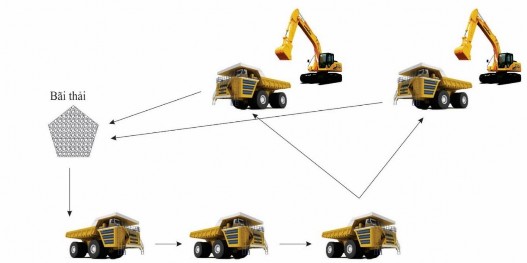
Figure 3.5. Illustration of open transport cycle
3.2. SOLUTIONS TO OPTIMIZE COORDINATION BETWEEN EXCAVATORS AND VEHICLES IN OPEN-PIT MINES
3.2.1. Use fewer different types of equipment
With the current state of equipment usage, in most open-pit coal mines in Quang Ninh, there is a lack of synchronization between the equipment in the mine, reducing the productivity of the equipment as well as the productivity of the entire mine.
To overcome the above disadvantages and maximize the efficiency of excavator synchronization
- cars on the mine, so use less types of equipment serving on the mine. In addition, using less types of equipment is also more convenient in management, operation, replacement and repair.
3.2.2. Periodically update the transport curve according to the displacement of the mining mirror
Typical examples such as at Deo Nai coal mine show that: due to difficult dumping conditions, difficulty in arranging dumping locations as well as dumping area, each year the mine's transport distance increases by an average of 0.3 km. This will change the entire cycle.
of the vehicle, leading to changes in the productivity of the excavator and affecting the efficiency of the excavator - mine's truck synchronization as well as the productivity of the entire mine.
Therefore, to improve the working productivity of transport equipment as well as loading and unloading equipment and the synchronous efficiency of excavators - trucks, it is necessary to calculate and update the transport schedule periodically every 1 month, 3 months or 6 months according to the movement progress of the working mirror and re-determine the working parameters of loading and unloading equipment, transport equipment, the number of coordinated equipment and the synchronous efficiency of excavators - trucks.
3.2.3. Do not use equipment that is too old
The lack of synchronization between different types of equipment and machinery with different technical conditions and the working capacity of the old equipment has greatly affected the working efficiency of the equipment. A typical example is the situation at the Deo Nai, Cao Son, Coc Sau coal mines and some other coal mines.
To improve the working efficiency of the equipment as well as to improve the productivity of the excavator - car synchronization, open-pit coal mines in Quang Ninh should not continue to use equipment that is too old, fully depreciated and has a technical condition that does not meet the requirements of synchronization and productivity. For equipment in use, still depreciated and in good technical condition, it is necessary to calculate appropriately with other equipment so that the efficiency of the excavator - car synchronization is the highest, maximizing the working parameters of the equipment.
3.2.4. Optimizing loading and unloading schemes
To overcome the current shortcomings in open-pit coal mines in Quang Ninh, it is necessary to optimize the loading and unloading diagrams for both earth and rock loading and coal loading.
The use of reasonable shoveling channels allows to increase the working efficiency of the loading and transporting equipment. Normal shoveling channels give higher productivity and efficiency than wide shoveling channels and narrow shoveling channels because they allow to fully develop the working parameters of the excavator, increase the working productivity of the equipment and reduce the downtime of the equipment.
For thin coal seams and coal seams containing interbedded rock and soil, it is necessary to use selective excavation schemes under specific conditions to optimize the excavation process, improve the working efficiency of the excavator, increase the efficiency of selective excavation, and reduce the mineral impoverishment rate [4].
The loading and unloading diagrams of excavators and trucks used in open-pit coal mines in Quang Ninh area are shown in Figure 3.6.
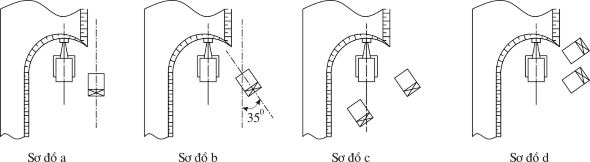
Figure 3.6. Mine vehicle loading diagrams [3]
Diagram a, b, d: loading vehicle on one side; Diagram c: loading vehicle on both sides.
- Diagram a has the truck axle parallel to the excavator axle in the front position, this diagram is applied when the excavator lane width is narrow. The disadvantage of this diagram is that the vehicle exchange time is large.
- Diagram b has the car's axis offset from the vertical at an angle of 35 degrees . In diagram b ,
This reduces the excavator's digging time due to reduced rotation time.
- The car diagram is arranged on both sides of the excavator, so the rotation time of the machine is reduced, the working time of the excavator is maximized, the car exchange diagram is safe and simple.
- Diagram d increases the excavator's time because there is no waiting time for vehicle exchange. This diagram is only applicable when the vehicle has a small load because reversing according to this diagram is complicated.
In addition, as analyzed above, the working efficiency of excavator and transport equipment is also directly affected by the skills of the excavator driver and the car driver. Thus, to improve the productivity of excavators, cars and the synchronization of excavators - cars, in addition to using reasonable loading and unloading diagrams, it is necessary to improve the skills of excavator and car drivers.
3.2.5. Optimizing vehicle speed (loaded and unloaded)
As discussed above, the efficiency of the coordination between excavators and trucks is greatly affected by the transport cycle. The cycle time of a truck trip on the mine includes the time for loading, the time the truck runs with and without a load, and the time for waiting and exchanging trucks.
Thus, the time the vehicle runs with and without load is directly affected by the vehicle speed (when loaded and when without load). To reduce the cycle time of a trip, one of the three component times above can be reduced or all three if possible.
In open-pit mines, transport routes are usually divided into two types: transport routes within the mine and transport routes outside the mine. In the case of loaded vehicles, the parameters of the transport routes within the mine have been calculated and optimally designed for vehicles to run safely, so it is difficult to increase the speed of vehicles on this road section. For transport routes outside the mine, depending on the type of route, the speed of vehicles can change. Normally, the average speed of vehicles is from 20 to 25 km/h. However, for transport routes outside the mine, the permitted speed often reaches 40 km/h. This reduces the running time of the vehicle and increases the working efficiency of the equipment as well as the entire mine. In addition, increasing the speed from 20 to 25 km/h to 40 km/h also increases the risk and insecurity rate in transport work. Therefore, it is necessary to ensure safety during transportation, regularly check and maintain vehicles; provide driving safety training for mine workers; regularly maintain and repair roads to ensure vehicle safety.
3.2.6. Improve the quality of transport routes
As analyzed above, the quality of the transport route, specifically the type of route and the roadbed, also greatly affects the efficiency of the mine transport work. To improve the efficiency of the transport work due to the influence of the type of route and the transport roadbed, it is necessary to implement the following requirements to improve the quality of the road:
- The roadbed must always be stable throughout the block; the geometric dimensions and shape of the roadbed must not be destroyed or deformed under any circumstances.
- Must ensure that the roadbed has sufficient strength and durability when subjected to shear and does not deform too much (or accumulate deformation) under the effect of vehicle loads.
- Must ensure that the roadbed strength does not change over time, weather, and climate.
- Must regularly maintain, repair and maintain the road.
3.2.7. Use open transport cycle instead of closed transport cycle
The current use of closed transport cycles in open-pit coal mines in Quang Ninh has the advantage of a simple, easy-to-manage excavator-car coordination model, but it makes the excavating and transporting equipment passive and prone to car congestion or excavators having to wait for cars, increasing waiting time and vehicle exchange, directly affecting the working efficiency of the equipment as well as the productivity of the mine.
In addition, the change in transport speed due to the displacement of the working mirror also leads to the coordination efficiency between the excavator and the car in the closed transport cycle decreasing as the transport speed increases, the excavator may have to wait for the car more.
Thus, to optimize the coordination efficiency between excavators and cars in the mine, it is necessary to use an open transport cycle instead of a closed transport cycle as currently used in mines. The open transport cycle allows cars and excavators to work more flexibly and proactively, minimizing waiting time and vehicle exchange, increasing the productivity of transport equipment, and excavators operating continuously.
without having to wait for transport equipment. At this time, the waiting time and vehicle exchange are zero (t m = 0), leading to a reduction in the cycle time of a trip. However, using an open transport cycle will also be more complicated, more difficult to manage and need to be arranged appropriately.
3.3. DEVELOPING OPTIMIZATION METHODS AND SOFTWARE PROGRAMS TO SYNCHRONIZE EXCAVATORS AND AUTOMOBILES FOR OPEN-PIT COAL MINES IN QUANG NINH REGION
The method of optimizing the coordination between excavators and cars for open-pit coal mines in Quang Ninh region is built on the combination of the advantages of previous methods, taking into account the current practical conditions of the mines. The optimization method proposed by NCS is specified by a calculation sequence accompanied by a corresponding software program developed by NCS to optimize the selection of synchronous excavators - cars for open-pit coal mines in Quang Ninh region.
Input data will be entered into the software program such as: mine output, number of working days in a year, number of working shifts in a day, number of working hours in a shift, type of material to be excavated, transported, transport speed, transport cycle, other coefficients, etc.
To determine the optimal synchronization, the software will calculate, using iteration to calculate the excavator-car synchronization productivity of each pair of equipment among the initially listed equipment. The list of these equipment is updated and added to the database of the previous software with the operating parameters of the equipment provided by the manufacturer. The program will calculate the number of excavators and cars serving the mine, as well as the excavator-car synchronization productivity.
The sequence of calculation and optimization of coordination between excavators and cars for open-pit coal mines in Quang Ninh region is as follows:
3.3.1. Determining the productivity of the excavator
Number of excavators serving the mine [2], [21]:
N x
A m . K
dt
Q nx
, the (3.1)
In which: A m - volume of mine to be excavated in 1 year, m 3 ; Q nx - working capacity of excavator in 1 year, m 3 /year; K dt - equipment reserve coefficient, K dt =1.1÷1.2.
The working capacity of an excavator in 1 year is determined as follows [2],
[21]:
Q nx
Q song
. n . N , m 3 /year (3.2)
With: n - number of working shifts in 1 day, shift; N - number of working days in 1 year, day; Q shift - working productivity in 1 shift of excavator, m 3 /shift and is determined as follows [2], [21]:
Q Q. T. , m 3 /shift (3.3)
song x song
In which: T shift - working time in 1 shift, hour; - time utilization coefficient; Q x - technical productivity of the excavator in one hour, m 3 /h and is determined as follows [2], [21]:
x
Q 3600. E . K
T c
x . K cn
, m 3 /h (3.4)
In which: E - bucket capacity, m 3 ; T c - excavator's excavating cycle time, s; K x - excavator's excavator's excavator's excavator's excavator 's excavator's technology utilization coefficient.
T c = t x + t q + t dx , s (3.5)
With: t x - excavator's excavator digging time is determined as follows [21]:
2
t 194. d
car
E
0.11 E 0.6
, s (3.6)
d - average size of rock in the pile, m; t q - rotation time of the excavator [21]:
5
3 (3.5 E 0.42 E 2 ) 3 . 2
E
t q , s (3.7)
- excavator rotation angle, degrees; t dx - excavator unloading time, s.
K K xđ
x K
(3.8)
touch
rg
In which: K xđ - bucket filling coefficient; K rg - coefficient of expansion of soil and rock in the bucket
Determine the value of Krg according to E and d tb [9]
E, m 3
K rg when the average size of the stone d tb , m | |||||||||||
0.1 | 0.15 | 0.25 | 0.35 | 0.45 | 0.55 | 0.65 | 0.75 | 0.85 | 0.95 | 1.05 | |
< 4 | 1.35 | 1.40 | 1.53 | 1.65 | 1.82 | 1.95 | 2.00 | 2.05 | - | - | - |
4÷6 | 1.34 | 1.38 | 1.48 | 1.60 | 1.75 | 1.86 | 1.95 | 2.00 | 2.03 | - | - |
6÷8 | 1.33 | 1.36 | 1.43 | 1.53 | 1.65 | 1.78 | 1.90 | 1.96 | 2.01 | 2.05 | - |
8÷10 | 1.32 | 1.35 | 1.42 | 1.50 | 1.60 | 1.72 | 1.83 | 1.91 | 1.99 | 2.02 | 2.05 |
10÷12.5 | 1.31 | 1.34 | 1.40 | 1.46 | 1.55 | 1.66 | 1.77 | 1.86 | 1.95 | 2.00 | 2.03 |
12.5÷15 | 1.31 | 1.33 | 1.39 | 1.44 | 1.52 | 1.63 | 1.74 | 1.82 | 1.92 | 1.99 | 2.02 |
15÷20 | 1.30 | 1.32 | 1.37 | 1.42 | 1.49 | 1.58 | 1.68 | 1.78 | 1.86 | 1.93 | 1.99 |
20÷25 | 1.30 | 1.32 | 1.35 | 1.40 | 1.46 | 1.54 | 1.64 | 1.74 | 1.82 | 1.89 | 1.95 |
Maybe you are interested!
-

 Solutions on Selection and Coordination with Representative Entities in the Pangasius Industry Value Chain
 -
 Some Key Solutions to Promote Positive Changes and Limit Negative Changes of Socialist Production Relations in
 -
 Some solutions to limit risks in international goods trading activities of Vietnamese traders - 10
 -
 Solutions for developing competitive strategies of Vietnam Airlines - 2
 -
 Some Solutions to Improve the Legal System of Alimony
Determine the value of K according to E and d tb [9]
E, m 3
K xđ when the average size of the stone d tb , m | |||||||||||
0.1 | 0.15 | 0.25 | 0.35 | 0.45 | 0.55 | 0.65 | 0.75 | 0.85 | 0.95 | 1.05 | |
< 4 | 1.18 | 1.15 | 1.08 | 0.93 | 0.72 | 0.45 | 0.22 | 0.10 | - | - | - |
4÷6 | 1.19 | 1.17 | 1.12 | 1.00 | 0.82 | 0.60 | 0.40 | 0.25 | 0.15 | - | - |
6÷8 | 1.21 | 1.18 | 1.15 | 1.08 | 0.92 | 0.73 | 0.53 | 0.37 | 0.25 | 0.16 | - |
8÷10 | 1.21 | 1.18 | 1.15 | 1.08 | 0.98 | 0.82 | 0.63 | 0.47 | 0.32 | 0.22 | 0.12 |
10÷12.5 | 1.21 | 1.18 | 1.16 | 1.09 | 1.00 | 0.88 | 0.72 | 0.55 | 0.38 | 0.27 | 0.16 |
3.3.2. Determining the productivity of the car
a. Case 1 (TH1): If
Cargo volume [2], [8], [21]:
q 0 then car productivity is calculated by volume
V 0
Number of buckets filled with cars (rounded) as follows [2], [8], [21]: