
4.3.4 4 hour load 74
4.3.5 2 hour load: 76
4.4 Dynamic running phase 77
4.4.1 24 hour load with flow rate 28 liters/day 77
4.4.2 12 hour load with flow rate of 56 liters/day 78
Maybe you are interested!
-
 Research on the treatment of seafood wastewater by electrocoagulation method combined with USBF - 19 tank
 -
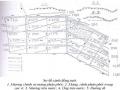 System of Methods and Works for Biological Treatment of Wastewater Based on Oxidation Principle.
 -
 Study on the effectiveness of hospital wastewater treatment by anaerobic (AO) method using improved ECO - BIO - BLOCK (EBB) biological media - 10
 -
 Study on the effectiveness of hospital wastewater treatment by anaerobic (AO) method using improved ECO - BIO - BLOCK (EBB) biological media - 2
 -
 Research on treatment of rotator cuff tears using modified Mason-Allen tendon endoscopic suturing technique and creating micro-damage at the attachment area - 2
4.4.3 6-hour load with flow rate of 112 liters/day 79
CHAPTER V: CONCLUSION AND RECOMMENDATIONS
5.1 Conclusion
5.2 Recommendations
APPENDIX
APPENDIX 1: Vietnam wastewater standards table 5945:2005 APPENDIX 2: Images of some filter materials
REFERENCES
ACKNOWLEDGEMENTS
To complete this graduation thesis, in addition to the great efforts of the student himself, the dedicated guidance and help of teachers, friends and family are extremely important.
First of all, I would like to sincerely thank Mr. Lam Vinh Son for directly guiding and creating favorable conditions for me to complete my graduation thesis.
During the process of writing my thesis, I have received a lot of help from teachers in the Faculty of Environment and Biotechnology. I would like to express my deep gratitude to the teachers who have wholeheartedly imparted valuable knowledge to me to have today.
I also thank my classmates and seniors for sharing. Thanks to the dedicated guidance of teachers and classmates, I have overcome the difficulties in the past time. Moreover, during the process of doing the thesis, I have learned a lot of valuable experiences.
Thank you very much!
Student: Pham Thi Huyen
MINISTRY OF EDUCATION AND TRAINING
HO CHI MINH CITY UNIVERSITY OF TECHNOLOGY FACULTY OF ENVIRONMENT AND BIOTECHNOLOGY
GRADUATION THESIS
RESEARCH ON BIOLOGICAL FILTERING TECHNOLOGY WITH SUBMISSION LAYER OF MATERIAL IN WATER IN TECHNOLOGY
WASTEWATER TREATMENT TECHNOLOGY BY MICROBIOLOGICAL MEMBRANES
Supervisor: MSc. Lam Vinh Son Student: Pham Thi Huyen Student ID: 207111020
Ho Chi Minh City, August 2010
1.1 Problem statement
CHAPTER I THE FIRST DREAM
Water is an indispensable substance for life on earth . Along with the development of human civilization through the process of industrialization and urbanization , mankind is facing the danger of environmental pollution . In which , water pollution is one of the most pressing issues . To move towards a sustainable society , many international organizations and most countries in the world have specific programs and actions to protect the ecological environment of their country as well as the global environment . In that trend , our country has issued environmental protection laws and regulations as well as implemented many specific action programs to protect the environment .environmental
To minimize negative impacts on the environment and ensure sustainable development , in addition to applying measures to minimize the use of natural resources economically and effectively , end - of - pipe treatment solutions always play an important role in the task of protecting the environment in general and protecting water resources in particular . That is why many scientists and technologists have focused on researching and proposing solutions to minimize the negative impacts on the environment caused by life and production activities . One of the research trends that attracts much attention from scientists is wastewater treatment . Wastewater is created from many different types of social activities and thereforeThey have very different properties depending on the source of the waste . But there is one thing in common .
In general , water pollution is a direct threat to humans as well as the ecological environment .
To solve the above problems , there have been many measures . Among them are :
Apply new technology with little or no wastewater .
Eliminate or reduce industrial waste into production wastewater .
Applying the circulating system , reusing production water .
Wastewater treatment meets standards .
Depending on each type of wastewater and based on certain requirements , people choose to use a certain method or combine many methods together . Each wastewater treatment method has its own advantages and limitations . There cannot be a single method for all types of wastewater . To choose a method , it is necessary to have a general understanding of the environment and knowledge of the basic principles and technology of that method . On that basis , it is possible to propose appropriate solutions . However , starting from the requirements of natural development , in harmony with the environment and the outstanding advantages of the method ,In biological methods , the first thing to consider is using biological methods .
Many places in the world such as activated sludge system , UASB type anaerobic treatment system ; different types of anaerobic and aerobic biofilters ; combined anaerobic / aerobic treatment system ; combined activated sludge system with aquatic plants , algae wastewater treatment system for biomass collection . However , these systems have been studied and put into practice for large - scale treatment facilities with good infrastructure , wastewater collection is easy to carry out . For developing countries like Vietnam , building a system to collect domestic wastewater for centralized treatment facilities is difficult .Large - scale centralized treatment is very expensive and is unlikely to be implemented in the near future . In addition , domestic wastewater from small residential communities is even more difficult to collect due to
Large distance from the waste source to the treatment plant . For small - scale industrial establishments , production establishments in craft villages , especially small - scale food production establishments , are creating huge pressure on the environment due to the production water . One of the reasons for this situation is the low technological level of these establishments , outdated and patchwork equipment , so the amount of wastewater discharged per unit of product is large .
Within the scope of the graduation thesis " Research on biological filtration technology with submerged materials in wastewater treatment technology using biofilms " . I conducted research to propose a wastewater treatment model using biological filtration to treat domestic wastewater and food wastewater .
1.2 Purpose
To protect the environment, along with the development of industries, the environment is increasingly seriously polluted, affecting the lives and health of people. In particular, the water environment is being heavily polluted. In order to improve people's lives, clean water is required to ensure medical requirements. Therefore, wastewater treatment is very necessary for countries as well as Vietnam. Biological filtration technology has a layer of filter material submerged in water to remove organic substances that pollute water sources in wastewater, providing clean water to protect the environment and people.
1.3 Research content
The research content of the topic is carried out through the study of wastewater treatment methods in wastewater treatment technology. The wastewater treatment methods commonly used today, especially the wastewater treatment method by biological methods.
Research on biological filtration process with submerged material in wastewater treatment technology using microbiological measures applied to treat domestic wastewater and food wastewater with high efficiency
waste
The thesis includes the following chapters: Chapter I: Introduction
Chapter II: Overview of wastewater treatment
Chapter III: Research on submerged biofiltration technology in water treatment
Chapter IV: Experimental results and discussion Chapter V: Conclusion and recommendations
1.4 Research methods
The topic is researched using the following methods:
Methodology: Study reading materials and collect data on the situation.
Domestic and industrial wastewater. Wastewater treatment systems are used for water treatment.
Experimental analysis method in laboratory.
Comparison method: This method aims to evaluate the efficiency of input and output wastewater treatment according to Vietnamese standards (TCVN 5945: 1995).
Methods of analysis and synthesis.
1.5 Scope of research
Each type of wastewater has its own characteristics, so there are also different treatment methods. Due to the relatively short time to complete the thesis, I have only conducted the experimental model at the laboratory of Ho Chi Minh City University of Technology.
Submerged biological filtration technology in wastewater treatment technology using biological membranes applied to domestic and food wastewater
Chapter II
OVERVIEW OF WASTEWATER TREATMENT
2.1 Concept of water supply.
Clean water is water that does not contain pathogens, dissolved toxins, turbidity, color, odor and unpleasant taste.
2.2 Concept of wastewater.
Wastewater is water that has been used, changing its physical, chemical and biological properties. Depending on the method of use and the source, wastewater has very different physical, chemical and biological properties. In general, wastewater is water that often contains higher chemical compounds than natural water, has a change in color in terms of physical properties and biological systems in it.
2.2.1 Rainwater
This is the type of wastewater that flows over the ground after rain and drags in waste, grease, etc. when entering the drainage system.
Places with separate drainage networks: stormwater drainage networks. Wastewater going to the treatment plant includes: Domestic water, industrial water and infiltrated groundwater. If after heavy rains there is no local flooding, if there is rainwater, it can overflow through the manhole covers and flow into the wastewater drainage system. The amount of infiltration due to seepage from groundwater and rainwater can be up to 470 m3/ha.day.
Where there is a common sewer network that both drains wastewater and rainwater. This is the case in most towns, cities and towns in our country. The amount of water flowing to the factory includes domestic wastewater, industrial wastewater, infiltrated groundwater and a part of rainwater.
2.2.2 Domestic wastewater
Domestic wastewater is water that is discharged after being used for community purposes such as bathing, washing, cleaning... it has been discharged from