
Simple housing contracts. Simple housing contracts are tightened with notarization and certification procedures, and are subject to State inspection and supervision. Social housing lease-purchase contracts are not required to be notarized or certified, except in cases where the parties agree to notarize or certify the contract [35, Article 122]. This provision makes many people worry about the legal binding nature of social housing lease-purchase contracts.
1.3. Implementation of social housing lease-purchase contracts
1.3.1. Principles for implementing social housing lease-purchase contracts
A social housing lease-purchase contract is a special type of contract because it combines the form of lease and the form of purchase of social housing. Therefore, the implementation of a social housing lease-purchase contract must comply with the following principles:
The term of performance of a social housing lease-purchase contract is relatively long with a minimum term of 05 years; the term of payment for social housing lease-purchase is at least 05 years, maximum is 15 years from the date of signing the social housing lease-purchase contract.
Maybe you are interested!
-
 Evaluation of the Process of Completing the Procedures for Granting Property Ownership Certificates at 2 Social Housing Areas (Unit:%)
 -
 Current Status of Implementation of Export Risk Management Principles of Truong Thanh Wood Industry Group Joint Stock Company.
 -
 Separating the Implementation of Social Policy from Electricity Business Operations in Electricity Enterprises.
 -
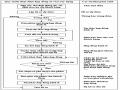 Document Generation Diagram In Each Stage Of Contract Implementation Tvxd
 -
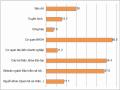 The Implementation of Social Insurance Policies and Laws Has Negatively Impacted Workers' Participation in Social Insurance
Social housing lessees are not allowed to mortgage (except for mortgages with banks to borrow money to rent the apartment) and are not allowed to transfer the house in any form for a minimum period of 05 years from the time of full payment of the house rental according to the contract signed with the lessor; are only allowed to resell, mortgage or lease after being granted a Certificate of land use rights, house ownership rights and other assets attached to the land according to the provisions of the law on land.
From the time the social housing tenant is allowed to sell social housing to those in need, in addition to the amounts payable when selling housing according to the provisions of law, the seller of an apartment must pay the State 50% of the land use fee allocated to that apartment; in the case of selling low-rise social housing adjacent to the apartment, 100% of the land use fee must be paid, calculated according to the land price issued by the Provincial People's Committee at the time of selling the apartment.
Within a period of less than 05 years from the time of full payment of the social housing lease-purchase fee, if the lessee wishes to resell the social housing, he/she may only resell it to the State (in case the State invests) or resell it to the project investor.
Build social housing (in case of renting and purchasing social housing invested in construction with non-budgetary capital) or resell it to subjects eligible to rent and purchase social housing according to regulations and analysis in section 1.1.2 of this thesis, with a maximum selling price equal to the selling price of social housing of the same type at the same location and time of sale and without having to pay personal income tax [19, article 19].
When the lease-purchase term of the house under the contract ends and the lessee has paid all the lease-purchase money as agreed, the lessor must complete the procedures to request the competent state agency to issue a Certificate to the lessee, except in the case where the lessee voluntarily completes the procedures to request the issuance of a Certificate.
1.3.2. Risks arising during the process of concluding and implementing social housing lease-purchase contracts
The social housing lease-purchase contract has a very long implementation period (minimum 05 years, maximum 10 years), so risks when implementing the contract are unavoidable. The 2014 Housing Law has new points when regulating risks in implementing social housing lease-purchase contracts compared to the 2005 Housing Law. With these new regulations, disputes related to social housing lease-purchase contracts will be resolved more easily.
First, when the social housing tenant dies
Life and death are things that people cannot decide. Meanwhile, the time to perform a social housing lease-purchase contract is relatively long (at least 05 years), so it is very necessary to stipulate the legal consequences in case the social housing lessee dies. The provisions on the legal consequences when the social housing lessee dies are based on the general provisions on inheritance under the 2005 Civil Law. Because, even if the social housing lessee has not fulfilled the obligations of the lease-purchase contract, when that person dies, that house is still considered the deceased's inheritance and the beneficiary must fulfill the obligations related to that inheritance. These provisions are specified in Clause 2, Article 135 of the 2014 Housing Law as follows:
In case there is a legal heir living in the same house, that legal heir may continue to rent-purchase the house, except in the case where the legal heir voluntarily returns the rented house.
If there is a legal heir who does not live in the house and the lessee has completed two-thirds of the lease-purchase term, the State will also create conditions for the legal heir to have the right to enjoy the deceased's inheritance by: paying the full amount corresponding to one-third of the remaining lease-purchase term and being granted a Certificate of Ownership for that house by a competent state agency.
If there is a legal heir who does not fall into the two above cases, the lessor has the right to reclaim the house and the legal heir is entitled to refund the amount that the lessee has initially paid with interest according to the regulations on interbank non-term interest rates at the time of refund.
If there is no legal heir, the State stipulates that the initial rental payment will belong to the State and will not be refunded. And the lessor is allowed to reclaim the rental housing to sign a rental contract with the subject eligible for rental purchase of social housing according to regulations. The cases of repossession of rental housing are analyzed in subsection 1.3.3.2 of this thesis below.
The 2014 Housing Law has a new point compared to the 2005 Housing Law with regulations on the legal consequences when a social housing tenant dies. However, are these regulations more consistent with the regulations stipulated in the 2015 Civil Code that will soon take effect than the regulations in the Housing Law? Furthermore, these regulations do not specifically stipulate each case of handling the amount of money that the deceased social housing tenant paid in advance. For example, if the legal heir is living in that house and does not want to continue the lease-purchase contract, will he be refunded the amount that the deceased paid? There should be sub-law documents regulating and providing detailed instructions on the implementation of this law to apply it in practice most effectively.
Second, cases of termination of lease-purchase contracts and revocation of social housing lease-purchase contracts
This is also one of the new points in the 2014 Housing Law regulating social housing in general and social housing rental in particular. Cases of termination
Termination of lease-purchase contracts and revocation of lease-purchase contracts for social housing are stipulated in Articles 84 and 136 of the 2014 Housing Law as follows:
* With the lease-purchase of social housing owned by the State when:
- The lessor purchases the house without proper authority, without the right subject or without meeting the prescribed conditions.
- The lease term expires and the lessee no longer wishes to continue renting or when both parties agree to terminate the lease-purchase contract. In case the agreement to terminate the social housing lease-purchase contract has been reached and the house has been handed over, the house must be returned to the lessee.
- The lessee returns the house being rented and does not continue to rent the house.
- The lessee does not pay rent for 3 months or more without a valid reason.
- Houses for rent-purchase that must be demolished for renovation or reconstruction according to the decision of a competent state agency.
- The lessee uses the house for purposes other than those agreed upon in the house lease contract or arbitrarily converts, sells, subleases, lends the house or arbitrarily breaks down, expands, renovates, or demolishes the house being leased.
* With the lease-purchase of social housing owned by non-state entities when:
- The lessee arbitrarily leases or sells the leased house to another person during the lease term.
- The lessee does not pay rent for 03 months or more without a valid reason.
- The lessee arbitrarily breaks, expands, renovates, or demolishes the leased house.
- The lessee uses the house for purposes other than those agreed upon in the lease-purchase contract.
- The lessee of the house has died and has no legal heir.
- Other cases as agreed by the parties.
In case of termination of the housing lease-purchase contract and the lessee has received the house, the lessee must return the house to the lessor; the lessee will be refunded the amount paid in the first installment, except in the following cases:
For state-owned social housing: The lessee does not pay rent for 3 months or more without a valid reason; the lessee or lessee uses the house for purposes other than those agreed in the lease contract or arbitrarily converts, sells, subleases, lends the house or arbitrarily breaks, expands, renovates, or demolishes the house being rented or purchased.
For social housing owned by non-state entities: cases of contract termination and revocation of social housing lease-purchase contracts are as stated above.
These cases of termination and repossession of social housing that is being rented and purchased are to protect the house, ensure that the parties properly implement the terms stipulated in the contract and also to properly demonstrate the function of social housing that our State is aiming for.
1.4. The significance of concluding and implementing social housing lease contracts in Vietnam
Housing needs are always a big problem for every family, especially for low-income people, housing is a big concern. However, in previous years, the real estate fever increased, making it impossible for low-income people to buy a house for their family. In recent years, due to the global economic crisis and the freezing of the real estate market, it is still difficult for low-income people to find their dream home. Therefore, social housing lease-purchase contracts are increasingly favored and promoted. With support from the government, low-income people in society will have their own home more easily. The government's policies to support social housing lease-purchase have been issued very promptly, both to rescue the real estate market and to help the poor and low-income people escape from temporary and difficult living conditions. Looking further, when people live well, the country can develop sustainably, and society can be civilized and polite. This
It is especially important in the context of international integration, so that Vietnam can " stand shoulder to shoulder with the nations of the five continents " as President Ho Chi Minh taught.
The social housing lease-purchase contract is also a measure to ensure the right to housing according to the 2013 Constitution, which is specified in the 2014 Housing Law. The specific regulation of social housing lease-purchase contracts in legal documents has shown the consistency in our country's legal system, contributing to the implementation of social housing on a national scale.
CONCLUSION OF CHAPTER 1
Chapter 1 of the thesis systematizes some basic theoretical issues on the conclusion and implementation of social housing lease-purchase contracts in Vietnam. By using methods of comparison, contrast, and citation, the author has pointed out the characteristics that highlight the characteristics of social housing lease-purchase contracts in Vietnam. The legal provisions have been analyzed and commented in the thesis to have an overview of the conclusion and implementation of social housing lease-purchase contracts in Vietnam, showing the conformity of Vietnamese law with foreign law. At the same time, these provisions also contribute to helping the State closely manage social housing lease-purchase contracts that are being concluded and implemented more and more to meet the needs of society and diversify the types of social housing development.
Chapter 2
STATUS OF CONTRACT AND IMPLEMENTATION
SOCIAL HOUSING LEASE PURCHASE CONTRACT IN VIETNAM
2.1. Legal regulations on social housing lease-purchase contracts
2.1.1. Classification of social housing lease-purchase contracts
There are three ways to classify social housing lease-purchase contracts:
First , based on the source of investment capital, there are two types:
Contract for lease-purchase of social housing of a state-owned project : Contract for lease-purchase of social housing in which the state is the project investor with different capital mobilization methods of the investor:
- By state budget;
- National bonds, official development assistance capital, preferential loans from donors, and State development investment credit capital;
- Investment in construction under the form of build-transfer contracts on land areas identified for the construction of social housing;
The form of social housing construction under a build-transfer contract is a form of investment signed between a competent state agency and an investor to build an infrastructure project; after construction is completed, the investor transfers the project to the Vietnamese State. The Government creates conditions for the investor to implement other projects to recover investment capital and profits or pay the investor according to the agreement in the build-transfer (BT) contract. This is a form of social housing construction that is currently being focused on because state-owned or domestic builders often do not meet market requirements in terms of design, quality, and high cost. Therefore, choosing an external investor to be able to compete with foreign investors in terms of design, good quality, and low price, in accordance with the criteria of social housing.
Contracts for leasing and purchasing social housing of projects invested and constructed with non-state capital: Non-state investors, enterprises, and households are potential investors that the State always encourages to develop this social housing segment. Therefore, the State has issued many policies
as well as preferential mechanisms for these non-state investors. Preferential mechanisms for social housing lease-purchase using non-state capital sources will be analyzed in detail in subsection 2.1.2 below of this thesis.
Second , based on the type of house, there are the following types:
Contract for lease purchase of social housing is apartment building:
Social housing is an apartment building designed and built in a closed style, ensuring construction standards and regulations, the minimum area of each apartment is 25 m2 , the maximum is 70 m2 , ensuring compliance with the construction planning approved by the competent state agency. The project investor is allowed to adjust the construction density or land use coefficient up to a maximum of 1.5 times compared to the current construction standards and regulations issued by the competent agency.
Based on the specific situation in the locality, the Provincial People's Committee is allowed to adjust the maximum apartment area standard, but the increase shall not exceed 10% compared to the maximum apartment area of 70 m2 and ensure that the ratio of apartments in the social housing construction project with a floor area of over 70 m2 does not exceed 10% of the total number of social housing apartments in the project [19, Article 7].
The characteristics of apartment buildings are common ownership and private ownership, so the social housing lease-purchase contract must clearly show the characteristics of this type of housing and must not be contrary to the provisions of the law. With social housing being apartment buildings, there are also regulations on rights and obligations regarding private ownership and common ownership such as corridors, elevators, garbage disposal areas, parking basements, etc. This is also a very important clause in the social housing lease-purchase contract.
Contract for lease purchase of social housing is low-rise townhouses:
The standard land area for construction of each low-rise social housing unit shall not exceed 70 m2 , the land use coefficient shall not exceed 2.0 times and must be consistent with the construction planning approved by the competent state agency. The low-rise social housing project must be approved by the Chairman of the Provincial People's Committee. In special, type 1 and type 2 urban areas, the Chairman of the Provincial People's Committee shall
must report and seek the opinion of the Provincial People's Council before deciding on the project.