
The process of completing the procedures for granting certificates of ownership of assets attached to land in a positive direction. Of which, the highest rate is the "Normal" assessment, accounting for 51%, favorable also accounting for 40%. There are 9% of respondents who said it was difficult, very difficult with the main reason being slow progress, taking a lot of time. In the research sample, up to the time of the survey, only Tay Mo social housing area and Rice city Linh Dam were granted certificates of ownership. The specific results are in the table below:
Table 4.4: Evaluation of the process of completing procedures for granting property ownership certificates at 2 social housing areas (Unit:%)
Area
Social housing
Very convenient | Favorable | Jar often | Hard | Total | |
Tay Mo | 5.1 | 24.2 | 56.2 | 14.5 | 100 |
Rice city – Linh Dam | 4.5 | 15 | 69.2 | 9.0 | 100 |
Maybe you are interested!
-

 Completing the retail process of kitchenware items at the website Hanoi.Golmart.vn - 1
 -
 Complete the retail process of kitchen utensils at Website Hanoi.Golmart.vn - 9
 -
 Evaluation of the implementation of new rural construction planning in Ba Vi district, Hanoi city in the period 2011 - 2020 - 1
 -
 Completing the training quality assurance system at the University of Economics, Vietnam National University, Hanoi - 16
 -
 Completing the socio-economic development plan of Long Bien district, Hanoi city until 2015 - 11
(Source: Thesis survey, 2018)
In the 3 social housing areas surveyed up to 2018, only 2 areas, Tay Mo and Rice city, were granted certificates of ownership, in which the majority of home buyers rated the granting of certificates at a normal level, 69.2% in Rice city Linh Dam and 56.2% in Tay Mo and Rice city. Regarding the assessment of the level of difficulty, Tay Mo residential area rated the level of difficulty higher (14.5%) than Rice city Linh Dam social housing area (9.0%). The main difficulties raised by home buyers were "Long waiting time", "many documents", "taxes", "not yet granted certificates"... In which, according to the investigation from the management board of the social housing apartment building, the difficulty also comes from the fact that the investor has not completed the remaining procedures to grant certificates to home buyers. In which, in Tay Mo social housing area, up to the time of survey
By the end of 2018, 259/288 apartments had been granted certificates. The remaining 29 households had not been granted certificates because they had not completed the necessary documents for the investor.
The difficulties in granting house ownership certificates to people were also announced by the investor and were done in early 2017. However, there are also some households that have not completed the necessary documents such as tax payment confirmation, household registration... so they have not been granted. We have also sent a petition to the investor to fully present it to people as soon as possible in 2018. (PVS, representative of the management of Tay Mo Social Housing)
At the Rice City social housing area, as of March 2019, the investor, BIC Vietnam Company, has also handed over nearly 500 Certificates to households out of a total of more than 700 households. It can be seen that being granted a Certificate of House Ownership is very important for people buying social housing. They always want to receive the certificate as soon as possible to be able to legalize their ownership rights and facilitate the process of using those rights such as buying, selling, mortgaging, transferring... The general summary results of the difficulties in owning social housing are mentioned with the main reasons below:
Table 4.5. Disadvantages and difficulties in owning social housing
Hard
Rate (%) | |
1. No difficulty | 40 |
2. Delay in granting property ownership certificates land-attached products | 13.4 |
3. Difficulty in selling a house | 10.8 |
4. Difficulties/limitations in mortgage loans bank | 12.5 |
5. Complicated paperwork
19.4 | |
6. Loss of intermediary costs | 2.9 |
7.Others: missing money, temporary residence certificate | 1.0 |
Source: Thesis survey, 2018
Among the difficulties mentioned, the reason given by respondents with the highest rate was “Complicated paperwork” at 19.4%. This is also one of the main reasons why many people, even though they have the conditions to buy a house, are still hesitant.
Buying a house at a cheaper price than the market, however, completing the application also takes a lot of time, with many documents to prove. Then I also have to wait, review, and check. If the check is not approved, I have to re-apply for another application to another housing project...
(PVS, female, 28 years old, Rice city Linh Dam social housing area)
Next is “Difficulties and limitations in mortgaging bank loans” with 12.5% and “Difficulties in selling houses” accounting for 10.8%. These two difficulties both stem from very strict regulations under the 2014 Social Housing Law on social housing. Social housing owners can only sell, transfer, or mortgage when they are granted a Certificate of House Ownership and after a period of 5 years.
I have fulfilled my financial obligations to the investor. When I bought the house, I did not borrow from the bank. I have been granted a house ownership certificate. However, when I want to use this certificate as collateral for a bank loan, I cannot do so because it must be 5 years after the date of fulfilling my financial obligations to the investor.
(PVS, female, 28 years old, Tay Mo Social Housing Area)
A small number of social housing buyers have to pay "Intermediary fees" (2.9%)
Although this number is not too large, it also shows that some subjects have benefited.
Using the sale of social housing to get the difference when there is no need for housing. This shows the inadequacy in housing management. Once put into use, there still needs to be control from the management agency so that social housing is sold to the right subjects. If it is not correct, it must be resolutely recovered according to regulations.
From the above analysis, it can be seen that social housing is a humane policy aimed at those with real housing needs, however, in the ownership process, there are still some shortcomings and difficulties, which reduce the attractiveness of social housing for the poor.
4.1.3. Social housing in the form of hire-purchase (rent first - buy later)
There is a difference in the process of granting certificates of ownership of assets attached to land between the form of immediate purchase and hire purchase (rent first - buy later). If in the form of immediate purchase, after completing the financial obligations with the investor, even in the case that the home buyer is taking out a bank loan for this house, they will still be granted a certificate according to the prescribed time. Because the bank has paid the house purchase amount on their behalf to the investor, after completing the financial obligations with the investor, the home buyer has the right to be granted a certificate according to the regulations. Another difference with the one-time payment of commercial apartments is that the certificate of ownership of assets attached to land will be kept by the bank until they have paid off the loan. As for the hire purchase form, the time to grant the certificate will depend on the period they registered to rent-purchase social housing and in addition, whether they decide to switch from renting to buying or not, at which time the ownership of social housing will be determined.
The 2014 Housing Law clearly states: “Hire-purchase of housing is when the lessee pays in advance to the lessee 20% of the value of the leased housing, excluding
In case the lessee is able to make advance payment, he/she shall be paid no more than 50% of the value of the leased house; the remaining amount shall be calculated as rent to be paid monthly to the lessor within a certain period; after the lease-purchase term expires and the remaining amount has been paid in full, the lessee shall have ownership of the house” (27, Clause 3, Article 17)
From that, it can be seen that social housing lease-purchase is when the lessee, who is a beneficiary of the social housing support policy prescribed by the State, pays the lessor an amount of money in advance; the remaining amount is calculated as rent to be paid monthly to the lessor within a certain period of time; after the lease-purchase term expires and the remaining amount has been paid, the lessee has the right to own the house.
The characteristics of the form of social housing lease purchase is a superior form to implement housing policies for low-income people. Accordingly, low-income people will be given the opportunity to own a large asset, which is a house that they have fulfilled their obligations during the rental period. The specific characteristics of the form of social housing lease purchase are as follows:
- Different from the form of renting a house, after the social housing lessee has fulfilled his/her financial obligations and the lease-purchase term has ended, the lessor will complete procedures for the competent state agency to issue a certificate of land use rights, house ownership rights and other assets attached to the land (hereinafter referred to as the house ownership certificate).
- Different from the form of house purchase, the social housing tenant pays the first amount of 20% of the value of the rented house, then pays the remaining amount within the agreed period of at least 5 years, can be paid monthly, quarterly or periodically as agreed.
- During the lease-purchase period, social housing is still owned by the lessor. The lessee only has the right to use the house and the house ownership is only transferred to the lessee when the lessee has fulfilled all financial obligations and is granted a certificate of house ownership.
- The form of house lease purchase will increase the responsibility of the lessee in maintaining and preserving the house; at the same time, collecting rent for a long time also ensures that the lessee has enough ability to pay and the investor can also recover the capital used to create the house.
House handover and issuance of ownership certificate, this is a very clearly stated term in the lease-purchase contract, it is the basis for settlement when a dispute occurs. This is also the period of time to determine the monthly rent for the social housing lease-purchase. After the lessee has paid at least 20% of the social housing value, the lessor will hand over the house on a date agreed upon by both parties. After the construction is completed, the unit, organization or individual must carry out a warranty so that the social housing lessee can be assured of the quality of the house. The house is warranted from the date of completion of construction and acceptance for use with the following period:
- For apartments, the minimum is 60 months;
- For individual houses, the minimum is 24 months.
With some advantages analyzed above, for that reason, the form of hire purchase is welcomed by TNT people because of lower payment ability, they have the right to choose whether to own the house or not after the hire purchase contract ends. At the same time, social housing in the form of hire purchase is also interested and controlled by the State throughout the hire purchase process, ensuring capital recovery for investors.
and transfer ownership of the house to the lessee upon completion of the lease purchase.
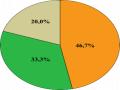
Of the 3 social housing areas in the research sample, only Hung Thinh, Ha Dong, the investor has reserved a certain number of apartments for sale in the form of hire-purchase. The type of hire-purchase of social housing is still a fairly new concept for home buyers. However, through actual surveys, the advantages of this type of ownership have been highly appreciated by home buyers. This is evidenced by a survey of 62 cases of hire-purchase of houses in Hung Thinh social housing area on the question "Do you decide to buy social housing after the end of the hire-purchase contract?". The results show that the majority of home buyers want to own social housing after the end of the hire-purchase contract. Over 77% of respondents said they would buy social housing after the end of the hire-purchase contract, 14.5
% answered “undecided” and only 8.1% answered “no”.
Table 4.1. Decision to own a house after the end of the lease contract
buy social housing
8.1
14.5
77.4
Have
No
(Source: Thesis survey, 2018)
Nearly 80% of respondents said they would decide to buy social housing.
after the end of the lease-purchase contract because housing is a real need for them. With their current economic conditions and circumstances, living in a better environment, with facilities that ensure children are the priority options. In addition, the lease-purchase form will help them be more aware of saving money to pay rent, when the lease contract ends, they will be granted a Certificate of Ownership. This is the desire of all NTN who want to have a house of their own.
I intend to stay here for a long time, so we will buy this apartment after the end of the lease-purchase contract. After paying off the rent, I will be granted a Certificate of House Ownership. This is what everyone wants to have their own house. PVS, female, 39 years old, Hung Thinh Social Housing Area
Over 20% of respondents are hesitant or have decided not to buy social housing after the lease-purchase contract ends. These are also plans for the future 3-4 years, when they end the lease-purchase contract. They will decide to buy or sell back to the investor. Looking deeper into this plan, respondents said that the decision to buy or not depends on employment conditions, possibly changing jobs or partly because they are not really satisfied with the quality and housing environment.
I have been here for almost a year now, but I feel that the environment is not favorable for my children to develop. To go to a good school, I have to travel quite far. The market is also not favorable, the environment is a bit isolated.
The service is not as expected. After the lease-purchase contract ends, I will probably return it to the investor and move to a more convenient place.
(PVS, female, 29 years old, Hung Thinh Social Housing Area)
These comments are from people who are living in social housing areas once.