
decide the development direction of the school, thereby setting requirements for the school's future work in terms of skills and qualifications required for IT security lecturers, will decide the form of training, training methods, the number of people going to training, which department should have people going to training, training costs...
1.5.1.3. Pedagogical environment, reputation, and brand of the school
The pedagogical environment and open democratic atmosphere in the school have an impact on the development of the IT security teaching staff. It affects the thoughts, emotions, reasoning and behavior of the school members. A good working atmosphere in the school will be the driving force for all activities in the school, especially the development of the IT security teaching staff.
The better the reputation and brand of the school, the more favorable it will be to attract lecturers and the more favorable the management and development of the IT security lecturers will be. The reputation and strong brand of the school will help the school to be favorable in recruiting students, contributing to increasing jobs, income and better treatment policies for the school community, especially IT security lecturers, creating motivation for lecturers to voluntarily stick with the school, creating favorable conditions for the management and development of the IT security lecturers in universities of the National Defense and Security sector.
Maybe you are interested!
-

 Organizing Capacity Training to Develop School Education Programs According to the New General Education Program for Management and Teaching Staff
 -
 Current Status of Teaching Staff of Inspectorate Cadre School.
 -
 About the School's Teaching Staff
 -
 Knowledge mapping method in teaching Vietnamese history 1919 - 1975 at Experimental Pedagogical High School in the Northwest region - 1
 -
 Experiences of Some Countries in Developing High School Teaching Staff
1.5.2. Objective Factors
Objective factors affecting the development of the IT security teaching staff are identified as factors originating from socio-economic conditions, circumstances, mechanisms, policies, and industry characteristics that have direct or indirect impacts on the development of the IT security teaching staff. These factors are specifically mentioned as follows:
1.5.2.1. State mechanisms and policies on the field of National Defense and Security
To meet the requirements of industrialization, modernization of the country, and deep international integration in all fields, our Party and State advocate fundamental and comprehensive innovation in Education and Training to build high-quality human resources for industries and fields, including the IT security industry.
field of national defense and security. Accordingly, Education and Training in national defense and security schools that provide training in information security must thoroughly understand and implement this policy well.
To do so, it is necessary to have a satisfactory treatment policy for lecturers - officers in the field of information security to create motivation to promote and attract talents to become lecturers at universities in the military and security sector. Encourage and create favorable conditions for lecturers both materially and spiritually, so that they can confidently devote themselves to the cause of education and training in the field of national defense and security. Research and develop comprehensive and synchronous treatment policies for lecturers, such as: training and use; salary, allowance and subsidy regimes according to scientific titles and degrees; housing and land regimes; rewards and honors; social insurance policies and regimes for convalescence, rest, medical treatment and sightseeing; invest in equipment, upgrade means, travel conditions, work and living conditions for lecturers - officers... In the immediate future, the authorities need to research, develop and promulgate treatment regimes for professors, associate professors and doctors who are directly teaching; There should be a mechanism for salary increase and military rank promotion before the term to motivate, encourage and attract talented people to teach. In the process of implementation, it is necessary to focus on praising and honoring the social status of "lecturers in military uniforms", based on the characteristics, nature, conditions and specificities of IT security lecturers at universities in the military and defense sector.
1.5.2.2. Practice of socio-economic development and science and technology
The market mechanism will create competitive motivation, improve the quality of education and training, and promote universities in the military and defense sector to be dynamic and creative; the goals of education and training must be closely linked to the needs of the armed forces and society, to ensuring national defense and security and the socio-economic development process and investment efficiency. For these reasons, the requirements for lecturers in the field of information security at universities in the military and defense sector are increasingly high. Lecturers in the field of information security at universities in the military and defense sector must always improve their professional qualifications and scientific research capabilities to meet the requirements of training high-quality human resources according to the development needs of the armed forces and the socio-economy in the context of the current 4.0 industrial revolution.
In the context of the development and explosion of information technology and data, information and data are becoming important resources that need to be protected. In the process of exploring and searching for knowledge from data, the issue of information security and safety has been and is facing great challenges in the context of the current industrial revolution 4.0. Meanwhile, the training of high-quality human resources for the IT security industry at universities in the military and defense sector has not yet developed commensurate with the demands of technology and the urgent needs of the armed forces and the socio-economy.
This has been placing increasing demands on training human resources in information security for the field of national defense and security, thereby requiring continuous improvement of the quality of information security lecturers at national defense universities in terms of both quality and capacity.
However, the task of building and defending the Socialist Republic of Vietnam has now taken a new step forward and is strongly affected by the domestic situation, especially the region and the world, as well as the trend of the times. This requires comprehensive development of the qualities and capacities of the teaching staff, including the teaching staff of the Information Security major at the universities of the National Defense and Security sector. The universities of the National Defense and Security sector that train in the Information Security major need to have a strategy and plan to train and develop the teaching staff of the Information Security major; in which it is necessary to pay attention to improving professional capacity in teaching, as a basis for improving the quality of teaching. The professional capacity in teaching of the Information Security major at the universities of the National Defense and Security sector is always influenced by many factors, both subjective factors of the lecturers and objective factors of the students and the environment.
Each factor has a different position and role but is closely related and affects the professional capacity of lecturers. Therefore, in order to consider, evaluate and impact to improve and enhance the professional capacity in teaching of lecturers, it is necessary to simultaneously impact the factors in a positive direction. Analyzing and clarifying the objective and subjective factors and their level of impact and influence will help the formation and development of professional capacity of lecturers in the field of information security to take place quickly, smoothly and sustainably.
Chapter 1 Summary
The IT security lecturers are high-quality human resources of the universities of the military and defense sector. They are lecturers in faculties, departments, centers, and specialized research institutes in the field of IT security at the universities of the military and defense sector. They have good qualities and abilities, the ability to teach, research, and disseminate scientific knowledge in the field of IT security, contributing to training high-quality human resources in IT security for the fields of military and defense and socio-economics in the context of the current 4.0 industrial revolution.
Developing the team of IT security lecturers in the military-technical universities according to the theory of human resource development is an urgent issue; it is a decisive factor for the existence and development of the universities. It is the overall process of building and perfecting the team of IT security lecturers in the military-technical universities to meet the professional competency standards.
To develop the IT security lecturers in the military-defense universities according to the theory of human resource development, it is necessary to build a professional competency framework for the IT security lecturers; next, it is necessary to apply the professional competency framework to all stages of management activities at the military-defense universities to create a standardized process from planning, recruitment, use, evaluation, training, fostering, treatment to creating an environment, creating motivation for the IT security lecturers to develop.
In the process of developing the IT security faculty, it is necessary to consider the influencing factors to limit the negative and promote the positive, in order to help the development of the faculty at the universities of the military defense sector achieve the highest efficiency.
Chapter 2
CURRENT STATUS OF DEVELOPMENT OF INFORMATION SECURITY LECTURERS AT UNIVERSITIES
DEFENSE AND SECURITY BLOCK IN THE CURRENT CONTEXT
2.1. Overview of defense and security universities assigned to train in information security
2.1.1. Academy of Cryptography Engineering
Mission: The Academy of Cryptography was established on April 15, 1976. The Academy is a center for training high-quality human resources for the Vietnamese Cryptography Industry, with over 40 years of experience in training and researching in the field of information security. During its development, the Academy has twice been awarded the State Prize for Science and Technology. In 2004, the Academy was the first university in the country to train in the field of information security. After 15 years of training in the field of information security, the Academy has affirmed its pioneering and prestigious role in training human resources in this field for society. In 2014, the Academy was selected by the Government as one of 8 key training institutions for human resources in security and information security for the Government.
As of 2019, the Academy has had over 2,000 information security engineers graduating, with over 90% of graduates having jobs immediately with relatively high incomes and being well-regarded by employers for their professional competence and professional qualities. During the training and international cooperation process, the Academy has sent over 280 students to study in countries with advanced science and technology. Up to now, the Academy has trained 15 engineering courses, and 05 graduate courses in information security, 02 doctoral courses in information security.
Cryptography Academy always positions itself as a university that provides high-level training in the field of cryptography science and technology - information security, with a modern educational and research environment, linking training with research, training with practice.
practice, aiming to develop the comprehensive capacity of learners, to meet the increasingly high practical requirements of the fields of National Defense, Security and Socio-Economy.
Information security training scale: Every year, the Cryptography Engineering Academy recruits more than 500 undergraduate training targets, 40 master's training targets and 12 doctoral training targets in the field of information security.
Faculty: Currently, the Cryptography Engineering Academy has more than 300 full-time lecturers, of which 30% have doctoral degrees.
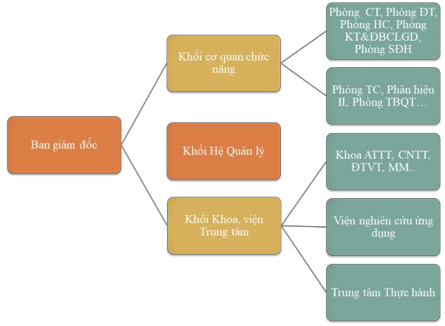
Diagram 2.1. Organizational structure of the Academy of Cryptography Engineering
2.1.2. Military Technical Academy
Mission: The Military Technical Academy was established under Decision No. 146/CP dated August 8, 1966 of the Government Council with the initial name of "Branch II of the University of Technology". On October 28, 1966, at the Great Hall of the University of Technology, the Ministry of Universities and Vocational Secondary Schools (now the Ministry of Education and Training) and the Ministry of National Defense solemnly held the Establishment Ceremony of Branch II of the University of Technology, and simultaneously opened the first training course. On June 6, 1991, the Chairman of the Council of Ministers decided to allow the Military Technical Academy to be named Le Quy Don Technical University. On January 31, 2008, the Military Technical Academy
was decided by the Government to be added to the list of national key universities. The Military Technical Academy is a national key university under the direct leadership of the Central Military Commission, the Ministry of National Defense, and the professional guidance of the Ministry of Education and Training. The Academy is responsible for training technical officers, technical command and staff with university, master's and doctoral degrees for the army. At the same time, the Academy is responsible for researching military science and technology, combining research with application, technology transfer with production, and performing the tasks of combat readiness and combat of the army.
Along with the tasks of training and serving the army, the Academy is also assigned by the State to train high-quality human resources to serve the cause of industrialization and modernization of the country. The Military Technical Academy is one of the 8 key institutions for training in information security. Every year, the Academy trains about 108 targets in the information security industry.
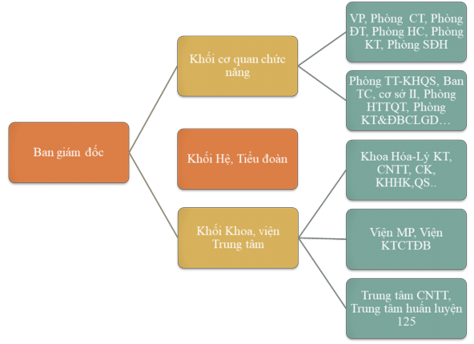
Diagram 2.2. Organizational structure of Military Technical Academy
Training scale: The Academy trains technical staff with university and postgraduate degrees, including Military Engineer Training: 42 majors, Civil Engineer Training:
Training scale in the last 5 years: 1,065 PhD students, 2,416 master students, 1,923 military university students, 3,011 civilian university students.
Teaching staff: The entire Academy currently has 1,168 lecturers, of which 100% have university degrees or higher, of which over 80% have master's degrees, nearly 40% have doctorates and doctorates; professors and associate professors are trained at prestigious universities at home and abroad.
2.1.3. People's Security Academy
Mission: The People's Security Academy was established under Decision 215/NV-P2 dated June 25, 1946 of the Ministry of the Interior (now the Ministry of Public Security). After more than 74 years of construction and development, from a police training school, vocational training, the People's Security Academy has now become one of the key higher education institutions of the Ministry of Public Security and is striving to become a national standard and national key educational institution. On June 4, 2014, the People's Security Academy was recognized by the Prime Minister as one of eight key training institutions on information security.
The People's Security Academy has the mission of training high-quality human resources for the Public Security sector and society; is the key unit in researching, proposing and advising on solving strategic scientific tasks of the Public Security sector; plays a pioneering and core role in the system of People's Public Security schools (CAND) in building scientific theories of security operations; is the key unit in expanding international cooperation in training, scientific research, application and technology transfer in protecting national security and ensuring social order and safety.
Training scale: Currently, the Academy is training 10 majors, 12 majors at university level; 04 majors at master's level and 02 majors at doctoral level. Up to now, the People's Security Academy has had 47 regular university training courses, 25 master's training courses, 19 doctoral training courses. The total training scale of the Academy is over 12,000 students. In addition, the Academy also opens university training classes for the Ministry of National Defense, Lao and Cambodian students.