
1.4 Overview of organic compound pollution in river water
1.4.1 Classification of organic compounds
Easily biodegradable organic substances such as carbohydrates, proteins, fats, etc. are often present in domestic wastewater, urban wastewater, and food processing industrial wastewater. In domestic wastewater, about 60-80% of organic substances are easily biodegradable. Easily biodegradable organic substances often have harmful effects on aquatic resources, because when decomposed, these substances will reduce dissolved oxygen in the water, leading to the death of shrimp and fish.
Maybe you are interested!
-

 General Organic Chemistry - Hanoi University of Agriculture - 12
 -
 Rate of Disease Symptoms Due to Frequent Exposure to Organic Solvents by Production Workshop
 -
 Analysis of Organic Chemistry Program Grade 11
 -
 P. Results of Treatment of Organic Substances in Leachate by Perozone with the Effect of Ph in 60 Minute Reaction Time
 -
 Interest relations in organic agricultural development in Hanoi - 19
Persistent organic substances Highly toxic organic substances are usually persistent substances that are difficult for microorganisms to decompose in the environment. Some organic substances can persist in the environment for a long time and bioaccumulate in organisms. Because of their ability to bioaccumulate, they can enter the food chain and from there enter the human body. Polychlorophenols (PCPs), polychlorobiphenyls (PCBs: polychlorinated biphenyls), polycyclic aromatic hydrocarbons (PAHs: polycyclic aromatic hydrocarbons), N- or O-heterocyclic compounds are persistent organic compounds. These substances are often found in industrial wastewater, runoff from fields (containing many pesticides, herbicides, growth stimulants, etc.). These compounds are often dangerous pollutants, even when present in very small concentrations in the environment.
Grease is a substance that is difficult to dissolve in water, but can dissolve in organic solvents. Grease has a very complex chemical composition. Crude oil contains thousands of different molecules, but most of them are hydrocarbons with carbon numbers from 2 to 26. Crude oil also contains sulfur, nitrogen, and metal compounds. Refined fuel oils (DO2, FO) and some other grease products also contain toxic substances such as PAHs, PCBs, etc. Therefore, grease is often highly toxic and relatively stable in the aquatic environment. The toxicity and impact of grease on aquatic ecosystems are not the same but depend on the type of grease.
1.4.2 Organic pollution in river water
The causes of organic pollution in river water can be natural or man-made. Natural pollution is caused by rain falling on the ground, carrying dirt such as scum, grease, etc. into rivers and lakes or overflowing manhole covers into the wastewater drainage system.
Man-made pollution is mainly caused by wastewater from urban residential areas, industries as well as ships. Typical man-made pollutants include:
- Domestic wastewater: The amount of domestic wastewater in residential areas depends on the population, water supply standards and characteristics of the drainage system. The amount of domestic wastewater fluctuates within a very large range, depending on the standard of living and the
People's habits, can be estimated at 80% of the water supply. Domestic wastewater contains many organic substances that are easily biodegradable, in addition to inorganic components, microorganisms and very dangerous pathogens. Organic substances contained in domestic wastewater include compounds such as proteins (40 - 50%); carbohydrates (40 - 50%) including starch, sugar and cellulose; and fats (5 -10%). The concentration of organic substances in domestic wastewater ranges from 150 - 450% mg/l on a dry weight basis. There are about 20 - 40% organic substances that are difficult to biodegrade.
- Production and industrial wastewater: Is the type of wastewater after the production process, depending on the type of industry. The pollution characteristics and concentration of industrial wastewater are very different depending on the type of industry and the technology chosen.
Many industrial sectors consume and discharge a huge amount of water containing very high levels of organic matter, typically including types of wastewater such as livestock wastewater, tapioca starch production wastewater, sugarcane production wastewater, etc.
Rapid urbanization, strong industrial development and increasing population density are the main causes of water pollution in Hanoi. Water pollution causes many negative consequences that directly affect life.
and the health of the capital's residents. Wastewater discharged by the capital's residents and industrial and handicraft factories contains many toxic substances that cause serious environmental pollution such as organic substances, grease, heavy metals, solvents and many other metals.
There are many different reasons why the water environment in Hanoi is seriously polluted, including subjective and objective causes.
Objective reasons
- The population in Hanoi city as well as the whole country is increasing rapidly, leading to an increase in wastewater.
- Industries are developing, factories and industrial zones are springing up rapidly. The amount of waste and wastewater from these factories and enterprises has not been thoroughly treated and has been discharged into the outside environment, causing water pollution.
- The city's water supply and drainage system is degraded but has not been invested in construction or renovation, causing wastewater to leak into the environment, polluting natural groundwater sources.
Subjective causes
- Most people in the city are not aware of protecting the water environment, protecting water resources as well as natural streams, ponds and lakes. People still dump garbage and wastewater into rivers and lakes naturally.
- Urban planning has not yet carefully studied the issue of water environment and measures to limit water pollution.
- Enterprises, factories, and plants that are not aware of environmental protection have not focused on investing in standard wastewater treatment systems or investing in modern equipment such as sludge presses used in wastewater treatment.
1.4.3 Measures to reduce organic pollution
1.4.3.1 Separation of wastewater and first-pass rainwater from the river
When discharged into rivers, urban wastewater will cause sedimentation, organic pollution, oxygen deficiency, eutrophication and toxicity to water sources. Therefore, these wastewaters need to be separated from rivers or treated to meet hygiene requirements before being discharged into rivers and lakes. Rainwater from residential areas, urban areas and industrial zones washes away dirt on the surface and when flowing into rivers and lakes, it will pollute the water body. In addition to wastewater, the first rainwater in urban areas also needs to be separated from the river. The main structure to separate wastewater and rainwater from the river is the spillway. In the dry season as well as when it rains lightly, water in the sewer cannot pass the spillway to flow into the river. Wastewater and the first rainwater flow through the sewer line into the drainage ditch or to the centralized wastewater treatment plant. When it rains heavily, a certain amount of sand on the surface can flow into the stormwater sewer.
1.4.3.2 Wastewater treatment before discharge into rivers
In special cases, when the drainage system is decentralized, the treated wastewater meets environmental sanitation regulations and is suitable for the self-cleaning capacity of the receiving source and will be discharged into the lake. Such a drainage and wastewater treatment organization diagram will be highly economically efficient due to the reduction of investment costs for the construction of wastewater drainage lines. On the other hand, in the dry season when the evaporation from the lake surface is large, the cleaned wastewater will be regularly replenished to maintain the water level, ensuring the urban landscape. The drainage organization with the Truc Bach Lake wastewater treatment plant (Hanoi) is a typical example of this principle.
For river basin wastewater treatment plants, treatment requirements focus on reducing suspended solids, BOD, nitrogen and phosphorus nutrients.
…to the allowable limit to maintain oxygen regime as well as limit the risk of eutrophication and the appearance of lake diseases.
Methods of treating lake basin wastewater can be biological treatment under artificial conditions or chemical treatment. Technological diagram, structure and operating mode
Wastewater treatment plant works depend on the type of receiving source. When constructing wastewater treatment plants in urban lake areas, the point to note is to ensure environmental sanitation and landscape requirements. (Except for Kim Lien and Truc Bach, which are treated at the source, Yen So is a post-collection treatment plant, and wastewater is still transported through the level I canal system - inner-city rivers)
1.4.3.3 Enhance the self-cleaning process in rivers
Self-purification is a combination of natural processes such as hydrodynamic, chemical, microbiological, and hydrobiological processes that occur in polluted surface water to restore the original water quality. Thus, self-purification includes physical processes of diluting river water with wastewater, enriching the lake with oxygen, and biological and chemical processes that transform pollutants in the river.
Enhance the process of diluting river water with wastewater
Wastewater discharged into rivers must meet the requirements: not affecting the local landscape environment and the mixing effect is the best. Thus, wastewater must be flooded and should be discharged under pressure. It is possible to use discharge outlets such as ejector discharges, distributed discharges... to mix wastewater evenly with river and lake water and enrich the water source with oxygen.
Increase dilution of source water with wastewater by adding clean water
The quality of clean water depends on two factors: the load of contaminants and the flow of water. To get the concentration of pollutants at the calculation point after receiving wastewater within the allowable limit, it is necessary to add clean water from other water bodies. Some proposals include: using Yen So lake water after cleaning to wash Set river and Kim Nguu river, using West lake water to wash and clean Thuy Khe canal in Hanoi; connecting lakes into a chain to use the cleaned water of the front lake to dilute the water for the lakes behind (for example: Binh Minh, Hao Thanh, Bach Dang lake chain... in Hai Duong).
Oxygen enrichment
The self-cleaning process of inner-city rivers can be enhanced by artificial aeration or forced oxygenation. This process will add oxygen so that bacteria can continue to oxidize organic substances in the water flowing into the lake. The mechanism of oxidation of substances in the lake is similar to the mechanism of auto-oxidation, but it is also accompanied by a series of other reactions, supporting the process of restoring water quality after receiving wastewater. Currently, there are many artificial aeration measures to provide oxygen to water sources. These are kinetic, mechanical, hydrodynamic, pneumatic measures or combined measures including aeration, mixing, etc.
Enhancing the transformation of pollutants in rivers by aquatic plants
The method of using flora and fauna to remove pollutants is based on the process of material transformation in aquatic ecosystems through the food chain. In the aquatic environment, algae and aquatic plants create primary productivity of the aquatic environment. They absorb nitrogen (NH 4 , NO 3 ...), phosphorus, carbon for growth. Aquatic plants play a very important role in removing organic substances, suspended solids, nitrogen, phosphorus, heavy metals, and pathogens. Depending on the characteristics of wastewater and lake water, people use appropriate aquatic plants. To treat wastewater, people often use floating plants such as water hyacinth, duckweed, etc.
Enhancing the transformation of pollutants in rivers and lakes with biological products
Many studies by the Institute of Biotechnology, the Institute of Environmental Technology, the Faculty of Biology of the University of Natural Sciences, the Institute of Environmental Science and Engineering (University of Construction...) show that in urban lakes there are many types of microorganisms that are capable of using organic matter and some minerals as a source of nutrition and energy, growing and thus increasing their biomass. These microorganisms are used to decompose residual organic and inorganic pollutants.
excess and toxic in the water environment. In 2009, Associate Professor, Dr. Tang Thi Chinh was assigned by the Department of Science and Technology of Vinh Phuc the topic: " Research on the application of technology to treat pollution and clean up ponds, canals and ditches polluted by industrial, agricultural, domestic wastewater, and craft village wastewater using organic products in Vinh Phuc province", successfully used the microbial product Biomix 2 combined with the product LTH100 of Green Joint Stock Company, Lang Hoa Lac High-Tech Park to treat pond water polluted by domestic wastewater and wastewater from the plastic recycling process in Dong Mau village, Yen Dong commune, Yen Lac district, Vinh Phuc.
Sagi Bio2 biological products are used for aerobic and anaerobic wastewater treatment projects rich in organic matter and organically polluted ponds and lakes to accelerate the decomposition of organic waste to clean the water environment. Sagi Bio microbial products have been licensed by the General Department of Environment - Ministry of Natural Resources and Environment as biological products used in environmental treatment in Vietnam and have been transferred to businesses for production and commercialization on the market.
1.4.3.4 Minimize pollution sources from bottom layer and sludge
River dredging
This method is usually only applied to small rivers and lakes, especially inner-city rivers and lakes. The biggest problem with this solution is the treatment of dredged sludge and the possibility of phosphorus reintegrating immediately into the water, changing the aquatic environment. The cost of this solution is often high. The ideal condition for applying this method is when there is no requirement to protect aquatic life during the dredging process. At that time, the river and lake water will be drained, and all the bottom sludge will be dredged by mechanical equipment.
To Lich River is dredged periodically, but because the amount of waste it receives is still too much, the river is still heavily polluted. Machinery is mostly used in the dredging and clearing stages of the riverbed, but in many sections of the river, workers have to work directly under the black, foul-smelling water.
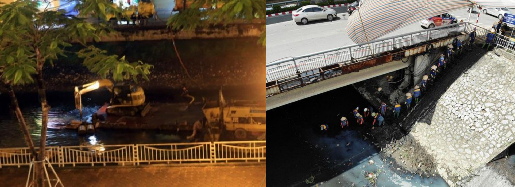
Figure 1.5: Image of dredging To Lich River
Change bottom water
Bottom water is often poor in oxygen and rich in nutrients due to the settling and replenishment process from bottom mud. This measure aims to supplement oxygen to the bottom layer and reduce the amount of nutrients in the water. The recirculating water creates conditions for disturbance, breaks stratification, and creates a dynamic regime in rivers and lakes.
Bottom layer ventilation
When water sources are polluted, one of the manifestations is a severe lack of dissolved oxygen, especially at the bottom layer. In the bottom layer aeration technique, the oxygen-poor water mass at the bottom layer is sucked up by the device and spread evenly on the open surface. Due to direct contact with oxygen-rich air, the oxygen exchange efficiency is much higher than other methods. Dissolved oxygen is evenly distributed throughout the water source, so the self-cleaning process of the lake water is strong, aerobic bacteria develop, limiting the growth of algae. In addition, toxic gases H 2 S, NH 3 , CH 4 in the bottom water layer are brought up and diffused into the air. When brought to the open surface, the water is disinfected to eliminate disease-causing bacteria by the sun's ultraviolet rays. The aerated bottom layer will stimulate the development of aerobic microorganisms and low-level animals, reduce the amount of bottom mud, increase the pH of the water, creating conditions for converting phosphorus (P) into insoluble form, hydrolyzing and precipitating heavy metals... The pollution load that the water source can withstand is higher, and the quality of the lake water is improved.