
Looking through some folk songs about women and men in the old society, we see that Confucian society still has a heavy prejudice against both genders. In terms of the concept of work and career, men and women also clearly show prejudice and discrimination. Men in folk songs and proverbs always carry the responsibility of being born to do great things:
- Be a man and be worthy of being a man.
Phu Xuan has been, Dong Nai has been
- Born a man
High passes, deep mountains, and endless rivers, what does it matter?
Maybe you are interested!
-
 Male characters in Luc Van Tien read according to gender theory - 16
 -
 Solutions for tourism development in Tien Lang - 10
zt2i3t4l5ee
zt2a3gstourism, tourism development
zt2a3ge
zc2o3n4t5e6n7ts
- District People's Committees and authorities of communes with tourist attractions should support, promote, and provide necessary information to people, helping them improve their knowledge about tourism. Raise tourism awareness for local people.
*
* *
Due to limited knowledge and research time, the thesis inevitably has shortcomings. Therefore, I look forward to receiving guidance from teachers, experts as well as your comments to make the thesis more complete.
Chapter III Conclusion
Through the issues presented in Chapter II, we can come to some conclusions:
Based on the strengths of available tourism resources, the types of tourism in Tien Lang that need to be promoted in the coming time are sightseeing and resort tourism, discovery tourism, weekend tourism. To improve the quality and diversify tourism products, Tien Lang district needs to combine with local cultural tourism resources, at the same time combine with surrounding areas, build rich tourism products. The strengths of Tien Lang tourism are eco-tourism and cultural tourism, so developing Tien Lang tourism must always go hand in hand with restoring and preserving types of cultural tourism resources. Some necessary measures to support and improve the efficiency of exploiting tourism resources in Tien Lang are: strengthening the construction of technical facilities and labor force serving tourism, actively promoting and advertising tourism, and expanding forms of capital mobilization for tourism development.
CONCLUDE
I Conclusion
1. Based on the results achieved within the framework of the thesis's needs, some basic conclusions can be drawn as follows:
Tien Lang is a locality with great potential for tourism development. The relatively abundant cultural tourism resources and ecological tourism resources have great appeal to tourists. Based on this potential, Tien Lang can build a unique tourism industry that is competitive enough with other localities within Hai Phong city and neighboring areas.
In recent years, the exploitation of the advantages of resources to develop tourism and build tourist routes in Tien Lang has not been commensurate with the available potential. In terms of quantity, many resource objects have not been brought into the purpose of tourism development. In terms of time, the regular service time has not been extended to attract more visitors. Infrastructure and technical facilities are still weak. The labor force is still thin and weak in terms of expertise. Tourism programs and routes have not been organized properly, the exploitation content is still monotonous, so it has not attracted many visitors. Although resources have not been mobilized much for tourism development, they are facing the risk of destruction and degradation.
2. Based on the results of investigation, analysis, synthesis, evaluation and selective absorption of research results of related topics, the thesis has proposed a number of necessary solutions to improve the efficiency of exploiting tourism resources in Tien Lang such as: promoting the restoration and conservation of tourism resources, focusing on investment and key exploitation of ecotourism resources, strengthening the construction of infrastructure and tourism workforce. Expanding forms of capital mobilization. In addition, the thesis has built a number of tourist routes of Hai Phong in which Tien Lang tourism resources play an important role.
Exploiting Tien Lang tourism resources for tourism development is currently facing many difficulties. The above measures, if applied synchronously, will likely bring new prospects for the local tourism industry, contributing to making Tien Lang tourism an important economic sector in the district's economic structure.
REFERENCES
1. Nhuan Ha, Trinh Minh Hien, Tran Phuong, Hai Phong - Historical and cultural relics, Hai Phong Publishing House, 1993
2. Hai Phong City History Council, Hai Phong Gazetteer, Hai Phong Publishing House, 1990.
3. Hai Phong City History Council, History of Tien Lang District Party Committee, Hai Phong Publishing House, 1990.
4. Hai Phong City History Council, University of Social Sciences and Humanities, VNU, Hai Phong Place Names Encyclopedia, Hai Phong Publishing House. 2001.
5. Law on Cultural Heritage and documents guiding its implementation, National Political Publishing House, Hanoi, 2003.
6. Tran Duc Thanh, Lecture on Tourism Geography, Faculty of Tourism, University of Social Sciences and Humanities, VNU, 2006
7. Hai Phong Center for Social Sciences and Humanities, Some typical cultural heritages of Hai Phong, Hai Phong Publishing House, 2001
8. Nguyen Ngoc Thao (editor-in-chief, Tourism Geography, Hai Phong Publishing House, two volumes (2001-2002)
9. Nguyen Minh Tue and group of authors, Hai Phong Tourism Geography, Ho Chi Minh City Publishing House, 1997.
10. Nguyen Thanh Son, Hai Phong Tourism Territory Organization, Associate Doctoral Thesis in Geological Geography, Hanoi, 1996.
11. Decision No. 2033/QD – UB on detailed planning of Tien Lang town, Hai Phong city until 2020.
12. Department of Culture, Information, Hai Phong Museum, Hai Phong relics
- National ranked scenic spot, Hai Phong Publishing House, 2005. 13. Tien Lang District People's Committee, Economic Development Planning -
Culture - Society of Tien Lang district to 2010.
14.Website www.HaiPhong.gov.vn
APPENDIX 1
List of national ranked monuments
STT
Name of the monument
Number, year of decisiondetermine
Location
1
Gam Temple
938 VH/QĐ04/08/1992
Cam Khe Village- Toan Thang commune
2
Doc Hau Temple
9381 VH/QĐ04/08/1992
Doc Hau Village –Toan Thang commune
3
Cuu Doi Communal House
3207 VH/QĐDecember 30, 1991
Zone II of townTien Lang
4
Ha Dai Temple
938 VH/QĐ04/08/1992
Ha Dai Village –Tien Thanh commune
APPENDIX II
STT
Name of the monument
Number, year of decision
Location
1
Phu Ke Pagoda Temple
178/QD-UBJanuary 28, 2005
Zone 1 - townTien Lang
2
Trung Lang Temple
178/QD-UBJanuary 28, 2005
Zone 4 – townTien Lang
3
Bao Khanh Pagoda
1900/QD-UBAugust 24, 2006
Nam Tu Village -Kien Thiet commune
4
Bach Da Pagoda
1792/QD-UB11/11/2002
Hung Thang Commune
5
Ngoc Dong Temple
177/QD-UBNovember 27, 2005
Tien Thanh Commune
6
Tomb of Minister TSNhu Van Lan
2848/QD-UBSeptember 19, 2003
Nam Tu Village -Kien Thiet commune
7
Canh Son Stone Temple
2160/QD-UBSeptember 19, 2003
Van Doi Commune –Doan Lap
8
Meiji Temple
2259/QD-UBSeptember 19, 2002
Toan Thang Commune
9
Tien Doi Noi Temple
477/QD-UBSeptember 19, 2005
Doan Lap Commune
10
Tu Doi Temple
177/QD-UBJanuary 28, 2005
Doan Lap Commune
11
Duyen Lao Temple
177/QD-UBJanuary 28, 2005
Tien Minh Commune
12
Dinh Xuan Uc Pagoda
177/QD-UBJanuary 28, 2005
Bac Hung Commune
13
Chu Khe Pagoda
177/QD-UBJanuary 28, 2005
Hung Thang Commune
14
Dong Dinh
2848/QD-UBNovember 21, 2002
Vinh Quang Commune
15
President's Memorial HouseTon Duc Thang
177/QD-UBJanuary 28, 2005
NT Quy Cao
Ha Dai Temple
Ben Vua Temple
Tien Lang hot spring
div.maincontent .p { color: black; font-family:"Times New Roman", serif; font-style: normal; font-weight: normal; text-decoration: none; font-size: 14pt; margin:0pt; } div.maincontent p { color: black; font-family:"Times New Roman", serif; font-style: normal; font-weight: normal; text-decoration: none; font-size: 14pt; margin:0pt; } div.maincontent .s1 { color: black; font-family:"Times New Roman", serif; font-style: normal; font-weight: normal; font-size: 16pt; } div.maincontent .s2 { color: black; font-family:"Times New Roman", serif; font-style: italic; font-weight: bold; text-decoration: none; font-size: 14pt; } div.maincontent .s3 { color: black; font-family:"Times New Roman", serif; font-style: italic; font-weight: normal; text-decoration: none; font-size: 14pt; } div.maincontent .s4 { color: black; font-family:"Times New Roman", serif; font-style: normal; font-weight: normal; font-size: 14pt; } div.maincontent .s5 { color: black; font-family:"Times New Roman", serif; font-style: normal; font-weight: bold; font-size: 14pt; } div.maincontent .s6 { color: black; font-family:"Times New Roman", serif; font-style: normal; font-weight: normal; text-decoration: none; font-size: 14pt; } div.maincontent .s7 { color: black; font-family:"Times New Roman", serif; font-style: normal; font-weight: bold; text-decoration: none; font-size: 14pt; } div.maincontent .s8 { color: black; font-family:"Times New Roman", serif; font-style: normal; font-weight: normal; text-decoration: none; font-size: 9pt; vertical-align: 6pt; } div.maincontent .s9 { color: black; font-family:"Times New Roman", serif; font-style: normal; font-weight: bold; text-decoration: none; font-size: 12pt; } div.maincontent .s11 { color: black; font-family:"Times New Roman", serif; font-style: normal; font-weight: normal; tex
Solutions for tourism development in Tien Lang - 10
zt2i3t4l5ee
zt2a3gstourism, tourism development
zt2a3ge
zc2o3n4t5e6n7ts
- District People's Committees and authorities of communes with tourist attractions should support, promote, and provide necessary information to people, helping them improve their knowledge about tourism. Raise tourism awareness for local people.
*
* *
Due to limited knowledge and research time, the thesis inevitably has shortcomings. Therefore, I look forward to receiving guidance from teachers, experts as well as your comments to make the thesis more complete.
Chapter III Conclusion
Through the issues presented in Chapter II, we can come to some conclusions:
Based on the strengths of available tourism resources, the types of tourism in Tien Lang that need to be promoted in the coming time are sightseeing and resort tourism, discovery tourism, weekend tourism. To improve the quality and diversify tourism products, Tien Lang district needs to combine with local cultural tourism resources, at the same time combine with surrounding areas, build rich tourism products. The strengths of Tien Lang tourism are eco-tourism and cultural tourism, so developing Tien Lang tourism must always go hand in hand with restoring and preserving types of cultural tourism resources. Some necessary measures to support and improve the efficiency of exploiting tourism resources in Tien Lang are: strengthening the construction of technical facilities and labor force serving tourism, actively promoting and advertising tourism, and expanding forms of capital mobilization for tourism development.
CONCLUDE
I Conclusion
1. Based on the results achieved within the framework of the thesis's needs, some basic conclusions can be drawn as follows:
Tien Lang is a locality with great potential for tourism development. The relatively abundant cultural tourism resources and ecological tourism resources have great appeal to tourists. Based on this potential, Tien Lang can build a unique tourism industry that is competitive enough with other localities within Hai Phong city and neighboring areas.
In recent years, the exploitation of the advantages of resources to develop tourism and build tourist routes in Tien Lang has not been commensurate with the available potential. In terms of quantity, many resource objects have not been brought into the purpose of tourism development. In terms of time, the regular service time has not been extended to attract more visitors. Infrastructure and technical facilities are still weak. The labor force is still thin and weak in terms of expertise. Tourism programs and routes have not been organized properly, the exploitation content is still monotonous, so it has not attracted many visitors. Although resources have not been mobilized much for tourism development, they are facing the risk of destruction and degradation.
2. Based on the results of investigation, analysis, synthesis, evaluation and selective absorption of research results of related topics, the thesis has proposed a number of necessary solutions to improve the efficiency of exploiting tourism resources in Tien Lang such as: promoting the restoration and conservation of tourism resources, focusing on investment and key exploitation of ecotourism resources, strengthening the construction of infrastructure and tourism workforce. Expanding forms of capital mobilization. In addition, the thesis has built a number of tourist routes of Hai Phong in which Tien Lang tourism resources play an important role.
Exploiting Tien Lang tourism resources for tourism development is currently facing many difficulties. The above measures, if applied synchronously, will likely bring new prospects for the local tourism industry, contributing to making Tien Lang tourism an important economic sector in the district's economic structure.
REFERENCES
1. Nhuan Ha, Trinh Minh Hien, Tran Phuong, Hai Phong - Historical and cultural relics, Hai Phong Publishing House, 1993
2. Hai Phong City History Council, Hai Phong Gazetteer, Hai Phong Publishing House, 1990.
3. Hai Phong City History Council, History of Tien Lang District Party Committee, Hai Phong Publishing House, 1990.
4. Hai Phong City History Council, University of Social Sciences and Humanities, VNU, Hai Phong Place Names Encyclopedia, Hai Phong Publishing House. 2001.
5. Law on Cultural Heritage and documents guiding its implementation, National Political Publishing House, Hanoi, 2003.
6. Tran Duc Thanh, Lecture on Tourism Geography, Faculty of Tourism, University of Social Sciences and Humanities, VNU, 2006
7. Hai Phong Center for Social Sciences and Humanities, Some typical cultural heritages of Hai Phong, Hai Phong Publishing House, 2001
8. Nguyen Ngoc Thao (editor-in-chief, Tourism Geography, Hai Phong Publishing House, two volumes (2001-2002)
9. Nguyen Minh Tue and group of authors, Hai Phong Tourism Geography, Ho Chi Minh City Publishing House, 1997.
10. Nguyen Thanh Son, Hai Phong Tourism Territory Organization, Associate Doctoral Thesis in Geological Geography, Hanoi, 1996.
11. Decision No. 2033/QD – UB on detailed planning of Tien Lang town, Hai Phong city until 2020.
12. Department of Culture, Information, Hai Phong Museum, Hai Phong relics
- National ranked scenic spot, Hai Phong Publishing House, 2005. 13. Tien Lang District People's Committee, Economic Development Planning -
Culture - Society of Tien Lang district to 2010.
14.Website www.HaiPhong.gov.vn
APPENDIX 1
List of national ranked monuments
STT
Name of the monument
Number, year of decisiondetermine
Location
1
Gam Temple
938 VH/QĐ04/08/1992
Cam Khe Village- Toan Thang commune
2
Doc Hau Temple
9381 VH/QĐ04/08/1992
Doc Hau Village –Toan Thang commune
3
Cuu Doi Communal House
3207 VH/QĐDecember 30, 1991
Zone II of townTien Lang
4
Ha Dai Temple
938 VH/QĐ04/08/1992
Ha Dai Village –Tien Thanh commune
APPENDIX II
STT
Name of the monument
Number, year of decision
Location
1
Phu Ke Pagoda Temple
178/QD-UBJanuary 28, 2005
Zone 1 - townTien Lang
2
Trung Lang Temple
178/QD-UBJanuary 28, 2005
Zone 4 – townTien Lang
3
Bao Khanh Pagoda
1900/QD-UBAugust 24, 2006
Nam Tu Village -Kien Thiet commune
4
Bach Da Pagoda
1792/QD-UB11/11/2002
Hung Thang Commune
5
Ngoc Dong Temple
177/QD-UBNovember 27, 2005
Tien Thanh Commune
6
Tomb of Minister TSNhu Van Lan
2848/QD-UBSeptember 19, 2003
Nam Tu Village -Kien Thiet commune
7
Canh Son Stone Temple
2160/QD-UBSeptember 19, 2003
Van Doi Commune –Doan Lap
8
Meiji Temple
2259/QD-UBSeptember 19, 2002
Toan Thang Commune
9
Tien Doi Noi Temple
477/QD-UBSeptember 19, 2005
Doan Lap Commune
10
Tu Doi Temple
177/QD-UBJanuary 28, 2005
Doan Lap Commune
11
Duyen Lao Temple
177/QD-UBJanuary 28, 2005
Tien Minh Commune
12
Dinh Xuan Uc Pagoda
177/QD-UBJanuary 28, 2005
Bac Hung Commune
13
Chu Khe Pagoda
177/QD-UBJanuary 28, 2005
Hung Thang Commune
14
Dong Dinh
2848/QD-UBNovember 21, 2002
Vinh Quang Commune
15
President's Memorial HouseTon Duc Thang
177/QD-UBJanuary 28, 2005
NT Quy Cao
Ha Dai Temple
Ben Vua Temple
Tien Lang hot spring
div.maincontent .p { color: black; font-family:"Times New Roman", serif; font-style: normal; font-weight: normal; text-decoration: none; font-size: 14pt; margin:0pt; } div.maincontent p { color: black; font-family:"Times New Roman", serif; font-style: normal; font-weight: normal; text-decoration: none; font-size: 14pt; margin:0pt; } div.maincontent .s1 { color: black; font-family:"Times New Roman", serif; font-style: normal; font-weight: normal; font-size: 16pt; } div.maincontent .s2 { color: black; font-family:"Times New Roman", serif; font-style: italic; font-weight: bold; text-decoration: none; font-size: 14pt; } div.maincontent .s3 { color: black; font-family:"Times New Roman", serif; font-style: italic; font-weight: normal; text-decoration: none; font-size: 14pt; } div.maincontent .s4 { color: black; font-family:"Times New Roman", serif; font-style: normal; font-weight: normal; font-size: 14pt; } div.maincontent .s5 { color: black; font-family:"Times New Roman", serif; font-style: normal; font-weight: bold; font-size: 14pt; } div.maincontent .s6 { color: black; font-family:"Times New Roman", serif; font-style: normal; font-weight: normal; text-decoration: none; font-size: 14pt; } div.maincontent .s7 { color: black; font-family:"Times New Roman", serif; font-style: normal; font-weight: bold; text-decoration: none; font-size: 14pt; } div.maincontent .s8 { color: black; font-family:"Times New Roman", serif; font-style: normal; font-weight: normal; text-decoration: none; font-size: 9pt; vertical-align: 6pt; } div.maincontent .s9 { color: black; font-family:"Times New Roman", serif; font-style: normal; font-weight: bold; text-decoration: none; font-size: 12pt; } div.maincontent .s11 { color: black; font-family:"Times New Roman", serif; font-style: normal; font-weight: normal; tex -
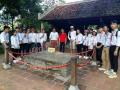 Students Participate in Exploring the Dragons at Ngoai Gate - National Treasures at the Temple of King Dinh Tien Hoang
 -
 Recruitment of civil servants at the People's Committee of Luc Nam district, Bac Giang province - Current situation and solutions - 9
 -
 Scientific commentary on the criminal code Volume 4 - Dinh Van Que - 2
If a man himself cannot complete his career, he almost always "takes" the pain as an excuse:
Busy with children, wife, family, just looking at the pain of Tang Bong Ho Thi
For men, there is no one who does not feel uncomfortable when being called "impotent" or "hiding behind their wife's skirt"... That is considered a big irony for them:
- A man washes dishes and sweeps the house. When his wife calls, he says yes, "It's me, ma'am!"
- Be a man and be worthy of being a man.
Bending down, struggling to carry two sesame seeds
In terms of social communication, the content of folk songs and proverbs also shows many prejudices against women and men in terms of love. Women are often passive, only focusing on housework, being the "housewife" in the house. In love, they are also always passive:
A pigeon perched on the roof. How many generations of women have asked for a man?
Therefore, they always leave their fate in the hands of others:
My body is like a well in the middle of the road. The wise wash their faces, the common people wash their feet.
On the contrary, men are completely proactive in love affairs:
Who asked you to marry me,
Let me cultivate the field of love to make it green.
Who asked me to marry you,
Thanks to my parents for giving birth to me.
It can be said that, besides the good values of many gender stereotypes in Vietnamese folk songs and proverbs, those stereotypes are also partly barriers to social development, deeply ingrained in people's subconscious and awareness.
But it was not until Vietnamese medieval literature, when Confucianism occupied a unique position, deeply influencing the ideological consciousness and concept of man, that the issue of human duties in a patriarchal society became more clearly distinguished, especially in terms of gender . There were many Confucian scholars with clear views on the roles and functions of men and women in society such as Nguyen Cong Tru, Nguyen Du, Ho Xuan Huong or Nguyen Dinh Chieu... However, in terms of quantity, there were more works written about men, which were mostly Confucian scholars' views on men. The status of men in this period was exalted as gentlemen, Confucianism taught men to be content with their lot, to be loyal to their king, because the king was the Son of Heaven. Confucianism also taught them to cultivate virtue, correct themselves, and observe etiquette, that clever words were not trustworthy, and beautiful words were not true.
Looking at the overall process of Vietnamese medieval literature, we can see that in each literary period, the concept of gender has clear changes. The concept of the individual is deeply influenced by Confucian ideology. The common feature of the works of this period is that with a patriarchal view, Confucianism advocates looking down on women, praising men, gentlemen, and underestimating beautiful and talented women. Therefore, most of the literary works focus on praising men who "cultivate themselves and establish themselves" to build great ambitions. Representing this period, we must mention Nguyen Trai and his works. As we know, when mentioning Nguyen Trai, people often talk about a benevolent, patriotic, and compassionate person who sets out to find the roots of history and the nation. Nguyen Trai stands out as an individual in his tormented choice between ideologies and paths to establish himself and nurture his
himself and especially to protect himself, but in the end he still could not escape the cruel sword of fate. Nguyen Trai once abandoned both "poetry and books" to "cultivate himself":
Retreat and keep your duty. Cultivate yourself differently, regardless of literature or poetry.
(Romance – XII)
Confucian philosophy has set out principles for life, hierarchies that people must always respect. Those principles, Confucianism talks about the relationship between family and society. Those are three important relationships that govern all human emotions and duties: monarch and subject, father and son, husband and wife. On the other hand, Confucianism also raises important virtues that people need to have in order for people and life to become better, which are: humanity, courtesy, righteousness, wisdom, and trust. Nguyen Trai was a Confucian scholar, a moralist, so he turned to Confucian ethics. Nguyen Trai followed the Confucian path of "literature to convey the way" , which means using literature to spread the thoughts and morals of the sages. First of all, we see that in his works, he always talks about loyalty and filial piety , the duties that men need to have in society. Nguyen Trai's personality always turned to the sacred duty towards family and country. In particular, he always kept in mind the two words loyalty and filial piety :
intelligence, trust:
" Bui has a feeling that he cannot bear to delay his duty as a son or a servant ." (Words of wisdom - lesson 1)
" The king has not yet reported to his heart, but his love is like a father's food and clothes ."
(Words of wisdom - lesson 7)
In his writings, Nguyen Trai also talked a lot about humanity, justice, and courtesy.
" If you see profit, do it rightly. The West wears a horse and makes the heart ache ."
(The Mirror of the Realm – Lesson 6)
" Friendship is not forgotten, the other person is rich and noble, do not forget the heart ."
(The Mirror of the Realm – Lesson 51)
" Advice to men to stay in this world, Do not be unjust or disorderly ."
(The Mirror of the Realm – Lesson 58)
Nguyen Trai lived in a society that was broken by war, so he was aware of the duties of a scholar. He advised people to treat each other with righteousness. In Nguyen Trai's poetry, the concepts of the three bonds and five constants are always combined together:
“ All things depend on God, All actions and stillness depend on the teacher.
Joy, anger, hardness, and softness may exist, but righteousness, courtesy, wisdom, and horses can allay them .
(Narrative – Part 3)
According to his concept, the image of a gentleman must be a person of complete virtue and talent:
" The virtuous and gentle are everywhere, and naturally all beings want to yield ."
(The Mirror of the Realm – Lesson 1) “ The gate of humanity awaits guests to come,
Plant virtue trees for your children to eat .
(Narrative - Lesson 5) " Giving back talent and virtue is kindness ,
Talent is one or two points less than virtue. To serve one's father, one must be filial. To meet the Lord every day, one must be careful .
(The Mirror of the Realm – Lesson 57)
It is clear that in his poems, virtue always comes first. He used the benevolence of Confucianism to advise his children and grandchildren, and to teach the younger generations with heartfelt poems. Going further, he also outlined a program of action for scholars. Once they become officials, scholars must be completely loyal to the king and the country, and must use moral words to advise the king not to flatter and commit evil deeds that harm the country and the people. He believed that scholars must have the same heart as Wei Zheng of the Tang Dynasty and Bao Zheng of the Song Dynasty in China:
" Showing off the snow in the place of learning the way
In the dynasty, loyalty and diligence are the top priorities .
(The Mirror of the Realm – Lesson 60) “ In the palace, keep Bao Zheng's heart,
The appointed general has the habits of Wei Zheng .
(The Mirror of the Realm – Lesson 61)
Like Nguyen Trai, Nguyen Khuyen and other Confucian scholars, Nguyen Binh Khiem always carried in his heart the two words " loyalty to the king " , he always kept in mind the thought "Heavy blessings thanks to the holy and intelligent virtue" (Nom poetry, poem 125). In terms of personality, he himself was a Confucian gentleman. Nguyen Binh Khiem lived in the period when Confucianism became the only religion and in the period when the country was divided, the people were suffering and rebelling. Therefore, the Confucian gentleman Nguyen Binh Khiem raised a new problem for the scholars of that time. According to him, for a man, a scholar, the essential, ideal problem was still loyalty to the legitimate king. But in Nguyen Binh Khiem's time, the concepts of king and country were no longer consistent, the king's interests conflicted with the people 's interests , so loyalty to a foolish king ( a tyrant ) would become foolish loyalty : the problem of choosing a master was raised. Instead of helping the country, he chose the path of leisure and seclusion to preserve the noble character of a gentleman : "I am foolish, I seek a quiet place, a wise man goes to a bustling place . "
If in the poems of Nguyen Trai and Nguyen Binh Khiem, besides the noble ideal of detachment, elimination of desire, purity and innocence, then in the Tales of Nguyen Du, "desire", especially sex and material desire, appears as a category of the individual, but is understood as negative manifestations. The individual appears under negative qualities, in the form of evil and ugliness. Trong Quy gambles to marry his wife (Nhi Khanh); Trung Ngo is greedy for the ghost of the kapok tree (Nhi Khanh); Duong Thien Tich takes advantage of the situation to take petty revenge; Ha Nhan is infatuated with the two souls of Lieu and Dao flowers; the god Thuong Luong captures the famous courtesan Duong Thi Han Than with the greedy monk Vo Ky, reincarnated as Thuong Luong; the unjust love of the unjust soul Thi Nghi with the mandarin Hoang
; the corrupt kings and mandarins in the story of The Woodcutter of Na Mountain; the statues of gods stolen from the abandoned Dong Trao pagoda; General Ly who committed evil and was punished by the King of Hell; Miss Tuy Tieu who was arrested and Du Nhuan Chi sought to save her; the daughter of Nam Xuong who died unjustly because her husband was jealous... In the system of characters in Truyen Ky Man Luc, there are female characters alongside men, but most of them are seen as harmful elements to men and scholars. They are mostly seen as demons, unjustly killed and condemned... And men who are infatuated with beauty are considered bad characters, villains, going against the concept of a gentleman. In general, the author's tendency is to encourage goodness, punish evil, promote virtue, condemn materialism and sex, following the Confucian ideology of the Song Dynasty "Destroy human desire, preserve natural principles". Those who stay away from the dust of the world and material desires will become immortals, become immortals, and ascend to heaven, such as Tu Thuc, Duong Tram, and Vu Nuong. Those who are greedy and greedy for profit will be punished in the underworld of the King of Hell. The needs for personal enjoyment and selfishness are considered to have their roots in demons, dragons, and serpents, and darkness. However, the "desire" of free individuals in love between men and women, although not acknowledged in the commentary, is described as memorable romantic encounters. Trung Ngo's meeting with the lonely ghost of Nhi Khanh is full of love, singing and composing, with the ideal of pleasure. Ha Nhan's love and composing encounter in the West camp, then the encounter with Han Than and Vo Ky, Nhuan Chi and Tuy
Tieu, Phat Sinh with Le Nuong, Thi Nghi with the Hoang family, were all meetings outside of etiquette, marriage, purely personal, love affairs with enjoyment as the purpose, of course not accepted by Confucian scholars in terms of morality, but in terms of emotions, they were favored by the author's pen to describe quite beautifully with special romantic verses. The poems of Nhi Khanh, of the two ladies Lieu and Dao describe the feelings of love very boldly, rare in the literature of that time, and also difficult to appear in the form of non-legends. In short, in the literature of the 15th to 17th century, the concept of gender appeared in two main forms: either abandoning fame, abandoning gossip, praise and criticism, "the only good person", opposing other ordinary people; or being passionate about material things, sex as a sin, contrary to morality but no longer feeling guilty, on the contrary, expressing a passionate, beautiful, romantic feeling.
Vietnamese literature from the 18th to the end of the 19th century was deeply influenced by Confucianism. Literature in this period was still mainly written about men and praised manhood. Confucian scholars focused on exploiting men from their responsibilities and ideals of helping the people and the country, and through that expressed the heroic model of the era. That was a somewhat stoic view of men for men. Along with the system of viewpoints, Confucianism also built for itself an ideal human model, which was the model of a gentleman for men. In the history of Confucianism, this was a model that was mentioned frequently, and was the pride of Confucianism to protect the feudal order. In other words, scholars and gentlemen were those who were educated and grew up from the common people, and through studying the Tao they became mandarins "wise mandarins, wise people" . Because the ideal of Confucianism is to educate people to have personality to serve politics and feudalism, educating people to become gentlemen has become the most important issue that Confucianism aims for.
Representing the concept of manhood in this period is the author Nguyen Cong Tru - a writer who affirmed the duties of men in feudal society. If we consider the convergence in the thoughts of Nguyen Dinh
Chieu and Nguyen Cong Tru, we can see that they are men with dreams of fame. Nguyen Cong Tru, when talking about the poet's ideal life when he was young, he once said:
Heaven gave me, earth gave me. Heaven and earth gave me a purpose.
Nguyen Cong Tru believes that people living in this life must do things that are useful to life:
Or:
Having a reputation in heaven and earth, must have a name in the mountains and rivers
The universe is my duty
No fame, no standing in the world
Here we can see that, for Nguyen Cong Tru, "fame" is duty and
The destination of men is always associated with the concept of loyalty and filial piety.
With loyalty and filial piety one can stand in heaven and earth. Without fame and fortune one will die with the grass and trees.
However, his concept of a gentleman was a bit different from the previous period. If in the previous period, gentlemen often constrained themselves with stoicism, then in this period, the image of a man that Nguyen Cong Tru wanted to convey, in addition to the dream of fame, was also a romantic and talented man. He openly talked about his pleasures, a pleasure with unconventional content that made many Confucian scholars at that time and almost all moralists today unable to help but react:
"The pleasure of dispelling sorrow is to pour wine and write poetry
It's so much fun to have pink swallows! When you're pleased, your eyes go away and your eyebrows come back.
Enough, enough ...
(Clever)