
- Principle of absolute honesty insurance:
Concept: Absolute honesty in insurance business is a principle stipulated in the law on insurance business. However, the law has not defined what absolute honesty is. In fact, absolute honesty in insurance business can be understood as the parties in an insurance contract must ensure honesty when providing information as well as during the implementation of the insurance contract. This is an important and consistent principle in the process of concluding and implementing an insurance contract.
Meaning: This provision is important not only to ensure the legal system but also to ensure the rights and obligations, so it is weak in the insurance relationship. Specifically: Firstly, it is to ensure the rights of the parties when an insurance event occurs because if the information provided is accurate and honest, when an insurance event occurs, the insurance buyer will be paid the insurance money or compensated according to the provisions of the law; Secondly, the insurance buyer is the weaker party in the insurance relationship in terms of both status and understanding of insurance compared to the insurance company. Therefore, the law stipulates that insurance companies must be absolutely honest to avoid insurance companies infringing on the rights of the insurance buyer for the purpose of profit; Thirdly, it is to ensure that the insurance company does not have its rights infringed in practice when there are cases where the buyer takes advantage of loopholes in the law to cheat for personal gain; Fourthly, it is to ensure that disputes arising between the parties in the insurance contract are limited and social safety and order are guaranteed.
- Principle of subrogation:
Maybe you are interested!
-

 Factors Affecting State Management of Health Human Resources
 -
 Research on the Current Characteristics of Forest Resources and Factors Affecting Forest Resources Management in the National Park Area
 -
 Content, Evaluation Criteria and Factors Affecting the Development of Border Gate Economic Zones
 -
 Factors affecting the publication of sustainable development reports at petroleum trading companies under the Vietnam National Petroleum Group - 2
 -
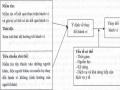 Model of Factors Influencing Health Behavior
Concept: The principle of subrogation is the principle that after compensating the insured, the insurance company has the right to represent the insured to claim compensation from a third party within the compensation limit that the insurance company has paid to the insured. Subrogation is used when it is determined that a third party is responsible for the damage to the subject in the insurance event. This principle is applied in property insurance and civil liability insurance (not applicable to personal insurance).
Meaning: Subrogation reduces insurance premiums: Successful claims through subrogation are another source of income besides insurance premiums for the insurance company to compensate financially. They allow to reduce the actual costs of the insurance company in case of loss and therefore it has the effect of reducing insurance premiums; Subrogation reduces the number of lawsuits: After receiving compensation from the insurance company, the insured will not want to continue to sue the responsible party because if he can claim compensation from this third party, he will still have to reimburse the insurance company.

Condition: Subrogation only applies in compensation contracts: The insurance contract between the insured and the insurer must be a contract to guarantee financial losses that may arise in the future of the insured, different from a life insurance contract (of a saving nature).
Subrogation applies after full compensation: Accordingly, the insurer can only subrogate after fully compensating for the loss within the scope of insurance of the insured.
The insurer claims indemnity on behalf of the insured: This claim must be made on behalf of the insured, that is, the insurer shall only benefit from the rights and remedies to which the insured is entitled, without any authority over matters beyond the limits of the rights and remedies to which the insured is entitled.
- Principle of insuring only risks, not certainty:
Concept: This principle indicates that the insurer only insures a risk, that is, insures an incident, an accident, a disaster, that occurs unexpectedly, randomly, beyond human control, but does not insure something that is certain to happen, naturally happens, and only compensates for damages and losses caused by the risk, not for damages that are certain to happen, naturally happen.
Meaning: People only insure for things that are risky, unexpected, and unforeseen, meaning they do not insure for things that have happened or will definitely happen. Because insurance is implemented to deal with the consequences of unexpected human risks, risks that people cannot limit or can only limit to some extent. The operator does not accept insurance when he knows for sure that the insured risk will happen, for example, the motor vehicle does not ensure technical safety, the ship is not seaworthy... People also do not insure for things that have happened, for example, insurance for ships and vehicles after they have had an accident.
- Principle of insurable benefits:
Concept: Insurable interest is an interest or right related to, attached to, or dependent on the safety or unsafety of the subject matter insured. This principle indicates that the insured wishing to purchase insurance must have an insurable interest. An insurable interest may be an interest that has existed or will exist in the subject matter insured.
For example: ownership, possession, use, property rights; rights and obligations to support and provide for the insured.
An insurable interest holder is a person who has some relationship with the subject matter of insurance recognized by law. It can be the owner of the subject matter of insurance, the person responsible for managing the property or the person receiving the mortgage of the property.
Meaning: Insurable interests are very important in insurance, only when there are insurable interests can an insurance contract be signed. When a loss occurs, the insured must have insurable interests before being compensated.
The principle of insurable interest states that the insured person who wishes to purchase insurance must have an insurable interest. An insurable interest may be an interest that already exists or will exist in the subject matter of insurance. In cargo insurance
Insurable interests are not necessarily present at the time of entering into an insurance contract, but are necessarily present when a loss occurs.
- The principle of the majority compensating the minority:
Concept: Insurance activities in general, and commercial insurance activities in particular, create a "contribution of the majority to the misfortune of the few" on the basis of gathering many people with the same risk into a community to disperse the financial consequences of losses.
Meaning: The more participants, the more dispersed the loss, the more the risk is minimized to the lowest level, reflected in the smallest insurance premium that each person must pay, enough so that it does not significantly affect their production and living activities. Operating according to the law of the majority, that is the most basic principle of insurance.
- Compensation principles:
Concept: Compensation is an important principle in insurance relations, the essence of insurance.
In the insurance business, the concept of indemnity is understood as an adequate return. According to this principle, when a loss occurs, the insured must be brought back to the original financial state as if the loss had not occurred. The insured cannot be paid more insurance money than the insurance benefit they have.
Meaning: The insured cannot make a profit through insurance, at most, the insured can only be compensated in full, but not more than the full amount.
1.1.2.2 Basic principles of health insurance:
Health insurance is implemented according to the following 5 principles:
- Ensuring risk sharing among health insurance participants. This is a principle built on the basic principle of insurance "Taking the majority to compensate for the minority". The risks that happen to everyone are completely different, in fact, many people have to face many types of risks. Thanks to this principle, those who are unfortunate to encounter risks can receive compensation to overcome difficulties much greater than the expenses they have contributed from participating in health insurance. Also thanks to this principle, the social nature of health insurance is very clear, that is, society and the community have joined hands to take care of individuals who are unfortunate to encounter risks. Thus, health insurance, in order to be truly successful, requires attracting a large number of people to participate. The more people participate in social health insurance, the more the burden of contribution fees for each person has a chance to decrease. On the contrary, when people get sick or ill, the compensation level has the conditions to increase.
- The health insurance contribution rate is determined as a percentage of salary, wages, pension, allowance or minimum wage of the administrative sector (generally referred to as minimum wage). Depending on the specific cases, there is a contribution rate. For example, the health insurance contribution rate will be reduced in the case of members in
A household participates in health insurance together; the monthly contribution of employees is equal to 4.5% of the employee's monthly salary and wages;...
- Health insurance benefits depend on the level of illness and the group of subjects within the scope of benefits of health insurance participants.
- Health insurance medical examination and treatment costs are jointly paid by the health insurance fund and the health insurance participant (co-payment principle).
- The Health Insurance Fund is managed centrally, uniformly, publicly, transparently, ensuring a balance between revenue and expenditure and is protected by the State. This principle stipulates that the Social Insurance Fund is managed uniformly and accounted for according to its component funds on the basis of publicity, transparency, and proper use to ensure effective management and investment of the fund and to serve the accounting work, assess the fund balance situation to make appropriate policy adjustments, ensure a balance between revenue and expenditure, and make timely adjustments when the funds forming the component are temporarily unbalanced, without affecting the rights of social health insurance participants.
1.1.2.3 Principles of universal health insurance:
- Ensuring risk sharing among health insurance participants; in addition, this principle is applied under the condition that most people in society have health insurance.
- The health insurance contribution rate is determined as a percentage of salary, wages, pension, allowance or minimum wage of the administrative sector, and is supported by the State budget for a number of subjects at different levels according to the law.
- Health insurance benefits depend on the level of illness and the group of subjects within the scope of benefits of health insurance participants according to the law.
- Health insurance treatment costs are jointly paid by the health insurance fund and the health insurance participant.
- The Health Insurance Fund is managed centrally, uniformly, publicly, transparently, ensuring balance between revenue and expenditure and is protected by the State.
1.2. The necessity and role of universal health insurance
1.2.1 The need for universal health insurance
In his work “Critique of the Goth Programme”, C. Marx pointed out that workers cannot enjoy all the products they have created for society. According to C. Marx, the total annual social product must be deducted from:
- First, the part to replace consumed means of production.
- Second, additional parts to expand production.
- Third, the reserve fund or insurance to prevent accidents, natural disasters, crop failures... (C.Marx and F.Engels Complete Works, vol. 19. National Political Publishing House, Hanoi, 1995., p.50).
The remaining amount is used as consumer goods. According to C. Marx, before distributing for personal consumption, the following must be deducted:
Firstly, general management costs that are not directly related to production, compared to today's society, this part is often narrowed and the more developed the society is, the more this part decreases.
Second, the amounts used to satisfy common needs such as schools, offices, healthcare, etc. This part gradually increases in today's society and the more developed the society, the more this part increases.
Third, funds are needed to support the incapacitated…Finally, then comes the “distribution” of the consumer goods to the producers.
Thus, to maintain social reproduction, it is necessary to carry out "reservations and insurance" to prevent risks to the production process.
In our country, the consequences of war are very serious, which greatly affects people's health. Therefore, the need for health care and health protection is an inevitable need of all people in the community. The more developed the society is, the more this need increases. However, when sick, not everyone can afford to pay for medical examination and treatment, especially the poor. Therefore, our Party and State have identified universal health insurance as one of the types of activities with a humane and humanitarian nature that need to be implemented. In the context of increasingly modern science and technology, the health sector has also made great changes, closely following the development of science and technology, so that medical examination and treatment facilities are increasingly modern and expensive. The service system is upgraded, the medical staff and the health system are increasingly tight, thereby making the cost of medical examination and treatment increasingly expensive. This situation makes a large part of the population unable to pay when sick or ill, forcing them to seek support.
health insurance support
On the other hand, when moving to a market economy, medical examination and treatment services are often expensive, arguably the most expensive of all social services. When unfortunately falling ill or suffering from unexpected illness, the majority of people do not have enough financial capacity to protect their health as well as their family's. This leads to the need for a solution to solve the above problem and universal health insurance was born on that basis.
Furthermore, the economy is growing, people's lives are increasingly improved, people's life expectancy is increasing, the population structure is shifting towards an increasing number of elderly people, making the need for medical examination and treatment constantly increase. Therefore, the medical examination and treatment system and medical facilities are not able to meet the demand, especially the State budget cannot satisfy this demand. Therefore, only health insurance can meet the demand by mobilizing the contributions of the majority of healthy people to compensate for the few sick people, helping families and businesses overcome difficulties.
For a long time, the State used money from the budget to take care of medical treatment for the people. Until now, that ability is very limited because the need for medical treatment is increasing.
As the cost of medical care increases, the infrastructure of the medical sector is deteriorating, requiring repair and additional means for effective treatment.
The partial collection of hospital fees in recent years has not only not been enough to cover the costs of the health sector, because the amount collected is too little compared to the actual cost of medical examination and treatment, but has also created new injustices, causing difficulties for the poor. To gradually overcome the shortcomings in collecting hospital fees, it is necessary to soon organize the implementation of universal health insurance.
From the above issues, the birth of universal health insurance is essential because it meets the wishes of the majority of people in society.
1.2.2 Role of universal health insurance:
Universal health insurance is a social policy implemented by the state, aiming to mobilize contributions from employers, employees, organizations and individuals in need of health insurance, thereby forming a fund and this fund will be used to pay for medical examination and treatment costs, when someone unfortunately suffers from an illness that they have participated in health insurance.
Although each country has different forms of organization, some countries organize it independently from other types of insurance, while others consider it as one of the social insurance regimes. In our country, health insurance has been integrated into social insurance since January 24, 2002. Regardless of how it is organized, health insurance still has a separate role with a broad social character as follows:
- Firstly: Universal health insurance is a measure to eliminate the inequality between the rich and the poor, so that everyone with illness can be treated on the condition that they participate in health insurance. With universal health insurance, everyone will have more equality in health care, and will be treated according to their illness, this is a superior feature of universal health insurance. Universal health insurance is highly humanitarian and is socialized according to the principle of "The majority compensates the minority". The majority of people participate to form a fund and this fund is used to pay for medical examination and treatment costs for a few people who are unfortunate enough to have an illness. Participating in universal health insurance is beneficial for both individuals and society. Everyone's contribution is only a small contribution compared to the cost of medical examination and treatment when they encounter the risk of illness, even the contribution of a lifetime is not enough for a one-time cost when suffering from a serious illness. Therefore, the contribution of the social community to form the universal health insurance fund is necessary and is carried out according to the motto: "I am for everyone, everyone is for me", when healthy to support the sick, when unfortunately sick, we receive contributions from the community, this has truly brought about fairness in medical examination and treatment.
- Second: Universal health insurance helps participants overcome difficulties as well as stabilize their finances when they are unlucky enough to get sick. Thanks to universal health insurance, people will feel more secure about their health and finances, because they have a small part of their reserve fund reserved for health care.
health, especially for the poor who unfortunately get sick. Thus, the birth of universal health insurance has the effect of overcoming the consequences and promptly stabilizing people's lives when they are sick, creating optimism in their lives, thereby helping them feel secure in working and producing to create material wealth for themselves and then for society, contributing to promoting the development of society.
- Third: The birth of universal health insurance also contributes to educating all people in society about humanity according to the motto: "The healthy leaves cover the torn leaves", especially helping to educate children from a young age about community spirit through the type of health insurance for students.
- Fourth: Universal health insurance increases the quality of medical examination and treatment and management through the investment of the health insurance fund. At that time, medical equipment will be more modern, there will be funds to produce special drugs to treat serious diseases, there will be conditions to upgrade medical examination and treatment facilities in a more systematic and complete manner, helping people to go to the hospital for medical examination and treatment more conveniently. At the same time, the medical staff will be better trained, doctors and nurses will have conditions to improve their skills, accumulate experience, and be more responsible for their work, leading to easier and stricter management in medical examination and treatment.
- Fifth: Universal health insurance also helps reduce the burden on the State budget. Currently, health care costs are mainly composed of four sources: State budget; health insurance fund; partial collection of hospital fees and medical services; contributions from mass organizations, charities and international aid organizations.
Of the four sources above, before the universal health insurance was available, the main source was the State budget. Therefore, the establishment of universal health insurance has really contributed to reducing the burden on the State budget.
- Sixth: Social welfare indicators in each country also represent the level of development of that country. Therefore, universal health insurance is a macro tool of the State to effectively implement social welfare, at the same time creating financial resources to support and provide for people's health care activities.
- Seventh: Universal health insurance also contributes to preventing and limiting serious diseases according to the motto "Prevention is better than cure". By combining with health insurance medical facilities to check health and provide health care for the majority of people participating in universal health insurance, thereby promptly detecting serious diseases and having timely treatment methods, avoiding bad consequences, which if not participating in health insurance, people are often afraid of the cost of going to the hospital, thus ignoring or ignoring diseases that can lead to death.
- Eighth: Universal health insurance also contributes to the innovation of the health management mechanism, specifically: To have a workforce in society with physical and mental strength, it is impossible not to take care of mothers and children, it is impossible to let workers work in unsanitary conditions, polluted environment... Therefore, taking care of health protection is the task of each person, each organization, each enterprise and also the common task of the whole society. At the same time, to ensure that when workers are sick,
To be able to receive convenient, safe and quality medical examination and treatment, it is necessary to have a diverse and widespread medical network, a team of good and dedicated doctors, and adequate and modern medical facilities. Through health insurance, the medical examination and treatment network will be rearranged and will no longer be divided mechanically according to administrative boundaries, but divided according to technical lines, ensuring convenience for patients, creating conditions for them to choose a treatment facility with appropriate quality.
Thus, the birth of universal health insurance not only helps health insurance participants overcome economic difficulties when illness risks occur, but also reduces the burden on the State budget, contributes to innovation in management mechanisms, and improves quality and fairness in medical examination and treatment.
1.3. Content and factors affecting universal health insurance:
1.3.1 Basic content of universal health insurance:
1.3.1.1 Subjects participating in universal health insurance
Employees working under indefinite-term labor contracts or labor contracts with a term of 3 months or more as prescribed by the law on labor; employees who are business managers receiving salaries and wages as prescribed by the law on salaries and wages; civil servants and public employees as prescribed by the law.
Professional officers, non-commissioned officers and specialized and technical officers and non-commissioned officers working in the People's Public Security force.
Recipients of monthly pension and disability benefits.
People receiving monthly social insurance benefits due to work accidents or occupational diseases.
People who have stopped receiving disability benefits are receiving monthly benefits from the state budget.
Retired commune, ward and town officials who are receiving monthly social insurance benefits
month.
Retired commune, ward and town officials receiving subsidies from the budget
monthly government
People receiving unemployment benefits. People with revolutionary contributions.
Veterans as defined by the law on veterans.
People who directly participated in the resistance war against America to save the country according to Government regulations.
Incumbent National Assembly and People's Council deputies at all levels.
People eligible for monthly social security benefits according to the law.
People from poor households, ethnic minorities living in areas with difficult or especially difficult socio-economic conditions.