
NH managers and policy makers to enhance the efficiency of NH in the coming time. There are a total of seven policy implications proposed by the author for two main groups of subjects: the governing bodies and commercial banks.
5.2.1. For the Government and the State Bank
5.2.1.1. Improving competitive conditions of banks
Basis for policy proposal:
Maybe you are interested!
-

 Improving business efficiency of Vietnam Technological and Commercial Joint Stock Bank - 2
 -
 Increasing capital mobilization from individual customers of commercial banks - Case study of Vietnam Joint Stock Commercial Bank for Investment and Development, Phu Tho Branch - 1
 -
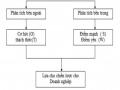 Competitive Analysis Model of Commercial Banks
 -
 Testing the credit risk tolerance of Vietnamese commercial banks - Case study of Vietnam Joint Stock Commercial Bank for Industry and Trade - 21
 -
 Proportion of Highly Liquid Assets Before and After Deducting Loans from State Bank and Commercial Banks in the Market of Some Commercial Banks
The positive relationship between competition and efficiency can be explained by the fact that the greater the competitive pressure, the more efficient banks operate. The main purpose of competition policy is to promote fair competition among banks. However, empirical research results show that competition has a non-linear relationship with bank efficiency, that is, if competition increases to a certain level, it will no longer have a positive impact but instead will have a negative impact on the performance of banks. Therefore, when developing competition policy, it is also necessary to consider determining a certain limit of competition in the market, avoiding competition beyond control (perfect competition) which can cause negative impacts on bank efficiency.
On the other hand, as demonstrated by a number of previous studies (Claessens & Laeven, 2004; Yildirim & Philippatos, 2007; Wu et al., 2010), the entry of foreign banks into the Vietnamese banking market should be promoted because this will help increase competitive pressure, restructure the banking industry and encourage domestic banks to change their governance structure towards more efficiency.

Policy content:
The Government should create incentives for each bank to continuously innovate technology, implement reasonable input and output price policies, save resources and increase labor productivity, thereby helping banks have a solid foundation to enhance competitiveness and improve operating performance. Furthermore, competition policy should also aim to protect and promote the increased benefits of financial service consumers through increased choice, higher quality services and lower prices. Based on the experience of the banking industry in the UK and Europe, for competition policy to be effectively implemented, it is necessary to ensure the following pillars:
i) Anti-monopoly and oligopoly: This involves eliminating anti-competitive agreements including price fixing (interest rates, service fees, etc.) and other abuses of power by banks holding a dominant market position (defined as having a market share exceeding 40%). On the other hand, the Government should consider
Adjust the legal capital level appropriately to loosen barriers to market entry, creating conditions for increased competition. Determining the legal capital level needs to be based on the market share balance of banks, ensuring that no single bank dominates the market, while maintaining a balanced market share between the group of State-owned commercial banks and the group of joint-stock commercial banks as well as between banks and non-bank credit institutions.
ii) Market liberalization: The Government needs to limit barriers to market entry, creating conditions for foreign banks to participate in efforts to increase competition in the Vietnamese banking market. The Government should let the banking industry operate according to market mechanisms, limit economic intervention and State regulations, "fair" competition will create motivation for banks to improve themselves and improve their operational efficiency. Accordingly, the National Assembly needs to discuss and promulgate legal documents on competition specifically for the banking system and credit institutions.
iii) Control of State aid: Competition policy analyses that State aid measures must be ensured not to distort the level of competition in individual markets. For example, the SBV must control short-term refinancing activities for credit institutions, limit medium- and long-term capital injection and possibly bankrupt weak banks.
iv) Merger control: This involves a thorough investigation of bank mergers and takeovers because the merger of two large banks may lead to their domination of the market. In order to effectively implement competition policy in the banking sector, the Governor of the State Bank of Vietnam should establish a specialized unit to regularly inspect and monitor banking competition. This unit is responsible for enforcing rules, monitoring competition activities, and bank M&A deals, to ensure a fair competitive environment and benefit consumers.
Thus, the important policy implication drawn from the study is that the Government can further enhance competitive conditions by reducing legal obstacles, but in the long term, it is necessary to pay attention to monitoring and controlling competitive pressure as well as assessing the endurance of each bank so that the implemented competition policy can achieve the highest efficiency.
5.2.1.2. Creating conditions to promote bank M&A
Basis for policy proposal:
One of the changes that brings clear results to banks is the implementation of the M&A strategy. Accordingly, the governing bodies need to create conditions for
promote and boost M&A activities further because this is the condition for banks to increase capital scale, expand market share and improve operational efficiency.
On the other hand, empirical evidence shows that the efficiency of state-owned banks is superior to that of non-state-owned banks. Thus, the concentration of market share in the entire industry in the hands of a few large banks in recent times has actually brought certain effects to the entire Vietnamese commercial banking system. Through direct management from the Government, state-owned commercial banks always play a leading role in the economy, being an important material tool for the State to orient, regulate the economy, and stabilize the macro economy. In fact, thanks to these banks, the Government's policies and guidelines can be quickly implemented and bring about truly positive effects.
Policy content:
The Government and the State Bank of Vietnam should apply a more cautious mechanism for evaluating and approving M&A deals at the national level, creating conditions for the deals to take place as smoothly and effectively as possible. Accordingly, it is necessary to encourage M&A of small and weak banks as a way to improve their financial strength and stability. For extremely weak banks that are under special control, it is necessary to consider bankruptcy options according to the provisions of the revised Law on Credit Institutions, which officially took effect from January 15, 2018. These actions will contribute to concentrating market share on a few large, high-quality and financially strong banks, thereby improving the efficiency of the entire Vietnamese banking industry. In addition, to ensure the rights of depositors when a bank goes bankrupt, it is possible to consider increasing the deposit insurance limit many times or paying beyond the deposit insurance limit in special cases.
On the other hand, the issue of State capital divestment in state-owned banks needs to be carefully considered and have a specific step-by-step roadmap and plan, avoiding subjectivity and haste, because these banks play an extremely important role in implementing macroeconomic policies, especially for a still young financial system like in Vietnam.
5.2.1.3. Accelerating the development of the banking industry
Basis for policy proposal: One of the important factors contributing to improving the efficiency of banks is the development of the banking industry in recent times. In addition, the participation of foreign investors will be of particular importance in improving the competitiveness of banks receiving investment thanks to the transfer of modern technology, abundant financial support and sharing of valuable management experiences.
Policy content:
To further promote the development of the banking industry, the Government needs to continuously improve infrastructure, modernize information technology according to international standards and practices, create the most favorable conditions, consolidate a solid foundation for banks in the process of integration and market opening; it is necessary to promote privatization of the banking industry, attract capital from shareholders and investors through the stock market.
In addition, domestic commercial banks should also be encouraged to expand investment to countries in the region, especially ASEAN, to expand their networks to reach regional and international levels, becoming an important bridge in promoting strategic economic relations between Vietnam and countries around the world.
The government needs to create conditions to attract both domestic and foreign investors to participate in efforts to promote capital growth and scale of operations of Vietnamese banks, contributing to improving technology and sharing customer bases.
5.2.1.4. Improving the capacity to forecast and adapt to macroeconomic fluctuations
Basis for policy proposals: The consequences of the 2008 global financial crisis led to the collapse of a series of banking systems, credit shortages, sharp declines in stock prices and large-scale devaluation of the dollar in the US and many European countries, which sounded a wake-up call for the financial systems of countries around the world, including Vietnam. The establishment of the National Financial Supervision Committee shortly thereafter (March 3, 2018) was a lifeline to help commercial banks in particular and the Vietnamese financial system in general have an important basis to forecast and cope with the prospect of macroeconomic fluctuations. After more than 11 years of operation, the National Financial Supervision Committee has made remarkable progress, contributing significantly to forecasting macroeconomic fluctuations, advising and advising the Government on timely and effective response policies to financial shocks.
Policy content:
To continue promoting the achieved results, as well as to adapt to the rapid development of the economy and the financial system, and improve the quality of macroeconomic reports, the National Financial Supervision Commission must constantly innovate, apply the latest and most modern analysis methods and forecasting models in in-depth analysis to provide the most accurate forecasts and warnings. The Commission needs to have connections with each bank and credit institution to ensure that forecasting information is transmitted to these organizations quickly and promptly. Even,
If deemed necessary, the Committee can also immediately issue warnings (outside the reporting cycle) for banks to respond promptly. The more accurate the reports, the more likely it is that policymakers and bank managers will be able to grasp the macroeconomic developments in the next period. As a result, timely and appropriate policy responses can be made to achieve the desired goals.
On the other hand, to improve forecasting, it is necessary to set a goal of building a reporting system that is published monthly instead of quarterly as at present, capable of forecasting whether the economic cycle will continue to recover or begin to move into recession within a quarter at the latest. In addition, to meet the needs of research as well as the construction of econometric forecasting models, it is necessary to build a long-term macroeconomic data system that is updated monthly.
5.2.2. For commercial banks
5.2.2.1. Improving risk management capacity
Basis for policy proposals: Empirical research results show that expanding the scale of lending activities brings certain inefficiencies to banks. However, lending is an important and essential activity for Vietnamese commercial banks to fulfill their credit intermediary function well. Therefore, it will be very difficult to limit the lending scale of banks. Instead, managers and policy makers can proactively implement risk management strategies in parallel with credit development strategies, not allowing credit development to overheat and cause unnecessary losses to banks.
Policy content: Building a risk management strategy from lending activities of banks needs to take into account the following requirements:
Firstly, increase the application of information technology in forecasting, analyzing and preventing risks, and approach international standards in risk management activities. Accordingly, Vietnamese commercial banks need to further accelerate the pace of approaching Basel II and soon implement Basel III in the near future.
Second, limiting the overheating of capital and asset growth, especially lending assets, balancing capital sources and capital use, requires strict control and roadmap to limit adverse shocks that put banks in a difficult situation, especially liquidity problems.
Third, when increasing the size of assets, banks must allocate the asset portfolio safely and reasonably, and at the same time need to improve risk management capacity.
credit risk, limit the increase of bad debt to clear capital flow , ensure loan recovery, minimize losses and maintain public trust.
Fourth, it is necessary to focus on strengthening the provisioning work and speeding up the progress of selling and handling bad debts to quickly recover the loaned capital, limiting risky investments or high-risk loans.
Fifth, ensure liquidity by establishing an appropriate reserve limit, investing in valuable papers so that when necessary, they can request rediscounting or participate in the open market. In addition, banks also need to diversify capital sources, pay attention to increasing access to short-term funding sources in the interbank money market. Trust is the "collateral" for banks to easily access this short-term capital source. Therefore, improving reputation and transparency in operations is also an issue that banks need to pay special attention to.
5.2.2.2. Diversify banking products and services in depth
Basis for policy proposal: The majority of current income sources of Vietnamese commercial banks are from credit activities, this dependence will make it difficult for Vietnamese banks to compete with foreign banks when these banks are constantly developing new financial products integrated with modern technology. Therefore, the orientation of expanding banking services beyond traditional services is a strategy that brings great prospects and is vital for Vietnamese commercial banks.
Policy content:
In order to diversify income as well as business areas, the prerequisite for banks is to diversify in depth, limit scattered, unfocused and ineffective investments. From the results of the research model estimation and reality, it shows that the policy of diversifying the activities of Vietnamese commercial banks in the past has not really brought about efficiency and has many potential risks such as liquidity risk, ethical risk, legal risk, conflict of interest... Many lessons from major banking cases in the past are a wake-up call for banks when implementing diversification strategies. Therefore, investing and contributing capital to non-financial areas that are not their strengths through the model of subsidiaries and affiliates, especially when investing in unlisted enterprises, forming overlapping and complex ownership relationships that need to be limited and tightly controlled. Instead, banks should focus on developing their strengths, implementing a policy of diversification.
Diversify financial and banking products and services, enhance the application of science and technology to improve efficiency and expand the transaction network.
In order to ensure the effectiveness of product and service diversification, the first thing is that each bank needs to form a specialized research department to develop products. In particular, focusing on products with high technology content, with outstanding features in the market to create a difference in competition, taking advantage of new distribution channels to diversify products, expand and develop products and services to reach new tastes of customers. Accordingly, modern electronic banking services such as Internet Banking, Mobile Banking, Auto Banking... need to be continued to be deployed, invested in and enhanced by banks with many new high-quality utilities. In addition, commercial banks also need to continue to research and deploy non-cash payment products and services to promote the efficiency and technical features of new technology. Future payment trends will change people's cash usage habits, therefore, the application of technology to simplify banking transaction procedures while still ensuring safety will be the key to success for banks in the future. Currently, in addition to competitive pressure from rival banks, commercial banks are also under direct threat from financial technology companies (Fintech) that are increasingly flourishing along with the rapid development of technology and the increasing demand for technology services of the people. In order to quickly access and effectively deploy electronic banking services, linking with Fintech companies can be considered a strategic direction for banks.
In addition, Vietnamese commercial banks need to diversify products in depth, exploit the added value of products, increase the ability to connect and integrate between products and services to maximize benefits for customers, creating differentiation in service distribution. In addition to developing new products and services, diversifying traditional banking products and services is also extremely necessary, because this is the segment that brings the main and stable profits to commercial banks. Banks can diversify in form, mobilization channels as well as distribution channels to stimulate customer demand, thereby increasing the number of potential customers.
5.2.2.3. Improve cost management capacity
Basis for policy proposal: One of the important requirements for banks to increase profits, maximize resources and improve efficiency is to consider cost optimization methods during operations. Normally, most banks and financial institutions will try to improve cost efficiency by optimizing
transaction channels and deploy information technology applications. Some other banks will try to implement traditional measures such as cutting the number of employees and streamlining the apparatus to minimize costs. However, it is important to note that traditional strategies may not help banks achieve cost efficiency in today's modern business environment, or will not cause strong impacts as in the past years. Accordingly, the focus of this policy implication is not simply to cut costs; instead, banks should try to improve efficiency by implementing long-term and sustainable cost optimization measures.
Policy content: To achieve cost efficiency, banks can take the following steps:
i) Business process transformation: Banks must realize that digital business transformation is not a mobile-only initiative, but it can affect the entire bank's operating organization. Accordingly, banks need to comprehensively transform the organization of business processes, from the technology platform and management system to match short-term goals and long-term vision. If the bank finds that the processes are outdated, they need to be eliminated or replaced with more efficient processes, bringing more benefits to customers. Changing business processes must be commensurate with the level of development of science and technology and focus on providing added value to customers. Although the costs associated with transforming business processes are not small, in the long term it will bring huge benefits to banks. The results of the business transformation will likely include improved ability to serve an expanded customer base, increased speed of processing loans and deposits, implementation of modern risk management systems, simplification of processes and ease of organizational management.
ii) Optimizing human resource management: Banks can apply available tools and methods to evaluate and manage employee performance, identify training needs and encourage cross-selling of products. Streamlining operations with a high degree of autonomy will be more likely to allow employees to focus on enhancing the customer experience by providing appropriate investment advice, addressing potential customer queries and concerns.
iii) Choosing the appropriate operating and distribution model: In order to simplify the operating model and minimize infrastructure investment costs for the transaction network, banks can consider linking with global shared service providers. Accordingly, the target that banks need to pay attention to is Fintech companies, which are