
1.1.7.2. Quantitative method
Definition : Quantitative analysis is a method of collecting numerical data and solving relationships in theory and research from a deductive perspective.
Theory : Quantitative research is mainly theory testing, using the empirical natural science model, quantitative research methods can be proven in practice and follow objectivity [64].
Qualitative research methods
Quantitative research methods | |
1/ Definition: | |
- NCĐT is a method of collecting data in words and is an approach that seeks to describe and analyze the characteristics of objects, phenomena, and people. from the analyst's perspective. | Inferential research is a method of collecting numerical data and resolving relationships in theory and research from an interpretive perspective. |
2/ Theory: | |
- Inductive research, creating theory, qualitative research methods still use interpretive viewpoint, not proof, only explanation and use constructivism in study. | Research is mainly theoretical testing, using the empirical natural science model, the research method can be proven in practice and is objectivist. |
3/ Implementation direction: | |
a/ In-depth interview: - unstructured interview - semi-structured interviews - structural or system interview. b/ Group discussion: - focused discussion - informal discussion | a/ Experimental research through variables. b/ Cross-sectional study means a research design in which data are collected at the same point in time. For example: a study of girls' education in urban and rural areas in 2012. |
Maybe you are interested!
-
 Analysis of Current Competitiveness of Vietnamese Commercial Banks
 -
 Analysis of competitiveness of Asia Commercial Bank, Can Tho branch - 2
 -
 Analysis and proposal of solutions to expand retail activities at Military Commercial Joint Stock Bank - 1
 -
 Model of the Impact of Credit Risk on the Business Performance of Commercial Banks
 -
![Investment Capital Enhances Competitiveness of Commercial Banks [6]](https://tailieuthamkhao.com/en/uploads/2024/11/30/investment-capital-enhances-competitiveness-of-commercial-banks-6-120x90.jpg) Investment Capital Enhances Competitiveness of Commercial Banks [6]
Investment Capital Enhances Competitiveness of Commercial Banks [6]
c/ Participant observation:
c/ Chronological research is when data is collected over time in which data is compared over time. d/ Case study is a research design that focuses on a specific case. e/ Comparative research is a research design at the same time or across many times | |
4/ How to choose a model: | |
a/ select probability sample: - random probability sample. - cluster probability sample - system template. - stratified sample. - cluster sample. | a/ select probability sample: - simple random sample. - select system template. - stratified sampling. - select cluster sample. |
5/ How to create a questionnaire: | |
- not in order. - open question - long question - controversial question. | - in order. - closed-open questions - pre-written questions - short, concise questions - non-controversial question |
1.1.7.3. Expert method
To assess the competitiveness of an enterprise, it is necessary to identify factors reflecting competitiveness from different fields of operation and to conduct both qualitative and quantitative assessments. Enterprises operating in different industries and fields have different factors for assessing competitiveness. However, based on research documents on competition, it is still possible to summarize the factors for assessing the competitiveness of an enterprise, which usually include: product and service prices; product quality; product distribution channels and sales services; information and trade promotion; research and development capacity; brand and reputation of the enterprise.
industry; labor qualifications; enterprise product market share and market share growth rate; financial position; enterprise organization and management capacity...
Many businesses today, through the method of directly comparing the above factors to evaluate their competitiveness compared to their competitors. This is a traditional method and partly reflects the competitiveness of the business. However, the limitation of this method is that it does not allow businesses to evaluate their overall competitiveness with their competitors, but only evaluate each aspect and each specific factor. To overcome the above disadvantages, researching and applying quantitative methods will help businesses compare their overall competitiveness with competitors in the industry.
1.2. Model for analyzing the competitive capacity of commercial banks
1.2.1. SWOT model
The SWOT model was born in the 60s and 70s at the Stanford Research Institute, USA. This is a method of assessing a business's capacity by using Porter's 5 competitive forces model to identify and analyze strengths and weaknesses, which are internal factors of a business; opportunities and threats, which are external factors of a business.
SWOT analysis is a subjective assessment of data arranged in SWOT format in a logical order that is easy to understand, easy to present, easy to discuss and make decisions, and can be used in any decision-making process. The SWOT analysis template is presented in the form of a 2-row, 2-column matrix, divided into 4 parts: Strengths, Weaknesses, Opportunities, Threats. To perform a SWOT analysis for a business's competitive position, people often ask themselves the following questions:
- Strengths : What are my advantages? What jobs do I do best? What resources do I need and can use? What advantages do others see in me? Consider the issue from your perspective and that of others. Be realistic, not modest. Advantages are often formed when comparing with competitors. For example, if all competitors offer products
In terms of high quality, a production process with such quality is not an advantage but a necessity to survive in the market.
- Weaknesses : What can be improved? What do I do worst? What should I avoid doing? You have to look at the problem from both an internal and an external perspective. Others may see weaknesses that you don't see yourself. Why can your competitors do better than you? You have to be realistic and face the facts.
- Opportunities : Where are the good opportunities? What interesting trends have I noticed? Opportunities can come from changes in technology and markets, whether international or local, from changes in government policy related to the company's field of operation, from changes in social patterns, population structure or fashion structure..., from events taking place in the region. The most useful way to find them is to review your strengths and ask yourself whether they open up any new opportunities. You can also do the opposite, review your weaknesses and ask yourself whether any opportunities would appear if you eliminated them.
- Threats : What are the obstacles facing the company? What are the competitors doing? Are there any changes in the requirements of the job, product or service? Are there any risks to the company from technological changes? Are there any problems with overdue debt or cash flow? Are there any weaknesses that threaten the company? These analyses often help to identify what needs to be done and turn weaknesses into opportunities.
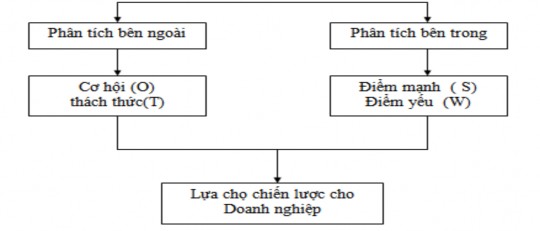
Figure 1.2: Competitiveness analysis model
External analysis: Is the analysis of external environmental factors that affect the competitiveness of the business, thereby helping to find opportunities as well as challenges for the business.
External factors can be economic factors, political factors, legal factors, socio-cultural factors, scientific and technological factors, natural factors, etc. These factors indirectly affect the competitiveness of enterprises. Therefore, enterprises need to study and analyze external environmental factors to increase opportunities, reduce challenges and limit risks, and based on that analysis, choose appropriate strategies for the enterprise.
Internal analysis: Is the analysis of internal factors of the enterprise or internal factors of the enterprise, the analysis focuses mainly on the following issues: organizational structure; management staff; financial capacity, technological level...
From analyzing the above factors, businesses will find out their strengths and weaknesses compared to their competitors. Businesses will know where they will stand in the market, the current market share of other businesses, the ability to increase market share of the business in the near future, the ability to develop the business in the future... helping businesses know their strengths and weaknesses to overcome and solve problems that are and will arise for the business.
- Strengths : are the jobs that the bank does better than its competitors. These can be easily recognizable strengths such as dominant market share, large capital, modern technology, high-quality human resources... and strengths that can only be felt such as adaptability, service attitude of the staff, brand reputation...
- Weaknesses : are the limitations of the bank, the things the bank does not do well compared to its competitors. These points can be recognizable or not easily recognizable, in a latent form. Being able to accurately identify the causes and impacts of weaknesses on business operations will help commercial banks overcome them more effectively.
- Opportunities : There are opportunities that can come from the objective environment, or created by the bank itself thanks to its strengths. Banks must always analyze, search for, and make good use of opportunities as well as create opportunities to promote sustainable development of banking business activities.
- Challenges : are factors, potential risks, and hazards that banks may encounter that make banking operations difficult. These challenges can arise from within or outside the bank.
Table 1.1: SWOT matrix model
Opportunity (O)
O 1, O 2, O 3 ,………………..
List key external opportunities.
Risk (T) T 1, T 2, T 3 ,…………...…… List the key external threats. | |
Strengths (S) S 1 , S 2 , S 3 ,………………... List the strengths within the bank. | Weakness (W) W 1 , W 2 , W 3 ,…………….. List the weaknesses within the bank |
Advantages of SWOT model
- SWOT analysis is a subjective assessment that allows active thinking beyond habitual or instinctive patterns. Data is arranged in SWOT format in a logical order that is easy to understand, easy to present, easy to discuss and can be used in any decision-making process.
- This is a useful tool to help orient and stimulate thinking when analyzing and understanding problems or making decisions in organizing and managing business. In a visual way, SWOT is a theoretical framework based on which we can review strategies, determine the position and direction of the bank, analyze business proposals or any ideas related to the interests of the bank.
Disadvantages of SWOT model
Besides the above advantages, analyzing the competitive capacity of commercial banks using the SWOT model also has some limitations such as:
- SWOT also has some limitations when arranging information with a tendency to simplify. This makes it possible for a lot of information to be forced into a position that is not suitable for
In essence, many topics can be neutralized or confused between the two extremes of SW and OT due to the analyst's perspective.
- Because SWOT analysis cannot quantify criteria, in order to avoid subjective reasoning and imposition affecting the quality of the analysis, the analyst must collect information from many different sources.
- The analysis of factors in each box of strengths, weaknesses, opportunities and challenges in the SWOT matrix depends more or less entirely on the understanding and level of the analyst. Therefore, this can create analysis results with different competitive strategy suggestions, even contradictory, making it difficult to make decisions.
- The SWOT matrix only provides feasible strategic options, not a final strategy selection technique, and to decide which strategy is best, the support of other tools such as the BCG matrix, GE matrix... is needed.
- The SWOT model is only applied to directly analyze a bank with its competitors, but analyzing and evaluating the competitive capacity of many banks at the same time, on a large scale at the macro level to perceive, evaluate and rank banks will take a lot of time and effort.
- The biggest limitation of using the SWOT analysis model occurs when an organization needs to make a decision, which is uncertain whether the decision is wise or not, because the decision is based only on analysis for planning.
- SWOT analysis requires a large amount of time and effort when applied to a large organization, or in a small business where there is no consensus, sometimes an attempt to reach a consensus for a common goal can cause conflict with other members of the group.
- SWOT analysis creates a list of strengths, weaknesses, opportunities and threats of an organization to help the analyst identify the points that need attention, but each element in the SWOT matrix is not assigned a certain weight or does not indicate the level of importance of each element to the organization. To determine which is the target element requires discussion and thus will be time-consuming and prone to disagreement. Thus, building strategic plans and business decisions will be difficult.
Conditions for applying SWOT model in analyzing competitive capacity of banks
- About people: SWOT analysis is an effective tool in strategic planning as well as business plans, so it requires people to:
+ Have teamwork skills, creativity,
+ Ability to collect, analyze and process information.
+ Well-trained and have in-depth understanding of banking operations, competition law and practical knowledge of the competitive situation of banks;
+ Understand the content and application of the SWOT model.
- Technical facilities: There is a database of information on the economic, political and social situation and especially a database on the activities of the industry in general and of the bank that needs to be analyzed and compared.
- Technology: Use a computer system equipped with office application software and internet connection to research and update information.
1.2.2. Internal-External Factors Matrix Model (IE)
IE Matrix (Internal - External Matrix) is a tool to evaluate the internal and external factors of a bank by placing different SBUs (Strategic Business Units) of a bank in a table with 9 cells. This matrix is based on 2 main aspects:
Internal Factor Evaluation (IFE) Matrix: Internal Factors Evaluation Matrix (IFE matrix) summarizes and evaluates the bank's key strengths and weaknesses. The IFE matrix is developed in five steps:
Step 1: Make a list of the critical success factors identified during the internal assessment. This list should include 10 to 20 factors, including both strengths and weaknesses.
Step 2: Assign an importance rating from 0.0 (not important) to 1.0 (very important) to each factor. This rating indicates the relative importance