
Thus, the layer of local language plays a very important role in the historical novels of writer Nguyen Truong Thanh. This layer of language brings the breath of the times and the locality to the historical novels, convincing readers with specific and detailed evidence. At the same time, it is also a means of exploring the life inside the human soul. In particular, this layer of language gives readers faith in the truth of the details told, while the layer of modern language helps readers live in the real atmosphere of the story, feel the closeness and familiarity in each narration, reviving the "chronicle corpses". More importantly, with this layer of language, the writer has the conditions to deeply explore the deep, hidden world of the human soul. The whole nature of the human being is revealed through words.
3.3.2. Narrator's language
In novels, the narrator plays an important role. As a narrator, the writer has the opportunity to deeply penetrate into the different circumstances of the characters and events described, to examine and evaluate the characters and events reflected. Not all literary works have a narrator character. For example, in plays, the evaluation and observation of characters are embedded in the language, actions and attitudes of the characters. In the historical novels of writer Nguyen Truong Thanh, the image of the narrator character occupies an important and quite prominent position. The narrator character appears almost from the beginning to the end of the book to introduce the character, lead the events, participate in further discussions about the character, help readers understand more about the character, and correctly evaluate the character according to the author's own evaluation.
Writer Nguyen Truong Thanh is a Kinh ethnic but has been deeply attached to and understands the people, land and customs of this place.
Maybe you are interested!
-
 Solutions for tourism development in Tien Lang - 10
zt2i3t4l5ee
zt2a3gstourism, tourism development
zt2a3ge
zc2o3n4t5e6n7ts
- District People's Committees and authorities of communes with tourist attractions should support, promote, and provide necessary information to people, helping them improve their knowledge about tourism. Raise tourism awareness for local people.
*
* *
Due to limited knowledge and research time, the thesis inevitably has shortcomings. Therefore, I look forward to receiving guidance from teachers, experts as well as your comments to make the thesis more complete.
Chapter III Conclusion
Through the issues presented in Chapter II, we can come to some conclusions:
Based on the strengths of available tourism resources, the types of tourism in Tien Lang that need to be promoted in the coming time are sightseeing and resort tourism, discovery tourism, weekend tourism. To improve the quality and diversify tourism products, Tien Lang district needs to combine with local cultural tourism resources, at the same time combine with surrounding areas, build rich tourism products. The strengths of Tien Lang tourism are eco-tourism and cultural tourism, so developing Tien Lang tourism must always go hand in hand with restoring and preserving types of cultural tourism resources. Some necessary measures to support and improve the efficiency of exploiting tourism resources in Tien Lang are: strengthening the construction of technical facilities and labor force serving tourism, actively promoting and advertising tourism, and expanding forms of capital mobilization for tourism development.
CONCLUDE
I Conclusion
1. Based on the results achieved within the framework of the thesis's needs, some basic conclusions can be drawn as follows:
Tien Lang is a locality with great potential for tourism development. The relatively abundant cultural tourism resources and ecological tourism resources have great appeal to tourists. Based on this potential, Tien Lang can build a unique tourism industry that is competitive enough with other localities within Hai Phong city and neighboring areas.
In recent years, the exploitation of the advantages of resources to develop tourism and build tourist routes in Tien Lang has not been commensurate with the available potential. In terms of quantity, many resource objects have not been brought into the purpose of tourism development. In terms of time, the regular service time has not been extended to attract more visitors. Infrastructure and technical facilities are still weak. The labor force is still thin and weak in terms of expertise. Tourism programs and routes have not been organized properly, the exploitation content is still monotonous, so it has not attracted many visitors. Although resources have not been mobilized much for tourism development, they are facing the risk of destruction and degradation.
2. Based on the results of investigation, analysis, synthesis, evaluation and selective absorption of research results of related topics, the thesis has proposed a number of necessary solutions to improve the efficiency of exploiting tourism resources in Tien Lang such as: promoting the restoration and conservation of tourism resources, focusing on investment and key exploitation of ecotourism resources, strengthening the construction of infrastructure and tourism workforce. Expanding forms of capital mobilization. In addition, the thesis has built a number of tourist routes of Hai Phong in which Tien Lang tourism resources play an important role.
Exploiting Tien Lang tourism resources for tourism development is currently facing many difficulties. The above measures, if applied synchronously, will likely bring new prospects for the local tourism industry, contributing to making Tien Lang tourism an important economic sector in the district's economic structure.
REFERENCES
1. Nhuan Ha, Trinh Minh Hien, Tran Phuong, Hai Phong - Historical and cultural relics, Hai Phong Publishing House, 1993
2. Hai Phong City History Council, Hai Phong Gazetteer, Hai Phong Publishing House, 1990.
3. Hai Phong City History Council, History of Tien Lang District Party Committee, Hai Phong Publishing House, 1990.
4. Hai Phong City History Council, University of Social Sciences and Humanities, VNU, Hai Phong Place Names Encyclopedia, Hai Phong Publishing House. 2001.
5. Law on Cultural Heritage and documents guiding its implementation, National Political Publishing House, Hanoi, 2003.
6. Tran Duc Thanh, Lecture on Tourism Geography, Faculty of Tourism, University of Social Sciences and Humanities, VNU, 2006
7. Hai Phong Center for Social Sciences and Humanities, Some typical cultural heritages of Hai Phong, Hai Phong Publishing House, 2001
8. Nguyen Ngoc Thao (editor-in-chief, Tourism Geography, Hai Phong Publishing House, two volumes (2001-2002)
9. Nguyen Minh Tue and group of authors, Hai Phong Tourism Geography, Ho Chi Minh City Publishing House, 1997.
10. Nguyen Thanh Son, Hai Phong Tourism Territory Organization, Associate Doctoral Thesis in Geological Geography, Hanoi, 1996.
11. Decision No. 2033/QD – UB on detailed planning of Tien Lang town, Hai Phong city until 2020.
12. Department of Culture, Information, Hai Phong Museum, Hai Phong relics
- National ranked scenic spot, Hai Phong Publishing House, 2005. 13. Tien Lang District People's Committee, Economic Development Planning -
Culture - Society of Tien Lang district to 2010.
14.Website www.HaiPhong.gov.vn
APPENDIX 1
List of national ranked monuments
STT
Name of the monument
Number, year of decisiondetermine
Location
1
Gam Temple
938 VH/QĐ04/08/1992
Cam Khe Village- Toan Thang commune
2
Doc Hau Temple
9381 VH/QĐ04/08/1992
Doc Hau Village –Toan Thang commune
3
Cuu Doi Communal House
3207 VH/QĐDecember 30, 1991
Zone II of townTien Lang
4
Ha Dai Temple
938 VH/QĐ04/08/1992
Ha Dai Village –Tien Thanh commune
APPENDIX II
STT
Name of the monument
Number, year of decision
Location
1
Phu Ke Pagoda Temple
178/QD-UBJanuary 28, 2005
Zone 1 - townTien Lang
2
Trung Lang Temple
178/QD-UBJanuary 28, 2005
Zone 4 – townTien Lang
3
Bao Khanh Pagoda
1900/QD-UBAugust 24, 2006
Nam Tu Village -Kien Thiet commune
4
Bach Da Pagoda
1792/QD-UB11/11/2002
Hung Thang Commune
5
Ngoc Dong Temple
177/QD-UBNovember 27, 2005
Tien Thanh Commune
6
Tomb of Minister TSNhu Van Lan
2848/QD-UBSeptember 19, 2003
Nam Tu Village -Kien Thiet commune
7
Canh Son Stone Temple
2160/QD-UBSeptember 19, 2003
Van Doi Commune –Doan Lap
8
Meiji Temple
2259/QD-UBSeptember 19, 2002
Toan Thang Commune
9
Tien Doi Noi Temple
477/QD-UBSeptember 19, 2005
Doan Lap Commune
10
Tu Doi Temple
177/QD-UBJanuary 28, 2005
Doan Lap Commune
11
Duyen Lao Temple
177/QD-UBJanuary 28, 2005
Tien Minh Commune
12
Dinh Xuan Uc Pagoda
177/QD-UBJanuary 28, 2005
Bac Hung Commune
13
Chu Khe Pagoda
177/QD-UBJanuary 28, 2005
Hung Thang Commune
14
Dong Dinh
2848/QD-UBNovember 21, 2002
Vinh Quang Commune
15
President's Memorial HouseTon Duc Thang
177/QD-UBJanuary 28, 2005
NT Quy Cao
Ha Dai Temple
Ben Vua Temple
Tien Lang hot spring
div.maincontent .p { color: black; font-family:"Times New Roman", serif; font-style: normal; font-weight: normal; text-decoration: none; font-size: 14pt; margin:0pt; } div.maincontent p { color: black; font-family:"Times New Roman", serif; font-style: normal; font-weight: normal; text-decoration: none; font-size: 14pt; margin:0pt; } div.maincontent .s1 { color: black; font-family:"Times New Roman", serif; font-style: normal; font-weight: normal; font-size: 16pt; } div.maincontent .s2 { color: black; font-family:"Times New Roman", serif; font-style: italic; font-weight: bold; text-decoration: none; font-size: 14pt; } div.maincontent .s3 { color: black; font-family:"Times New Roman", serif; font-style: italic; font-weight: normal; text-decoration: none; font-size: 14pt; } div.maincontent .s4 { color: black; font-family:"Times New Roman", serif; font-style: normal; font-weight: normal; font-size: 14pt; } div.maincontent .s5 { color: black; font-family:"Times New Roman", serif; font-style: normal; font-weight: bold; font-size: 14pt; } div.maincontent .s6 { color: black; font-family:"Times New Roman", serif; font-style: normal; font-weight: normal; text-decoration: none; font-size: 14pt; } div.maincontent .s7 { color: black; font-family:"Times New Roman", serif; font-style: normal; font-weight: bold; text-decoration: none; font-size: 14pt; } div.maincontent .s8 { color: black; font-family:"Times New Roman", serif; font-style: normal; font-weight: normal; text-decoration: none; font-size: 9pt; vertical-align: 6pt; } div.maincontent .s9 { color: black; font-family:"Times New Roman", serif; font-style: normal; font-weight: bold; text-decoration: none; font-size: 12pt; } div.maincontent .s11 { color: black; font-family:"Times New Roman", serif; font-style: normal; font-weight: normal; tex
Solutions for tourism development in Tien Lang - 10
zt2i3t4l5ee
zt2a3gstourism, tourism development
zt2a3ge
zc2o3n4t5e6n7ts
- District People's Committees and authorities of communes with tourist attractions should support, promote, and provide necessary information to people, helping them improve their knowledge about tourism. Raise tourism awareness for local people.
*
* *
Due to limited knowledge and research time, the thesis inevitably has shortcomings. Therefore, I look forward to receiving guidance from teachers, experts as well as your comments to make the thesis more complete.
Chapter III Conclusion
Through the issues presented in Chapter II, we can come to some conclusions:
Based on the strengths of available tourism resources, the types of tourism in Tien Lang that need to be promoted in the coming time are sightseeing and resort tourism, discovery tourism, weekend tourism. To improve the quality and diversify tourism products, Tien Lang district needs to combine with local cultural tourism resources, at the same time combine with surrounding areas, build rich tourism products. The strengths of Tien Lang tourism are eco-tourism and cultural tourism, so developing Tien Lang tourism must always go hand in hand with restoring and preserving types of cultural tourism resources. Some necessary measures to support and improve the efficiency of exploiting tourism resources in Tien Lang are: strengthening the construction of technical facilities and labor force serving tourism, actively promoting and advertising tourism, and expanding forms of capital mobilization for tourism development.
CONCLUDE
I Conclusion
1. Based on the results achieved within the framework of the thesis's needs, some basic conclusions can be drawn as follows:
Tien Lang is a locality with great potential for tourism development. The relatively abundant cultural tourism resources and ecological tourism resources have great appeal to tourists. Based on this potential, Tien Lang can build a unique tourism industry that is competitive enough with other localities within Hai Phong city and neighboring areas.
In recent years, the exploitation of the advantages of resources to develop tourism and build tourist routes in Tien Lang has not been commensurate with the available potential. In terms of quantity, many resource objects have not been brought into the purpose of tourism development. In terms of time, the regular service time has not been extended to attract more visitors. Infrastructure and technical facilities are still weak. The labor force is still thin and weak in terms of expertise. Tourism programs and routes have not been organized properly, the exploitation content is still monotonous, so it has not attracted many visitors. Although resources have not been mobilized much for tourism development, they are facing the risk of destruction and degradation.
2. Based on the results of investigation, analysis, synthesis, evaluation and selective absorption of research results of related topics, the thesis has proposed a number of necessary solutions to improve the efficiency of exploiting tourism resources in Tien Lang such as: promoting the restoration and conservation of tourism resources, focusing on investment and key exploitation of ecotourism resources, strengthening the construction of infrastructure and tourism workforce. Expanding forms of capital mobilization. In addition, the thesis has built a number of tourist routes of Hai Phong in which Tien Lang tourism resources play an important role.
Exploiting Tien Lang tourism resources for tourism development is currently facing many difficulties. The above measures, if applied synchronously, will likely bring new prospects for the local tourism industry, contributing to making Tien Lang tourism an important economic sector in the district's economic structure.
REFERENCES
1. Nhuan Ha, Trinh Minh Hien, Tran Phuong, Hai Phong - Historical and cultural relics, Hai Phong Publishing House, 1993
2. Hai Phong City History Council, Hai Phong Gazetteer, Hai Phong Publishing House, 1990.
3. Hai Phong City History Council, History of Tien Lang District Party Committee, Hai Phong Publishing House, 1990.
4. Hai Phong City History Council, University of Social Sciences and Humanities, VNU, Hai Phong Place Names Encyclopedia, Hai Phong Publishing House. 2001.
5. Law on Cultural Heritage and documents guiding its implementation, National Political Publishing House, Hanoi, 2003.
6. Tran Duc Thanh, Lecture on Tourism Geography, Faculty of Tourism, University of Social Sciences and Humanities, VNU, 2006
7. Hai Phong Center for Social Sciences and Humanities, Some typical cultural heritages of Hai Phong, Hai Phong Publishing House, 2001
8. Nguyen Ngoc Thao (editor-in-chief, Tourism Geography, Hai Phong Publishing House, two volumes (2001-2002)
9. Nguyen Minh Tue and group of authors, Hai Phong Tourism Geography, Ho Chi Minh City Publishing House, 1997.
10. Nguyen Thanh Son, Hai Phong Tourism Territory Organization, Associate Doctoral Thesis in Geological Geography, Hanoi, 1996.
11. Decision No. 2033/QD – UB on detailed planning of Tien Lang town, Hai Phong city until 2020.
12. Department of Culture, Information, Hai Phong Museum, Hai Phong relics
- National ranked scenic spot, Hai Phong Publishing House, 2005. 13. Tien Lang District People's Committee, Economic Development Planning -
Culture - Society of Tien Lang district to 2010.
14.Website www.HaiPhong.gov.vn
APPENDIX 1
List of national ranked monuments
STT
Name of the monument
Number, year of decisiondetermine
Location
1
Gam Temple
938 VH/QĐ04/08/1992
Cam Khe Village- Toan Thang commune
2
Doc Hau Temple
9381 VH/QĐ04/08/1992
Doc Hau Village –Toan Thang commune
3
Cuu Doi Communal House
3207 VH/QĐDecember 30, 1991
Zone II of townTien Lang
4
Ha Dai Temple
938 VH/QĐ04/08/1992
Ha Dai Village –Tien Thanh commune
APPENDIX II
STT
Name of the monument
Number, year of decision
Location
1
Phu Ke Pagoda Temple
178/QD-UBJanuary 28, 2005
Zone 1 - townTien Lang
2
Trung Lang Temple
178/QD-UBJanuary 28, 2005
Zone 4 – townTien Lang
3
Bao Khanh Pagoda
1900/QD-UBAugust 24, 2006
Nam Tu Village -Kien Thiet commune
4
Bach Da Pagoda
1792/QD-UB11/11/2002
Hung Thang Commune
5
Ngoc Dong Temple
177/QD-UBNovember 27, 2005
Tien Thanh Commune
6
Tomb of Minister TSNhu Van Lan
2848/QD-UBSeptember 19, 2003
Nam Tu Village -Kien Thiet commune
7
Canh Son Stone Temple
2160/QD-UBSeptember 19, 2003
Van Doi Commune –Doan Lap
8
Meiji Temple
2259/QD-UBSeptember 19, 2002
Toan Thang Commune
9
Tien Doi Noi Temple
477/QD-UBSeptember 19, 2005
Doan Lap Commune
10
Tu Doi Temple
177/QD-UBJanuary 28, 2005
Doan Lap Commune
11
Duyen Lao Temple
177/QD-UBJanuary 28, 2005
Tien Minh Commune
12
Dinh Xuan Uc Pagoda
177/QD-UBJanuary 28, 2005
Bac Hung Commune
13
Chu Khe Pagoda
177/QD-UBJanuary 28, 2005
Hung Thang Commune
14
Dong Dinh
2848/QD-UBNovember 21, 2002
Vinh Quang Commune
15
President's Memorial HouseTon Duc Thang
177/QD-UBJanuary 28, 2005
NT Quy Cao
Ha Dai Temple
Ben Vua Temple
Tien Lang hot spring
div.maincontent .p { color: black; font-family:"Times New Roman", serif; font-style: normal; font-weight: normal; text-decoration: none; font-size: 14pt; margin:0pt; } div.maincontent p { color: black; font-family:"Times New Roman", serif; font-style: normal; font-weight: normal; text-decoration: none; font-size: 14pt; margin:0pt; } div.maincontent .s1 { color: black; font-family:"Times New Roman", serif; font-style: normal; font-weight: normal; font-size: 16pt; } div.maincontent .s2 { color: black; font-family:"Times New Roman", serif; font-style: italic; font-weight: bold; text-decoration: none; font-size: 14pt; } div.maincontent .s3 { color: black; font-family:"Times New Roman", serif; font-style: italic; font-weight: normal; text-decoration: none; font-size: 14pt; } div.maincontent .s4 { color: black; font-family:"Times New Roman", serif; font-style: normal; font-weight: normal; font-size: 14pt; } div.maincontent .s5 { color: black; font-family:"Times New Roman", serif; font-style: normal; font-weight: bold; font-size: 14pt; } div.maincontent .s6 { color: black; font-family:"Times New Roman", serif; font-style: normal; font-weight: normal; text-decoration: none; font-size: 14pt; } div.maincontent .s7 { color: black; font-family:"Times New Roman", serif; font-style: normal; font-weight: bold; text-decoration: none; font-size: 14pt; } div.maincontent .s8 { color: black; font-family:"Times New Roman", serif; font-style: normal; font-weight: normal; text-decoration: none; font-size: 9pt; vertical-align: 6pt; } div.maincontent .s9 { color: black; font-family:"Times New Roman", serif; font-style: normal; font-weight: bold; text-decoration: none; font-size: 12pt; } div.maincontent .s11 { color: black; font-family:"Times New Roman", serif; font-style: normal; font-weight: normal; tex -
 Narrative thinking in historical and cultural novels of Nguyen Xuan Khanh - 7
 -
 Using local historical and cultural relics in teaching Vietnamese history at high schools in Thai Nguyen province - 16
 -
 History of Formation and Development of Thanh Hoa Province
 -
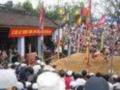
 Ha Doi Temple and the Giai Market Festival – Tien Thanh Commune Ha Doi Temple, a Valuable Historical and Artistic Relic.
Therefore, the language of the narrator - Nguyen Truong Thanh has the following characteristics: It is a simple, easy-to-understand language, trying to minimize the number of Sino-Vietnamese words to use pure Vietnamese words; a language full of emotions (highly expressive: when proud, when angry, sad...) sometimes the narrator seems to blend into the story, into the story. For example, when writing about the land of Lang Son, rich in historical wonders, the writer is very proud of this land, he wrote, described with all his love, pride as a son of this land of peach blossoms: "Nature has bestowed upon my homeland Lang Son majestic mountains, beautiful scenery, cool, fresh climate. The land of peach blossoms, of a unique multi-ethnic culture, a place where the quintessence of the nation converges" [25.13]; with “ the famous landscapes of Dong Dang - To Thi - Nhat - Nhi - Tam Thanh - Chua Tien - Thanh Co... have entered the legendary folk songs of the nation forever” [23.66]; and is the place with “many famous landscapes of the land of peach blossoms, of fairs and markets where the soul-stirring love melodies of Sli, Then, Luon, Phong Slu are heard, where young men and women from all over the villages with unique, colorful costumes gather here to sing love songs day and night” [24.75]; and “the place where our ancestors throughout the process of building and defending the country, national heroes from Le Hoan, Ly Thuong Kiet, Tran Hung Dao to Le Loi, Nguyen Trai, Quang Trung in their glorious feats of arms were not associated with this land” [25.13,14]; and where “ generation after generation they have stood shoulder to shoulder with the people of the whole country, built and protected the fatherland, established glorious military achievements and won Chi Lang in the wars against the Song - pacified the Nguyen, destroyed the Ming, chased away the Qing, and fought the French, which has entered the national poetry as one of the most glorious and brilliant feats in the history of defending the country of the Dai Viet people” [23.66,67]; and that is why “it is not by chance that our people from the past to the present, from the South to the North, from the plains to the
In the highlands, everyone is immersed in their mother's lullaby: "Whoever goes to Lang Son with me - It's worth the effort of my parents to give birth to me" [25.13]...
It is the love for this land rich in historical wonders, where writer Nguyen Truong Thanh spent his entire life, that makes us see, besides the proud, cheerful tone when writing about this beautiful land, rich in culture and many historical wonders - there is another tone, full of anger, sorrow when writing about the cruelty of the enemy towards the people and land here: "They forced the villages to concentrate the people, separating the fish from the water. Many people had to leave their villages to hide in the deep forest, the villages were burned down, the fields in the valleys were abandoned. Some people had their houses burned, some were concentrated, some were imprisoned, some had to be scattered..." [23.196]; and "the enemy was like a swarm of poisonous snakes, silently crawling in and then simultaneously burning the houses of the people, the fire was burning high in the sky, adults frantically hugged their crying children to escape from the fire. Before they could recover, the enemy had already surrounded them outside and opened fire on the people, laughing hysterically and shouting: “Kill them all, burn them all, kill all these communist-following Man people…” [22.222]; and “they concentrated their forces to massacre the people of Vu Le, where the people had contributed the most to the construction and development of the Khuoi Noi base, the headquarters of the National Salvation Army. They captured most of the people in the villages of Na Cai and Ban It. In particular, a village of the Dao people consisting of 16 families was completely destroyed by the enemy, leaving only one survivor” [23.245, 246]…
Especially the language is close to the way of thinking, the way of expressing, the way of feeling, the way of thinking of ethnic minorities. For example, when writing about the birth of the hero Hoang Dai Hue: "The mother had been in labor for three days but the boy had not come out to see the sun. On the fourth day, he was born when the sun had set, his cry echoed throughout the forest. He cried until the next day, when the sun returned to light a fire on the top of the mountain" [21.92]; and "the mist was still
covering the village, the mountains and forests like a giant milk-colored cloak, the indigo-shirted comrades gathered in large numbers” [22. 33]; and “the girls who excelled in the contest were even more enthusiastically cheered on. They were kindly tied on their right wrists by the contest owner and the patriarch with a green thread, the immortal green of the mountains and forests, and the budding symbolizes gentleness, the hope of dreams. They were also sung to by the boys and given silver bracelets” [21.150]…
Thus, with a simple, clear narrative language and a deep understanding of the people, the land and the customs of this place - that writer Nguyen Truong Thanh has expressed accurately, truthfully and touchingly - the history of a mountainous countryside - a remote border area of the Fatherland. That makes the reader feel like living with the historical atmosphere with the people, the specific historical events on this land. That is why writer Nguyen Truong Thanh is considered the most typical historical novelist of Lang Son, the one who made the whole country understand Lang Son, proud and love the beautiful sacred land, full of important historical events of the nation over the past thousands of years. That alone is worthy of respect and love, worthy of being a son of Lang Son.
CONCLUSION
1. Nguyen Truong Thanh is a typical and outstanding novelist of Lang Son's literary life since the 70s (20th century). He is a writer who is deeply attached to the land where he has lived and been attached to for more than half of his life - even though it is not the place where he was born. In him - the inspiration from the beautiful Lang Son, rich in identity and history, has never been exhausted throughout his creative life. On the literary path over the past decades - Nguyen Truong Thanh has constantly thought, searched and created to affirm his own artistic style. He has tried his hand at many genres such as: poetry, short stories, memoirs, film scripts... but historical novels are his forte and most successful genre. Studying his historical novels means studying his greatest achievement, his most outstanding contribution to his literary career in particular, and to the Lang Son Literature and Arts Association in general.
2. The subjects reflected in his novels are the important historical events of the nation associated with the land of Lang Son and the heroes - the elite children of Lang Son who lived, fought steadfastly, and sacrificed heroically on this beloved border land. Or in other words, the heroes - the elite children of Lang Son, the people who have made the history of the struggle against foreign invaders of Lang Son glorious, have become a great and strong inspiration for writer Nguyen Truong Thanh to build his historical novels. They are the children of ethnic minorities in the border area - deeply patriotic, rich in courage and intelligence, indomitable and resilient, ready to sacrifice themselves for the independence and freedom of the country, for the peace of the beloved mountainous border homeland.
In his historical novels, author Nguyen Truong Thanh has reflected quite truthfully and convincingly on these events.
historical periods, historical events, historical figures... with a very vivid and detailed way of telling and describing, making the reader feel like they are living with those historical events and figures. From space to time, from scenery to customs of Lang Son; from appearance, costumes to dialogues, to feelings, thoughts of the characters, the author has shown the noble spirit, outstanding talent of the ethnic minority heroes here. In the process of learning, discovering, reflecting these characters in the work, this historical novelist has focused on praising their heroic traits and their simple traits in daily life (that is, their gentle, simple nature, with deep love for their compatriots and comrades) but in combat, they are very resilient, brave, ready to sacrifice their lives for the revolutionary struggle of the nation.
In particular, in the historical novels of Nguyen Truong Thanh, the author not only reflects historical events and heroic figures of his homeland, Lang Son, but also expresses his love and pride for a homeland rich in cultural identity with many beautiful customs and practices of the ethnic minority communities in this remote border area. One thing that is easy to recognize is: The customs and practices, the festivals, the market days with colorful ethnic costumes as well as the passionate and smooth Sli, Luon, Then singing melodies that captivate people's hearts every spring, when the festival comes... are all expressed with a romantic voice of this typical Lang Son historical novelist.
3. Regarding art - in the process of building his historical characters, writer Nguyen Truong Thanh inherited traditional artistic elements and applied many modern artistic elements. First of all, it is the art of describing the character's appearance, then the art of describing psychology.
The characters are quite flexible. Under his pen, the world of characters appears vividly with different shapes, faces, personality traits, thoughts, feelings, behaviors, actions... Therefore, the world of historical characters in his works is rich, complex, realistic, vivid, and convincing to readers. This characteristic affirms the modernity in historical novels of writer Nguyen Truong Thanh.
The second rather prominent feature in the artistic aspect of Nguyen Truong Thanh's historical novels is the author's unique artistic language. It is a clear, simple, and rich in imagery language, a language that is close to the daily life of the ethnic minorities here. Especially the language imbued with the ethnic character of the mountainous region is close to the feelings, thoughts, and customs of the people here. That language is both suitable for the origin of the characters and suitable for the era of the story. It is these unique artistic characteristics of using descriptive language that have contributed to the writer's success, as well as effectively contributed to creating the writer Nguyen Truong Thanh's own artistic style.
4. It can be affirmed that Nguyen Truong Thanh's historical novels are the most typical achievements of Lang Son literature, which is the " specialty " in the literary life of a border province. Through initial surveys and research, we can point out a number of reasons (objective and subjective, direct and indirect) leading to the achievements of Nguyen Truong Thanh's historical novels: Lang Son - a sacred land, every inch of land here is associated with the miracles and legends of the nation; Lang Son is the homeland of the community of ethnic minorities in Vietnam - this place has a tradition of patriotism that always maintains the beloved border area of the country.
The Fatherland - a beautiful land, rich in cultural identity... All of these factors have contributed to creating a special aesthetic area, a strong source of inspiration - strongly affecting the aesthetic emotions so that historical novelist Nguyen Truong Thanh can express the values of Truth - Goodness - Beauty in his historical novels.