
UNIT 5 THE HEATING AND AIR-CONDITIONING SYSTEMS
Article code: MH09-05
Introduce:
In this lesson students are provided with some basic terminology related to the heating and air conditioning systems of cars. Students read and understand the text about the heating and air conditioning systems of cars and practice exercises to practice reading comprehension skills.
Target:
- Knowledge:
+ Recognize basic terms related to car heating and air conditioning systems such as refrigerant, compressor, condenser, evaporator, heater core, thermostatic control valve, heat pipe, etc.
+ Understand the main content of the English lesson about the heating and air conditioning system of a car.
- Skill:
+ Read and understand English text related to car heating and air conditioning systems.
- Self-control and responsibility:
+ Develop the ability to work independently and in pairs/groups.
+ Self-evaluate your own results or those of your pair/group members after completing the exercise.
THE HEATING AND AIR-CONDITIONING SYSTEMS
Heating and air-conditioning systems do little for the operation of a vehicle; they merely provide comfort for the passengers of the vehicle. Both systems are dependent on the proper operation of the engine. The heating system basically adds heat to the vehicle's interior, whereas air conditioning removes heat.
1. Heating Systems
To meet safety standards, all vehicles must be equipped with passenger compartment heating and windshield defrosting systems. The main components of an automotive heating system are the heater core, the heater control valve, the blower motor and the fan, and the heater and defroster ducts. The heating system works with the engine's cooling system and converts the heat from the coolant circulating inside the engine to hot air, which is blown into the passenger compartment.
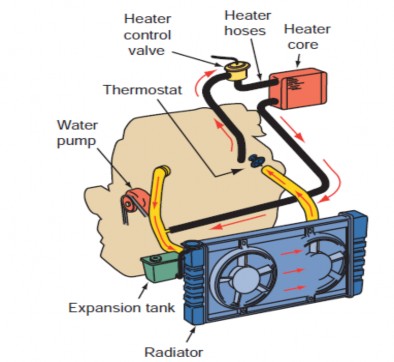
Figure 5.1 A typical heating system
A heater hose transfers hot coolant from the engine to the heater control valve and then to the heater core inlet. As the coolant circulates through the core, heat is transferred from the coolant to the tubes and fins of the core. Air blown through the core by the motor blower and the fan then picks up the heat from the surfaces of the core and transfers it into the passenger compartment. After giving up its heat, the coolant is then pumped out through the heater core outlet, where it is returned to the engine's cooling system to be heated again.
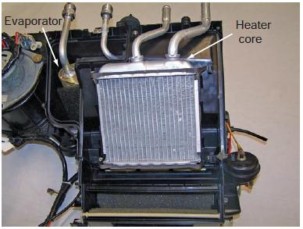
Figure 5.2 A heater core
2. Air Conditioning
Air-conditioning basically supplies cool air into the passenger compartment. It also removes moisture from the air. An A/C system cools the air by moving heat from the confined space of the passenger compartment to the atmosphere.
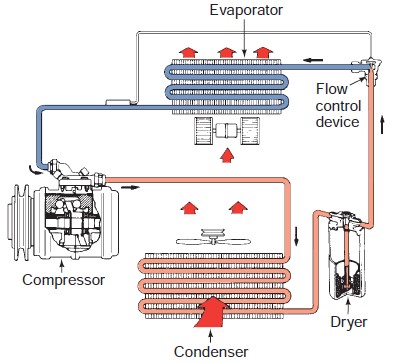
Figure 5.3 A typical air-conditioning system
Air conditioning is becoming standard equipment, rather than an option, on most vehicles. It uses refrigerant to remove the heat from the air and a blower to send the cool air into the passenger compartment.
Until 1992, a refrigerant called CFC-12 was standard on most vehicles. When it was found to contribute to the depletion of the ozone player, CFC-12 was no longer used. It was replaced by R-134a. Production of CFC-12 ceased at the end of 1995. If your car was built before 1992, you may have trouble replacing the air conditioner's refrigerant. Conversions to an alternative refrigerant (R-134a) are
expensive, so think about this fact before buying a pre-1992 used vehicle.
Task 1 Match the words and the correct definitions
2. inlet
3. air conditioning
4. passenger compartment
5. valve
6. outlet
7. blower
8. option
1. heater coreA. a device that produces a current of air B. a device for controlling the flow of a liquid or gas, letting it move in one direction only C. something that you can choose to have or do; the freedom to choose what you do D. a system that cools and dries the air in a building or car E. a separate section in a car or plane for passengers' seats F. a device for warming the air or water in an automotive engine G. an opening through which liquid, air or gas can enter a machine H. a pipe or hole through which liquid or gas can flow out |
Maybe you are interested!
-
 Autocad Textbook for Metal Cutting Profession - College of Technology - Dong Thap Vocational College - 12
 -
 Some Measures to Manage English Teaching Activities at Pakse Pedagogical College
 -
 Office Informatics Information Technology Profession - College - Dong Thap Community College - 2
 -
 Diesel engine maintenance and repair - Automotive Technology Profession For College Level Part 1 - 1
 -
 English for Industrial Electronics - College of Industry and Commerce - 14
Task 2 Read the text and circle the correct answers
1. The heating system on a car helps ………………into the passenger compartment.
A-send the cool air B-send the warm air C-send the cold air
2. A vehicle needs the heating and air-conditioning systems for its operation. A-True B-False C-Not given
3. The hot coolant from the engine is brought to the heater control valve thanks to ………….
Aa heater hose Three heater core inlet Ca heater core outlet
4. The function of the heat core is ………………………. A-providing cold air for the passenger compartment
B-producing heat for the passenger compartment
C-providing enough air for the passenger compartment
5. The heat from the air in the car is removed thanks to the ………………of the air-conditioning system.
A-blower B-standard equipment C-refrigerant
6. The cool air is sent into the passenger compartment thanks to
………………of the air-conditioning system.
A-fan B-standard equipment C-refrigerant
Task 3 Write short answers to these questions using NO MORE THAN THREE WORDS
1. Besides a passenger compartment heating system, what must a vehicle have to meet safety standards?
…………………………………………………………………………………………………………………
2. What does the heater hose move from the engine to the heater control valve and then to the heater core inlet?
…………………………………………………………………………………………………………………
3. What helps move the air through the heater core?
…………………………………………………………………………………………………………………
4. After giving its heat, where does the coolant go to be heated again?
…………………………………………………………………………………………………………………
5. Why did automobile manufacturers stop using CFC-12 for the air-conditioning system?
…………………………………………………………………………………………………………………
Task 4 What do the underlined words refer to?
1. Heating and air-conditioning systems do little for the operation of a vehicle.
Theymerely provide comfort for the passengers of the vehicle. A-the air-conditioning systems
B-the passengers of the vehicle
C-the heating and air-conditioning systems
2. Air blown through the core by the blower motor and fan then picks up the heat from the surfaces of the core and transfers itinto the passenger compartment.
A-the heat B-the core C-the air with heat
3. Until 1992, a refrigerant called CFC-12 was standard on most vehicles. When itwas found to contribute to the depletion of the ozone player, CFC-12 was no longer used.
Aa refrigerant B-CFC-12 C-vehicle
4. Of course, some vehicles have more complicated systems such as two fans run by electric thermostats thataren't connected to the water pump at all.
A-some vehicles B-electric thermostats C-two fans
5. Air conditioning is becoming standard equipment, rather than an option, on most vehicles. Ituses refrigerant to remove the heat from the air and a blower to send the cool air into the passenger compartment.
A-Air conditioning B-an option C-most vehicles
Task 5 Fill in each blank with a suitable word or phrase
fan circulates operating interior heat
The function of the heater core is to provide (1) ……………..for the passenger compartment. The same liquid that the water pump circulates throughout the engine also (2) ……………..through the heater core when engine is (5)………………. When you get chilly, you can direct air across the heater core and heat the (3)
………………of your vehicle by turning on the inside (4)……………..
Task 6 Translate into Vietnamese
1. Heating and air-conditioning systems do little for the operation of a vehicle. They merely provide comfort for the passengers of the vehicle. The heating system basically adds heat to the vehicle's interior, whereas air conditioning removes heat.
…………………………………………………………………………………………………………………
…………………………………………………………………………………………………………………
…………………………………………………………………………………………………………………
2. The heating system works with the engine's cooling system and converts the
heat from the coolant circulates inside the engine to hot air, which is blown into the passenger compartment.
…………………………………………………………………………………………………………………
…………………………………………………………………………………………………………………
…………………………………………………………………………………………………………………
3. Air blown through the core by the blower motor and fan then picks up the heat from the surfaces of the core and transfers it into the passenger compartment.
…………………………………………………………………………………………………………………
…………………………………………………………………………………………………………………
4. Air conditioning is becoming standard equipment, rather than an option, on most vehicles. It uses refrigerant to remove the heat from the air and a blower to send the cool air into the passenger compartment.
…………………………………………………………………………………………………………………
…………………………………………………………………………………………………………………
…………………………………………………………………………………………………………………
Vocabulary
+ air-conditioning system (n) air-conditioning system
+ heat (n) heat; (v) to heat, to heat up
+ remove (v) to remove, to take away
+ safety standard (n) safety standard
+ be equipped with (v) be equipped with
+ passenger compartment (n) passenger compartment
+ windshield (n) windshield
+ windshield defrosting (n)
+ operate (v) operate
+ heater core (n) heater core
+ heater control valve (n) heater control valve
+ condenser (n) condenser, condenser
+evaporator (n) evaporator
+ heating system (n) heating system+ interior (n) interior, inside part + inside fan (n) inside fan + standard equipment (n) standard equipment + option (n) choice + refrigerant (n) refrigerant, coolant + remove (v) to remove, to take away + blower (n) fan + defroster duct (n) defrosting duct + blow – blew – blown: blow + convert (v) to convert + heater hose (n) heater hose + heater core inlet (n) the passageway for coolant to enter the heater core + heater core outlet (n) the way the coolant goes out to the heater core + dryer (n) dryer, dryer |
UNIT 6 THE FUEL SYSTEM -BASIC COMPONENTS
Article code: MH09-06
Introduce:
In this lesson students are provided with some basic terminology related to the basic components of the fuel system in a car. Students read and understand the lesson about the basic components of the fuel system in a car.
Target:
- Knowledge:
+ Recognize basic terms related to basic components of the fuel system on a car such as fuel tank, fuel line, float, fuel gauge, fuel injection system, fuel filter, etc.
+ Understand the main content of the English lesson about the basic components of the fuel system on a car as above.
- Skill:
+ Read and understand the content of the English lesson about the basic components of the fuel system in a car.
- Self-control and responsibility:
+ Develop the ability to work independently and in pairs/groups.
+ Self-evaluate your own results or those of your pair/group members after completing the exercise.
THE FUEL SYSTEM -BASIC COMPONENTS
Fuel tank
The fuel tank is a metal or plastic composite container , usually located under the trunk compartment.
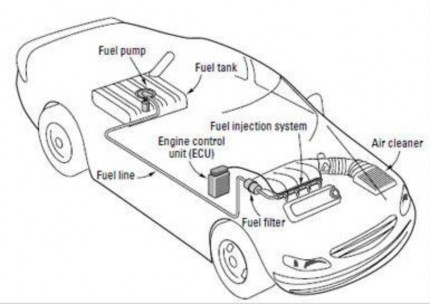
Figure 6.1 A typical fuel system
Inside the fuel tank is a little floatthat bobs up and down on the surface of the fuel, sending messages to the fuel gaugeon your dashboard so that you can tell when you have to buy more gasoline. Although some vehicles run on diesel oil or other alternative fuels, presently most are gasoline-powered, so I usually refer to fuel as gasoline .
Fuel lines and fuel pump
The fuel pump pump s the gasoline through the fuel lines, which runs under your car from the fuel tank to the carburetoror fuel injectors. Older cars with carburetors use a mechanical fuel pump that's driven by the engine. Engines with fuel injectionuse an electric fuel pump that may be located in or near the fuel tank.
Fuel filter
The fuel filter does exactly what its name implies - it filters the fuel. As the fuel passes along the fuel line on its way to the fuel injector s or carburetor, it passes through the fuel filter. A small screen inside the fuel filter traps the dirt and rust that would otherwise enter your fuel if you ride around most of the time with a nearly-empty tank. Some vehicles have additional fuel filters between the fuel tank and fuel pump. It's important to change your fuel filters according to the manufacturer's maintenance schedule.
Air cleaner and air filter
The air cleaner cleans the air before it's mixed with fuel. In carbureted engines, the air cleaner is usually large and round with a snorkel sticking out of