
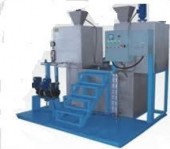
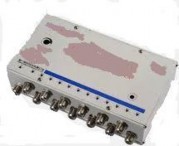
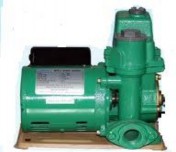
Dispenser Amplifier Automatic vacuum pump
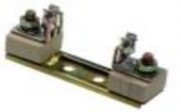
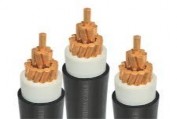
Fuse Electric cable Electric pipeline
Maybe you are interested!
-

 Some Measures to Manage English Teaching Activities at Pakse Pedagogical College
 -
 Electronic Measurement Industrial Electronics - College - Dong Thap Vocational College - 10
 -
 Electronic Measurement Industrial Electronics - College - Dong Thap Vocational College - 7
 -
 English for Automotive Technology - TC College - Dong Thap Vocational College - 5
 -
 Example Illustrating a Summary of an English Text
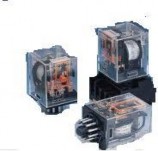

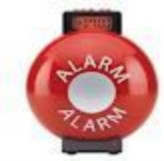
Relay Ceiling roses Arlam bell
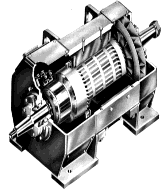
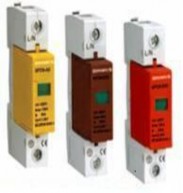

Synchronous machine Surge arrester Lightning arrrester
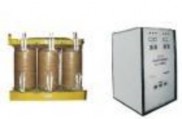
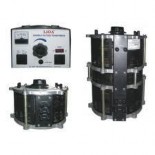
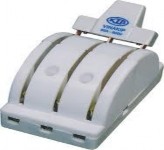
Step-down transformer Stepless transformer Three phase circuit breaker
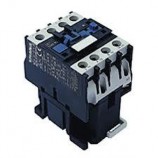
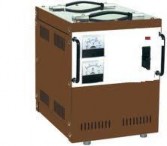
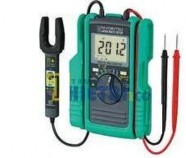
Magnetic contactor Voltage regulator Universal electricmeter
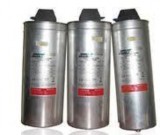
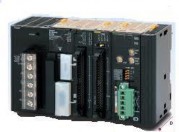
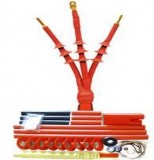
Power capacitor PLC programmer Underground cable
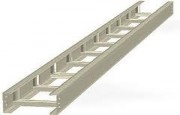
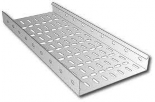
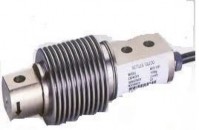
Cable ladder Cable tray Force sensor
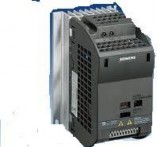
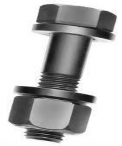

Frequency converter Bolt, nut and washes Hand drill


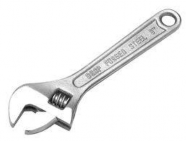
Insulated pliers Spanner Adjustable wrench
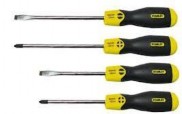
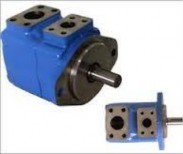
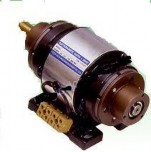
Screwdriver Hydraulic pump Magnetic brake clutch
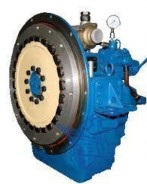
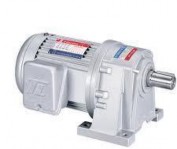
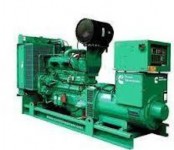
Gear box Gear motor Synchronous generator
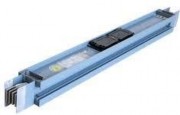
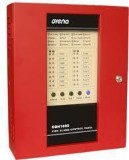
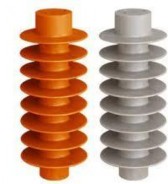
Busbar Central control box Ceramic insulator
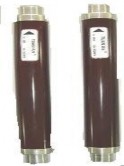
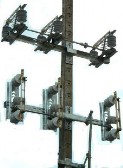

Medium voltage fuses Disconnect switch Band conveyor
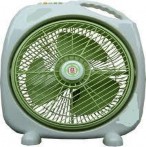

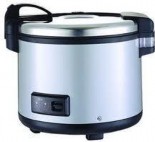
Electric fan Electric iron Electric cooker
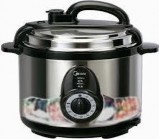
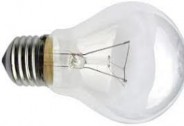
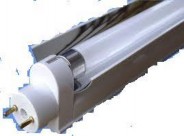
Pressure cooker Light bulb Flourescent tube
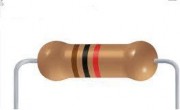
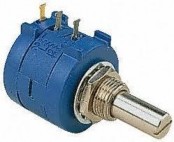
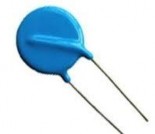
Resistor Rheostat Varistor
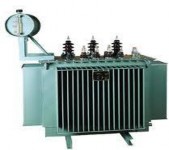
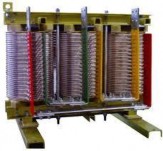
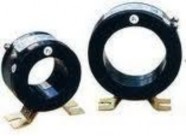
Oil-submerged transformer Dry- type transformer Current transformer
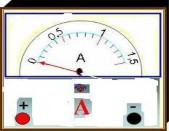
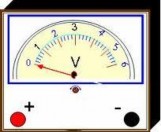
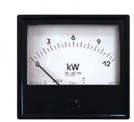
Ammeter Voltmeter Wattmeter
IV. EXERCISE
Objective: To test the learners' achievements in understanding specialized vocabulary as well as grammar, knowledge and reading comprehension skills learned to complete application exercises as well as apply them in real working environments after graduation.
1. Complete the sentences
deficit end amplifier output voltage
a. The Op-Amp produces an ……… ………. that is the difference between the two input terminals, multiplied by the gain A.
b. You can use Op- Amp to ……………… the signals.
c. You can use Op- Amp to ……………… global warming.
d. You can use Op- Amp to ……………… music very loud.
e. You can use Op- Amp to pay off the ………...
2. Answer the following questions
a. Why do we call TON?
................................................................ ................................................................ ..........................
................................................................ ................................................................ ..........................
b. What is an off – delay timer?
................................................................ ................................................................ ..........................
................................................................ ................................................................ ..........................
c. How many basic types of timers? ?
................................................................ ................................................................ ..........................
d. What is the purpose of the gate in the thyristor?
................................................................ ................................................................ ..........................
................................................................ ................................................................ ..........................
e. How do we use the transistor as an amplifier?
................................................................ ................................................................ .............................
................................................................ ................................................................ .............................
3. Decide True or False
a. A useful mode of operation of Transistor Amplifier is the common-emitter configuration
b. The emitter resistor itself provides negative feedback.
c. The resistors are used to effectively form a potential divider to reduce the voltage supplied to the base.
d. An oscillator is a mechanical or electronic device used to oppose the current.
e. The clock frequency of the oscillator is an important factor in determining the rate at which a computer can perform instructions.
4. Listen and Check
power link regenerative value converters digital quadrants constant drives
SR32 devices are AC/DC three-phase …………with a full ………..control, which are active in the four ………… to supply constant voltage to the DC link of the AVy and AGy inverters. The SR32 converter is suitable to supply ……. to both single and multiple inverter systems connected to a common DC……….. A part of the regenerated power can be exchanged between the monitoring and regenerating…………..; the exceed power is regenerated back to the Mains via the SR32 converter. The output voltage of the SR32 converter is kept ………within a specified range even if the inverter operates in a ………….mode untill it reaches the full current …… supplied while operating in a rectifier mode.
5. Match the ideas
1. Electronic oscillators
2. When a direct current is applied to such a crystal
3. The SR32 converter
4. The principle of oscillation is
5. The duration of a tick (increment)
a. it vibrates at a frequency
b. are used to generate signals in computers
c. vary with the vendor and the timebase used
d. is suitable to supply power to both single and multiple inverter systems connected to a common DC link.
e . that a periodic fluctuation between two things is based on changes in energy
V. CONVERSATION
Objective: To develop communication skills for learners so that they can confidently communicate in the working environment .
Isabel: Hi, Oliver
Oliver: Hi, Isabel. How's everything? Isabel: Well. Thanks. How about you? Oliver: Fine, Thanks.
Isabel: Do you know how many types of the operational amplifier?
Oliver : Oh, I think there are nine types.
Isabel: Right. And can you tell me its importance?
Oliver : Yes, I can. With the operational amplifier, you can feed the hunger, amplify signals, save the dolphins, differentiate signals, integrate signals, heal the sick, pay off the deficit, buffer signals, end global warming, sum multiple signals, and make music louder.
Isabel: That's great. The operational amplifier is really useful, isn't it?
Oliver: Sure, I like it very much. Isabel: Uh huh. Thanks for your answer. Oliver: You're welcome.
Unit 7: Cell Phone
In order to help learners better understand electronic devices used in households or in industry, this lesson helps learners have knowledge and skills in English to read and understand the structure, technical parameters and operating principles of some basic electronic devices such as batteries, remote controls, alarm systems, recording systems, and at the same time provides learners with specialized English terminology so that learners can use it in a working environment with foreign enterprises and read specialized electrical reference documents in English.
Lesson Objectives:
After completing this lesson, students will be able to use their English knowledge and skills to:
- Read and understand the structure, technical specifications and operating principles of electronic devices such as batteries, remote controls, alarm systems, and recording systems.
- Understand vocabulary and pronounce specialized terms in Electronics correctly.
- Use English modal verbs correctly in context.
- Confident communication in a business environment
Lesson content:
I. VOCABULARY
Objective: Provide learners with English vocabulary in the field of structure, technical parameters and operating principles of some electronic devices so that learners can read and understand technical terms related to some documents in the field of industrial electricity and electronics in English.
Battery (n) : Battery Sulfuric acid (n) : Sulfuric acid Solution (n) : Solution Electrolyte (n) : Electrolyte Reaction (n) : Reaction
Release (n) : Release Recharge (v) : Recharge Maintenance (n) : Maintenance Spillage (n) : Leakage
Instance (n) : Case
Pressure (n) : Pressure
Reseal (v) : Seal
Buzzer (n) : Vibrator Radar (n) : Radar Ultrasonic (adj) : Ultrasonic Reflection (n) : Reflection Chime = bell (n) : Bell
Premises (n) : Facilities, locations
Anatomy (n) : Structure
Circuitry (n) : Circuit diagram Jack (n) : Socket, plug
Shaft (n) : Shaft Pinpoint (v) : Specify Induction (n) : Induction