
Ba Vi National Park has attracted a lot of investment from businesses participating in tourism development, so investment in infrastructure is increasing day by day. Tourism activities have contributed to the economic restructuring of the district and increased income for the people.
The 400m2 core area with an area of 60 hectares is at an altitude of 400 m above sea level, located on the main road to the top of Ba Vi mountain. The infrastructure serving eco-tourism includes works invested in and renovated by the Garden, up to now there are 6 guest houses with a total of about 80 beds; a tennis court; 2.2km of Botanical Garden road, 100m2 dining room; 60m2 refreshment area; 200-seat conference room. In addition, there are 2km of walking paths in the Botanical Garden, lawns, campfire grounds... and ruins of construction works and villas from the French colonial period.
In order for tourism in Ba Vi National Park to develop sustainably, contributing to the socio-economic development of the locality, the Party Committee and authorities at all levels in Ba Vi district always determine that tourism must be associated with the preservation of traditional cultural - historical - revolutionary values, preserving a sustainable ecological environment, improving the material and spiritual life of the people. Based on the attention of Hanoi city, with the aim of bringing the best services to tourists coming to visit and relax, Ba Vi district has coordinated with functional units and enterprises to invest and develop many tourist traffic routes such as: building route 415 to Ha temple, Trung temple, 6.8 km long with a capital of 64 billion VND; upgrading the route from Ba Vi National Park to Thien Son - Suoi Nga tourist area, Long Viet...
Maybe you are interested!
-
 Solutions for tourism development in Tien Lang - 10
zt2i3t4l5ee
zt2a3gstourism, tourism development
zt2a3ge
zc2o3n4t5e6n7ts
- District People's Committees and authorities of communes with tourist attractions should support, promote, and provide necessary information to people, helping them improve their knowledge about tourism. Raise tourism awareness for local people.
*
* *
Due to limited knowledge and research time, the thesis inevitably has shortcomings. Therefore, I look forward to receiving guidance from teachers, experts as well as your comments to make the thesis more complete.
Chapter III Conclusion
Through the issues presented in Chapter II, we can come to some conclusions:
Based on the strengths of available tourism resources, the types of tourism in Tien Lang that need to be promoted in the coming time are sightseeing and resort tourism, discovery tourism, weekend tourism. To improve the quality and diversify tourism products, Tien Lang district needs to combine with local cultural tourism resources, at the same time combine with surrounding areas, build rich tourism products. The strengths of Tien Lang tourism are eco-tourism and cultural tourism, so developing Tien Lang tourism must always go hand in hand with restoring and preserving types of cultural tourism resources. Some necessary measures to support and improve the efficiency of exploiting tourism resources in Tien Lang are: strengthening the construction of technical facilities and labor force serving tourism, actively promoting and advertising tourism, and expanding forms of capital mobilization for tourism development.
CONCLUDE
I Conclusion
1. Based on the results achieved within the framework of the thesis's needs, some basic conclusions can be drawn as follows:
Tien Lang is a locality with great potential for tourism development. The relatively abundant cultural tourism resources and ecological tourism resources have great appeal to tourists. Based on this potential, Tien Lang can build a unique tourism industry that is competitive enough with other localities within Hai Phong city and neighboring areas.
In recent years, the exploitation of the advantages of resources to develop tourism and build tourist routes in Tien Lang has not been commensurate with the available potential. In terms of quantity, many resource objects have not been brought into the purpose of tourism development. In terms of time, the regular service time has not been extended to attract more visitors. Infrastructure and technical facilities are still weak. The labor force is still thin and weak in terms of expertise. Tourism programs and routes have not been organized properly, the exploitation content is still monotonous, so it has not attracted many visitors. Although resources have not been mobilized much for tourism development, they are facing the risk of destruction and degradation.
2. Based on the results of investigation, analysis, synthesis, evaluation and selective absorption of research results of related topics, the thesis has proposed a number of necessary solutions to improve the efficiency of exploiting tourism resources in Tien Lang such as: promoting the restoration and conservation of tourism resources, focusing on investment and key exploitation of ecotourism resources, strengthening the construction of infrastructure and tourism workforce. Expanding forms of capital mobilization. In addition, the thesis has built a number of tourist routes of Hai Phong in which Tien Lang tourism resources play an important role.
Exploiting Tien Lang tourism resources for tourism development is currently facing many difficulties. The above measures, if applied synchronously, will likely bring new prospects for the local tourism industry, contributing to making Tien Lang tourism an important economic sector in the district's economic structure.
REFERENCES
1. Nhuan Ha, Trinh Minh Hien, Tran Phuong, Hai Phong - Historical and cultural relics, Hai Phong Publishing House, 1993
2. Hai Phong City History Council, Hai Phong Gazetteer, Hai Phong Publishing House, 1990.
3. Hai Phong City History Council, History of Tien Lang District Party Committee, Hai Phong Publishing House, 1990.
4. Hai Phong City History Council, University of Social Sciences and Humanities, VNU, Hai Phong Place Names Encyclopedia, Hai Phong Publishing House. 2001.
5. Law on Cultural Heritage and documents guiding its implementation, National Political Publishing House, Hanoi, 2003.
6. Tran Duc Thanh, Lecture on Tourism Geography, Faculty of Tourism, University of Social Sciences and Humanities, VNU, 2006
7. Hai Phong Center for Social Sciences and Humanities, Some typical cultural heritages of Hai Phong, Hai Phong Publishing House, 2001
8. Nguyen Ngoc Thao (editor-in-chief, Tourism Geography, Hai Phong Publishing House, two volumes (2001-2002)
9. Nguyen Minh Tue and group of authors, Hai Phong Tourism Geography, Ho Chi Minh City Publishing House, 1997.
10. Nguyen Thanh Son, Hai Phong Tourism Territory Organization, Associate Doctoral Thesis in Geological Geography, Hanoi, 1996.
11. Decision No. 2033/QD – UB on detailed planning of Tien Lang town, Hai Phong city until 2020.
12. Department of Culture, Information, Hai Phong Museum, Hai Phong relics
- National ranked scenic spot, Hai Phong Publishing House, 2005. 13. Tien Lang District People's Committee, Economic Development Planning -
Culture - Society of Tien Lang district to 2010.
14.Website www.HaiPhong.gov.vn
APPENDIX 1
List of national ranked monuments
STT
Name of the monument
Number, year of decisiondetermine
Location
1
Gam Temple
938 VH/QĐ04/08/1992
Cam Khe Village- Toan Thang commune
2
Doc Hau Temple
9381 VH/QĐ04/08/1992
Doc Hau Village –Toan Thang commune
3
Cuu Doi Communal House
3207 VH/QĐDecember 30, 1991
Zone II of townTien Lang
4
Ha Dai Temple
938 VH/QĐ04/08/1992
Ha Dai Village –Tien Thanh commune
APPENDIX II
STT
Name of the monument
Number, year of decision
Location
1
Phu Ke Pagoda Temple
178/QD-UBJanuary 28, 2005
Zone 1 - townTien Lang
2
Trung Lang Temple
178/QD-UBJanuary 28, 2005
Zone 4 – townTien Lang
3
Bao Khanh Pagoda
1900/QD-UBAugust 24, 2006
Nam Tu Village -Kien Thiet commune
4
Bach Da Pagoda
1792/QD-UB11/11/2002
Hung Thang Commune
5
Ngoc Dong Temple
177/QD-UBNovember 27, 2005
Tien Thanh Commune
6
Tomb of Minister TSNhu Van Lan
2848/QD-UBSeptember 19, 2003
Nam Tu Village -Kien Thiet commune
7
Canh Son Stone Temple
2160/QD-UBSeptember 19, 2003
Van Doi Commune –Doan Lap
8
Meiji Temple
2259/QD-UBSeptember 19, 2002
Toan Thang Commune
9
Tien Doi Noi Temple
477/QD-UBSeptember 19, 2005
Doan Lap Commune
10
Tu Doi Temple
177/QD-UBJanuary 28, 2005
Doan Lap Commune
11
Duyen Lao Temple
177/QD-UBJanuary 28, 2005
Tien Minh Commune
12
Dinh Xuan Uc Pagoda
177/QD-UBJanuary 28, 2005
Bac Hung Commune
13
Chu Khe Pagoda
177/QD-UBJanuary 28, 2005
Hung Thang Commune
14
Dong Dinh
2848/QD-UBNovember 21, 2002
Vinh Quang Commune
15
President's Memorial HouseTon Duc Thang
177/QD-UBJanuary 28, 2005
NT Quy Cao
Ha Dai Temple
Ben Vua Temple
Tien Lang hot spring
div.maincontent .p { color: black; font-family:"Times New Roman", serif; font-style: normal; font-weight: normal; text-decoration: none; font-size: 14pt; margin:0pt; } div.maincontent p { color: black; font-family:"Times New Roman", serif; font-style: normal; font-weight: normal; text-decoration: none; font-size: 14pt; margin:0pt; } div.maincontent .s1 { color: black; font-family:"Times New Roman", serif; font-style: normal; font-weight: normal; font-size: 16pt; } div.maincontent .s2 { color: black; font-family:"Times New Roman", serif; font-style: italic; font-weight: bold; text-decoration: none; font-size: 14pt; } div.maincontent .s3 { color: black; font-family:"Times New Roman", serif; font-style: italic; font-weight: normal; text-decoration: none; font-size: 14pt; } div.maincontent .s4 { color: black; font-family:"Times New Roman", serif; font-style: normal; font-weight: normal; font-size: 14pt; } div.maincontent .s5 { color: black; font-family:"Times New Roman", serif; font-style: normal; font-weight: bold; font-size: 14pt; } div.maincontent .s6 { color: black; font-family:"Times New Roman", serif; font-style: normal; font-weight: normal; text-decoration: none; font-size: 14pt; } div.maincontent .s7 { color: black; font-family:"Times New Roman", serif; font-style: normal; font-weight: bold; text-decoration: none; font-size: 14pt; } div.maincontent .s8 { color: black; font-family:"Times New Roman", serif; font-style: normal; font-weight: normal; text-decoration: none; font-size: 9pt; vertical-align: 6pt; } div.maincontent .s9 { color: black; font-family:"Times New Roman", serif; font-style: normal; font-weight: bold; text-decoration: none; font-size: 12pt; } div.maincontent .s11 { color: black; font-family:"Times New Roman", serif; font-style: normal; font-weight: normal; tex
Solutions for tourism development in Tien Lang - 10
zt2i3t4l5ee
zt2a3gstourism, tourism development
zt2a3ge
zc2o3n4t5e6n7ts
- District People's Committees and authorities of communes with tourist attractions should support, promote, and provide necessary information to people, helping them improve their knowledge about tourism. Raise tourism awareness for local people.
*
* *
Due to limited knowledge and research time, the thesis inevitably has shortcomings. Therefore, I look forward to receiving guidance from teachers, experts as well as your comments to make the thesis more complete.
Chapter III Conclusion
Through the issues presented in Chapter II, we can come to some conclusions:
Based on the strengths of available tourism resources, the types of tourism in Tien Lang that need to be promoted in the coming time are sightseeing and resort tourism, discovery tourism, weekend tourism. To improve the quality and diversify tourism products, Tien Lang district needs to combine with local cultural tourism resources, at the same time combine with surrounding areas, build rich tourism products. The strengths of Tien Lang tourism are eco-tourism and cultural tourism, so developing Tien Lang tourism must always go hand in hand with restoring and preserving types of cultural tourism resources. Some necessary measures to support and improve the efficiency of exploiting tourism resources in Tien Lang are: strengthening the construction of technical facilities and labor force serving tourism, actively promoting and advertising tourism, and expanding forms of capital mobilization for tourism development.
CONCLUDE
I Conclusion
1. Based on the results achieved within the framework of the thesis's needs, some basic conclusions can be drawn as follows:
Tien Lang is a locality with great potential for tourism development. The relatively abundant cultural tourism resources and ecological tourism resources have great appeal to tourists. Based on this potential, Tien Lang can build a unique tourism industry that is competitive enough with other localities within Hai Phong city and neighboring areas.
In recent years, the exploitation of the advantages of resources to develop tourism and build tourist routes in Tien Lang has not been commensurate with the available potential. In terms of quantity, many resource objects have not been brought into the purpose of tourism development. In terms of time, the regular service time has not been extended to attract more visitors. Infrastructure and technical facilities are still weak. The labor force is still thin and weak in terms of expertise. Tourism programs and routes have not been organized properly, the exploitation content is still monotonous, so it has not attracted many visitors. Although resources have not been mobilized much for tourism development, they are facing the risk of destruction and degradation.
2. Based on the results of investigation, analysis, synthesis, evaluation and selective absorption of research results of related topics, the thesis has proposed a number of necessary solutions to improve the efficiency of exploiting tourism resources in Tien Lang such as: promoting the restoration and conservation of tourism resources, focusing on investment and key exploitation of ecotourism resources, strengthening the construction of infrastructure and tourism workforce. Expanding forms of capital mobilization. In addition, the thesis has built a number of tourist routes of Hai Phong in which Tien Lang tourism resources play an important role.
Exploiting Tien Lang tourism resources for tourism development is currently facing many difficulties. The above measures, if applied synchronously, will likely bring new prospects for the local tourism industry, contributing to making Tien Lang tourism an important economic sector in the district's economic structure.
REFERENCES
1. Nhuan Ha, Trinh Minh Hien, Tran Phuong, Hai Phong - Historical and cultural relics, Hai Phong Publishing House, 1993
2. Hai Phong City History Council, Hai Phong Gazetteer, Hai Phong Publishing House, 1990.
3. Hai Phong City History Council, History of Tien Lang District Party Committee, Hai Phong Publishing House, 1990.
4. Hai Phong City History Council, University of Social Sciences and Humanities, VNU, Hai Phong Place Names Encyclopedia, Hai Phong Publishing House. 2001.
5. Law on Cultural Heritage and documents guiding its implementation, National Political Publishing House, Hanoi, 2003.
6. Tran Duc Thanh, Lecture on Tourism Geography, Faculty of Tourism, University of Social Sciences and Humanities, VNU, 2006
7. Hai Phong Center for Social Sciences and Humanities, Some typical cultural heritages of Hai Phong, Hai Phong Publishing House, 2001
8. Nguyen Ngoc Thao (editor-in-chief, Tourism Geography, Hai Phong Publishing House, two volumes (2001-2002)
9. Nguyen Minh Tue and group of authors, Hai Phong Tourism Geography, Ho Chi Minh City Publishing House, 1997.
10. Nguyen Thanh Son, Hai Phong Tourism Territory Organization, Associate Doctoral Thesis in Geological Geography, Hanoi, 1996.
11. Decision No. 2033/QD – UB on detailed planning of Tien Lang town, Hai Phong city until 2020.
12. Department of Culture, Information, Hai Phong Museum, Hai Phong relics
- National ranked scenic spot, Hai Phong Publishing House, 2005. 13. Tien Lang District People's Committee, Economic Development Planning -
Culture - Society of Tien Lang district to 2010.
14.Website www.HaiPhong.gov.vn
APPENDIX 1
List of national ranked monuments
STT
Name of the monument
Number, year of decisiondetermine
Location
1
Gam Temple
938 VH/QĐ04/08/1992
Cam Khe Village- Toan Thang commune
2
Doc Hau Temple
9381 VH/QĐ04/08/1992
Doc Hau Village –Toan Thang commune
3
Cuu Doi Communal House
3207 VH/QĐDecember 30, 1991
Zone II of townTien Lang
4
Ha Dai Temple
938 VH/QĐ04/08/1992
Ha Dai Village –Tien Thanh commune
APPENDIX II
STT
Name of the monument
Number, year of decision
Location
1
Phu Ke Pagoda Temple
178/QD-UBJanuary 28, 2005
Zone 1 - townTien Lang
2
Trung Lang Temple
178/QD-UBJanuary 28, 2005
Zone 4 – townTien Lang
3
Bao Khanh Pagoda
1900/QD-UBAugust 24, 2006
Nam Tu Village -Kien Thiet commune
4
Bach Da Pagoda
1792/QD-UB11/11/2002
Hung Thang Commune
5
Ngoc Dong Temple
177/QD-UBNovember 27, 2005
Tien Thanh Commune
6
Tomb of Minister TSNhu Van Lan
2848/QD-UBSeptember 19, 2003
Nam Tu Village -Kien Thiet commune
7
Canh Son Stone Temple
2160/QD-UBSeptember 19, 2003
Van Doi Commune –Doan Lap
8
Meiji Temple
2259/QD-UBSeptember 19, 2002
Toan Thang Commune
9
Tien Doi Noi Temple
477/QD-UBSeptember 19, 2005
Doan Lap Commune
10
Tu Doi Temple
177/QD-UBJanuary 28, 2005
Doan Lap Commune
11
Duyen Lao Temple
177/QD-UBJanuary 28, 2005
Tien Minh Commune
12
Dinh Xuan Uc Pagoda
177/QD-UBJanuary 28, 2005
Bac Hung Commune
13
Chu Khe Pagoda
177/QD-UBJanuary 28, 2005
Hung Thang Commune
14
Dong Dinh
2848/QD-UBNovember 21, 2002
Vinh Quang Commune
15
President's Memorial HouseTon Duc Thang
177/QD-UBJanuary 28, 2005
NT Quy Cao
Ha Dai Temple
Ben Vua Temple
Tien Lang hot spring
div.maincontent .p { color: black; font-family:"Times New Roman", serif; font-style: normal; font-weight: normal; text-decoration: none; font-size: 14pt; margin:0pt; } div.maincontent p { color: black; font-family:"Times New Roman", serif; font-style: normal; font-weight: normal; text-decoration: none; font-size: 14pt; margin:0pt; } div.maincontent .s1 { color: black; font-family:"Times New Roman", serif; font-style: normal; font-weight: normal; font-size: 16pt; } div.maincontent .s2 { color: black; font-family:"Times New Roman", serif; font-style: italic; font-weight: bold; text-decoration: none; font-size: 14pt; } div.maincontent .s3 { color: black; font-family:"Times New Roman", serif; font-style: italic; font-weight: normal; text-decoration: none; font-size: 14pt; } div.maincontent .s4 { color: black; font-family:"Times New Roman", serif; font-style: normal; font-weight: normal; font-size: 14pt; } div.maincontent .s5 { color: black; font-family:"Times New Roman", serif; font-style: normal; font-weight: bold; font-size: 14pt; } div.maincontent .s6 { color: black; font-family:"Times New Roman", serif; font-style: normal; font-weight: normal; text-decoration: none; font-size: 14pt; } div.maincontent .s7 { color: black; font-family:"Times New Roman", serif; font-style: normal; font-weight: bold; text-decoration: none; font-size: 14pt; } div.maincontent .s8 { color: black; font-family:"Times New Roman", serif; font-style: normal; font-weight: normal; text-decoration: none; font-size: 9pt; vertical-align: 6pt; } div.maincontent .s9 { color: black; font-family:"Times New Roman", serif; font-style: normal; font-weight: bold; text-decoration: none; font-size: 12pt; } div.maincontent .s11 { color: black; font-family:"Times New Roman", serif; font-style: normal; font-weight: normal; tex -
 Evaluating the Development Potential of Ornamental Flower Craft Villages in Thu Duc District in the Direction of Tourism Associated with Environmental Protection
 -
 Conditions and Potential for Tourism Development in Sam Son Town Sam Son
 -
 Hai Duong Tourism - Potential, current situation and development solutions - 9
 -
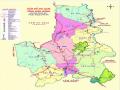 Overview of Tourism Development Potential of Dak Nong Province
To increase the attractiveness of tourist destinations, tourism businesses in Ba Vi National Park have regularly renovated religious and belief structures; upgraded restaurants, rooms, hotels, entertainment areas, etc. The management of business activities and business of tourist areas, destinations, travel agencies, and tourist transportation in the district has had many changes and entered a new stage.
Along with promoting tourism promotion and advertising activities, in recent years, authorities at all levels, functional agencies and management boards of tourist attractions have also paid special attention to ensuring environmental sanitation and security and order at tourist attractions, thereby creating a sense of security and comfort for visitors from all over the world when coming to Ba Vi National Park.
3.2.6. Difficulties in tourism development and sustainable exploitation of forest products
Although Ba Vi National Park has abundant natural resources, is a beautiful and pristine land associated with thousands of years of history, it has brought great economic benefits to Ba Vi district. However, the structure and planning to highlight the unique features of the tourist area need attention in all aspects.
Investment in tourism in Ba Vi National Park is reflected in the road system and accommodation facilities, restaurants, etc. However, most of the investment is from businesses. Important services such as motels, entertainment venues, camping, cuisine, and souvenir shops are spontaneous and therefore lack planning. The routes and tourist attractions in the forest have not been adequately invested in, so they have not attracted tourists to visit and explore nature.
The technical infrastructure for tourism in Ba Vi National Park currently lacks a visitor center to introduce visitors to specimens of the Park's flora and fauna and existing tourism products. Facilities serving the needs of tourists for entertainment are still monotonous and unprofessional. Resort services or overnight accommodation rentals are too few compared to the needs of ecotourism and resort tourism in the Park. Walking routes to enjoy the natural landscape in the forest are only exploited, combined with the project's forest protection routes, focusing on a few places at elevations of 400m or more. According to statistics, in the Park there are about 200 French villa ruins, mainly located at elevations 400, 600-700 and 800... very valuable in history, an ideal resort but has not been restored.
The labor force for tourism activities in Ba Vi National Park is abundant. Every year, thousands of people participate in tourism activities in various fields from accommodation, food and beverage, sightseeing, shopping, entertainment, etc. However, the quality is low, the structure by industry is not suitable, and there is no regular training and knowledge. Mostly unskilled laborers have not been trained and the wages are low.
The propaganda and education work on protecting natural resources and the environment has not been very effective. In some cases, tourism has had negative impacts on forest ecosystems, most notably the disturbance of animals, breaking trees, picking branches, trampling on plants, tourists also leave their mark through carvings on tree branches, in caves, destroying vegetation along the road, catching animals such as butterflies, birds, collecting forest products such as orchids, mushrooms, ornamental plants, increasing the use of biodiversity resources, increasing the amount of waste causing environmental pollution, forming conflicts due to unreasonable benefit sharing among forces participating in forest management.
Lack of community management of forest products: Currently, all localities have conventions on forest protection and management. However, they mainly focus on wood products, with little or no relation to non-timber forest products. Forest products are considered unmanaged and ownerless resources. Therefore, those who take more benefit more, those who take less benefit less. Wild vegetables, wild animals and non-timber forest products in general are almost freely accessible. Therefore, people do not have measures to manage, protect and develop forest products and this resource is deteriorating every day.
Overexploitation: Many forest food species have become poor due to exploitation over many years and are no longer abundant enough to restore their productivity. Some plant species that are very abundant in nature such as wild rattan, wild banana, yam, fig, fig, wild bamboo shoots, especially animals such as
Squirrels, bamboo rats, snails, crabs, rabbits, wild pigs, etc., but now their numbers are very small. The reason is related to over-exploitation and exploitation in an ownerless manner. With plant species, people exploit them without leaving any seed sources for development. Many species are dug up with their roots, cut down with their trees, and uprooted with their roots. Many animal species are caught until the last one. Over-exploitation has made species that are very easy to develop in the wild no longer able to recover. According to studies on non-timber forest products in tropical Southeast Asia. If there are enough seed sources, 1 hectare of natural forest can provide 60 kg of wild game meat and many other valuable non-timber forest products per year.
Unstable market: The market for forest products is unstable. Due to the lack of stable customers and stable contracts, people do not value forest products and do not care about measures to protect and develop them. Most people only care about harvesting these products without contributing to their conservation and development. This is one of the reasons for the decline in the output of these resources over time. If tourist establishments have contracts with local people for forest products, they will have the necessary measures to protect and increase their output. It is believed that the current output of forest products can be increased with good management measures, such as supplementary planting, protection of seed sources, exploitation at appropriate outputs that are balanced with their ability to regenerate in nature, etc.
There has been coordination in developing ecotourism between the local community and the National Park Management Board, but there are still some people who, for their own benefit, affect the natural landscape and lose the trust of tourists. There is no mechanism for coordinating the organization of management, exploitation and sharing of benefits with the local community and tourism businesses.
3.3. Orientation of solutions for sustainable exploitation of tourism products from forests Consulting with local officials, forestry officials and tourists can provide some solutions for sustainable exploitation of forest products.
Tourism products in the forest ecosystem of Ba Vi National Park are as follows.
3.3.1. Solutions to build policy mechanisms and organize and perfect the management apparatus
Ba Vi National Park is under the management of the Ministry of Agriculture and Rural Development. Therefore, the Park Management Board needs to consult the Ministry of Agriculture and Rural Development on issues of exploiting the Park's tourism potential. In order for tourism activities to develop in Ba Vi National Park, it is very important and necessary to have policies and mechanisms to create a legal corridor for a favorable tourism business environment, encourage and support all economic sectors to invest in developing tourist areas. The Management Board should carry out detailed planning and clearly define the boundaries of specific tourist spots in the Park, to set out regulations prohibiting deforestation, hunting animals, destroying natural resources and human resources... preventing illegal use of land within the territory that has been prioritized for tourism development. The Park Management Board needs to coordinate with the leaders of Hanoi city to carry out state management of all areas and tourism activities, in accordance with the regulations and internal rules issued by the tourism law. Tourism development needs the active support of participating organizations and individuals such as: Residential communities, non-governmental organizations, travel companies, Park Management Board, etc. Therefore, the project management board needs to introduce preferential policies for capital sources of local organizations and individuals when promoting tourism development.
The tourism management board does not have a long-term, specific policy plan for tourism development, so it has not created high efficiency for the tourism business activities of the Park. To ensure effective management and promote the active participation of households, there must be a close and synchronous combination between the system.
The management board needs to develop regulations and rules for tourism management and exploitation, along with cultural education and propaganda, raising the knowledge of local people and raising tourists' awareness of the natural environment and culture when participating in local tourism activities.
In order to facilitate the exploitation of resources, construction of technical infrastructure, business activities, development of tourism programs, attracting visitors, supporting the life of the community, etc., the Park Management Board needs to have incentives and priority exemptions for families doing tourism business.
3.3.2. Improve infrastructure and technical facilities for tourism
In general, the infrastructure system in Ba Vi National Park is still lacking and not synchronous. Construction projects are not planned synchronously, they are requested where needed and mainly rely on state budget capital. This is the limitation for Ba Vi to be able to complete the infrastructure system to serve forest protection, scientific research and tourism development.
To attract, meet the needs and to bring tourists good impressions of Ba Vi National Park, the construction of infrastructure is extremely urgent. This construction mainly focuses on upgrading the road system, electricity, domestic water, medical stations, parking lots, etc. Because although tourists travel with the initial intention of enjoying the resource values of the place they come to, but are not met at least, no matter how rich and attractive the tourism resources here are, their own attractiveness will be reduced. Research facilities in Ba Vi National Park are gradually being stabilized. However, many facilities are not really complete, some facilities are still small and need to be expanded.
Besides infrastructure, technical facilities play an important role in determining the quality of tourism products and impressions.
for tourists. Therefore, in order for tourism activities to operate professionally and ensure quality, households participating in tourism activities need to invest in improving their accommodation to serve the accommodation needs of tourists such as: household appliances such as televisions, water heaters, blankets, sheets, pillows, mattresses, etc., cooking utensils and food service for tourists and especially toilets... Only then will tourists want to stay and use the services of the people. Regarding means of transportation, the Management Board will attract investment capital and loans and give priority to helping some households have capital to buy bicycles to meet the needs of tourists traveling, sightseeing and picnicking by bicycle.
In addition, it is necessary to focus on building a parking lot for vehicles for groups of tourists visiting and traveling in Ba Vi. However, the operation and management of this parking lot will be owned by the people under the management and supervision of the Park Management Board. Investing in lending capital to people to buy vehicles will meet the needs of tourists will become easy, compact, simple and satisfy customers.
3.3.3. Solutions to conserve resources, ensure economic and social benefits for the community
To limit the possible harmful impacts on the natural and human environment caused by tourism activities, it is necessary to develop tourism programs combined with the protection of the natural and cultural environment. Local communities need to clearly recognize the value of natural and human tourism resources for tourism development as well as the general landscape, community culture, and their own local identity. They need to be aware of the advantages and disadvantages of tourism activities and tourists affecting resources. Therefore, it is necessary to develop regulations for visiting and codes of conduct for tourists, travel agencies, and tourism service providers to ensure sustainable exploitation of tourism resources, on the basis of long-term conservation and promotion of tourism resources.
Optimally exploiting the tourism potential of the Park while still ensuring the natural development of animals and plants, without harming them as well as the ecological environment and landscape here, the National Park Management Board should coordinate with relevant sectors to propose optimal long-term measures for sustainable tourism development and conservation of the Park's resources. There should be plans to handle waste generated by tourists when visiting the National Park. Focus on training staff and tourism experts on knowledge of environmental protection, prohibiting deforestation, indiscriminate exploitation of animals and plants, etc. It is necessary to organize regular research and investigation of existing natural resources to determine the potential and value of the Park in terms of tourism. After having complete survey results and data, measures will be planned to develop tourism in harmony with economic development planning and environmental protection. For human resources, local culture should be promoted to the maximum, on the basis of preserving the resource values as they are. Limit negative impacts on local culture from tourists.
If tourism is developed properly, it will bring many economic and social benefits not only for tourism but also for the people. However, to ensure balanced economic and social benefits for the community, to ensure long-term tourism development as an economic sector of the region, it is necessary to help people in neighboring areas find new ways of livelihood to improve their lives, reduce the gap between rich and poor, ensure balance in the social development structure, and minimize conflicts between tourism activities and the community of neighboring communes.
3.3.4. Solutions for conservation of wild animals, plants and ecological landscapes
Strengthening the management and protection of forest resources, especially in areas where endangered, rare, economically valuable animals and species of value are concentrated.