
- Construction works and locations associated with the lives and careers of national heroes and celebrities of the country. Typical relics of this type include Kim Lien historical relic site, Kiep Bac temple, Mau Doi temple, Lam Kinh, Dong Nhan temple...
- Construction works and locations associated with typical historical events of revolutionary and resistance periods. Typical relics of this type include the Dien Bien Phu victory relic site, Cu Chi tunnels, Pac Bo revolutionary historical relic site...
- Sites of archaeological value such as Trang Kenh relic, Con Moong cave, Do mountain...
- A complex of architectural works or a single architectural work with typical architectural and artistic values of one or more historical periods such as My Son Sanctuary, Phat Diem Stone Church...
In 2010, historical relics accounted for 51.2% of ranked relics.
Maybe you are interested!
-
 Hai Phong traditional craft villages with tourism development - 7
 -
 Quang Nam Province's Experience in Restoring and Developing Traditional Craft Villages Associated with Modern Tourism Development Trends
 -
 Orientation for developing traditional craft villages in Tra Vinh province to serve tourism in the integration period - 1
 -
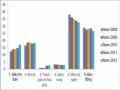 Traditional Craft Villages Serving Tourism in Thua Thien Hue Province in the Period 2008-2012
 -
 Traditional craft villages and their significance for tourism development in Ninh Binh province - 10
c. Classification
DTLSVH includes:
 Ethnographic relics: historical and cultural values associated with the eating, living and activities of all ethnic groups such as the Central Highlands tombs
 Monuments mark important, typical political events that have decisive significance for the direction of a country or a locality, such as Ben Binh Than, Ba Dinh Square, Tran Hung Dao forest, etc.
 Monuments marking the victory against invaders such as Bach Dang River, Dong Da Mound, Chi Lang Pass...
 Monuments marking the lives and careers of famous people and national heroes: Con Son, Kiep Bac Temple, Pac Bo relics...
 The relics mark glorious events in the country's labor such as the Song Da hydroelectric plant, Bac Hung Hai irrigation project, Thai Nguyen iron and steel industrial park...
 Monuments marking the crimes of colonial and feudal invaders, for example: Con Dao prison, Son La prison, Hoa Lo prison...
 Souvenirs, treasures, antiques associated with the names of famous people, national heroes and historical periods, historical monuments: Statue of female general Le Chan in Hai Phong, Statue of Tran Hung Dao in Nam Dinh, Statue of Ho Chi Minh on Co To island, Golden seal of King Bao Dai...
Containing great values, being the mark of time, being characteristic of the cultural identity not only of the locality but also of the whole nation, being the thoughts and feelings of many generations, the DTLSVH are attractive tourist attractions that tourists cannot ignore on their journey.
1.1.3.2. Traditional craft villages and handicraft villages
Due to the characteristics of Vietnamese agriculture and village relations, handicrafts were selected and easily developed on an individual scale and then expanded to a family scale. Gradually, handicrafts were spread among craftsmen's families, gradually spreading and developing in the whole village, or many villages near each other according to the principle of passing on the profession. And because of the different benefits brought by the handicrafts, each village began to differentiate. The professions that brought more benefits gradually developed strongly, on the contrary, the professions that were less effective or not suitable for the village gradually faded away. From there, craft villages specializing in a single profession began to form, such as pottery villages, mat villages, silk villages, wood carving villages, bronze villages, etc.
There are 12 main handicraft product groups in Vietnam, including:
- Bamboo and rattan.
- Products from sedge and water hyacinth.
- Ceramics.
- Wood carving.
- Lacquer.
- Embroidery.
- Stone sculpture.
- Handwoven.
- Craft paper.
- Art painting.
- Metal.
- Other handicraft products.
a. Concept of craft village
The concept of “Craft Village” often appears in local and central newspapers and magazines, but until now there has not been a unified definition that is “accepted” as a category in culture. Therefore, we often encounter the sentences “village sentiment, neighborhood sentiment”, “behind the bamboo fences of the village”, or “smart men choose wives from the same village”… This concept is to distinguish it from the concept of guilds in urban areas, the most prominent feature of which is that the level and technology of craft villages in rural areas are still heavily dependent on manual activities and are associated with agricultural production. However, to have a complete concept of craft villages, it is necessary to unify the following viewpoints:
A village is called a craft village when it meets the following two conditions:
- There is a relative number of households producing the same profession;
- Income from production accounts for a large proportion of the village's total income.
Thus, not every village with a trade activity can be called a craft village, but certain standards need to be set. When conducting research, each researcher will come up with different concepts of craft villages:
- Tran Minh Yen, 2004: “Craft village is a socio-economic institution in rural areas, composed of two elements: village and craft, existing in a certain geographical space including many households living mainly on handicrafts, between them there are economic, political and cultural links”.
- Dang Kim Chi, 2005: "Craft villages can be understood as Vietnamese rural villages with small-scale handicraft and non-agricultural industries that dominate in terms of labor and income compared to agriculture".
- According to Dr. Pham Con Son in the book "Traditional Craft Villages of Vietnam", "A craft village is an ancient administrative unit that also means a place with a large population, organized activities, discipline, and specific customs in a broad sense. A craft village is not only a village that specializes in a profession, but also implies that people of the same profession live together to develop jobs. The solid foundation of craft villages is both collective business, economic development, and preservation of national identity and local characteristics."[p.8]
- According to Circular No. 116/2006/TT-BNN, dated December 18, 2006: "Craft village" is one or more residential clusters at the hamlet, village, village, village, village, phum, soc level or similar residential areas in a commune or town, with rural craft activities, producing one or more different types of products.
b. Traditional craft villages
Traditional crafts are those whose technological secrets produce products that carry aesthetic values, philosophical thoughts, feelings and aspirations of people, created by folk artisans, preserved and developed from generation to generation for people of the same bloodline or village. The products are created by the skillful hands and exquisite talent of artisans combined with primitive tools, both having practical value and being the crystallization of talent and human feelings.
Culture is pervasive and transmitted. Due to the usefulness and cultural value of traditional crafts, many people, either of the same bloodline or in the same community, pass them on to each other, share their professional secrets, and form traditional craft villages. Following the flow of history, up to now, our country still preserves and maintains many traditional craft villages. The artisans who created those crafts are honored as the ancestors of the craft.
Like craft villages, traditional handicraft villages are also researched. During the research process, each researcher either shares the same viewpoint as the previous researcher, or puts forward his own concept:
- According to author Bui Van Vuong, 2002: “Traditional craft villages are traditional craft villages that make handicrafts. Not all villagers necessarily produce handicrafts there. In many cases, craftsmen also do farming. But the high demand for specialization has created craftsmen who specialize in producing traditional goods right in their hometowns.”
- According to Bui Thi Hai Yen, traditional craft villages can be conceived as: "Are villages with occupations that produce goods using primitive tools and human labor that have been formed for a long time in history, the art of producing goods has been passed down from generation to generation in
village. The goods produced not only meet the needs of the village but are also sold in domestic and international markets.”[p. 70]
- According to Circular No. 116/2006/TT-BNN, dated December 18, 2006: "Traditional craft village is a craft village with a long-standing traditional profession".
c. Recognition criteria
 Criteria for recognition of traditional occupations
A profession recognized as a traditional profession must meet the following 3 criteria:
a) The profession has existed in the locality for over 50 years up to the time of request for recognition;
b) Profession that creates products with national cultural identity;
c) A profession associated with the name of one or more artisans or the name of a craft village.
 Criteria for recognition of craft villages
Recognized craft villages must meet the following 3 criteria:
a) At least 30% of total households in the area participate in rural industry activities;
b) Stable production and business activities for at least 2 years up to the time of request for recognition;
c) Comply with the State's policies and laws.
 Criteria for recognition of traditional craft villages
Traditional craft villages must meet craft village criteria and have at least one traditional occupation.
Traditional craft villages are often located in areas with limited land, large populations or difficult natural conditions for agricultural production. These are also common characteristics of traditional craft villages in Vietnam. Therefore, the Northern Delta region of our country is home to many traditional craft villages, such as Bat Trang pottery village (Hanoi), Van Phuc silk village (Hanoi), Phuong My bronze casting village (Hai Phong), vermicelli making in Cu Da ancient village (Hanoi), Chu Dau pottery (Hai Duong)...
1.1.3.3. Culture and arts
Throughout history in each country, folk artists and the people have created, nurtured and preserved many folk songs, dances, music, musical instruments, and performing arts in general...
Cultural and artistic values become indispensable spiritual food for the people, are forms of entertainment after hard working hours, or during festivals, expressing aesthetic values, traditions, cultural identity, thoughts, feelings and dreams of people.
 Classify
- According to the target audience (public, kings) and according to the regulations on sound color, lyrics, actors, musical instruments, performance space, traditional art and culture includes royal music and folk music.
- According to the time of birth and development, art culture is divided into traditional art culture and modern art culture.
Traditional cultural and artistic performances are considered the national soul, the traditional cultural identity, and the pride of each nation. They were created and cultivated in the past, refined, supplemented, preserved, and passed down through many generations by folk artists, reaching a high, perfect level.
about performing arts, lyrics, music and musical instruments. Studying and enjoying traditional cultural and artistic values, visitors not only have fun, relax, immerse themselves in the joyful, colorful mood of sound, skillful performance of artists, but also touch the soul of that nation. Therefore, culture and art have contributed to enriching tourism products, exploited to serve domestic and foreign tourists, improving spiritual life, making visitors temporarily forget their daily worries, immersing themselves in the artistic space.
1.2. Cultural tourism
1.2.1. Concept and characteristics
1.2.1.1. Concept
Tourism is increasingly developing, along with that new forms of tourism appear, including cultural tourism. If natural tourism is based on uniqueness and innovation in landscape, cultural tourism goes deep into exploiting traditional values from long ago, unique features that do not repeat in any locality, country or ethnicity. Cultural objects are the basis for forming cultural tourism.
Since its inception, this type of tourism has increasingly attracted many tourists to participate. Along with that, there are also many concepts of cultural tourism.
- According to Dr. Tran Nhan: “Tourism with the participation of cultural elements is being favored by many people. This is a type of tourism that aims to appreciate culture, the desire to learn and the love of culture through tourists' trips”.
- Dr. Tran Duc Thanh said: "People call it cultural tourism when tourism activities take place mainly in a humanistic environment or when tourism activities focus on exploiting humanistic tourism resources."