
Capture and provide economic and market information on product designs, goods, product quality, etc.; research and forecast the market, especially long-term and medium-term forecasts for craft village products; develop policies to support market access; policies to support the construction of concentrated raw material areas, etc.
- The group of specific financial and credit policy mechanisms is to build a number of financial and credit policy mechanisms to encourage and promote economic sectors to accumulate investment in developing non-tariff areas serving tourism; diversify forms of capital mobilization for investment in developing craft villages to form a fund to support the development of non-tariff areas serving tourism, a credit guarantee fund for small and medium enterprises in the province; build a policy mechanism to form and structure the allocation of investment capital for the development of occupations and non-tariff areas serving tourism; incentive mechanisms to form and attract more units providing consulting services on investment and development to Thua Thien Hue province.
- Policy on supporting the development of modern techniques and technology in production in LNTT serving tourism.
- Policies and mechanisms on human resource training and employment for workers in traditional craft villages to improve skills, help people know how to do tourism for their craft villages and educate people about preserving national cultural values for developing traditional craft villages to serve tourism.
Maybe you are interested!
-
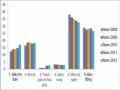
 Traditional Craft Villages Serving Tourism in Thua Thien Hue Province in the Period 2008-2012
 -
 Hai Phong traditional craft villages with tourism development - 7
 -
 Quang Nam Province's Experience in Restoring and Developing Traditional Craft Villages Associated with Modern Tourism Development Trends
 -
 Orientation for developing traditional craft villages in Tra Vinh province to serve tourism in the integration period - 1
 -
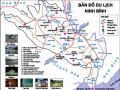 Traditional craft villages and their significance for tourism development in Ninh Binh province - 10
- Policy on developing technical infrastructure for craft villages such as developing rural transport systems, perfecting the electricity supply system for production and daily life, increasing investment in upgrading and upgrading the telecommunications system, developing water supply and drainage systems and maintaining environmental sanitation for craft villages, developing healthcare systems and social welfare for LNTT serving tourism.
- Policy on development and investment in infrastructure for industrial clusters - small-scale industry, concentrated craft village clusters to create favorable conditions for production premises for tourism-serving enterprises to develop stably and sustainably.
- Support policy for tourism service enterprises to register product quality
products and craft village associations.
Furthermore, the above policies must be implemented simultaneously and synchronously with the process of improving the effectiveness and efficiency of State management of tourism, specifically: continuing to effectively implement and improve the competitiveness of the investment environment; directing the promotion of administrative reform and the one-stop mechanism for investment projects in the province to ensure transparency for investors and ensure convenience for tourists. Regularly improve and enhance the quality of operations of the Provincial Tourism Development Steering Committee. Review and supplement functions and tasks, improve and consolidate the operational capacity of the State management apparatus on tourism from the province to the grassroots level, especially the officers in charge of tourism in key tourist districts and towns. Improve the operational capacity of the Tourism Inspectorate, the Tourism Promotion Center and the Tourism Association of Thua Thien Hue province. Implement the Law on Tourism and guiding documents, focusing on the fields of tourist accommodation, travel, entertainment to ensure political security, social order and safety, and preserve the landscape and environment in the context of international integration. Develop and promulgate regulations on management and exploitation of tourism investment in two national thematic tourist areas to attract domestic and foreign investors. Speed up the process of restructuring State-owned enterprises in the tourism sector. Strengthen cooperation and tourism development with provinces and cities across the country, especially with provinces in the key economic region of the Central region and major tourist centers. Promote scientific research, apply advanced science and technology to the process of tourism management and business, emulation and reward work, etc.
The development and implementation of the above policies must be in accordance with Vietnamese law, and at the same time in accordance with international practices, ensuring transparency, stability and resources for policy implementation. At the same time, the above policies must be implemented synchronously and simultaneously to have a certain effect on the development of LNTT serving tourism in Thua Thien Hue province.
CONCLUDE
Tourism is identified as a key economic sector of Thua Thien Hue province. In order to contribute to the development of a diverse and rich tourism industry with unique features, exploiting the advantages of non-tariff barriers to serve tourism is one of the issues that need to be thoroughly studied to contribute to providing scientific arguments for the development of the identity of Thua Thien Hue province in tourism development. With that meaning, the thesis has solved the following problems:
Firstly , it provides an overview of the research situation on LNTT and LNTT serving tourism at home and abroad to exploit and inherit research results, and at the same time points out the gaps in the thesis that need further research in both theory and practice.
Second , on the basis of inheriting and absorbing the research results of previous scientific works, the thesis has systematized the concepts of craft villages, traditional craft villages, traditional craft villages serving tourism, and at the same time analyzed the characteristics and roles of traditional craft villages serving tourism in the new context.
Third , the thesis has established basic criteria for evaluating tourism service enterprises, specifically: tourism products of tourism service enterprises; labor force of tourism service enterprises; capital sources for tourism service development; the level of application of science and technology in the production process of tourism service enterprises; number of tourists coming to tourism service enterprises and presenting factors affecting the development of tourism service enterprises including two groups: 1) Group of external factors including: the relationship between tourism service enterprises and tourism businesses; demand of tourists in the market; development of handicrafts and tourism industry in Vietnam and policies of the Government and local authorities on tourism service enterprises; 2) Group of internal factors such as: capital sources; qualifications of labor force at tourism service enterprises; Level of science and technology and level of application of science and technology in the production process; uniqueness and distinctiveness of the product; conditions for maintaining the production and reproduction process at tourist resorts.
Fourthly , based on the study of experiences of a country (Japan, Thailand) and some localities in the country (Hanoi, Quang Nam) on developing LNTT serving tourism, the thesis has drawn some practical lessons for Thua Thien Hue province in the process of developing LNTT serving tourism, specifically: building LNTT serving tourism according to the model of "each craft village, one product" associated with tourism development; focusing on honoring the team of artisans and training the workforce capable of inheriting traditional crafts; the government and local authorities need to have specific policies to create conditions for LNTT serving tourism to develop. This is also the contribution of the thesis.
Fifth , based on data collection, analysis and processing, the thesis analyzed the current status of LNTT serving tourism in Thua Thien Hue province in the period of 2008 - 2012. At the same time, the thesis pointed out the achievements, limitations and causes in the process of developing LNTT serving tourism in Thua Thien Hue province.
Sixth , based on theoretical issues and the current situation of LNTT serving tourism in Thua Thien Hue province in the period of 2008 - 2012, the thesis has made forecasts and directions for developing LNTT serving tourism in Thua Thien Hue province until 2020. At the same time, it proposes 6 basic groups of solutions to solve problems related to market, investment, human resources, solving the relationship between development within the province, other provinces and abroad, mechanisms and policies of the Central Government and local authorities (Thua Thien Hue province) for developing LNTT serving tourism, specifically: one is to develop the market for consuming tourism products of LNTT serving tourism in Thua Thien Hue province; two is to invest in developing LNTT serving tourism in Thua Thien Hue province; three is to train the labor force for LNTT serving tourism in Thua Thien Hue province; Fourth, develop non-cash income for tourism associated with tourism forms in Thua Thien Hue province; fifth, strengthen cooperation between non-cash income for tourism in Thua Thien Hue province and tourism businesses in other localities and abroad; and finally, perfect the mechanisms and policies of the State and Thua Thien Hue province for non-cash income for tourism.
LIST OF PUBLISHED WORKS RELATED TO THE THESIS
1. Nguyen Le Thu Hien (2010), "Developing traditional craft villages in economic restructuring in Thua Thien Hue province", Journal of Political Theory , pp. 74-77.
2. Nguyen Le Thu Hien (2010), The role of traditional craft villages in tourism development in Thua Thien Hue province , Proceedings of the conference on scientific research summary 2006 - 2010, Hue University of Economics, pp.44-52.
3. Nguyen Le Thu Hien (2011), Improving the competitiveness of handicraft products of traditional craft villages in Thua Thien Hue province , School-level scientific research project, Hue University of Economics, (project manager).
4. Nguyen Le Thu Hien (2013), "Credit fund for craft village development - An important credit channel to develop traditional craft villages serving tourism in Thua Thien Hue province", Journal of Theoretical Education , (200), pp.39-42
5. Nguyen Le Thu Hien (2013), "People of the craft village", Huong River Magazine,
(8), pp.11, 59-60.
6. Nguyen Le Thu Hien (2013-2015), Developing the market for handicraft products of Thua Thien Hue province, scientific research topic at Hue University (Project leader), in progress.
LIST OF REFERENCES
* Vietnamese
[1]. Bach Thi Lan Anh (2010), Sustainable development of traditional craft villages in the Northern key economic region , PhD thesis in economics, Hanoi.
[2]. Dao The Anh (2005 ), ''Developing rural industrial clusters from traditional craft villages'', Past and Present Magazine.
[3]. Dinh Van An (2004), Development of enterprise types in a multi-sector economy , Central Institute for Economic Management.
[4]. Standing Committee of Bac Ninh Provincial Party Committee (2010), Resolution 12/NQ - TW on construction and development of industrial and handicraft zones .
[5]. Bui Quang Binh (2010), Development Economics , Education Publishing House.
[6]. Nguyen Thi Ngoc Cam (2013), Research on sustainable development of craft village tourism in Thua Thien Hue province, Proceedings of "Hue Traditional Craft and Craft Festival Workshop", Hue, pp. 12 - 16.
[7]. Ministry of Industry (2006), The impact of WTO accession on Vietnam's economic development .
[8]. Ministry of Planning and Investment (2004), Development of craft village industrial clusters - Current status and solutions , Proceedings of scientific conference, Hanoi.
[9]. Ministry of Agriculture and Rural Development (2005), Four years of implementing Decision B2/2000/QD - TTg of the Prime Minister on a number of policies to encourage the development of rural craft villages.
[10]. Ministry of Finance (2004), Financial policy on rural infrastructure investment and rural industry development , Discussion paper.
[11]. Ministry of Trade (August 2003), Continuing to innovate policies and solutions to promote consumption of products of traditional craft villages in the North until 2010 .
[12]. Ministry of Trade (2006), 20 years of innovation in Vietnam's trade policy mechanism, achievements and lessons learned , The Gioi Publishing House, Hanoi 2006.
[13]. Hoang Van Chau - Pham Thi Hong Yen - Le Thi Thu Ha (2007), Vietnam's tourism craft villages , Statistical Publishing House, Hanoi.
[14]. Tran Minh Chau (2007), On incentive and investment policies in Vietnam , National Political Publishing House, Hanoi.
[15]. Government (2000), Decision No. 132/2000/QD-TTg dated November 24, 2000 of the Prime Minister on a number of policies to encourage the development of rural industries .
[16]. CIEM - Company 7 (2006), 6 years of implementing the Enterprise Law, Central Institute for Economic Research .
[17]. CIEM - SIDA (2006), Vietnamese small and medium enterprises in the context of international economic integration , National Political Publishing House, Hanoi.
[18]. Nguyen Tri Dinh (Chief) (2005), Solutions to develop craft villages in some provinces of the Red River Delta , Ministry-level scientific research project, Hanoi.
[19]. Phan Tien Dung (2013), Preserving and promoting traditional craft villages to contribute to promoting sustainable tourism development in Thua Thien Hue province, Proceedings of "Hue Traditional Craft and Craft Festival Workshop", Hue, pp. 05 - 11.
[20]. Nguyen Van Dai, Tran Van Luan (1997), Creating jobs through restoring and developing traditional industries , Agricultural Publishing House, Hanoi.
[21]. Communist Party of Vietnam (1996), Documents of the 7th National Congress of Delegates, National Political Publishing House , Hanoi.
[22]. Communist Party of Vietnam (2001), Documents of the 9th National Congress of Delegates , National Political Publishing House, Hanoi.
[23]. Communist Party of Vietnam (2006), Documents of the 10th National Congress of Delegates , National Political Publishing House, Hanoi.
[24]. Communist Party of Vietnam (2011), Documents of the 11th National Congress of Delegates , National Political Publishing House, Hanoi.
[25]. Nguyen Van Dinh, Tran Thi Minh Hoa (2006), Tourism Economics Textbook , National Economics University, Labor - Social Publishing House.
[26]. Vu Van Dong (2010), ''One village one product, a solution for sustainable tourism development - experiences from other countries and Vietnam'' , Development and Integration Magazine, No. 3, pp. 34 - 37.
[27]. Vu Thi Ha (2002), Restoring and developing craft villages in rural areas of the Red River Delta - current situation and solutions , Master's thesis in Economics, Ho Chi Minh National Academy of Politics, Hanoi.
[28]. Huu Hai, "Hoi An Craft Village: Opportunities and Challenges", People's Forum
Quang Nam , No. 25, http://www.qn_hdnhqna_gov.vn .
[29]. Vu The Hiep (2008), "Potential for developing tourism craft villages in Thua Thien Hue province" , Journal of Science and Education, Hue University of Education, (4), pp.120-123.
[30]. Nguyen Xuan Hoan, Dao The Anh (2013), Potential for rural tourism development and the participation of travel companies in rural tourism development in Vietnam, Proceedings of "Hue Traditional Craft Festival and Craft Village Workshop", Hue, pp. 57 - 76.
[31]. Mai The Hon (2000), Development of traditional craft villages in the process of industrialization and modernization in the suburbs of Hanoi capital , PhD thesis in economics, Ho Chi Minh National Academy of Politics, Hanoi.
[32]. Mai The Hon, Hoang Ngoc Hoa, Vu Van Phuc (2003), Developing traditional craft villages in the process of industrialization and modernization , National Political Publishing House, Hanoi.
[33]. To Duy Hop, Luong Hong Quang (2000), Community Development - Theory and Application , Culture and Information Publishing House, Hanoi.
[34]. Pham Thuy Hong (2004), Competitive strategy for small and medium enterprises in Vietnam today , National Political Publishing House, Hanoi.