
- Life goal building skills
- Self-protection skills
- Perseverance skills
- Emotional coping skills
- Skills to cope with stress.
Maybe you are interested!
-
 Current Status of Directing the Implementation of School Psychological Counseling Capacity Development Activities for Teachers in Secondary Schools in Mong Cai City, Province
 -
 Ho Chi Minh 1995: Complete Works. - National Political Publishing House, Hanoi, Volume 3. 10. Nguyen Thi Anh Thu, Psychological and Social Characteristics of Semi-Immigrants
 -
 Concept, Characteristics and Requirements for Foreign Direct Investment in the Direction of Sustainable Development in Key Economic Zones
 -
 Concept, Characteristics and Role of Training and Development of Staff and Civil Servants
 -
 Some psychological and ethical characteristics in business in Vietnamese enterprises today - 12
2- Group of skills of perception and living with others. This group has the skills:
- Relationship building skills - interpersonal interaction
- Empathy
- Effective communication
- Negotiation skills
- The ability to stand firm against negative pressure from friends or others.
3- Group of skills for effective decision making and working, including the following skills:
- Critical thinking
- Creative thinking
- Make a decision
- Problem solving
d. ESCAP (United Nations Economic and Social Commission for Asia and the Pacific)
According to ESCAP organization, life skills are classified into 3 types.
- Life skills for personal development
- Life skills to build relationships with others
- Technology skills, as suggested by young representatives at a conference. (ESCAP emphasizes information technology skills).
d. According to author Nguyen Quang Uan
Author Nguyen Quang Uan divides life skills into 3 main groups [39, pp.1-3] 1- First group: Personal life skills, including the following skills:
Personal living skills, Health training skills, Self-awareness skills
self, skills of self-awareness and responsibility, skills of self-determination of life goals and plans.
2- Second group: Skills in relationships with others, with the community, and society, including the following skills: Communication and behavioral skills, Skills in establishing and maintaining interpersonal relationships, Skills in performing socio-cultural behaviors, and Social adaptation skills.
3- The third group: Practical work skills include the following skills: Skills to determine work goals, Skills to select and determine values, Skills to plan work, Skills to solve problems arising in work, Skills to organize and implement work effectively, Skills to evaluate work and draw experience from work, Skills to prepare for the next jobs.
e. Some foreign authors also mentioned the 4-H life skills model like the model below after a long period of research.
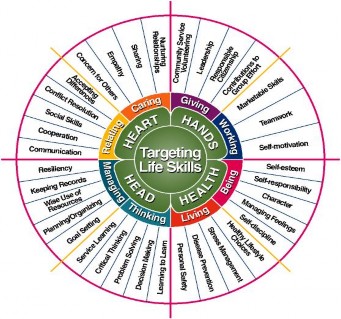
Diagram 1: 4-H Life Skills Model (Steve McKinley)
1- HEAD (Cognition – brain)
* Thinking: Thinking
Service learning: self-training to serve Learning to learn: knowledge acquisition Decision-making: decision-making
Problem solving: problem solving Critical thinking: critical thinking
* Managing: Managing
Resilience: showing resilience Keeping records: managing data, books
Wise use of resources: wise use of resources Planning/Organizing: planning
Goal setting: setting goals 2- HEART (Mind)
* Relating: Relating Communications: communication Cooperation: cooperation
Social Skills: community work Conflict Resolution: conflict resolution
Accepting Differences: accepting differences
* Caring: Caring Sharing: sharing
Concern for others: care for others Empathy: empathy
Nurturing relationships: caring for close relationships 3- HAND (Balance)
* Giving: Giving
Community service-volunteering: performing public service automatically Leadership: leading
Responsible citizenship: carry out civic responsibilities Contribution to group: contribute to group efforts
* Working: Working Marketable/useful skills: marketing Teamwork: teamwork
Self-motivation: self-motivation
4- HEALTH (Physical)
* Living: Living
Healthy life-style: adhere to a healthy lifestyle Stress management: stress management
Disease prevention: disease prevention Personal safety: personal safety
* Being: Humanity
Self esteem: showing self-esteem Self responsibility: taking responsibility for oneself Character: expressing oneself Managing feelings: controlling emotions Self discipline: obeying discipline
From the above classifications of life skills, the following conclusions can be drawn.
Each organization and individual's way of dividing life skills is relative. The skills that are often mentioned by many perspectives are still self-awareness, self-health care, self-control, and problem solving.
Although each organization has a different perspective, the way of classifying life skills is different. But in general, no matter which perspective is used to classify, life skills must be the abilities that belong to the individual's capacity to help oneself survive and master one's life as well as achieve life goals effectively. Because of this, author Huynh Van Son chose to approach life skills in a personal way, meaning what life skills each individual needs, what skills in the process of life development as well as in different relationships and in different activities. From here, it can be seen that the most necessary life skills for humans are also the basic skills that humans need to have right from the first years of life, especially children 5-6 years old. These are basic groups of skills aimed at comprehensive development for children: physical development skills, cognitive development skills, social-emotional development skills, language and communication development skills.
1.2.2. Life skills for 5-6 year old children
1.2.2.1. Characteristics of psychological development of 5-6 year old children [22, pp.117-215]
a. Physical development
Children from 3 to 6 years old gain an average of about 3kg in weight and 5-7cm in height each year. The fastest growing parts during this period are the arms and legs. The hands and feet develop more slowly.
The child's skeletal and muscular systems continue to develop. Bones continue to ossify, muscles enlarge. Respiratory and circulatory systems develop. The rate of formation of conditioned reflexes increases rapidly, the second signal system and sensory apparatus develop strongly.
The nervous system continues to grow in shape and structure. The brain weight increases from about 1,100 grams to 1,300 grams. Some areas of the cerebral cortex continue to become myelinated (especially the prefrontal cortex). The functional areas of the brain continue to specialize, allowing the child to perform complex mental tasks and control many activities that require fine muscle control.
About the motor development of preschool children. By the age of 5, children have mastered the basic movements of adults: running, swinging their arms, controlling their center of gravity and maintaining balance. Actions have been coordinated with the neck, arms, shoulders, legs..., thanks to which children can ride a bicycle, do somersaults or perform other complex movements...
In movement, children have the ability to coordinate quite closely between the motor organs and the senses. The ability to control small muscles improves rapidly, so children use their hands more skillfully. 5-year-old children can skillfully button their shirts, tie their shoelaces or imitate simple operations; can use scissors to cut paper along pre-drawn lines, redraw shapes, letters, mold objects...
b. Development of perceptual abilities
In children aged 3-6, their perceptual abilities develop rapidly. Children's perceptual development has the following characteristics:
- First: Perception develops strongly and dominates cognitive activities, which is a prominent feature in the psychological development of children aged 3-6. Other cognitive processes of children such as memory, thinking, attention, etc. all depend heavily on perception.
- Second: Children's perception often develops through three stages (3 levels): telling stage; describing stage; explaining stage.
- Third: Egoism of perception. Egoism is a psychological phenomenon in which children often focus on themselves, taking themselves as the standard for perceiving, evaluating and reacting to objects.
- Fourth: The perception of children aged 3-6 is strongly influenced and influenced by language and thinking as well as other cognitive processes. [14, pp.119-121]
c. The development of self-consciousness
Children aged 5-6 begin to understand what kind of person they are, what qualities they have, how people around them treat them, and why they act this way or that way... Self-awareness is most clearly expressed in self-assessment of their success or failure, of their strengths and weaknesses, of their abilities and even their inability.
To evaluate themselves correctly, children must first learn how to evaluate others and listen to how those around them evaluate them. Then, children grasp the skill of comparing themselves with others, which is the basis for more accurate self-evaluation and also the basis for children to follow the example of good people and good deeds.
The self-awareness of 5-6 year old children is also clearly expressed in their gender development. At this age, children not only realize whether they are male or female, but also clearly know how to behave appropriately according to their gender. Boys often imitate the behaviors and gestures of men, while girls imitate the posture of women. This phenomenon is clearly reflected in games: Boys often play the role of soldiers, police officers, etc.; girls play the role of housewives, saleswomen, etc.
Clearly defined self-awareness helps children control and adjust their behavior to conform to social norms and rules, thereby making their behavior more social and personal than before. [36]
d. Characteristics of memory development
Intentional forms of memorization and recall appear and develop strongly when children are 5-6 years old. Intentional memory develops due to the increasing complexity of children's activities and the increasing demands of adults on them. It is a purposeful type of memory and relies on psychological tools, such as language, diagrams, charts, writing and all possible conventions. However, the main type of intentional memory of children at this stage is still mechanical memory.
Children aged 5-6 have the ability to remember indirectly, that is, they know how to use symbols as intermediate objects to remember better.
Memory content of 5-6 year old children includes:
- Motor memory: Children may gradually abandon patterns, but adult instructions still make sense. Movements become more steady, faster and more precise, with fewer unnecessary body movements.
- Visual memory: The main content of visual memory is symbols or images of things and phenomena that children have previously acquired.
- Logical word memory: Logical word memory in children manifests in two forms:
Active language acquisition of the mother tongue: Children memorize words, grammatical forms and reproduce them. For memorizing poems and stories, tone and rhythm are important.
When remembering the content of stories, children often remember literary characters that make them emotional, they follow and put themselves in the position and actions of the characters. Poems in which the images are close to children are remembered better by children.
- Emotional memory: Children remember the happy and sad emotions they have experienced. This memory is a form of reminiscence that helps enrich and refine children's lives.
e. Characteristics of thinking development
In children aged 5-6, the main type of thinking is visual-image thinking. When solving problems, children often think based on visual-image thinking. Children solve problems based on specific images more easily than when the problem is given in the form of abstract numbers. General and abstract knowledge is only acquired by children when they are expressed through visual models.
LA Venger (1969), AV Daparogiet (1972), NN Podiakov (1972) said: “Older preschoolers can perceive not only the appearance of objects but also understand the properties and internal relationships of those objects. At the age of older preschoolers, children have formed the ability to approach abstract, cumulative and reasoning forms (…). However, this perception is carried out by children not in the form of concepts but mostly in the form of visual images in the process of working with perceived objects”. Besides, P.Ia. Ganperin (1966), Davydov (1972) and NI Nepomiasa (1975) said that the most important task in the development of thinking of older preschoolers is “the transition from the pre-operational level of thinking to a higher level of the thinking process; But there are equally important tasks, which are how to make the most of pre-operational thinking abilities in the process of children's intellectual development.
Regarding the unique nature of the thinking process in preschool children, AA Liublinxkaia has given some characteristics of thinking in preschool children as follows:
- Lack of knowledge necessary to establish real essential relationships between conditions or aspects of a certain activity.
- There is no continuous skill, that is, the skill of using a precise system according to a certain logic of intellectual operations.
So, in the process of developing children's thinking activities, there is a shift from using practical actions to solve specific tasks that are presented visually to internal intellectual actions, actions that are shortened. Thus, in 5-6 year old children, visual-image thinking has developed strongly and logical thinking begins to appear. [28]
f. Characteristics of imaginative development