
At this time, the genitals are most obvious, the vaginal mucosa is congested, edematous, and a lot of clear mucus flows out. The animal shows high excitement: The female cannot stand or lie still, breaks the cage, eats and drinks less, squeals, stands in a daze, has difficulty urinating, always jumps on the back of another animal or lets another animal jump on her back, likes to be close to the male, when close to the male, always stands in a position ready to accept the male such as: The tail is curled up and tilted to one side, the hind legs are spread out and bent down, ready to accept the male.
- Post-estrus stage:
The pig returns to normal, the vulva loses its elasticity, the tail is curled and it refuses to mate.
- Rest phase:
This is the longest stage, the animal's sexual manifestations in this period are completely quiet. During this period, the reproductive organs show no signs of activity, the corpus luteum in the ovary atrophies, the ovum in the ovary begins to develop and grow, and the reproductive organs are all in a physiological state.
* Physiology of pregnancy and childbirth:
After staying in the fallopian tube for about 3 days to nourish itself, the zygote begins to move down to the uterus, finding a suitable location to nest and form the fetus. Hormonal changes in the mother's body during pregnancy are as follows: Progesterone increases very quickly in the first 10 days of pregnancy, peaks on the 20th day of pregnancy, then decreases slightly in the first 3 weeks, then remains stable during pregnancy to maintain pregnancy and inhibit estrus. 1-2 days before giving birth, Progesterone suddenly decreases. Estrogen remains at a low level throughout pregnancy, gradually increases at the end of pregnancy for about 2 weeks, and peaks at birth.
2.2.1.3. Process of caring for breeding sows during pregnancy, farrowing, and nursing
* Nutrition
The important factor for pregnant and lactating sows is to provide adequate quantity and quality of nutrients required for high reproductive efficiency. Nutrition includes: Energy nutrition, protein nutrition, mineral influence, trace elements and vitamin influence.
* Energy needs
Energy is indispensable for the mother's body to maintain pregnancy, milk production, and child rearing. Energy needs vary depending on each stage. It is necessary to meet the energy needs of the sow, avoid providing excess energy causing food waste, reducing product costs. If there is a shortage, it will affect the normal physiology of the animal. Energy is provided in two forms: Glucid accounts for 70
- 80%, lipids 10 - 13% of total energy supply.
* Effects of minerals
In the pig's body, minerals contain 3%, of which up to 75% are calcium and phosphorus, approximately 25% are sodium and potassium, there are also small amounts of magnesium, iron, zinc, copper, and other elements in trace form. For example, calcium prevents the absorption of zinc, causing skin disorders and keratinization.
* Protein requirements
Protein is an important component in the diet of pigs, an irreplaceable component that is necessary for all metabolic activities in the body and participates in the formation of tissues in the body. Because protein participates in the formation of metabolic activities, a certain amount of protein is always lost every day. In the process of assimilation and catabolism of the body, every day there are cells that grow and develop, divide and old cells are eliminated. Therefore, protein is provided to compensate for the loss and another part builds new cells, creating livestock products. However, the supply of protein must ensure sufficient quantity and balance of irreplaceable amino acids lysine, methionine, histidine,
cysteine, tryptophan... or more precisely, the protein requirement of pigs is the need for amino acids. In addition, the food must have high biological value, easy to digest and absorb. To meet the above needs, pigs need to be fed with a variety of foods.
* Effects of vitamins
Vitamins are needed for normal tissue metabolism, health, growth and maintenance. Some vitamins can be synthesized by pigs to meet their needs, such as vitamin B12. Some vitamins that pigs often lack need to be supplemented (A, D, E). If supplemented incorrectly, excess or deficiency is not good.
- Vitamin A deficiency: Piglets grow slowly, have dry skin, poor eyesight, pregnant sows are prone to miscarriage, premature birth...
- Vitamin D deficiency: Poor fetal development, prone to leg paralysis before and after birth.
- Vitamin E deficiency: Pigs have embryonic and fetal death, and are not in heat or are slow to estrus.
Techniques for raising pregnant sows
* Nutrition for pregnant sows
Principles for raising pregnant sows: Feed the right portion, ensure nutrition, pay special attention to feeding enough vitamins and minerals. Lack of minerals, piglets' bones develop poorly, pregnant sows are at risk of paralysis. Lack of vitamins, piglets develop slowly, have poor vitality. Do not feed too much starch to prevent obesity, difficult birth.
+ Nutritional needs of pregnant pigs: Crude protein 13%, metabolizable energy 2900 kcal/kg of food.
+ Feeding level for pregnant sows (kg mixed feed/pig/day). Stage I of pregnancy: Feeding with bran 07
For gilts: 1.6 - 1.8 kg/head/day, feed once a day. For gestation sows: 2 - 2.2 kg/head/day, feed once a day.
Pregnancy stage II: From 84 - 114 days, feed with bran 07.
For gilts: 2.5 kg/head/day, feed twice a day For sows: 3 kg/head/day, feed twice a day
+ The amount of food for pregnant sows depends on the physical condition of the sow: Sows that are too thin must be fed more concentrated feed, sows that are too fat must have less concentrated feed.
+ In winter, on days when the temperature is below 15 degrees Celsius, sows need to be fed an additional 0.2 - 0.3 kg/head/day to compensate for the energy lost due to cold weather.
+ Do not feed pregnant sows moldy food, cottonseed oil, or papaya leaves because they can easily cause miscarriage.
+ Let pigs drink water freely.
* Care of pregnant sows
+ Keep the pig quiet for the first week after mating.
+ Check the pregnant sow on the 21st and 42nd day after mating to see if she is in heat again.
+ Bath: 1 time/day on hot days.
+ Clean and massage the udder 10-15 days before the expected birth to stimulate milk production when the pig gives birth. If the udder is scratched or cracked, apply Vaseline and antibiotics to prevent infection.
+ Clean the barn daily, keep the pigs clean, warm in winter, cool in summer. Spray disinfectant once a week.
+ Do not vaccinate, deworm, or bathe in scabies during the first month of pregnancy and 15 days before giving birth because the impact on the diaphragm can easily cause miscarriage and premature birth.
+ It is necessary to record the mating date to calculate the farrowing date and plan for farrowing.
* Methods to detect pregnant pigs
Detecting pregnant pigs is important in production. If pregnant sows can be identified accurately and promptly after mating, appropriate care and feeding measures can be applied according to the laws of development.
of the fetus to improve the fertility of the sow. If the sow is not pregnant, there is a plan to mate again promptly.
The average gestation period of a sow is 114 days. The gestation period of a sow is divided into two periods:
+ First gestation period: Is the first 84 days of pregnancy.
+ Second gestation period: The time when the pig is pregnant from 85 days until giving birth.
Detecting a sow in the second trimester is easier than in the first trimester because the fetus is now developing strongly, the belly is larger and saggier. In practice, there are many methods to detect pregnant pigs quickly and accurately, such as the method based on the sow's estrus cycle, using ultrasound, measuring vaginal resistance, and laboratory diagnosis.
The method based on the sow's estrus cycle is that after 21 days of mating, if there are no signs of estrus, the sow can be considered pregnant. After mating, the sow shows signs such as fatigue, likes to sleep, changes from poor appetite to increased appetite, increasingly shiny fur, more docile temperament, heavy gait, etc., that is the sow is pregnant after mating. On the contrary, when observing that the sow does not lie down after eating, has drooping ears, always wagging tail, and congested vulva, the sow may not be pregnant, and needs to be monitored for timely mating.
Sow care techniques
* Care of farrowing sows
The purpose of raising farrowing sows is to ensure safe farrowing, high survival rate of piglets, good health of mother pigs, ability to produce milk to feed their piglets, and improve the quality of the piglets.
- Nutrition process
According to Tran Van Phung et al (2004) [19]: Food used for sows giving birth must be foods with high nutritional value and easy to digest. Do not feed sows foods with high occupancy coefficients that can cause compression of the fetus, resulting in premature birth, difficult birth, or forced labor.
suffocation. One week before giving birth, it is necessary to base on the specific health condition of the sow to have a plan to gradually reduce the amount of food. For sows with good health, one week before giving birth, reduce the amount of food by 1/3, 2-3 days before giving birth, reduce the amount of food by 1/2. For sows with poor health, do not reduce the amount of food but reduce the volume of food by increasing the feeding of easily digestible foods. On the days of giving birth, it is necessary to base on the physical condition of the sow, the development of the udder to decide on a reasonable nutritional regimen. On the day the sow bites the nest, give the sow a little concentrated food (0.5 kg) or do not give concentrated food but drink water freely. On the day the sow gives birth, you can not feed the sow but only give her warm water mixed with salt or thin porridge. After giving birth 2
- Do not feed the sow a lot of food suddenly for 3 days, but increase it gradually until the 4th - 5th day, when it is up to standard. Food needs to be well prepared, small in volume, and have a delicious taste to stimulate the sow's appetite.
- Care process
According to Tran Van Phung et al (2004) [19]: Taking care of sows plays an important role, directly affecting the productivity and health of both sows and piglets. It is necessary to regularly monitor the health of sows, observe the udders and body temperature of sows continuously in the first 3 days after giving birth to detect any abnormalities for timely treatment. 10 - 15 days before the sow gives birth, it is necessary to fully prepare the sow farrowing pen. Clean and disinfect all pens, floors, and floors used for piglets and sows. The pen must be dry, warm, clean, and have enough light. After cleaning and disinfecting, the pen should be left empty for 3 - 5 days before the sow gives birth. 1 week before giving birth, the sow must be cleaned thoroughly, the sow must be cleaned of dirt or feces on its body, and the udder and vulva must be cleaned with a towel soaked in soapy water. This avoids the risk of newborn piglets becoming infected due to direct contact with the mother pig carrying the disease-causing bacteria. After cleaning the sow, they
We gently move the pigs from the gestation pen to the farrowing pen so that they can gradually get used to the new pen.
In the process of caring for sows giving birth, the necessary and very important work is to prepare a brooding pen for piglets. The brooding pen is very important for piglets, it has the effect of preventing the mother pig from crushing the piglets to death, especially in the first days after birth, the piglets are still weak, and the mother pig has just given birth and is still very weak and has not recovered. The brooding pen creates conditions to control the appropriate temperature for piglets, especially piglets born in the winter months. In addition, the brooding pen creates favorable conditions for early feeding of piglets (put the feeding trough in the brooding pen for piglets at 7 - 10 days old) without the mother pig pushing and eating the piglets' food. On the expected day of the sow's birth, the brooding pen for the piglets needs to be prepared. Brooding pen size: 1.2 x 1.5 m. The brooding pen is cleaned, disinfected and left empty for 3 - 5 days before receiving the newborn piglets.
Table 2.1. Signs when a pig is about to give birth
Before giving birth
Token | |
0 - 10 days | Breasts are swollen and hard, vulva is swollen and plump |
2 days | The breasts become firmer and secrete a clear fluid. |
12 - 14 hours | The sow is restless, the mammary glands begin to secrete milk. |
6 hours | More milk is secreted through the two milk ducts. |
2 - 4 hours | All breasts have colostrum spurting out in long jets. |
30 minutes - 2 hours | Increased breathing, restless walking |
15 - 30 minutes | Vaginal discharge of pink mucus mixed with meconium |
15 seconds - 5 minutes | Sow lying on one side, breathing intermittently, abdominal pressure, pressure thigh, tail wagging to give birth |
Maybe you are interested!
-
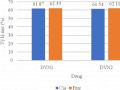
 Effects of Factors on Reproductive Performance of Dvn1 and Dvn2 Sows
 -
 Applying the process of caring for, preventing and treating diseases for breeding sows and piglets raised by their mothers at Thien Thuan Tuong Mineral Exploitation Joint Stock Company, Cam Pha, Quang Ninh province - 8
 -
 Current status of reproductive health care service provision and effectiveness of some intervention solutions at commune level, Quang Ninh province - 19
 -
 Applying technical processes for care, feeding, disease prevention and treatment for breeding sows and piglets at Hoa Phat Livestock Company Limited, Long Son Commune, Son Dong District, Bac Giang Province - 2
 -
 Results of Implementing the Care and Feeding Process for Pigs Raised at the Farm
From the notes on the signs of sows about to give birth, it has helped me a lot in strengthening my observation and monitoring skills, as well as giving me work experience in the process of raising sows later. Determining the time when sows give birth will also help breeders to be proactive.
The preparation for giving birth to piglets and sows is thoughtful and careful, bringing high efficiency, improving the survival rate of piglets after birth.
Techniques for raising sows and piglets
The purpose of raising nursing sows is to apply scientific measures to increase milk production, ensuring good health for the mother pigs. Piglets grow and develop quickly, achieving a high number of piglets after weaning and weaning weight.
Sows are quickly re-bred after being spayed.
- Nurturing process
Feed for nursing sows must be foods that have a positive effect on milk yield and quality. These include young green foods such as green vegetables, tubers and fruits such as pumpkin, carrots, papaya. Good concentrates such as broken rice, rice bran, wheat flour, animal protein supplements, vegetable protein, minerals and vitamins.
Do not feed sows with moldy, spoiled, or spoiled food.
Mixed feed for sows used in industrial farming must ensure adequate protein, energy and vitamin and mineral components according to regulations such as metabolic energy 3100 kcal/kg, protein 15%, calcium from 0.9
- 1.0%, phosphorus 0.7%.
The amount of food for nursing sows also plays an important role and directly affects the growth and milk production ability of the mother pig, so we need to have a reasonable and nutritious diet for the mother pig.
According to Tran Van Phung et al (2004) [19], during the raising process, sows are fed as follows:
For foreign sows
+ Day of farrowing: Feed the sow a small amount of complete mixed feed (0.5 kg) or do not feed, but give water freely.