
Figure 4.18 shows that the harvested snakehead fish are mainly sold to local traders (80.7%) and some traders from neighboring provinces (16.5%). In addition, there are a few small-scale farmers who directly retail to local consumers (2.5%) and a small number are kept for consumption or for relatives (0.3%).
Local driver/warehouse 80.7%
Traders from other provinces 16.5%

Direct retail
2.5%
To use
0.3%
Figure 4.18: Source of consumption of commercial snakehead fish
Survey results show that the average fixed cost for snakehead fish farming is about 4.3 million VND/crop, of which construction depreciation accounts for the highest proportion (83.7%). The cage farming model has the highest fixed cost (18.8 million VND/crop) due to the high cost of building the raft.
The average variable cost is about 270.4 million VND/crop, of which the cost of buying food accounts for the highest proportion (88.1% of the total variable cost), followed by the cost of buying seeds (4.8%). The cost of buying medicine and water treatment chemicals accounts for about 2.6% of the total variable cost. Many households have to borrow additional capital from outside to raise snakehead fish, so paying interest each crop is also a big pressure for these households, the interest on this loan accounts for about 2.2% of the total variable cost.
KH
machinery 15.4%
Fish fry
4.8%
Chemical drugs 2.6%
Construction project 83.7%
Land tax or rent 0.9%
Food
88.1%
Other 2.2%
Loan interest 2.3%
Figure 4.19: Fixed cost structure when
snakehead fish farming
Figure 4.20: Variable cost structure when raising snakehead fish
The Mekong Delta has abundant aquatic resources, providing a large amount of food for the region's aquaculture, especially during the flood season. Snakehead fish farmers mainly take advantage of idle labor to exploit freshwater trash fish resources as food for farmed snakehead fish. Therefore, when calculating the cost of raising snakehead fish, the amount of self-exploited food will be converted to the cost of food at current prices. With this calculation, the average total production cost of snakehead fish farmers is about 274.7 million VND/crop, of which variable costs account for 98.4%. The average production cost is about 29.7 thousand VND/kg, of which the river cage farming model has the lowest cost (28.4 thousand VND/kg) and the cage model has the highest cost (32.4 thousand VND/kg). With an average selling price of about 28.8 thousand VND/kg, farmers do not make a profit and the number of households losing money is also quite high (52.3%).
Table 4.16: Financial indicators for snakehead fish farming
Interpretation of Earth Pond
(n 1 =48)
± 588.2 | ± 83.2 | ± 93.0 | ± 112.3 | ± 1353.3 | ± 696.5 |
Price/kg (1000 VND) 28.8 ± 5.8 | 29.2 ± 7.2 | 28.4 ± 9.6 | 30.2 ± 7.5 | 32.4 ± 8.3 | 29.7 ± 7.8 |
Income/crop (million) 497.8 | 82.4 | 58.3 | 76.3 | 713.9 | 286.7 |
± 653.3 | ± 107.0 | ± 89.7 | ± 104.0 | ± 1450.0 | ± 746.7 |
Profit/crop (million) 45.5 | 4.6 | -1.9 | 1.7 | 5.3 | 11.9 |
± 132.4 | ± 31.3 | ± 23.7 | ± 26.9 | ± 200.0 | ± 109.3 |
Profit margin (%) 11.6 ± 20.0 | 0.8 ± 29.3 | -6.6 ± 31.7 | -2.3 ± 24.0 | 5.8 ± 24.9 | 2.1 ± 27.0 |
Loss ratio (%) 27.1 | 58.0 | 66.7 | 58.8 | 53.7 | 52.3 |
Maybe you are interested!
-
 Analysis of the value chain of farmed snakehead fish in the Mekong Delta - 13
 -
 Mortality Rate (%) of Black Snakehead Fish Fry Using Processed Feed at Different Times
 -
 Research on alternative methods of processed feed in rearing black snakehead fish (Channa striata) - 9
 -
 Survey on the supply and use of feed in farming giant freshwater prawn, pangasius and snakehead fish in the Mekong Delta - 8
 -
 Comparison of economic and technical efficiency of snakehead fish farming model in earthen ponds and cage farming model in Hong Ngu district, Dong Thap province - 1
Cost/case (million VND)452.3
pond
(n 2 =50)
77.8
River raft
(n 3 =45)
60.1
Tarpaulin pool
(n 4 =34)
74.7
Cage
(n 5 = 41)
708.6
Total
(n=218)
274.7
On the contrary, if we consider the exploitation of freshwater trash fish as food for snakehead fish as taking advantage of idle labor during the flood season, mainly for profit, then the cost of self-exploited food is not calculated in the production cost. With this calculation, the average total production cost is about 267.6 million VND/crop and the production cost will be lower (24.4 thousand VND/kg). With an average selling price of about 28.8 thousand VND/kg, fish farmers still make a profit of nearly 4,000 VND/kg. The loss rate has decreased to about 35.8% but this rate is still quite high, which shows that the risk is quite high when participating in commercial snakehead fish farming.
Table 4.17: Financial indicators excluding self-exploited feed costs
Interpretation of Earth Pond
(n 1 =48)
± 592.9 | ± 85.1 | ± 94.5 | ± 113.6 | ± 1354.9 | ± 698.2 |
Price/kg (1000 VND) 26.7 ± 9.3 | 24.5 ± 10.6 | 17.1 ± 11.3 | 25.0 ± 8.8 | 29.2 ± 11.8 | 24.4 ± 11.1 |
Profit/crop (million)57.0 | 9.7 | 9.6 | 5.2 | 8.3 | 19.1 |
± 136.4 | ± 30.9 | ± 27.4 | ± 27.6 | ± 200.2 | ± 110.9 |
Profit Margin (%) 68.0 | 159.8 | 158.8 | 39.4 | 77.3 | 105.1 |
± 190.4 | ± 497.3 | ± 259.1 | ± 93.5 | ± 225.5 | ± 300.7 |
Loss ratio (%) 25.0 | 40.0 | 28.9 | 38.2 | 48.8 | 35.8 |
Cost/case (million VND) 440.8
pond
(n 2 =50)
72.7
River raft
(n 3 =45)
48.6
Tarpaulin pool
(n 4 =34)
71.1
Cage
(n 5 = 41)
705.6
Total
(n=218)
267.6
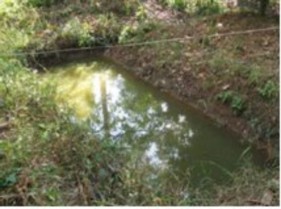
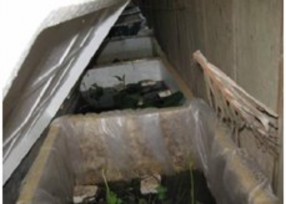
a. Pond for raising parent fish b. Styrofoam box for parent fish to lay eggs
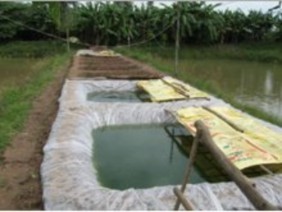
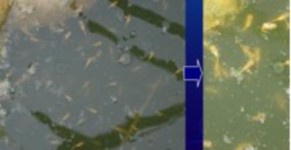
c. Pond for rearing fish fry up to 1 week after hatching d. Size of fish fry 1 week after hatching
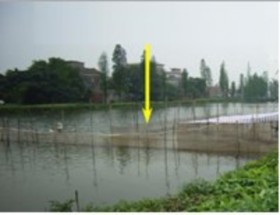
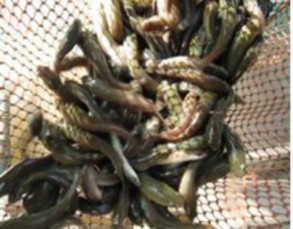
e. Nursery cage for snakehead fish after 1 week of age f. Screening (cutting cage) of fish for meat farming
Figure 4.21: Some pictures of the snakehead fish production and breeding group
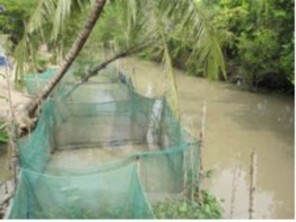
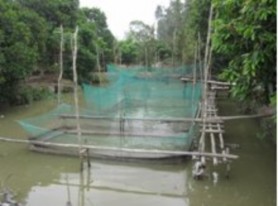
a. River cage farming model b. Pond cage farming model
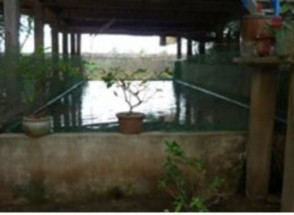
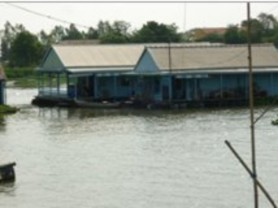
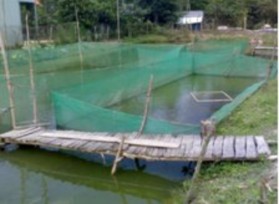
c. Floating pond farming model d. Cage farming model
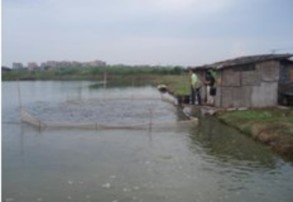
e. Earthen pond farming model f. Combined farming model (square-head snakehead fish farming)
in cages and snakehead fish raised in ponds)
Figure 4.22: Some pictures of the commercial snakehead fish farming group
4.2.2. Trader group
The surveyed snakehead fish traders included wholesalers and retailers. The wholesale group surveyed the freshwater fish purchasing warehouses and collectors. The retail group was mainly surveyed at the market and divided into product groups: retail of fresh fish, dried snakehead fish and snakehead fish sauce. The survey results showed that most of the retail households do business at the market (87.5-100.0%), but only 46.7% of the wholesale households do business at the market. Wholesale households take advantage of the available land area as a point of purchasing raw fish (40.0%). Due to the nature of the profession, some households do not have a fixed business location. For the wholesale group, they only need a boat or vehicle to transport fish for consumption to be able to buy and sell (13.4%).
Wholesalers with business locations have a fairly large business area (154.9 m2 ) . Meanwhile, retailers mainly sell at markets, so their business area is very small, ranging from 3.6-4.9 m2 . Most of the traders' business locations are rented (53.3-100.0%), except for some cases of home-based business by the wholesale group (46.7%), so they do not have to rent business premises.
Most of the households that buy and sell snakehead fish retail do not have business signs, the rate ranges from 75-100% of households, only a few stalls selling dried snakehead fish and snakehead fish sauce have signs (respectively: 12.5% and 5.6%). Meanwhile, 57.1% of the households that sell wholesale have business signs and business cards for customers to contact. All snakehead fish households have contracts in the purchase and sale (71.4-92.9%), however, they are mainly oral contracts between the seller and the buyer (wholesale: 61.5%; retail: 100%). Because the warehouses often purchase in large quantities, up to 38.5% of the warehouses make handwritten contracts when purchasing raw fish from commercial fish farming households. Some of the reasons why traders do not have written contracts in the purchase and sale are due to small-scale transactions and acquaintances.
Table 4.18: Information on business locations of the trader group
Interpretation of Warehouse/Driver
(n 1 =15)
Fresh stall
(n 2 =26)
Dry stall
(n 3 = 16)
Fish sauce stall
(n 4 =18)
Business area (m 2 ) 154.9±312.0 4.0±6.1 4.9±3.9 3.6±2.4
Signage (%) 57.1 0.0 25.0 5.6
Business cards (%) 57.1 0.0 6.3 0.0
Contracts in sales (%) 92.9 92.0 71.4 72.2
Buying and selling snakehead fish is the main occupation, so households often buy and sell all year round, in which the purchasing warehouse has an average buying and selling time of about 10 months/year and as a business household, traders have to operate an average of 28-30 days/month. The average daily buying and selling output of the wholesale group is quite high (2.2 tons/day), followed by fresh fish retailers at the market selling about 17
kg/day/stall and dry output, snakehead fish sauce is consumed more slowly (4.4-6.3 kg/day/stall).
Wholesalers often buy snakehead fish with sizes from 300 grams/fish and up, the average size is about 530 grams/fish. With this size, the average purchase price is about 28.4 thousand VND/kg and the selling price is 30.9 thousand VND/kg. Meanwhile, fresh snakehead fish sold at the market with an average size (525 grams/fish) is similar to the purchasing warehouses but the purchase price is higher (44.5 thousand VND/kg) and the selling price is about 49.6 thousand VND/kg. With dried snakehead fish and snakehead fish sauce products, due to the processing reducing the weight of the fish, the size is smaller than fresh snakehead fish, ranging from 216-336 grams/fish. Dried snakehead fish has a fairly high buying and selling price (buying 137 thousand VND/kg and selling 160 thousand VND/kg), while snakehead fish sauce has a buying price of about 63 thousand VND/kg and selling price of 88 thousand VND/kg.
Table 4.19: Trading activities of the trader group
Interpretation of Warehouse/Driver
Fresh stall | Dry stall | Fish sauce stall | |
(n 1 =15) | (n 2 =26) | (n 3 = 16) | (n 4 =18) |
Number of months of purchase/year 10±3 | 12±0 | 12±2 | 12±1 |
Number of trading days/month 28±7 | 30±1 | 29±4 | 29±4 |
Daily sales volume (kg) 2184.7 | 16.9 | 4.4 | 6.3 |
±2860.2 | ±16.4 | ±4.8 | ±9.9 |
Sales volume/month (kg) 61790.0 | 503.7 | 130.8 | 150.4 |
±84488.3 | ±493.1 | ±144.6 | ±145.3 |
Average selling size (g/fish) 530.0 | 525.0 | 216.3 | 336.1 |
±144.9 | ±200.6 | ±164.4 | ±156.1 |
Purchase price/kg (1000 VND) 28.4 ±6.3 | 44.5 ±9.3 | 137.0 ±45.8 | 62.7 ±26.0 |
Selling price/kg (1000 VND) 30.9 ±6.4 | 49.6 ±10.7 | 160.6 ±40.3 | 87.8 ±24.8 |
Figure 4.23 shows that the supply of commercial snakehead fish to purchasing warehouses is mainly from farmed snakehead fish (54.7%), in addition, large purchasing warehouses can buy commercial snakehead fish from smaller purchasing warehouses (37.3%). These warehouses also buy wild snakehead fish and mainly buy from exploitation households (8.0%). After purchasing raw materials, these purchasing warehouses sell mainly to larger warehouses in Ho Chi Minh City (58.8%) and some redistribute to small local retail outlets (31.6%). In addition, purchasing warehouses also sell snakehead fish to local restaurants and eateries (6.8%) and places processing fish sauce or dried snakehead fish (2.8%).
NTTS people 54.7%
Warehouse HCMC 58.8%
Retailer 31.6%
Barn
/Other 37.3%
KTTS 8.0%
Processing score 2.8%
Restaurants, eateries 6.8%
Figure 4.23: Source of commercial snakehead fish supply for wholesale
Figure 4.24: Source of consumption of commercial snakehead fish for wholesale
The retail stalls in the market buy snakehead fish from purchasing warehouses with the highest proportion (52.7%), followed by buying from fishers (25.8%) and buying from other retailers (19.6%). In addition, a few retailers buy snakehead fish directly from farmers at a lower price (1.9%). Most of the snakehead fish retail stalls sell to direct consumers (95.4%), a few resell to other retailers (4.0%) and some restaurants and eateries also order snakehead fish from retailers (0.6%).
Other retailers 19.6%
Other retailers 4.0%
KTTS 25.8%
NTTS people 1.9%
Barn
/Drive 52.7%
Consumer 95.4%
Restaurants, eateries 0.6%
Figure 4.25: Snakehead fish supply
retail merchandise
Figure 4.26: Source of consumption of commercial snakehead fish for retail
The main source of dried snakehead fish supply for retail stalls is from dried processing points (50.0%) and 31.3% of the retail stalls buy dried snakehead fish from large dried fish warehouses. Some snakehead fish farmers use the lost snakehead fish to dry snakehead fish and resell it to retail stalls (12.5%). In addition, there is another source of supply from retail stalls (6.3%). Similar to fresh snakehead fish, most of the dried snakehead fish is sold to direct consumers (82.4%). The remainder is sold to other retail stalls and restaurants or eateries (12.5% and 5.1%, respectively).

Processing score 50.0%
NTTS people 12.5%
Retailer 6.3%
Barn
/Other 31.3%
Consumer 82.4%
Restaurant, eatery
5.1%
Retailer 12.5%
Figure 4.27: Source of dried snakehead fish supply
for retail
Figure 4.28: Source of consumption of dried snakehead fish
for retail
Similar to dried snakehead fish, the supply of snakehead fish sauce for retail stalls is mainly from fish sauce processing facilities (44.4%). In addition, fish sauce stalls also process fish sauce for retail sale, so the source of fresh fish for processing fish sauce is mainly provided from large purchasing warehouses (31.1%), aquaculture farmers (10.0%), aquaculture farmers (2.8%) and fresh fish retailers (1.7%). In border districts, during the annual flood season, the amount of wild snakehead fish from Cambodia is large and the price is quite cheap, so many snakehead fish sauce stalls purchase wild snakehead fish from this source to process fish sauce for retail sale (10.0%), because snakehead fish sauce processed from wild snakehead fish will have better quality than farmed snakehead fish. Snakehead fish sauce is sold by retail stalls mainly to consumers (84.9%), other retail stalls (12.5%) and to some restaurants and eateries in the area (2.6%).
Restaurant,
Point | People | People | People |
processing | NTTS | KTTS | retail |
44.4% | 10.0% | 2.8% | other |
| 1.7% Camp |

Consumers 84.9%
Barn
/Drive 31.1%
10.0% split
eatery
2.6%
Retailer 12.5%
Figure 4.29: Source of snakehead fish sauce supply
for retail
Figure 4.30: Sources of consumption of snakehead fish sauce
for retail
The group of traders only buy and sell, do not have production features, so when calculating costs, only the additional costs (also known as marketing costs) are calculated, meaning that the input material costs are ignored. The survey results show that the purchasing warehouses have the highest additional costs (over 40 million VND).