
Whatever is the way it should be, even our souls and thoughts must be as flexible as dough, you put them into any mold and they must follow that mold... Brother, I was oppressed by my family and forced to get engaged, engaged to someone I had never met before". The character "I" continued: "We loved each other, many times I asked my family to ask her to be my wife, but my teacher and especially my mother absolutely did not listen, because for me, Dung, a new girl is an extreme" [61, 251]. In the end, Dung was forced by her parents to marry a rich family. Those prejudices and bad customs taking place in the character's inner world arouse many emotional states in the reader's heart. In addition, the writer also condemned the flag sacrifice ceremony of the bloodthirsty Black Flag bandits. Because it is an inhumane bad custom, it needs to be abolished.
Thus, writing about the customs of the ethnic minorities in the Lan Khai mountainous region not only observes the surface, but also pays attention to the silent and persistent movement of human life, allowing each character to express their own unique characteristics of their own ethnic group. Through this, the author also brings excitement to readers to explore and admire a new land with unique folk cultural activities. Indeed, literature is not something strange but is the shadow of the life and customs of each community that the writer discovers and expresses. The deeper the understanding of human living conditions, the more realistic the portrait of the character in the work.
Maybe you are interested!
-
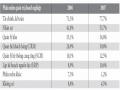
 Situation of Information Technology Application in Enterprises
 -
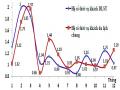 About the Investment Situation in 2 Parks and Other Habitat Areas in Ninh Thuan:
 -
 Overview of the Economic, Social and Educational Situation of Dak Glong District, Dak Nong Province
 -
 Investment Situation in Non-Credit Services at Saigon Commercial Joint Stock Bank in the Period of 2015-2019
 -
 Evaluation of Research Situation and Issues Raised for the Thesis
Chapter 3
CHARACTERISTICS OF LAN KHAI'S SHORT STORY IN SOME ARTISTIC FORMS
3.1. The art of situation building
3.1.1. Situation concept
The artistic innovation of Vietnamese short stories in the period 1930 - 1945 is expressed in many aspects of artistic form, including story situations. In modern short stories, situations play a very important role. Good, outstanding short stories often have unique, attractive situations. Vietnamese short stories in the period 1930 - 1945 achieved brilliant success in content and art, first of all because the writers created many typical situations. Writer Nguyen Cong Hoan showed his sharpness and sensitivity when discovering humorous, ironic situations in life. The situations in his stories are often paradoxical, absurd situations to expose the evil aspects of life. Nam Cao, on the other hand, mentioned very normal, trivial issues but had great social significance. Nam Cao rarely went into action situations, but he often exploited psychological situations. The flexible use of different types of situations has helped writers to reveal the most essential features of real life and thereby clearly express the character's personality and the ideological theme of the work. Bui Viet Thang affirmed: "The more unique the story situation is, focusing on many actions and thoughts of the character, the more attractive and convincing the work becomes" [6, 295].
With short stories, "a cross-section of life", the problem of situation is one of the issues that always receives attention from researchers as well as
Art creators. Because, short stories often have few characters, the issues are tightly compressed, condensed.
In the Vietnamese Dictionary, the authors say that a situation is "the development of a situation, in terms of what needs to be dealt with" [45, 996].
Hegel believes: "A situation is a state with a distinct nature and becomes determined in this property of its own. The situation contributes to expressing the content, which is the part that has an internal existence through artistic expression" [54, 110].
In artistic activities, researchers and short story writers are always interested in the issue of artistic situations. According to researcher Phung Quy Nham: "When referring to short stories, an indispensable element is the situation: the story situation and the character situation. Thanks to knowing how to put the story in typical situations, "special situations" (the word used by XL Rubinslein), "multi-colored situations" (Hegel), the ideological and artistic quintessence of the short story is more clearly expressed than other genres in narrative. In short stories, situations are often associated with events, events of character actions. According to Xaytlin, "these situations are necessary for building multi-faceted and profound images as well as for building a unified and logical multi-faceted system of details for the work of art" [39, 55].
Researcher Nguyen Dang Manh emphasized: "The most important thing in a short story is to create a certain situation. From the situation emerges a character's personality, revealing a mood" [53].
Writer Nguyen Kien confided: "The important thing for a short story is to choose the right situation, it mainly reveals personality and fate, from there characterizes a social phenomenon. As I understand it, a short story only contains a certain situation that has happened in life, if there are two or more situations, the short story is broken" [38, 47].
Nguyen Thanh Long also believes that: "A writer must use his own thoughts, his own elegance, his own life experience, to create his own models, in each model to bring together people who are far apart, let them participate in the topic between them, and their personalities will emerge." This is the way to "put people in situations" [38, 52].
With writer Nguyen Minh Chau, in his creative process, he confirmed: "Sometimes people think of a situation where a really good story happens and that's considered half done". "It (situation or artistic situation) does not need to have sharp conflicts like in a play, but it is a very specific and personal pretext, where the plot and characters rely on each other to effectively carry out all the author's intentions" [26, 257].
Situation is an indispensable basic issue of short stories, is the "sure excuse" that creates its own appearance and characteristics, so when studying Lan Khai's short stories, it is necessary to study the artistic situation. It can be said that the myriad of life has given rise to many types of situations. Writers, when reflecting life and human destiny, cannot help but use situations in their works. Through a survey of Lan Khai's short stories, based on many criteria for classification, we found that the writer uses the following types of situations: difficult, dramatic situations; psychological situations, moods. These types of situations have contributed to the value of Lan Khai's short stories.
3.1.2. Tricky, dramatic situations
Lan Khai's short stories attract readers, not because of the large number of characters or many events, but because of the dramatic and dramatic situations from the way events are developed, to the character building, and always creating a surprising ending. Lan Khai's short stories also attract readers because of the way the stories end. Many stories end with the image of death, the loss of good, loyal people: Ma thuong luong, Con bo duoc thuy te, Doi duoc con,
Tiger Man, Money Loss Strength, Pang Nha, Lo Giang Waves, Kham Khac, Storm, Crying Pine, Because of Floating Flowers, Lydean .... In general, these are the spiritual tragedies that the characters have to endure. These are the harsh realities in the lives of people in the mountains that make us think and sob about the past.
A typical story that Lan Khai built with a difficult and dramatic situation is Money lost strength. The story only revolves around the fate of the two main characters, Lo Hli and Today, but the story has a profound value reflecting reality because of many rich details with intertwined and binding conflicts. The story opens by describing the beautiful love of a young couple like grass and trees meeting the light, like drought meeting the rain. But in the next developments, we see that their love encounters obstacles from the powerful forces of money. These are also the situations that push the characters to conflicts, the stormy events of life. Happy love must face poverty, evil, and harsh customs and practices. At this time, the fate of small people becomes more fragile than ever. They are pushed to the end of life. The unexpected ending of the story is the image of the young couple committing suicide just because they want to live their love to the fullest with each other. Thus, the structure of such plots is capable of both expressing the character's personality traits and recreating the dark reality of life in the past. At the same time, it contributes to increasing the denunciation meaning of the work, increasing the tragedy of the story.
In the story of Pang Nha, Lan Khai created a dramatic and ironic situation. The story tells about the love between Pang Nha and Lo Trong. They loved each other passionately but were hindered by hostile forces represented by Tao Phay and Noong Ha. Noong Ha could not win Pang Nha's love and was jealous of Lo Trong, so he secretly plotted revenge. Ironically, Lo Trong died at the hands of Bach Sau, Pang Nha's brother, due to a misunderstanding. The end of the story is a heartbreaking tragedy. Lo Trong died and on that terrible night, Ban Vai village lost a girl.
The innocent smiling girl is now a crazy girl.
In Because the flowers drift, readers encounter the tragedy that covers the widow's tragedy. The story tells about the beautiful love story of a talented couple, Van and Dien Anh. They are both well-educated people, they are attached to each other and become a couple. But ironically, they have not been married for long when the country is in turmoil, the citadel is invaded and attacked by Chinese invaders. The situation is critical, Dien Anh has to lead the army to put down the rebellion. Van is depressed, then a few days later Van receives news that her husband has died in battle. The whole castle of happiness in her life has been shaken, now the citadel has collapsed. She loves her husband so much that she decides to disguise herself as a man and go to the green forest and red mountains to collect the remains of her beloved husband. A month later, Van carries her husband's remains home. On the way through the flood, she picks up some wild flowers and accidentally lets Dien Anh's remains float away with the water. How pitiful for human fate. That is the great coolness that causes pity for the character.
In general, dramatic, tense situations often bring interesting feelings to readers. It is the way of constructing situations like that that makes the short story Lan Khai more attractive.
3.1.3. Psychological situation, mood
Besides the dramatic, suspenseful situations, some of Lan Khai's stories are built with psychological and mood situations. The mood situations mainly explore the emotional and sentimental developments of the characters. The end of the story is a loss of spirit or separation... to make the character tormented, worried, or have a melancholy, sad mood. Separations are also the subject of many literary works. Separations are always sad. For example, the story Ben rung xuan, is the farewell scene between the three characters Thi, Khau and Ban. The characters are all sad, they silently look at each other. Thi is sad and pensive as if chasing a distant thought, Khau is also sad but it is the sadness of someone sending a friend away, Ban is hesitant and does not want to leave. They hold hands very touchingly, their voices are full of love and concern. Ban feels excited in his heart when he looks at
saw Thi's eyes glistening with tears. Saying goodbye to Ban, both Khau and Thi were filled with sorrow.
The psychological situation and mood are still clearly shown in the work Autumn Flute Sound. It is the beautiful love story between Luyt So and Hai Tau. Hai Tau's flute sound, the flute calling for love, made Luyt So sob. He knew Luyt So loved his flute sound, but he did not know whether love had any categories or not, and did Kinh and Tho know the squareness of a hundred years' story? Then they fell in love with each other, they wanted to express their feelings together. Both of them could speak, but they were like mute people because they did not understand each other's language. Hai Tau resented Mr. Xanh for not letting him become a Tho so that he could enjoy the pleasure of love. The confidences kept piling up in his withered heart. In the quiet moments, both of them were extremely miserable. That misery was for two "deaf and mute" lovers.
The psychological situation and mood are also clearly expressed by Lan Khai in stories written about social psychology such as: Hiding from life, Toying with love, The place of appointment, The debt, The life of a silkworm...
The situations in Lan Khai's short stories are dramatic, tense situations rich in drama and psychological situations, moods. Lan Khai has highlighted the portraits of ordinary people, they have appeared vividly. From there, it makes the reader think about life, about the thoughts and feelings of the characters. Lan Khai's short stories do not attract readers with the plot but impress them with the art of describing the situations.
3.2. The art of character building
3.2.1. Character concept
Talking about literary works means talking about characters, because characters are the basic means for writers to generalize reality in a symbolic way. Therefore, no matter what issue is mentioned, in literary works "characters are indispensable, because they are the basic form through which literature describes the world in a symbolic way" [29, 277].
In the book 150 literary terms, the author defines character as "an artistic image of a human being, one of the signs of a human being in the art of language. Besides humans, literary characters can also be animals, plants, and mythical creatures that are given human-like characteristics" [2, 241].
It can be said that the main character is the soul of the work, the spiritual child of the writer. As a result of the writer's fictional creation, the character in the work is a unique aspect that helps the writer express his artistic concept of people. The character always plays an important role from which other aspects of the overall structure of the work radiate. With such an important role, many writers attach importance to building their characters in the work. As the writer To Hoai said: "The character is the only place where everything is concentrated and everything is resolved in a work" [19, 127].
Talking about characters means talking about people described and expressed through literary means. It is a phenomenon of high artistic and symbolic value. Through the creation of characters, writers express their perceptions and thoughts about a certain issue in society. Through the world of images in the work, writers express their feelings about life, sending their thoughts, dreams, aspirations or secret thoughts to the characters. Characters are also the place for writers to express their own artistic views and aesthetic ideals about people. The main character is the element that leads readers into the world of life reflected through the author's lens. Each writer has his own way of building characters, and of course it is not a copy of real-life prototypes. To do this requires not only the writer to have the ability to observe, grasp, and know how to receive meaningful events, but also to have a heart "open to life". Writers must immerse themselves in their characters, live passionately with their lives, but at the same time remain alert to be able to clearly see their every move.