
It can be said that at the time of surveying tourists at destinations in the research areas, the epidemic had not yet broken out in Vietnam, so during this period, tourism activities were still taking place (the government was still able to control the source of infection from abroad; and localities were still effectively implementing epidemic prevention work such as: medical declaration, epidemiological investigation, tracing, propaganda work, etc.).
1.4.2.3 Scope of content
Tourists' intention to return to a tourist destination is a broad category, the research topic is very diverse and rich, but due to limited resources in terms of time, survey area and other objective issues, the author only focuses on researching the factors affecting tourists' intention to return to tourist destinations in 3 coastal provinces in the southwest of Hau River: Ca Mau, Bac Lieu and Soc Trang.
1.5 RESEARCH METHODS
Maybe you are interested!
-
 Solutions for tourism development in Tien Lang - 10
zt2i3t4l5ee
zt2a3gstourism, tourism development
zt2a3ge
zc2o3n4t5e6n7ts
- District People's Committees and authorities of communes with tourist attractions should support, promote, and provide necessary information to people, helping them improve their knowledge about tourism. Raise tourism awareness for local people.
*
* *
Due to limited knowledge and research time, the thesis inevitably has shortcomings. Therefore, I look forward to receiving guidance from teachers, experts as well as your comments to make the thesis more complete.
Chapter III Conclusion
Through the issues presented in Chapter II, we can come to some conclusions:
Based on the strengths of available tourism resources, the types of tourism in Tien Lang that need to be promoted in the coming time are sightseeing and resort tourism, discovery tourism, weekend tourism. To improve the quality and diversify tourism products, Tien Lang district needs to combine with local cultural tourism resources, at the same time combine with surrounding areas, build rich tourism products. The strengths of Tien Lang tourism are eco-tourism and cultural tourism, so developing Tien Lang tourism must always go hand in hand with restoring and preserving types of cultural tourism resources. Some necessary measures to support and improve the efficiency of exploiting tourism resources in Tien Lang are: strengthening the construction of technical facilities and labor force serving tourism, actively promoting and advertising tourism, and expanding forms of capital mobilization for tourism development.
CONCLUDE
I Conclusion
1. Based on the results achieved within the framework of the thesis's needs, some basic conclusions can be drawn as follows:
Tien Lang is a locality with great potential for tourism development. The relatively abundant cultural tourism resources and ecological tourism resources have great appeal to tourists. Based on this potential, Tien Lang can build a unique tourism industry that is competitive enough with other localities within Hai Phong city and neighboring areas.
In recent years, the exploitation of the advantages of resources to develop tourism and build tourist routes in Tien Lang has not been commensurate with the available potential. In terms of quantity, many resource objects have not been brought into the purpose of tourism development. In terms of time, the regular service time has not been extended to attract more visitors. Infrastructure and technical facilities are still weak. The labor force is still thin and weak in terms of expertise. Tourism programs and routes have not been organized properly, the exploitation content is still monotonous, so it has not attracted many visitors. Although resources have not been mobilized much for tourism development, they are facing the risk of destruction and degradation.
2. Based on the results of investigation, analysis, synthesis, evaluation and selective absorption of research results of related topics, the thesis has proposed a number of necessary solutions to improve the efficiency of exploiting tourism resources in Tien Lang such as: promoting the restoration and conservation of tourism resources, focusing on investment and key exploitation of ecotourism resources, strengthening the construction of infrastructure and tourism workforce. Expanding forms of capital mobilization. In addition, the thesis has built a number of tourist routes of Hai Phong in which Tien Lang tourism resources play an important role.
Exploiting Tien Lang tourism resources for tourism development is currently facing many difficulties. The above measures, if applied synchronously, will likely bring new prospects for the local tourism industry, contributing to making Tien Lang tourism an important economic sector in the district's economic structure.
REFERENCES
1. Nhuan Ha, Trinh Minh Hien, Tran Phuong, Hai Phong - Historical and cultural relics, Hai Phong Publishing House, 1993
2. Hai Phong City History Council, Hai Phong Gazetteer, Hai Phong Publishing House, 1990.
3. Hai Phong City History Council, History of Tien Lang District Party Committee, Hai Phong Publishing House, 1990.
4. Hai Phong City History Council, University of Social Sciences and Humanities, VNU, Hai Phong Place Names Encyclopedia, Hai Phong Publishing House. 2001.
5. Law on Cultural Heritage and documents guiding its implementation, National Political Publishing House, Hanoi, 2003.
6. Tran Duc Thanh, Lecture on Tourism Geography, Faculty of Tourism, University of Social Sciences and Humanities, VNU, 2006
7. Hai Phong Center for Social Sciences and Humanities, Some typical cultural heritages of Hai Phong, Hai Phong Publishing House, 2001
8. Nguyen Ngoc Thao (editor-in-chief, Tourism Geography, Hai Phong Publishing House, two volumes (2001-2002)
9. Nguyen Minh Tue and group of authors, Hai Phong Tourism Geography, Ho Chi Minh City Publishing House, 1997.
10. Nguyen Thanh Son, Hai Phong Tourism Territory Organization, Associate Doctoral Thesis in Geological Geography, Hanoi, 1996.
11. Decision No. 2033/QD – UB on detailed planning of Tien Lang town, Hai Phong city until 2020.
12. Department of Culture, Information, Hai Phong Museum, Hai Phong relics
- National ranked scenic spot, Hai Phong Publishing House, 2005. 13. Tien Lang District People's Committee, Economic Development Planning -
Culture - Society of Tien Lang district to 2010.
14.Website www.HaiPhong.gov.vn
APPENDIX 1
List of national ranked monuments
STT
Name of the monument
Number, year of decisiondetermine
Location
1
Gam Temple
938 VH/QĐ04/08/1992
Cam Khe Village- Toan Thang commune
2
Doc Hau Temple
9381 VH/QĐ04/08/1992
Doc Hau Village –Toan Thang commune
3
Cuu Doi Communal House
3207 VH/QĐDecember 30, 1991
Zone II of townTien Lang
4
Ha Dai Temple
938 VH/QĐ04/08/1992
Ha Dai Village –Tien Thanh commune
APPENDIX II
STT
Name of the monument
Number, year of decision
Location
1
Phu Ke Pagoda Temple
178/QD-UBJanuary 28, 2005
Zone 1 - townTien Lang
2
Trung Lang Temple
178/QD-UBJanuary 28, 2005
Zone 4 – townTien Lang
3
Bao Khanh Pagoda
1900/QD-UBAugust 24, 2006
Nam Tu Village -Kien Thiet commune
4
Bach Da Pagoda
1792/QD-UB11/11/2002
Hung Thang Commune
5
Ngoc Dong Temple
177/QD-UBNovember 27, 2005
Tien Thanh Commune
6
Tomb of Minister TSNhu Van Lan
2848/QD-UBSeptember 19, 2003
Nam Tu Village -Kien Thiet commune
7
Canh Son Stone Temple
2160/QD-UBSeptember 19, 2003
Van Doi Commune –Doan Lap
8
Meiji Temple
2259/QD-UBSeptember 19, 2002
Toan Thang Commune
9
Tien Doi Noi Temple
477/QD-UBSeptember 19, 2005
Doan Lap Commune
10
Tu Doi Temple
177/QD-UBJanuary 28, 2005
Doan Lap Commune
11
Duyen Lao Temple
177/QD-UBJanuary 28, 2005
Tien Minh Commune
12
Dinh Xuan Uc Pagoda
177/QD-UBJanuary 28, 2005
Bac Hung Commune
13
Chu Khe Pagoda
177/QD-UBJanuary 28, 2005
Hung Thang Commune
14
Dong Dinh
2848/QD-UBNovember 21, 2002
Vinh Quang Commune
15
President's Memorial HouseTon Duc Thang
177/QD-UBJanuary 28, 2005
NT Quy Cao
Ha Dai Temple
Ben Vua Temple
Tien Lang hot spring
div.maincontent .p { color: black; font-family:"Times New Roman", serif; font-style: normal; font-weight: normal; text-decoration: none; font-size: 14pt; margin:0pt; } div.maincontent p { color: black; font-family:"Times New Roman", serif; font-style: normal; font-weight: normal; text-decoration: none; font-size: 14pt; margin:0pt; } div.maincontent .s1 { color: black; font-family:"Times New Roman", serif; font-style: normal; font-weight: normal; font-size: 16pt; } div.maincontent .s2 { color: black; font-family:"Times New Roman", serif; font-style: italic; font-weight: bold; text-decoration: none; font-size: 14pt; } div.maincontent .s3 { color: black; font-family:"Times New Roman", serif; font-style: italic; font-weight: normal; text-decoration: none; font-size: 14pt; } div.maincontent .s4 { color: black; font-family:"Times New Roman", serif; font-style: normal; font-weight: normal; font-size: 14pt; } div.maincontent .s5 { color: black; font-family:"Times New Roman", serif; font-style: normal; font-weight: bold; font-size: 14pt; } div.maincontent .s6 { color: black; font-family:"Times New Roman", serif; font-style: normal; font-weight: normal; text-decoration: none; font-size: 14pt; } div.maincontent .s7 { color: black; font-family:"Times New Roman", serif; font-style: normal; font-weight: bold; text-decoration: none; font-size: 14pt; } div.maincontent .s8 { color: black; font-family:"Times New Roman", serif; font-style: normal; font-weight: normal; text-decoration: none; font-size: 9pt; vertical-align: 6pt; } div.maincontent .s9 { color: black; font-family:"Times New Roman", serif; font-style: normal; font-weight: bold; text-decoration: none; font-size: 12pt; } div.maincontent .s11 { color: black; font-family:"Times New Roman", serif; font-style: normal; font-weight: normal; tex
Solutions for tourism development in Tien Lang - 10
zt2i3t4l5ee
zt2a3gstourism, tourism development
zt2a3ge
zc2o3n4t5e6n7ts
- District People's Committees and authorities of communes with tourist attractions should support, promote, and provide necessary information to people, helping them improve their knowledge about tourism. Raise tourism awareness for local people.
*
* *
Due to limited knowledge and research time, the thesis inevitably has shortcomings. Therefore, I look forward to receiving guidance from teachers, experts as well as your comments to make the thesis more complete.
Chapter III Conclusion
Through the issues presented in Chapter II, we can come to some conclusions:
Based on the strengths of available tourism resources, the types of tourism in Tien Lang that need to be promoted in the coming time are sightseeing and resort tourism, discovery tourism, weekend tourism. To improve the quality and diversify tourism products, Tien Lang district needs to combine with local cultural tourism resources, at the same time combine with surrounding areas, build rich tourism products. The strengths of Tien Lang tourism are eco-tourism and cultural tourism, so developing Tien Lang tourism must always go hand in hand with restoring and preserving types of cultural tourism resources. Some necessary measures to support and improve the efficiency of exploiting tourism resources in Tien Lang are: strengthening the construction of technical facilities and labor force serving tourism, actively promoting and advertising tourism, and expanding forms of capital mobilization for tourism development.
CONCLUDE
I Conclusion
1. Based on the results achieved within the framework of the thesis's needs, some basic conclusions can be drawn as follows:
Tien Lang is a locality with great potential for tourism development. The relatively abundant cultural tourism resources and ecological tourism resources have great appeal to tourists. Based on this potential, Tien Lang can build a unique tourism industry that is competitive enough with other localities within Hai Phong city and neighboring areas.
In recent years, the exploitation of the advantages of resources to develop tourism and build tourist routes in Tien Lang has not been commensurate with the available potential. In terms of quantity, many resource objects have not been brought into the purpose of tourism development. In terms of time, the regular service time has not been extended to attract more visitors. Infrastructure and technical facilities are still weak. The labor force is still thin and weak in terms of expertise. Tourism programs and routes have not been organized properly, the exploitation content is still monotonous, so it has not attracted many visitors. Although resources have not been mobilized much for tourism development, they are facing the risk of destruction and degradation.
2. Based on the results of investigation, analysis, synthesis, evaluation and selective absorption of research results of related topics, the thesis has proposed a number of necessary solutions to improve the efficiency of exploiting tourism resources in Tien Lang such as: promoting the restoration and conservation of tourism resources, focusing on investment and key exploitation of ecotourism resources, strengthening the construction of infrastructure and tourism workforce. Expanding forms of capital mobilization. In addition, the thesis has built a number of tourist routes of Hai Phong in which Tien Lang tourism resources play an important role.
Exploiting Tien Lang tourism resources for tourism development is currently facing many difficulties. The above measures, if applied synchronously, will likely bring new prospects for the local tourism industry, contributing to making Tien Lang tourism an important economic sector in the district's economic structure.
REFERENCES
1. Nhuan Ha, Trinh Minh Hien, Tran Phuong, Hai Phong - Historical and cultural relics, Hai Phong Publishing House, 1993
2. Hai Phong City History Council, Hai Phong Gazetteer, Hai Phong Publishing House, 1990.
3. Hai Phong City History Council, History of Tien Lang District Party Committee, Hai Phong Publishing House, 1990.
4. Hai Phong City History Council, University of Social Sciences and Humanities, VNU, Hai Phong Place Names Encyclopedia, Hai Phong Publishing House. 2001.
5. Law on Cultural Heritage and documents guiding its implementation, National Political Publishing House, Hanoi, 2003.
6. Tran Duc Thanh, Lecture on Tourism Geography, Faculty of Tourism, University of Social Sciences and Humanities, VNU, 2006
7. Hai Phong Center for Social Sciences and Humanities, Some typical cultural heritages of Hai Phong, Hai Phong Publishing House, 2001
8. Nguyen Ngoc Thao (editor-in-chief, Tourism Geography, Hai Phong Publishing House, two volumes (2001-2002)
9. Nguyen Minh Tue and group of authors, Hai Phong Tourism Geography, Ho Chi Minh City Publishing House, 1997.
10. Nguyen Thanh Son, Hai Phong Tourism Territory Organization, Associate Doctoral Thesis in Geological Geography, Hanoi, 1996.
11. Decision No. 2033/QD – UB on detailed planning of Tien Lang town, Hai Phong city until 2020.
12. Department of Culture, Information, Hai Phong Museum, Hai Phong relics
- National ranked scenic spot, Hai Phong Publishing House, 2005. 13. Tien Lang District People's Committee, Economic Development Planning -
Culture - Society of Tien Lang district to 2010.
14.Website www.HaiPhong.gov.vn
APPENDIX 1
List of national ranked monuments
STT
Name of the monument
Number, year of decisiondetermine
Location
1
Gam Temple
938 VH/QĐ04/08/1992
Cam Khe Village- Toan Thang commune
2
Doc Hau Temple
9381 VH/QĐ04/08/1992
Doc Hau Village –Toan Thang commune
3
Cuu Doi Communal House
3207 VH/QĐDecember 30, 1991
Zone II of townTien Lang
4
Ha Dai Temple
938 VH/QĐ04/08/1992
Ha Dai Village –Tien Thanh commune
APPENDIX II
STT
Name of the monument
Number, year of decision
Location
1
Phu Ke Pagoda Temple
178/QD-UBJanuary 28, 2005
Zone 1 - townTien Lang
2
Trung Lang Temple
178/QD-UBJanuary 28, 2005
Zone 4 – townTien Lang
3
Bao Khanh Pagoda
1900/QD-UBAugust 24, 2006
Nam Tu Village -Kien Thiet commune
4
Bach Da Pagoda
1792/QD-UB11/11/2002
Hung Thang Commune
5
Ngoc Dong Temple
177/QD-UBNovember 27, 2005
Tien Thanh Commune
6
Tomb of Minister TSNhu Van Lan
2848/QD-UBSeptember 19, 2003
Nam Tu Village -Kien Thiet commune
7
Canh Son Stone Temple
2160/QD-UBSeptember 19, 2003
Van Doi Commune –Doan Lap
8
Meiji Temple
2259/QD-UBSeptember 19, 2002
Toan Thang Commune
9
Tien Doi Noi Temple
477/QD-UBSeptember 19, 2005
Doan Lap Commune
10
Tu Doi Temple
177/QD-UBJanuary 28, 2005
Doan Lap Commune
11
Duyen Lao Temple
177/QD-UBJanuary 28, 2005
Tien Minh Commune
12
Dinh Xuan Uc Pagoda
177/QD-UBJanuary 28, 2005
Bac Hung Commune
13
Chu Khe Pagoda
177/QD-UBJanuary 28, 2005
Hung Thang Commune
14
Dong Dinh
2848/QD-UBNovember 21, 2002
Vinh Quang Commune
15
President's Memorial HouseTon Duc Thang
177/QD-UBJanuary 28, 2005
NT Quy Cao
Ha Dai Temple
Ben Vua Temple
Tien Lang hot spring
div.maincontent .p { color: black; font-family:"Times New Roman", serif; font-style: normal; font-weight: normal; text-decoration: none; font-size: 14pt; margin:0pt; } div.maincontent p { color: black; font-family:"Times New Roman", serif; font-style: normal; font-weight: normal; text-decoration: none; font-size: 14pt; margin:0pt; } div.maincontent .s1 { color: black; font-family:"Times New Roman", serif; font-style: normal; font-weight: normal; font-size: 16pt; } div.maincontent .s2 { color: black; font-family:"Times New Roman", serif; font-style: italic; font-weight: bold; text-decoration: none; font-size: 14pt; } div.maincontent .s3 { color: black; font-family:"Times New Roman", serif; font-style: italic; font-weight: normal; text-decoration: none; font-size: 14pt; } div.maincontent .s4 { color: black; font-family:"Times New Roman", serif; font-style: normal; font-weight: normal; font-size: 14pt; } div.maincontent .s5 { color: black; font-family:"Times New Roman", serif; font-style: normal; font-weight: bold; font-size: 14pt; } div.maincontent .s6 { color: black; font-family:"Times New Roman", serif; font-style: normal; font-weight: normal; text-decoration: none; font-size: 14pt; } div.maincontent .s7 { color: black; font-family:"Times New Roman", serif; font-style: normal; font-weight: bold; text-decoration: none; font-size: 14pt; } div.maincontent .s8 { color: black; font-family:"Times New Roman", serif; font-style: normal; font-weight: normal; text-decoration: none; font-size: 9pt; vertical-align: 6pt; } div.maincontent .s9 { color: black; font-family:"Times New Roman", serif; font-style: normal; font-weight: bold; text-decoration: none; font-size: 12pt; } div.maincontent .s11 { color: black; font-family:"Times New Roman", serif; font-style: normal; font-weight: normal; tex -
 Classification of the Convenience of 3 Types of Tourism
 -
 Factors affecting the decision to choose domestic tour programs of tourists researched at Lua Viet Tourism Company Limited - 15
 -
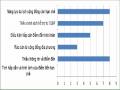 Types of Sea and Island Tourism Products Preferred by Tourists
 -
 Research on factors affecting tourists' purchasing decisions for the 3N2D Da Nang - Hoi An tour of Dai Bang Advertising Media and Tourism Services Joint Stock Company - 11
The main research method of this thesis is quantitative research method, which means that on the basis of TPB theory of planned behavior, satisfaction theory and destination image theory, the author proceeds to build hypotheses to answer the research questions and collect data to test those hypotheses. Regarding the research method, this thesis includes two steps: (step 1) qualitative research; and (step 2) quantitative research; (see also Chapter 3), the basic summary is as follows:
(1) Step 1: For the qualitative research method, the author performs 2 contents, including: first is qualitative research to complete the research model, next is qualitative research to build and develop the scale.
(i) Qualitatively complete the research model: to determine the need for research, build and propose research hypotheses, this is the basis for checking the suitability and adjusting the research model of the thesis.
(ii) Qualitative construction of scale construction and development: based on the proposed research model, the author continues to adjust and supplement the research components (or research concepts), which are the observed variables, ensuring that the scales are built in accordance with theory and are concretized in practice. Specifically, through the technique of interviewing experts (managers with expertise and work experience related to the fields of economics and tourism), the
The expert interview approach at this step is divided into the following two phases: phase 1 is to discuss the content to evaluate the idea, phase 2 is to discuss, select and adjust the influencing factors (observed variables). In addition, during the implementation process, the author also used the method of exchanging via email and phone with experts to be able to approach the problem more accurately and promptly. The result of the qualitative research is a questionnaire to survey tourists to continue in the quantitative research step.
(2) Step 2: The quantitative research method is conducted by analyzing primary data, through the process of directly interviewing tourists at tourist destinations in 03 provinces: Ca Mau, Bac Lieu and Soc Trang (Vietnam). For this quantitative research method, the author conducts 2 contents, including: first is preliminary quantitative research to eliminate poor quality scales; and official quantitative research to re-examine whether the data is suitable for the objectives and research questions. After that, this data will be synthesized, analyzed and the research results will be reported.
1.6 THESIS STRUCTURE
In addition to sections such as table of contents, list of tables, list of figures, references and appendices, the thesis content is structured into 5 specific chapters as follows:
Chapter 1 Research overview: presents the reasons for choosing the research topic, research objectives, research questions, research scope, research methods and thesis structure.
Chapter 2 Theoretical basis and research model: identifies theoretical basis related to the research topic and previous studies in practice, thereby helping the author identify research gaps in order to build hypotheses and research models.
Chapter 3 Research methods: presents the research process, qualitative research methods (qualitative to complete the research model and form the scale); and, preliminary quantitative research methods to evaluate the research scale.
Chapter 4 Research results and discussion: implementing formal quantitative research methods, with statistical techniques, scale assessment and research model testing.
Chapter 5 Conclusion and managerial implications: identify the academic research contribution and propose recommendations to contribute to attracting tourists to visit the destination and developing tourism in the research areas.
CHAPTER 2. THEORETICAL BASIS AND RESEARCH MODEL
Chapter 2 identifies the theoretical basis related to the research topic and previous studies in practice (international and Vietnamese studies), thereby helping the author identify the research "gap" in order to be able to build hypotheses and research models.
2.1 CONCEPTS RELATED TO THE TOPIC
2.1.1 Tourism, tourism classification and tourism related components
Tourism is a common phenomenon and brings benefits to many related subjects. It can be said that tourism is the activity of people leaving their daily residence, this activity is affected by many economic-political, cultural and social factors. According to the World Tourism Organization, tourism is the activity of an individual with the purpose of visiting a destination outside of the usual place of residence; and excluding the main purpose of making money. In general, there are many concepts of tourism due to the approach to different purposes. Lieper (1979) added that the travel time can be one or more nights and this activity is not for the purpose of making money. Vietnam's Tourism Law (2017) also has a similar approach. It can be seen that tourism is a real and legitimate need of each individual in the social life of every country.
Depending on the criteria, tourism activities can be classified into different groups, commonly including the following basic criteria: (1) Classification by territory (international and domestic tourism); (2) Classification by geographical location; (3) Classification by purpose of the trip; and (4) Some other types of tourism (Based on means of transport, there are types of tourism such as: bicycle tourism, car tourism, train tourism, boat tourism, plane tourism. If based on the length of the trip, there are types: short-term tourism, long-term tourism; or, if based on the form of organization, there are: group tourism, individual tourism, family tourism. And if based on the contract method, we also have: package tourism, partial tourism...).
As discussed, tourism is a complex industry, involving many components (distribution, transportation, tourism facilities (restaurants, hotels, entertainment areas, etc.) and other supporting services. The challenge for tourism planners and managers in both the private and government sectors is to meet the needs of tourists for experience, learning and entertainment, while balancing natural resources and preserving local culture. When tourism is well researched, developed and managed, it will also bring other benefits beyond economic benefits such as maintaining national traditions, preserving the environment and contributing to regional peace efforts.
2.1.2 Destination and destination image
Tourism activities are spatially oriented, tourists leave their daily residence to go to a new place to experience or relax. According to Van Raaij (1986), a tourist destination is a product consisting of two parts: "available" and "artificial". In which, the "available" part such as climate, landscape, beach, mountain... are natural features of the destination and the "artificial" part refers to features such as hotels, means of transport and facilities for sports and entertainment... A tourist destination is a geographical area with attributes, features, attractions and services to attract potential tourists, such as: a continent, a country, an island or a city. A tourist destination is a place where tourists come to visit and service providers apply marketing methods as well as provide tourism products and services to customers, especially that place must be given a specific brand name (Buhalis, 2000).
In Middleton's (1988) perspective, a tourist destination consists of the following five components: the presence of natural and man-made attractions in an area; the presence of facilities and services for tourists; ease and convenience of access; the images used to attract tourists; and the total cost of the stay. Laws (1995) is a place where people spend their holidays; these elements require location, people and festivals. Cooper, Fletcher, Gilbert & Wanhill (1998) separately say that a tourist destination must be the focus of food, accommodation, entertainment and recreation facilities designed to meet the needs of tourists. A destination encompasses all aspects of tourism including demand, transportation, supply and marketing; and many authors have different views.
such as: Hu & Ritchie (1993); Gatrell (1994); Murphy, Pritchard & Smith (2000); Deng, King & Bauer (2002)…
Although there are different views on the number of components that make up a tourist destination, in essence, a tourist destination must attract visitors to leave their homes, the destination has all the elements of a “non-home” place, such as: landscapes to observe, fun activities to participate in, and memories to remember (Park and Gretzel, 2007).
In addition to the term “tourism destination”, there is another equally important and confusing term, which is the term “destination image”. Destination image is understood as the impressions of tourists about a tourist destination, which tourism researchers agree on in both the cognitive factor group (assessment based on perception of beliefs and personal knowledge); and the affective/emotional factor group (assessment based on personal feelings) towards the destination. According to Quyen (2017), tourists are the ones who evaluate the image of that destination based on their beliefs, attitudes and opinions, or in other words, tourists are the ones who will decide on the destination image of any destination, not the conditions hidden inside.
2.1.3 Destination can be considered a tourism product
A product is defined as anything that can be offered to a market for attention, acquisition, use or consumption (Kotler, 1984). Similarly, tourism products can also be understood in different ways. Medlik and Middleton (1973) define tourism products as a group of activities, services and benefits that make up a tourism experience. For tourism destinations, destinations typically consist of four basic elements: attractions, access (transportation, parking), facilities (food and beverage, accommodation, entertainment, retail and other services).
It can be said that the combination of exploiting natural and social factors with the use of resources (human resources, means, skills) at an organization or enterprise to provide a product or service for tourists can be considered a tourism product. Therefore, a tourist destination is considered both a set of resources (natural, cultural, artistic, etc.) and an attractive (or complex) overall product to bring comfort and novelty to tourists' vacations (Cracolici and Nijkamp, 2008).
2.1.4 Satisfaction
Millan and Esteban (2004) believe that the result of all activities performed during the shopping and consumption process is satisfaction, or more simply, satisfaction is the emotional response of tourists to the consumption experience based on the comparison between the performance, desires and beliefs of tourists about the tourism product.
2.1.5 Distinguish between intended behavior and actual behavior
According to Warshaw and Davis (1985), a person’s conscious plan to perform or not perform a specific behavior in the future can be considered as behavioral intention. However, Ajzen and Fishbein (1980) suggested that there may not be a perfect relationship between behavioral intention and behavioral performance. Furthermore, they also emphasized that it is important to specify the target behavior precisely. For example, a tourist may intend to visit a specific event (e.g., a motor racing event in a stadium) at the destination (Can Tho) instead of the destination (Can Tho). Asking about the intention to visit the destination will not reflect the specific event. In addition, there is a time lag between the intention to go and the actual visit, as tourists may change their plans on some issues, thus leading to an unfulfilled intention. However, as noted above, the more one tends to think about an intention, the more likely one is to want to do it (e.g., travel).
2.1.6 Intention to return to tourist destination
In the tourism field, the term revisit can be defined as any situation in which a person returns one or more times to the same destination. Thus, Intention to revisit a tourist destination is an indication of a tourist's relative willingness and commitment to revisit a previous destination (by extension, this intention to revisit can also be word-of-mouth recommendation of the destination to their acquaintances. This is also the central topic of research in this thesis.
2.1.7 Attitude, subjective norms, and perceived behavioral control
According to the theory of planned behavior TPB, attitude is a person's positive or negative belief about performing a particular behavior. When an individual has a belief about a behavior
A certain action or event will lead to the formation of a behavioral intention related to that action.
A subjective norm refers to the perceived external (social) pressure to perform or not perform a behavior, an individual will intend to perform a certain behavior when the individual perceives that they should. In the context of tourism, although traveling and the intention to return are completely voluntary, psychological pressure from acquaintances (colleagues, superiors or family) can influence their intention.
Perceived behavioral control refers to the individual's belief that they have control over personal factors or constraints on the behavior, people will not have a real intention to perform a behavior if they believe they do not have the ability, resources or opportunities to do so, even if they have a positive attitude towards the behavior. For example, Sparks and Pan (2009) found that control over personal resources (time and money) can be a factor that helps researchers predict intentions to visit a destination.
2.2 THEORETICAL BASIS RELATED TO THE TOPIC
2.2.1 Theory of Destination Image
The term Destination Image has been widely studied in the fields of marketing, tourism, transportation; or geography. Although the term “destination image” is commonly used in tourism, there seems to be no consensus on its definition.
Destination image according to Hunt (1971) is the impression state of a person towards a place where they do not reside. Markin (1974) believes that destination image has elements of personalization, internalized understanding and conceptualization of what we know; or, an expression of an individual's impressions, prejudices, imagination and emotional thoughts about a specific object or place (Lawson & Bond-Bovy; 1977). Or some other researchers also have a relatively different view, typically Dichter (1985) thinks that an image is not only individual characteristics or qualities but also the impression created in the minds of others; and other authors such as: Arrebola (1994); Coshall (2000); Gallarza et al. (2002) ...