
19
right. The more money a university makes each year from selling programs
present, then they
attract more resources and use
Maybe you are interested!
-
 State Management Functions on the Economy by Impact Phase
 -
 Directions for Improving State Management of Tourism Activities in Dak Nong Province
 -
 State management of compensation, support and resettlement when the State acquires land in Buon Ho town, Dak Lak province - 12
 -
 The impact of state ownership and bank loans on investment decisions of companies in Vietnam - 18
 -
 Current Status of State Management Activities for Tourism Enterprises in Hanoi
use to open
wide
program. The demand curve Db1Db1, and the supply curve Sb1Sb1, for the business administration program are theoretically the same as those for the agriculture program. Ignore the curve Db2 Db2 for the moment. Suppose that, because of an overlap, the initial demand and supply curves for both programs have the same prices; that is, Pa1 is equal to Pb1. The levels of the programs are sa1 and sb1, respectively.
Now, to increase the demand for students in business administration programs
equal to the agricultural program, the business administration demand curve moves
shifts to Db2Db2, and the agricultural demand curve shifts to Da2Da2. What are the effects of maintaining the equilibrium price for the two programs? At price Pb1, universities cannot expand their business administration programs and cannot afford the costs of doing so. There will be a shortage of staff and facilities to teach business administration. Classes will be larger and classrooms will be
will be more crowded. The quality of education will be reduced. In the agricultural program
At Pa1 price level class sizes will be reduced and facilities will be less fully utilised. There will be an overabundance of teaching staff and equipment. Shortages and surpluses of these types are common in universities and colleges today. They represent inefficiencies in the provision of educational services because the school does not allow the assessment system to allocate resources effectively.
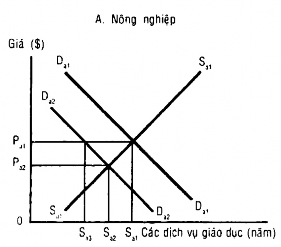
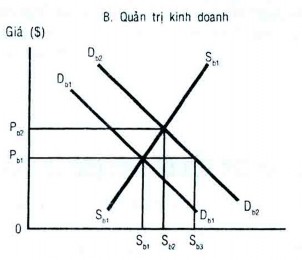
Figure 1.3. The impact of changes in demand for educational services
(Da1 Da1 and Sa1 Sa1 are the original demand and supply curves for the year of agricultural education, whereas in the business administration program they are Db1 Db1 and Sb1 Sb1. Now, assume that the demand for business administration increases from Db2 Db2 and the demand for agriculture decreases to Da2 Da2. Keeping the tangible costs (tuition
20
and the law
costs) at points Pb1 and Pa1 lead to an excess of capacity
agricultural education
and the lack of business administration education. If the tuition and fees of the business administration program were increased to pb2 and that of agriculture decreased to pa2, it would increase the efficiency with which both are used.) [1, p.99]
If universities use different prices for different programs, they can increase both efficiency and accountability to customers. Let tuition and fees in business administration increase to pb2. The additional revenue gained will be expanded to sb2, taking into account the increased demand. The price increase also helps to relieve pressure on facilities by reducing the enrollment rate from sb3 to sb2. Now, to reduce tuition and fees in agriculture to Pa3, universities are encouraged to cut some programs back to sa2, which is just enough to cover expenses. In addition, reducing prices in agriculture from Pa1 to Pa2 will increase the enrollment rate from sa3 to sa2. [1, P.100]
To make the previous economic analysis more general, suppose that there is an increase in demand for a new program in a university, for example, ecology studies. The cost of providing the program over several years can be determined and the supply curve can then meet the demand curve. The equilibrium price will reflect the cost of the program to students. It also creates the possibility of the program being exactly the same without any surplus or shortage. This shows that the types of educational services are relatively diverse and rich.
1.1.3 Factors affecting the private college and university system
1.1.3.1 Socio-economic environmental factors
Training institutions, whether public or private, are affected to varying degrees by socio-economic environmental factors such as the state and growth rate of the economy, the human resource needs of enterprises, the needs and affordability of learners, the tradition of learning, and international integration and globalization. Training institutions all need basic input factors such as schools, classrooms, workshops, machinery, equipment and teaching materials, etc. For public training institutions, most of these factors are provided by the State, while private training institutions often depend on self-reliance and on the suppliers of these factors in the economy.
An important factor from the economic environment is the availability, quality and price of labor. If an economy has an abundant untrained labor force, while the trained labor force is scarce, this will increase the training demand for the university-college system in general, including universities and colleges.
21
Labor costs are also an extremely important economic factor for private education institutions. Relatively high salaries for teaching and administrative staff can be a problem for private education institutions because they push up tuition fees. Many types of education and training provided in the public sector are provided at lower tuition fees (partly because they are subsidized by the state). The inputs to an education institution (such as labor, materials and capital) are clearly affected by changes in the general price level in the economy. If prices rise sharply, it will cause chaos in the economic environment at both the input and output levels. Inflation can be a disaster for private education institutions because it will increase the prices of inputs such as labor, materials and other items. Private training institutions cannot adjust tuition fees in time with inflation. Moreover, tuition fees are usually agreed upon in advance between the training institution and the learner, so at this time tuition fees will not cover the costs of labor, materials, etc. to maintain training.
From an economic perspective, universities and colleges rarely or never use price systems (tuition, fees) or market forces in determining the programs they will offer. Schools often try to provide what they believe society needs such as business, construction, mechanics, information technology, etc. At the same time, the wishes of students and their families must also be considered, otherwise it will affect the student enrollment rate. In private schools, major sponsors have an influence on the choice of programs. However, the interests of learners are considered the most important [1, p.101].
International integration and globalization are among the factors that strongly promote the formation and development of higher education in our country. Due to the unprecedented capacity and scale of globalization, the state and enterprises can use more extensive, faster and cheaper methods than before when interacting with the outside. The integration trend will promote human resources, capital, goods, science and technology and information technology to flow into Vietnam faster and faster, which leads to a more fierce competitive environment between domestic and foreign enterprises. In order to obtain and maintain a relatively advantageous position in this constant change, no country does not actively seek a favorable location for itself, enhancing the country's competitiveness. Under the intertwined influences both internally and externally, higher education, with its role of taking on the responsibility of enlightenment, disseminating knowledge and nurturing and educating natural talents, has also become a great weapon in globalization.
1.1.3.2 Factors of political environment, law and policy for development of private university and college education
22
The political and legal environment includes laws, regulations and the activities of state agencies, all of which affect private training institutions. The perceptions, attitudes and actions of political and state leaders, legislators will change with the ups and downs of social needs and beliefs. Many politicians who supported the development of the private sector in higher education completely changed direction when there was a risk of private schools being closed, when people complained about high tuition fees, about the low quality of education and training in the private sector.
The state has a real influence on every aspect of life and on every private educational institution. The state here plays two main roles at the same time, on the one hand promoting and on the other hand restricting the activities of the private sector. For example, the state
promote private education and training by encouraging its expansion and development.
Education and training, by supporting and subsidizing private training institutions, by tax exemptions, by supporting teachers on the state payroll, by forming loans with preferential interest rates. By limiting the expansion of the public sector. Another role of the state is to limit and regulate the private sector in education and training. A private training institution is surrounded by a network of laws, rules and decisions of the courts or state management levels on education and training to protect the rights of learners, workers and the whole society.
Policies set the scope of the decision and ensure that the decision is appropriate and contributes to the objectives. Policies help to resolve problems early without having to analyze them when they arise in similar situations and help to unify different plans. An example is the policy for teachers in public schools to be contracted to teach in private schools. This policy allows principals in private universities and colleges to propose plans to invite public school teachers to teach without having to consult with the highest level, but still need standards to check (such as the ratio of invited guest lecturers to the total number of teachers, both permanent and guest, degree standards, etc.).
Since policies are guidelines for decision making, they must have some flexibility; otherwise they can become rules. In some cases the policy scope can be quite wide, but it can also be very narrow. Policy is a means of encouraging freedom and creativity, but within limits, of course the freedom may depend on the policy and this in turn reflects the position of the manager.
23
Theory and practice show that policies for the private sector of higher education can be formed from four sources:
inside
- Drafting : The most logical source of policy is the highest level of management .
of the education system, drafted a policy with the urgent purpose of
guiding individuals, social and economic organizations, private schools in their actions. Basically this type of policy originates from the goals of the education system and is determined by the top management.
- Suggestions : In practice, perhaps most policies originate from situations in which lower-level officials have outlined exceptions to upper-level management. When suggestions have been made and decisions have been made on them, a set of general rules will be formed. Precedents are formed and become guidelines for later management actions. The policy that originated from suggestions for the development of private universities in our country can be illustrated through the case of Thang Long Private University (now a private school). Policies built from suggestions are sometimes imperfect and partial. If managers make decisions based on a set of known facts without considering their possible effects on other aspects of operations, or if unintended regulations are formed from these decisions, the resulting policies will not guide the thinking and actions of the grassroots level as senior managers would like.
- Implicit : Different circumstances explain the formation of implicit policies. There may be cases where policies are announced merely for show and not (or not yet) implemented. There may be a country that announces a certain policy merely to create a desired impression but is not able or willing to implement it. In most cases, implicit policies are made in the absence of clear guidelines and strategies. Decision makers at lower levels choose their own guidelines based on what they understand from the actions of their superiors.
- External pressure : Policies are created by pressure from outside the subsystem (or outside the training facility) affecting the subsystem (or outside the training facility ) .
training facilities) is increasing. Direct regulation, competition of
Public schools, private schools, and conditions requiring state assistance are some forms of external pressure. Other social organizations such as churches, unions, and philanthropies can also create or enforce policies for a particular private school.
Establishing appropriate and adequate policies for the higher education sector to achieve the goals of the entire education and training system is difficult for many reasons.
24
by:
- First, policies are rarely clearly defined in writing and
It is rarely explained precisely. For example: “The capital of a private university includes initial capital and capital acquired during operation”. Here, a series of questions can be raised: What is initial capital? How much is this capital? How is it formed? According to current regulations, the initial capital to be allowed to establish a college or university is 50 billion VND, is that appropriate?
- Second, the very decentralization of power that policies intend to achieve through decentralization of their influence will lead to widespread participation in policy formulation and interpretation with certain differences between institutions and between individuals.
- Third, at any level of policy making, sometimes they do not have enough knowledge and information or have not fully calculated the impact of policy issuance and implementation on all aspects of social life.
- Fourth, it is not always easy to test a policy, because determining actual policy (quantifying policy implementation) can be difficult and intended policy is not always clear.
1.1.3.3 Factors of scientific and technological environment
The influence of science is seen in new knowledge, in new techniques.
Technology is seen in new products, new machines, new tools, new materials and new services. Part of the benefit gained from science, engineering and technology is that it brings new knowledge, greater productivity, more leisure and greater variety of products.
The development of science, technology and engineering increases the need for training, education and retraining, which means increasing the "customers" for schools (public and private), but at the same time forces training institutions to innovate the content of training programs, innovate machinery and equipment for training in the field of engineering.
Technology is changing rapidly. The remarkable development of science and technology in the period
The current period has more or less affected the formation of private training institutions. This has a great impact on the development of training programs and professions to be able to access modern science and technology.
1.2 STATE MANAGEMENT OF PRIVATE COLLEGE AND UNIVERSITY EDUCATION SECTOR
1.2.1 Concept of state management of the university and college system
1.2.1.1 Concept of state management
25
In the system of social management entities, the State is the only entity.
comprehensive social management by law. Social management is the implementation
organizational functions to create the necessary conditions to achieve goals
The purpose set forth in the process of common human activities in society. Therefore, since the appearance of the state, social management has been undertaken by the state. However, social management is not only carried out by the state as a special political organization, but also by all other components of the political system such as political parties, social organizations... Thus, state management is a form of management
state-authoritarian society,
use of rights
force
State
to condition
regulate social relations and human behavior to maintain and develop
develop social relations and legal order to carry out the functions and tasks of the State.[16, p.6]
State management is the work performed by all agencies.
state, sometimes directly by the people
perform
equal
form of abandonment
votes or by social organizations, agencies if assigned by the State to perform state functions. State management is essentially state management, performed by the State through the State apparatus on the basis of State power to perform the tasks and functions of the Government.
1.2.1.2 State management of university and college education
State management of education and training is the work
State
real
presently
right
force
work to regulate
act, thing
adjust all educational activities in
social scope to realize the State's educational goals. Management
State management of education and training is the organized and regulated impact by state power on education and training activities carried out by state education management agencies from central to local levels to perform functions and tasks according to state regulations to develop the education and training career, maintain discipline, satisfy people's education and training needs, and realize the state's education and training goals.
In the concept of state management of education and training, three main parts emerge, which are the subject, object and goal of education and training:
- The state management entities of education and training are competent agencies (legislative and executive agencies) as prescribed in Article 87 of the Law on Education.
- The object of state management of education and training is the national education system and all educational and training activities within the scope of the whole society.
- The overall goal of education and training is to ensure order and discipline in education and training activities, to achieve the goal of improving people's knowledge, training human resources, nurturing talents for society, perfecting and developing the personality of the public.
26
However, at each level of education, the objectives have been specified in the Education Law and school regulations.
Thus, it can be said that: State management of education and training is the management of competent state agencies, of the Ministry of Education from central to local levels, of the national education system and educational activities of society to improve people's knowledge - training.
create - nurture
[13, p.5]
talent for the country
and perfecting the personality of citizens.
It should be noted that state management is the exercise of three powers: Legislative - Executive - Judicial to regulate all social relations and citizens' behavior.
What about state management of education and training in reality?
is to exercise the right
executive to organize
function
operate and regulate all activities
education and training activities within the scope
society as a whole. However, to manage effectively and efficiently, the use of executive power must be combined with legislative power and inspection and control activities in the activities of the entire system.
From the above theoretical bases, it can be understood that: State management of the university and college system is the state exercising executive power to regulate activities in the higher education system and at the same time demonstrating the state's commitment to the development of education and training. The Government, the Ministry of Education and Training, ministries and branches and the People's Committees of decentralized localities share in implementing that commitment, and need to clearly define tasks and responsibilities in managing schools to create high consensus.
1.2.2 Characteristics of state management of the private college and university system
One of the most important goals in state management of education and training is to ensure a favorable pedagogical environment for the implementation of educational goals set by the State. From the above perceptions, we see that state management of education and training has the following characteristics:
The first:
Just according to the principle
management
State administrative management for
active
education management activities,
just according to the principle
administrative education
education for an educational institution including a private higher education institution.
Education is essentially the implementation of functions, tasks and powers assigned by the State.
The State shall prescribe (decentralization, assignment or delegation). The agencies and organizations shall replace
The State implements the education and training career and regulates
act, thing
adjust the activities
Education and Training activities. Substantive administrative management
is the work
drafting legal documents
Regulations and compliance with documents, combined with educational management is to bring the construction of documents into professional educational activities to make everyone understand the regulations of the documents to implement them correctly.