
10. Global Initiative for Asthma, (2020). Global strategy for asthma management and prevention. Available at: https://ginasthma.org/wp- content/uploads/2020/04/GINA-2020-full-report_-final-_wms.pdf, [accessed 21st April 2020].
11. Scadding GK, Kariyawasam HH, Scadding G. et al (2017). BSACI guideline for the diagnosis and management of allergic and non‐allergic rhinitis (Revised Edition 2017; First edition 2007). Clinical & Experimental Allergy, 47(7), 856-889.
12. Meltzer EO, Blaiss MS, Naclerio RM et al (2012). Burden of allergic rhinitis: allergies in America, Latin America, and Asia-Pacific adult surveys. in Allergy and asthma proceedings. Allergy and Asthma Proceedings, 33(5), S113-S141.
13. Asher MI and Weiland SK (1998). The International Study of Asthma and Allergies in Childhood (ISAAC). ISAAC Steering Committee. Clin Exp Allergy, 28(5), 52-66.
Maybe you are interested!
-
 Study on asthma control status in children with bronchial asthma and allergic rhinitis - 18
 -
 Study on asthma control status in children with bronchial asthma and allergic rhinitis - 21
 -
 Study on asthma control status in children with bronchial asthma and allergic rhinitis - 22
 -
 Car body electrical practice - 8
zt2i3t4l5ee
zt2a3gs
zt2a3ge
zc2o3n4t5e6n7ts
If the voltage is out of specification, replace the wire or connector.
If the voltage is within specification, install the front fog light relay and follow step 5.
Step 5 Check the front fog light switch
- Remove the D4 connector of the fog light switch
- Use a multimeter to measure the resistance of the front fog light switch.
Measurement location
Condition
Standard
D4-3 (BFG) -D4-4 (LFG)
Light switchFront Fog OFF
>10kΩ
D4-3 (BFG) -D4-4 (LFG)
Front fog light switchON
<1 Ω
- Standard resistor
D4 connector is located on the combination switch assembly.
If the resistance is out of specification, replace the combination switch (the fog light switch is located in the combination switch).
If the resistance is within specification, follow step 6.
Step 6 Check wiring and connectors (front fog light relay-light selector switch)
- Disconnect connector D4 of the combination switch assembly
- Use a voltmeter to measure the voltage value of jack D4 on the wire side.
Measurement location
Control modecontrol
Standard
D4-3 (BFG) - (-) AQ
TAIL
11 to 14 V
D4 connector for the wiring of the combination switch assembly
If the voltage does not meet the standard, replace the wire or connector.
If the voltage is within standard, there may have been an error in the previous measurements.
Step 7 Check the front fog lights
- Remove the front fog light electrical connector.
- Supply battery voltage to the fog lamp terminals
Jack 8, B9 of front fog lamp on the electrical side
blind first.
Power supply location
Terms and Conditions
Battery positive terminal - Terminal 2Battery negative terminal - Terminal 1
Fog lightsbefore morning
- If the light does not come on, replace the bulb.
If the light is on, re-plug the jack and continue to step 8.
Step 8 Check wiring and connectors (relay and front fog lights)
- Disconnect the B8 and B9 connectors of the front fog lights.
- Use a voltmeter to measure voltage at the following locations:
Measurement location
Switch location
Terms and Conditions
B8-2 - (-) AQ
Electric lock ON TAIL size switchFog switch ON
11 to 14 V
B9-2 - (-) AQ
Electric lock ONTAIL size switch Fog switch ON
11 to 14 V
B8 and B9 connectors on the front fog lamp wiring side
Voltage is not up to standard, repair or replace the jack. If up to standard, there may have been an error in the measurement process.
2.2.4. Procedure for removing, installing and adjusting fog lights 1. Procedure for removing
- Remove the front inner ear pads
Use a screwdriver to remove the 3 screws and remove the front part of the front inner ear liner
-Remove the fog light assembly
+ Disconnect the connector.
+ Use a screwdriver to remove 3 screws to remove the fog light cover
2. Installation sequence
-Rotate the fog lamp bulb in the direction indicated by the arrow as shown in the figure and remove the fog lamp from the fog lamp assembly.
-Rotate the fog light bulb in the direction indicated by the arrow as shown in the figure and install the light into the fog light assembly.
- Use a screwdriver to install the fog light cover
-Install the electrical connector
Attention: Be careful not to damage the plastic thread on the lamp assembly.
- Install the front inner ear pads
Use a screwdriver to install the front inner bumper with 3 screws.
3. Prepare the vehicle to adjust the fog light convergence. Prepare the vehicle:
- Make sure there is no damage or deformation to the vehicle body around the fog lights.
- Add fuel to the fuel tank
- Add oil to standard level.
- Add engine coolant to standard level.
- Inflate the tire to standard pressure.
- Place spare tire, tools and jack in original design position
- Do not leave any load in the luggage compartment.
- Let a person weighing about 75 kg sit in the driver's seat.
4. Prepare to check the fog light convergence
a/ Prepare the vehicle status as follows:
- Place the car in a dark enough place to see the lines. The lines are the dividing line, below which the light from the fog lights can be seen but above which it cannot.
- Place the car perpendicular to the wall.
- Keep a distance of 7.62 m between the center of the fog lamp and the wall.
- Park the car on level ground.
- Press the car down a few times to stabilize the suspension.
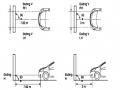
Note: A distance of approximately 7.62 m is required between the vehicle (fog lamp center) and the wall to adjust the convergence correctly. If the distance of 7.62 m cannot be achieved, set the correct distance of 3 m to check and adjust the fog lamp convergence. (Since the target area varies with the distance, please follow the instructions as shown in the figure.)
b/ Prepare a piece of thick white paper about 2 m high and 4 m wide to use as a screen.
c/ Draw a vertical line through the center of the screen (line V).
d/ Set the screen as shown in the picture. Note:
- Keep the screen perpendicular to the ground.
- Align the V line on the screen with the center of the vehicle.
e/Draw the reference lines (H, V LH and V RH lines) on the screen as shown in the figure.HINT:
Mark the center of the fog lamp on the screen. If the center mark cannot be seen on the fog lamp, use the center of the fog lamp or the manufacturer's name mark on the fog lamp as the center mark.
H line (fog light height):
Draw a line across the screen so that it passes through the center mark. Line H should be at the same height as the center mark of the fog light bulb.
Line V LH, V RH (center mark position of left fog lamp LH and right fog lamp RH):
Draw two lines so that they intersect line H at the center marks.
5. Check the fog light convergence
a/ Cover the fog lamp or remove the connector of the other side fog lamp to prevent light from the unchecked fog lamp from affecting the fog lamp convergence test.
b/ Start the engine.
c/ Turn on the fog lights and make sure that the dividing line is outside the standard area as shown in the drawing.
6. Adjust the fog light convergence
Use a screwdriver to adjust the fog light to the standard area by turning the toe adjustment screw.
Note: If the screw is adjusted too far, loosen it and then tighten it again, so that the last rotation of the light adjustment screw is clockwise.
3. Self-study questions
1. Describe the operating principle of the lighting system with automatic headlight function
2. Describe the operating principle of the lighting system with the function of rotating headlights when turning
3. Draw diagram and connect lighting system on Hyundai Porter car
4. Draw diagram and connect lighting system on Honda Accord 1992
5. Draw the lighting circuit on a 1993 Toyota Lexus
LESSON 3 MAINTENANCE AND REPAIR OF SIGNAL SYSTEM
I. IMPLEMENTATION GOAL
After completing this lesson, students will be able to:
- Distinguish between types of signals on cars
- Correctly describe common symptoms and suspected areas causing damage.
- Connecting signal circuits ensures technical requirements
- Disassemble, install, check, maintain and repair the signal system to ensure technical requirements.
- Ensure safety in work and industrial hygiene
II. LESSON CONTENT
1. General description
The signal system equipped on cars aims to create signals to notify other vehicles participating in traffic about the vehicle's operating status such as: stopping, parking, braking, reversing, turning...
Signals are used either by light such as headlamps, brake lights, turn signals….. or by sound such as horns, reverse music….
Just like the lighting system. A signal system circuit usually consists of: battery, fuse, wire, relay, electrical load and control switch. Only some switches of the signal system are on the combination switch. The switches of other signals are usually located in different locations such as in the gearbox or brake pedal……
2. Maintenance and repair
2.1. Turn signals and hazard lights
The installation location of the turn signal is shown in Figure 3.1. The turn signal control switch is located in the combination switch under the steering wheel. Turning this switch to the right or left will make the turn signal turn right or left.
The hazard light switch is used when the vehicle has a problem while participating in traffic. When the hazard light switch is turned on, all the turn signals on the vehicle will light up at a certain frequency. The hazard light switch is usually placed separately from the turn signal switch (some old cars integrate the hazard and turn signal switches on the same combination switch cluster).
Figure 3.1 Turn signal switch Figure 3.2 Hazard switch
The part that generates the flashing frequency for the lights is called a turn signal relay. The turn signal relay usually has 3 terminals: B (positive power supply); E (negative power supply); L (providing the turn signal switch to distribute to the
lamp)
2.1.1. Circuit diagram
To generate the frequency for the turn signal, a turn signal relay is used in the turn signal circuit. The current from the turn signal relay will be sent to the turn signal switch assembly to distribute the current to the turn signal lights for the driver's purpose.
Figure 3.3. Schematic diagram of a turn signal circuit without a hazard switch
1. Battery; 2. Electric lock; 3. Turn signal relay; 4. Turn signal switch; 5. Turn signal lamp; 6. Turn signal lamp; 7. Hazard switch
Figure 3.4 Schematic diagram of turn signal circuit with hazard switch
1. Battery; 2. Combination switch cluster; 3. Turn signal;
4. Turn signal light; 5. Turn signal relay
Today's cars no longer use three-pin turn signal relays (B, L, E) but use eight-pin turn signal relays (figure 3.5) (pin number 8 is used for hazard lights).
For this type, the current supplying the turn signal lights is supplied directly from the turn signal relay to the lights.
div.maincontent .p { color: black; font-family:"Times New Roman", serif; font-style: normal; font-weight: normal; text-decoration: none; font-size: 14pt; margin:0pt; } div.maincontent p { color: black; font-family:"Times New Roman", serif; font-style: normal; font-weight: normal; text-decoration: none; font-size: 14pt; margin:0pt; } div.maincontent .s1 { color: black; font-family:"Times New Roman", serif; font-style: normal; font-weight: normal; text-decoration: none; font-size: 13pt; } div.maincontent .s2 { color: black; font-family:"Times New Roman", serif; font-style: italic; font-weight: normal; text-decoration: none; font-size: 14pt; } div.maincontent .s3 { color: black; font-family:"Times New Roman", serif; font-style: normal; font-weight: normal; text-decoration: none; font-size: 14pt; } div.maincontent .s4 { color: black; font-family:"Times New Roman", serif; font-style: normal; font-weight: normal; text-decoration: none; font-size: 13pt; } div.maincontent .s5 { color: black; font-family:"Times New Roman", serif; font-style: normal; font-weight: normal; text-decoration: none; font-size: 13pt; vertical-align: 1pt; } div.maincontent .s6 { color: black; font-family:"Times New Roman", serif; font-style: normal; font-weight: normal; text-decoration: none; font-size: 11pt; } div.maincontent .s7 { color: black; font-family:"Times New Roman", serif; font-style: normal; font-weight: normal; text-decoration: none; font-size: 14pt; vertical-align: -9pt; } div.maincontent .s8 { color: black; font-family:"Times New Roman", serif; font-style: normal; font-weight: normal; text-decoration: none; font-size: 11pt; } div.maincontent .s9 { color: #008000; font-family:"Times New Roman", serif; font-style: normal; font-weight: normal; text-decoration: none; font-size: 14pt; } div.maincontent .s10 { color: black; font-family:"Times New Roman", serif; font-style: italic; font-weight: normal; te
Car body electrical practice - 8
zt2i3t4l5ee
zt2a3gs
zt2a3ge
zc2o3n4t5e6n7ts
If the voltage is out of specification, replace the wire or connector.
If the voltage is within specification, install the front fog light relay and follow step 5.
Step 5 Check the front fog light switch
- Remove the D4 connector of the fog light switch
- Use a multimeter to measure the resistance of the front fog light switch.
Measurement location
Condition
Standard
D4-3 (BFG) -D4-4 (LFG)
Light switchFront Fog OFF
>10kΩ
D4-3 (BFG) -D4-4 (LFG)
Front fog light switchON
<1 Ω
- Standard resistor
D4 connector is located on the combination switch assembly.
If the resistance is out of specification, replace the combination switch (the fog light switch is located in the combination switch).
If the resistance is within specification, follow step 6.
Step 6 Check wiring and connectors (front fog light relay-light selector switch)
- Disconnect connector D4 of the combination switch assembly
- Use a voltmeter to measure the voltage value of jack D4 on the wire side.
Measurement location
Control modecontrol
Standard
D4-3 (BFG) - (-) AQ
TAIL
11 to 14 V
D4 connector for the wiring of the combination switch assembly
If the voltage does not meet the standard, replace the wire or connector.
If the voltage is within standard, there may have been an error in the previous measurements.
Step 7 Check the front fog lights
- Remove the front fog light electrical connector.
- Supply battery voltage to the fog lamp terminals
Jack 8, B9 of front fog lamp on the electrical side
blind first.
Power supply location
Terms and Conditions
Battery positive terminal - Terminal 2Battery negative terminal - Terminal 1
Fog lightsbefore morning
- If the light does not come on, replace the bulb.
If the light is on, re-plug the jack and continue to step 8.
Step 8 Check wiring and connectors (relay and front fog lights)
- Disconnect the B8 and B9 connectors of the front fog lights.
- Use a voltmeter to measure voltage at the following locations:
Measurement location
Switch location
Terms and Conditions
B8-2 - (-) AQ
Electric lock ON TAIL size switchFog switch ON
11 to 14 V
B9-2 - (-) AQ
Electric lock ONTAIL size switch Fog switch ON
11 to 14 V
B8 and B9 connectors on the front fog lamp wiring side
Voltage is not up to standard, repair or replace the jack. If up to standard, there may have been an error in the measurement process.
2.2.4. Procedure for removing, installing and adjusting fog lights 1. Procedure for removing
- Remove the front inner ear pads
Use a screwdriver to remove the 3 screws and remove the front part of the front inner ear liner
-Remove the fog light assembly
+ Disconnect the connector.
+ Use a screwdriver to remove 3 screws to remove the fog light cover
2. Installation sequence
-Rotate the fog lamp bulb in the direction indicated by the arrow as shown in the figure and remove the fog lamp from the fog lamp assembly.
-Rotate the fog light bulb in the direction indicated by the arrow as shown in the figure and install the light into the fog light assembly.
- Use a screwdriver to install the fog light cover
-Install the electrical connector
Attention: Be careful not to damage the plastic thread on the lamp assembly.
- Install the front inner ear pads
Use a screwdriver to install the front inner bumper with 3 screws.
3. Prepare the vehicle to adjust the fog light convergence. Prepare the vehicle:
- Make sure there is no damage or deformation to the vehicle body around the fog lights.
- Add fuel to the fuel tank
- Add oil to standard level.
- Add engine coolant to standard level.
- Inflate the tire to standard pressure.
- Place spare tire, tools and jack in original design position
- Do not leave any load in the luggage compartment.
- Let a person weighing about 75 kg sit in the driver's seat.
4. Prepare to check the fog light convergence
a/ Prepare the vehicle status as follows:
- Place the car in a dark enough place to see the lines. The lines are the dividing line, below which the light from the fog lights can be seen but above which it cannot.
- Place the car perpendicular to the wall.
- Keep a distance of 7.62 m between the center of the fog lamp and the wall.
- Park the car on level ground.
- Press the car down a few times to stabilize the suspension.
Note: A distance of approximately 7.62 m is required between the vehicle (fog lamp center) and the wall to adjust the convergence correctly. If the distance of 7.62 m cannot be achieved, set the correct distance of 3 m to check and adjust the fog lamp convergence. (Since the target area varies with the distance, please follow the instructions as shown in the figure.)
b/ Prepare a piece of thick white paper about 2 m high and 4 m wide to use as a screen.
c/ Draw a vertical line through the center of the screen (line V).
d/ Set the screen as shown in the picture. Note:
- Keep the screen perpendicular to the ground.
- Align the V line on the screen with the center of the vehicle.
e/Draw the reference lines (H, V LH and V RH lines) on the screen as shown in the figure.HINT:
Mark the center of the fog lamp on the screen. If the center mark cannot be seen on the fog lamp, use the center of the fog lamp or the manufacturer's name mark on the fog lamp as the center mark.
H line (fog light height):
Draw a line across the screen so that it passes through the center mark. Line H should be at the same height as the center mark of the fog light bulb.
Line V LH, V RH (center mark position of left fog lamp LH and right fog lamp RH):
Draw two lines so that they intersect line H at the center marks.
5. Check the fog light convergence
a/ Cover the fog lamp or remove the connector of the other side fog lamp to prevent light from the unchecked fog lamp from affecting the fog lamp convergence test.
b/ Start the engine.
c/ Turn on the fog lights and make sure that the dividing line is outside the standard area as shown in the drawing.
6. Adjust the fog light convergence
Use a screwdriver to adjust the fog light to the standard area by turning the toe adjustment screw.
Note: If the screw is adjusted too far, loosen it and then tighten it again, so that the last rotation of the light adjustment screw is clockwise.
3. Self-study questions
1. Describe the operating principle of the lighting system with automatic headlight function
2. Describe the operating principle of the lighting system with the function of rotating headlights when turning
3. Draw diagram and connect lighting system on Hyundai Porter car
4. Draw diagram and connect lighting system on Honda Accord 1992
5. Draw the lighting circuit on a 1993 Toyota Lexus
LESSON 3 MAINTENANCE AND REPAIR OF SIGNAL SYSTEM
I. IMPLEMENTATION GOAL
After completing this lesson, students will be able to:
- Distinguish between types of signals on cars
- Correctly describe common symptoms and suspected areas causing damage.
- Connecting signal circuits ensures technical requirements
- Disassemble, install, check, maintain and repair the signal system to ensure technical requirements.
- Ensure safety in work and industrial hygiene
II. LESSON CONTENT
1. General description
The signal system equipped on cars aims to create signals to notify other vehicles participating in traffic about the vehicle's operating status such as: stopping, parking, braking, reversing, turning...
Signals are used either by light such as headlamps, brake lights, turn signals….. or by sound such as horns, reverse music….
Just like the lighting system. A signal system circuit usually consists of: battery, fuse, wire, relay, electrical load and control switch. Only some switches of the signal system are on the combination switch. The switches of other signals are usually located in different locations such as in the gearbox or brake pedal……
2. Maintenance and repair
2.1. Turn signals and hazard lights
The installation location of the turn signal is shown in Figure 3.1. The turn signal control switch is located in the combination switch under the steering wheel. Turning this switch to the right or left will make the turn signal turn right or left.
The hazard light switch is used when the vehicle has a problem while participating in traffic. When the hazard light switch is turned on, all the turn signals on the vehicle will light up at a certain frequency. The hazard light switch is usually placed separately from the turn signal switch (some old cars integrate the hazard and turn signal switches on the same combination switch cluster).
Figure 3.1 Turn signal switch Figure 3.2 Hazard switch
The part that generates the flashing frequency for the lights is called a turn signal relay. The turn signal relay usually has 3 terminals: B (positive power supply); E (negative power supply); L (providing the turn signal switch to distribute to the
lamp)
2.1.1. Circuit diagram
To generate the frequency for the turn signal, a turn signal relay is used in the turn signal circuit. The current from the turn signal relay will be sent to the turn signal switch assembly to distribute the current to the turn signal lights for the driver's purpose.
Figure 3.3. Schematic diagram of a turn signal circuit without a hazard switch
1. Battery; 2. Electric lock; 3. Turn signal relay; 4. Turn signal switch; 5. Turn signal lamp; 6. Turn signal lamp; 7. Hazard switch
Figure 3.4 Schematic diagram of turn signal circuit with hazard switch
1. Battery; 2. Combination switch cluster; 3. Turn signal;
4. Turn signal light; 5. Turn signal relay
Today's cars no longer use three-pin turn signal relays (B, L, E) but use eight-pin turn signal relays (figure 3.5) (pin number 8 is used for hazard lights).
For this type, the current supplying the turn signal lights is supplied directly from the turn signal relay to the lights.
div.maincontent .p { color: black; font-family:"Times New Roman", serif; font-style: normal; font-weight: normal; text-decoration: none; font-size: 14pt; margin:0pt; } div.maincontent p { color: black; font-family:"Times New Roman", serif; font-style: normal; font-weight: normal; text-decoration: none; font-size: 14pt; margin:0pt; } div.maincontent .s1 { color: black; font-family:"Times New Roman", serif; font-style: normal; font-weight: normal; text-decoration: none; font-size: 13pt; } div.maincontent .s2 { color: black; font-family:"Times New Roman", serif; font-style: italic; font-weight: normal; text-decoration: none; font-size: 14pt; } div.maincontent .s3 { color: black; font-family:"Times New Roman", serif; font-style: normal; font-weight: normal; text-decoration: none; font-size: 14pt; } div.maincontent .s4 { color: black; font-family:"Times New Roman", serif; font-style: normal; font-weight: normal; text-decoration: none; font-size: 13pt; } div.maincontent .s5 { color: black; font-family:"Times New Roman", serif; font-style: normal; font-weight: normal; text-decoration: none; font-size: 13pt; vertical-align: 1pt; } div.maincontent .s6 { color: black; font-family:"Times New Roman", serif; font-style: normal; font-weight: normal; text-decoration: none; font-size: 11pt; } div.maincontent .s7 { color: black; font-family:"Times New Roman", serif; font-style: normal; font-weight: normal; text-decoration: none; font-size: 14pt; vertical-align: -9pt; } div.maincontent .s8 { color: black; font-family:"Times New Roman", serif; font-style: normal; font-weight: normal; text-decoration: none; font-size: 11pt; } div.maincontent .s9 { color: #008000; font-family:"Times New Roman", serif; font-style: normal; font-weight: normal; text-decoration: none; font-size: 14pt; } div.maincontent .s10 { color: black; font-family:"Times New Roman", serif; font-style: italic; font-weight: normal; te -
 Internal control of revenue and expenditure activities at the National Children's Hospital - 2
14. Asher MI, Keil U., Anderson HR et al (1995). International Study of Asthma and Allergies in Childhood (ISAAC): rationale and methods. European respiratory journal, 8(3), 483-491.
15. Bernstein JA (2010). Allergic and mixed rhinitis: Epidemiology and natural history. Allergy & Asthma Proceedings, 31(5), 365-369.
16. Chong, SN and Chew, FT (2018). Epidemiology of allergic rhinitis and associated risk factors in Asia. World Allergy Organization Journal, 11, 17.
17. Tran Thuy Hanh, Nguyen Van Doan and colleagues (2011). Study on the current status of bronchial asthma in Vietnam in 2010 - 2011. Ministry-level project, Ministry of Health.
18. Nga NN, Chai SK, Bihn TT et al (2003). ISAAC-based asthma and atopic symptoms among Hanoi school children. Pediatric Allergy and Immunology, 14(4): 272-279.
19. Bousquet J., Bousquet P.J., Godard P. et al (2005). The public health implications of asthma. Bull World Health Organ, 83(7), 548-554.
20. Leynaert B., Neukirch C., Kony S. et al (2004). Association between asthma and rhinitis according to atopic sensitization in a population-based study. Journal of Allergy and Clinical Immunology, 113(1), 86-93.
21. Ait‐Khaled N., Odhiambo J., Pearce N. et al (2007). Prevalence of symptoms of asthma, rhinitis and eczema in 13‐to 14‐year‐old children in Africa: the International Study of Asthma and Allergies in Childhood Phase III. Allergy, 62(3), 247-258.
22. Kabir M., Rahman F., Hassan MQ et al (2005). Asthma, atopic eczema and allergic rhino-conjunctivitis in school children. Mymensingh medical journal: MMJ, 14(1), 41-45.
23. Solé D., Camelo-Nunes IC, Vana AT et al (2004). Prevalence of rhinitis and related-symptoms in schoolchildren from different cities in Brazil. Allergologia et immunopathologia, 32(1), 7-12.
24. MacIntyre CR, Peat, J., McIntyre, PB et al (2005). Childhood asthma diagnosis and use of asthma medication. Australian family physician, 34(3), 193-196.
25. Simon PA, Zeng Z., Wold CM et al (2003). Prevalence of childhood asthma and associated morbidity in Los Angeles County: impacts of race/ethnicity and income. Journal of Asthma, 40(5), 535-543.
26. Weinmayr G., Weiland SK, Bjorksten B. et al (2007). Atopic sensitization and the international variation of asthma symptom prevalence in children. American journal of respiratory and critical care medicine, 176(6), 565-574.
27. Szczeklik A. and Stevenson DD (2003). Aspirin-induced asthma: advances in pathogenesis, diagnosis, and management. Journal of Allergy and Clinical Immunology, 111(5), 913-921.
28. Tang W., Smith SG, Beaudin S. et al (2014). IL-25 and IL-25 receptor expression on eosinophils from subjects with allergic asthma. Int Arch Allergy Immunol, 163(1), 5-10.
29. Brussels GG, Maes T., and Bracke KR (2013). Eosinophils in the spotlight: Eosinophilic airway inflammation in nonallergic asthma. Nat Med, 19(8), 977-979.
30. Schleich FN, Manise M., Sele J. et al (2013). Distribution of sputum cellular phenotype in a large asthma cohort: predicting factors for eosinophilic vs neutrophilic inflammation. BMC Pulm Med, 13(1), 1-8.
31. Giudice MM, Pedullà M., Brunese FP et al (2010). Neutrophilic Cells in Sputum of Allergic Asthmatic Children. European Journal of Inflammation, 8(3), 151-156.
32. Riiser A. (2016). Bronchial hyperresponsiveness in childhood: A narrative review. World Journal of Respirology, 6(2), 63-68.
33. Doing DC and J. Solway (2013). Airway smooth muscle in the pathophysiology and treatment of asthma. Journal of applied physiology, 114(7), 834-843.
34. O'Reilly R., Ullmann N., Irving S. et al (2013), Increased airway smooth muscle in preschool wheezers who have asthma at school age. Journal of Allergy and Clinical Immunology, 131(4),1024-1032.
35. Tepper RS, Wise RS, Covar R. et al (2012). Asthma outcomes: pulmonary physiology. Journal of Allergy and Clinical Immunology, 129(3), S65-S87.
36. Global Initiative for Asthma (2017). Pocket guide for asthma management and prevention for adults and children older than 5 years. Available at: https://ginasthma.org/wp-content/uploads/2017/02/wms- Main-pocket-guide_2017.pdf, [accessed 28th February 2017].
37. Keglowich L. and Borger P. (2015). The three A's in asthma–airway smooth muscle, airway remodeling & angiogenesis. The open respiratory medicine journal, 9, 70.
38. Chetta A., Zanini A., Foresi A. et al (2003). Vascular component of airway remodeling in asthma is reduced by high dose of fluticasone. American journal of respiratory and critical care medicine, 167(5), 751-757.
39. Beeh KM, Ksoll M., and Buhl R. (2000), Elevation of total serum immunoglobulin E is associated with asthma in nonallergic individuals. European Respiratory Journal, 16(4), 609-614.
40. Girodet PO, Nguyen D., Mancini JD et al (2016). Alternative macrophage activation is increased in asthma. American journal of respiratory cell and molecular biology, 55(4), 467-475.
41. Marogna M., Massolo A., Berra D. et al (2006). The type of sensitizing allergen can affect the evolution of respiratory allergy. Allergy, 61(10), 1209-1215.
42. Bauchau V. and Durham S. (2004). Prevalence and rate of diagnosis of allergic rhinitis in Europe. European Respiratory Journal, 24(5), 758-764.
43. Baroody FM and Canning B. (2003), Comparative anatomy of the nasal and tracheal/bronchial airways. Upper and lower respiratory diseases. Lung Biology and in Health and Diseases, 181, 1-43.
44. Balogun R.A., Siracusa A., and Shusterman D. (2018). Occupational rhinitis and occupational asthma: Association or progression? American journal of industrial medicine, 61(4), 293-307.
45. Sazonov Kocevar V., Thomas III J., Jonsson L. et al (2005). Association between allergic rhinitis and hospital resource use among asthmatic children in Norway. Allergy, 60(3), 338-342.
46. Sritipsukho P., Satdhabudha A., and Nanthapisal S. (2015). Effect of allergic rhinitis and asthma on the quality of life in young Thai adolescents. Asian Pac J Allergy Immunol, 33(3): p. 222-6.
47. Togias A. (2003). Rhinitis and asthma: evidence for respiratory system integration. Journal of Allergy and Clinical Immunology, 111(6), 1171-1183.
48. Conrad LA, Cabana MD, and Rastogi D. (2021). Defining pediatric asthma: phenotypes to endotypes and beyond. Pediatric Research, 90(1), 45-51.
49. Monica B. Reddy and Ronina A. Covar (2016). Asthma phenotypes in childhood. Current opinion, 16(2), 127-134.
50. Just J., Gouvis-Echraghi R., Couderc R. et al (2012). Novel severe wheezy young children phenotypes: boys atopic multiple-trigger and girls nonatopic uncontrolled wheezy. Journal of Allergy and Clinical Immunology, 130(1), 103-110.
51. Howrylak JA, Fuhlbrigge AL, Strunk RC et al. 2014., Classification of childhood asthma phenotypes and long-term clinical responses to inhaled anti-inflammatory medications. Journal of allergy and clinical immunology, 133(5), 1289-1300.
52. Fainardi, V. and S. Saglani (2015). The need to differentiate between adults and children when treating severe asthma. Expert review of respiratory medicine, 9(4), 419-428.
53. De Andrade WCC, Facury LMDLB, Ricci CDAT et al (2015). Phenotypes of severe asthma among children and adolescents in Brazil: a prospective study. BMC Pulmonary Medicine, 15(1), 36.
54. Global Initiative for Asthma, (2016). Pocket guide for asthma management and prevention for adults and children older than 5 years. Available at: https://ginasthma.org/wp-content/uploads/2016/04/GINA- 2016-main-report_tracked.pdf, [accessed 2nd August 2016].
55. Global Initiative for Asthma, (2007). Global strategy for asthma management and prevention updated 2007. Available at: https://ginasthma.org/wp-content/uploads/2019/01/2007-GINA.pdf, [accessed 2nd August 2016].
56. Glaxo Smith Kline. Asthma control test. [online] Available at: https://www.asthmacontroltest.com/, [accessed 15th August 2016].
57. Moral VP, Mostaza SA, Rodríguez CA et al (2016). Spanish guideline on the management of asthma. J Investig Allergol Clin Immunol, 26(Suppl 1), 1-92.
58. Linhares DV, da Fonseca JAL, Borrego LM et al (2014). Validation of control of allergic rhinitis and asthma test for children (CARATKids)–a prospective multicenter study. Pediatric Allergy and Immunology, 25(2),173-179.
59. Amaral R., Carneiro AC, Wandalsen G. et al (2017). Control of Allergic Rhinitis and Asthma Test for Children (CARATKids): Validation in Brazil and cutoff values. Ann Allergy Asthma Immunol, 118(5), 551-556.
60. Maarsingh H., Zuidhof AB, Bos IST et al (2008). Arginase inhibition protects against allergen-induced airway obstruction, hyperresponsiveness, and inflammation. American journal of respiratory and critical care medicine, 178(6), 565-573.
61. Dinh-Xuan AT, Annesi-Maesano I., Berger P. et al (2015). Contribution of exhaled nitric oxide measurement in airway inflammation assessment in asthma. A position paper from the French Speaking Respiratory Society. Revue des maladies respiratoires, 32(2), 193-215.
62. Olthoff A., Rohrbach S., Faber M. et al (2002). Neuronal nitric oxide synthase immunoreactivity in the nasal mucosa of patients with idiopathic and allergic rhinitis. ORL, 64(3), 180-185.
63. Haight JS, Djupesland PG, Qjan W. et al (1999). Does nasal nitric oxide come from the sinuses? Journal of otolaryngology, 28(4), 197-204.
64. Reynaert NL, Ckless K., Wouter, E.F. et al (2005). Nitric oxide and redox signaling in allergic airway inflammation. Antioxidants & redox signaling, 7(1-2), 129-143.
65. Sanders SP, Proud D., Permutt S. et al (2004). Role of nasal nitric oxide in the resolution of experimental rhinovirus infection. Journal of allergy and clinical immunology, 113(4), 697-702.
66. Bogdan C. (2015). Nitric oxide synthase in innate and adaptive immunity: an update. Trends in immunology, 36(3), 161-178.
67. Smith AD, Cowan JO, Filsell S. et al (2004). Diagnosing asthma: comparisons between exhaled nitric oxide measurements and conventional tests, 169(4): p. 473-478.
68. Berkman N., Avital A., Breuer R. et al (2005). Exhaled nitric oxide in the diagnosis of asthma: comparison with bronchial provocation tests. Thorax, 60(5), 383-388.
69. Takeno S., Noda N., and Hirakawa K. (2012). Measurements of nasal fractional exhaled nitric oxide with a hand-held device in patients with allergic rhinitis: relation to cedar pollen dispersion and laser surgery. Allergology International, 61(1), 93-100.
70. Wilson AM, Orr LC, Sims EJ et al (2001). Effects of monotherapy with intra‐nasal corticosteroid or combined oral histamine and leukotriene receptor antagonists in seasonal allergic rhinitis. Clinical & Experimental Allergy, 31(1), 61-68.
71. Yamada T., Yamamoto H., Kubo S. et al (2012). Efficacy of mometasone furoate nasal spray for nasal symptoms, quality of life, rhinitis-disturbed sleep, and nasal nitric oxide in patients with perennial allergic rhinitis. Allergy & Asthma Proceedings, 33(2), e9-e16.
72. Heffler E., Pizzimenti S., Badiu I. et al. (2013). Nasal nitric oxide is a marker of poor asthma control. Journal of breath research, 7(2), 1-5.
73. Dweik RA, Boggs PB, Erzurum SC et al (2011). An official ATS clinical practice guideline: interpretation of exhaled nitric oxide levels (FENO) for clinical applications. American journal of respiratory and critical care medicine, 184(5), 602-615.
74. Duong-Quy S. (2019). Clinical utility of the exhaled nitric oxide (NO) measurement with portable devices in the management of allergic airway inflammation and asthma. Journal of Asthma and Allergy, 12, 331-341.
75. Olivieri M., Corradi M., and Malerba M. (2007) Gender and exhaled nitric oxide. Chest, 132(4), 1410.
76. Avital A., Uwyyed K., Berkman N. et al (2003). Exhaled nitric oxide is age‐dependent in asthma. Pediatric pulmonology, 36(5), 433-438.
77. Kovesi T., Kulka R., and Dales R. (2008). Exhaled nitric oxide concentration is affected by age, height, and race in healthy 9-to 12-year-old children. Chest, 133(1), 169-175.
78. Erkoçoğlu, M., Kaya A., Özcan C. et al (2013). The effect of obesity on the level of fractional exhaled nitric oxide in children with asthma. International archives of allergy and immunology, 162(2), 156-162.
79. Baptist AP, Li L., and Dichiaro CA (2015). The importance of atopy on exhaled nitric oxide levels in African American children. Annals of Allergy, Asthma & Immunology, 114(5), 399-403.