
ecology in general and the ecological basis in the rainforest business in particular, in which the structural factors of the forest and the types of silvicultural treatment applied to natural rainforests have been deeply studied. From there, this author has made very rich summaries of the principles of silvicultural treatment to bring about forests of basically even age, forests of uneven age and methods of treatment to improve rainforests.
Author Odum EP (1971) [10] completed the theory of ecosystems based on the term ecosystem of Tansley AP, in 1935. The clarified concept of ecosystems is the basis for studying structural factors from an ecological perspective.
- About the description of forest structure morphology:
The phenomenon of stratification is the spatial arrangement of forest biological components both on the ground and vertically. The method of drawing vertical forest cross-section diagrams proposed by Davit and PW Richards (1933 - 1934) and first used in Guyana is still an effective method to study the stratified structure of forests. However, this method has the disadvantage of only illustrating the vertical arrangement of tree species in a limited area. Cusen (1951) overcame this by drawing a number of adjacent strips and giving a three-dimensional image.
Maybe you are interested!
-
 Study on some natural regeneration characteristics of forest stands containing Fernandoa brillettii Dop. Steenis distributed in Yen Lac commune, Yen Trach, Thai Nguyen province - 1
 -
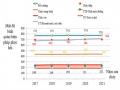 Changes in some forest structure indicators based on three measures of post-fire forest recovery
 -
 Impact of Financial Market Development on Enterprise Capital Structure by National Institutional Quality
 -
 The impact of financial market development on the capital structure of listed enterprises in the ASEAN Economic Community - 28
 -
 Model of Some Related Studies.
Richards PW (1952) [18] distinguished the vegetation composition of rainforests into two types: mixed rainforests with complex tree species composition and monodominant rainforests with simple tree species composition. In special sites, monodominant rainforests only include a few tree species.
According to this author, rainforests are often multi-layered (usually have 3 layers, except for the shrub layer and the herbaceous layer). In tropical rainforests, in addition to large trees, shrubs and herbaceous species, there are also many climbing plants of various shapes and sizes, along with many epiphytes on the trunks or branches of trees.
Kraft (1884) first proposed a forest tree classification system, he divided the forest trees in a forest stand into 5 levels based on the growth ability, size and quality of the forest trees. Kraft's classification reflects the differentiation of forest trees, the classification criteria are clear, simple and easy to apply but only suitable for pure forests of the same age.
The classification of forest trees for natural tropical mixed forests is a complex issue, so far no author has proposed a widely accepted forest classification scheme for natural tropical forests. Sampion Gripfit (1948), when studying natural forests Richards (1952) [18] divided forests in Nigeria into 6 layers based on the height of forest trees.
Thus, most authors when studying strata often give qualitative comments, the division of strata according to height is mechanical and does not reflect the complex stratification of tropical natural forests.
- Quantitative study of forest structure:
Forest structure research has existed for a long time and has gradually shifted from qualitative to quantitative description with the support of mathematical statistics and informatics, in which the modeling of forest structure and the establishment of relationships between forest structure factors have been successfully studied by many authors. The issue of spatial and temporal structure of forests has been the focus of most research by authors. Many authors are interested in studying the spatial and temporal structure of forests in a quantitative direction and using mathematical models to simulate structural laws (cited in Tran Van Con (2001) [3]. Another issue related to forest structure research is the classification of forests according to structure and appearance or ecological appearance. The basis for forest classification according to this trend is the distribution characteristics, dominant life forms, layer structure and some other morphological characteristics of forest plant communities.
Different from the trend of classifying forests according to structure and appearance, which mainly describes forests in a static state. Based on the study of forests in a dynamic state, Melekhov emphasized the change of forests over time, especially the change of tree species composition in the forest stand through different stages in the process of forest formation and development.
In summary, in the world, research works on the structural characteristics of forests in general and tropical forests in particular are very rich and diverse, with many elaborate research works that have brought high efficiency in forest business. However, research works on the structural characteristics of natural forests restored after slash-and-burn farming are still very few.
2.2.1.2. Research on forest regeneration
The issue of regeneration has been studied by the Forest Planning and Investigation Institute since the 60s (20th century) in some provinces of Quang Ninh, Yen Bai, Nghe An, Ha Tinh (Huong Son, Huong Khe), Quang Binh.... The initial research results were summarized by Nguyen Van Thuong (1991) [14] and concluded about the natural regeneration situation of some forests in Northern Vietnam, the phenomenon of regeneration under the forest canopy of woody species has continued continuously, not cyclical.
Phung Ngoc Lan (1984) [7] when discussing the issue of ensuring regeneration in forest exploitation, presented the results of checking green Lim seeds under the forest canopy at Huu Lung Forestry Enterprise, Lang Son. Right from the germination stage, stink bugs are a factor that significantly affects the germination rate.
Pham Dinh Tam (1987) [11] clarified the phenomenon of regeneration of gaps in secondary forests in Huong Son, Ha Tinh. According to the author, the number of regenerated trees appeared quite a lot under different gaps. The larger the gap, the more regenerated trees and more than in places with closed canopy. From there, the author proposed the method of selective exploitation and natural regeneration for the forest in this area.
The most discussed issue of tropical forest regeneration is the effectiveness of silvicultural treatments related to the regeneration of target species in different forest types. Since then, silviculturalists have successfully developed many regeneration cutting methods. The work of Bernard (1954, 1959); Wyatt Smith (1961, 1963) [18] with the uniform-age forest method in Malaysia; Nicholson (1958) in North Borneo; Donis and Maudoux (1951, 1954) with the homogenization formula of the upper layer in Zaia; Taylor (1954), Jones (1960) with the method of gradual cutting of understory regeneration in Nigeria and Ghana; Barnarji (1959) with the method of gradual cutting of canopy elevation in Andaman. The detailed content of the steps and the effectiveness of each method for regeneration was summarized by Baur (1964) [2] in his work: The ecological basis of the rainforest business.
Notable research works on the distribution of natural regeneration of tropical forests are the research works of Richards, PW (1952), Bernard Rollet (1974), summarizing the research results on the distribution of naturally regenerated trees, it was observed that: in small plots (1 x 1m, 1 x 1.5m), naturally regenerated trees have a cluster distribution, a few have a Poisson distribution. In Africa, based on collected data, Taylor (1954), Barnard (1955) determined that the number of regenerated trees in tropical forests is lacking and needs to be supplemented by artificial afforestation. On the contrary, authors studying the natural regeneration of Asian tropical forests such as Budowski (1956), Bava (1954), and Atinot (1965) stated that under the canopy of tropical forests, there are generally enough economically valuable regenerated trees, so silvicultural measures are necessary to protect and develop available regenerated trees under the canopy of forests. Nguyen Duy Chuyen (1996) [4].
Thus, the research works mentioned above have partly clarified the characteristics of natural regeneration in tropical forests. That is the basis for building reasonable silvicultural methods. Research on the natural regeneration ability of vegetation after swidden cultivation from 1-20 years in the Northwest of India,
Ramakrishnan (1981, 1992) reported that the species diversity index was very low. The dominant species index peaked at the beginning of the succession process and gradually decreased with the fallow period. Long Chun and colleagues (1993) studied the plant diversity in the swidden ecosystem in Xishuangbanna, Yunnan province, China and commented: in Baka, when the swidden was left fallow for 3 years, there were 17 families, 21 genera, 21 plant species, and after 19 years of fallow, there were 60 families, 134 genera, 167 species. Pham Hong Ban (2000) [1].
In summary, through the results of natural regeneration research of forest vegetation in the world, we can see the research methods of some authors as well as the regeneration laws in some places. At the same time, the authors have pointed out some appropriate silvicultural measures to promote the regeneration process in a beneficial direction.
2.2.2. Studies in Vietnam
In recent years, research on natural forests in Vietnam has increased, because behind the forest ecosystems there are many mysteries. That has attracted the attention of many authors.
2.2.2.1. Studies on forest structure
The study of forest structure in Vietnam has also been mentioned by many authors in order to propose suitable silvicultural solutions, but the following research works are typical:
According to the research results of author Tran Ngu Phuong (1970) [9], the structural characteristics of the forest vegetation in Northern Vietnam were pointed out based on the results of a general survey of the forest situation in Northern Vietnam from 1961 to 1965. The first structural factor that the author studied was composition and through that, some development laws of the forest ecosystem were discovered and applied to production practice.
Author Thai Van Trung (1963, 1970, 1978) [15] proposed a model of the layer structure such as: Overstory layer (A 1 ), ecological dominant layer (A 2 ), understory layer (A 3 ), shrub layer (B) and grass layer (C). He applied and improved the diagram and vertical section method of Davit - Risa to study the structure of Vietnamese forests, in which the shrub layer and fresh carpet were drawn in a smaller scale and had symbols of the tree species composition of the population for ecological and phenological characteristics along with a climate chart, geographical location, and terrain.
Van Steenis (1956) [19] studied two common regeneration characteristics of tropical rainforests: continuous dispersed regeneration of shade-tolerant species and streak regeneration of light-loving species. He called the pioneer species transient species, and the later-growing species permanent or colonizing species. The way of regeneration to heal the gaps in the forest canopy is like the way of healing wounds in the human body, with transient species playing the role of lymph to clot blood. Mangenot called these species “scar-healing” species.
In summary, most recent forest research works tend to model the laws of forest structure and the proposal of technical measures to impact the forest often rarely mentions ecological factors, so they have not really been applied to forest business to meet the goal of long-term stability. Therefore, to propose a silvicultural solution requires in-depth research on forest structure and must be based on a comprehensive perspective on ecology, forestry, productivity and, most importantly, must analyze the natural laws that exist in the forest ecosystem.
2.2.2.2. Studies on forest regeneration
Research on the laws of genesis, natural regeneration and secondary succession of tropical forest plant communities Thai Van Trung (1963, 1970, 1978)
[16] has stated.
Nguyen Thi Thoa (2003) [13] Regeneration is a biological process specific to forest ecosystems, which is expressed by the appearance of a new generation of tree seedlings of woody species. In a narrow sense, forest regeneration is a process of restoring the basic components of the forest, mainly the woody layer.
Dang Kim Vui (2002) [16] when studying the structure of restored forests after slash-and-burn cultivation in Dong Hy district, Thai Nguyen province with the object of naturally restored forests at different age stages, studied the structure of species composition, life form structure, morphological structure, density, coverage,... of forest states and concluded: The total number of tree species in the restored forest ecosystem gradually decreases as the age stage increases, at the same time the number of tree species increases gradually, the number of grass and shrub species decreases rapidly. During the restoration process, the state of the forest changes in terms of levels and plant composition at each level, at the final stage of the restoration process (from 10 to 15 years old), the forest has a distinct 5-layer structure. On that basis, the author proposed a number of solutions to improve the effectiveness of forest restoration after slash-and-burn cultivation.
Research on natural secondary forests restored on land after slash-and-burn cultivation in Son La province by author Le Dong Tan (2003) [12] showed that the compositional structure of secondary forests restored after slash-and-burn cultivation is quite simple. This is shown by the composition coefficient of the dominant species complex, in many places only 2 to 3 species are absolutely dominant. The distribution of trees on the ground is random, but for each tree species it is clustered.
Vu Tien Hinh (1991) [6] Researching the characteristics of the regeneration process of natural forests in Huu Lung (Lang Son) and Ba Che area (Quang Ninh) observed: the composition coefficient calculated by the percentage of trees in the regeneration layer and the high tree layer is related.
tight system. Most species have a higher coefficient of tree layer composition, so does the coefficient of regeneration layer composition.
In summary, in the natural regeneration process of primary or secondary natural communities, there are two ways of regeneration: The first is continuous regeneration under a dense, closed canopy of shade-tolerant species. This regeneration is often sparse and weak due to lack of light, so only a few trees escape two dangerous stages in their life: a stage in the first one or two years and a long period of inhibition waiting for the opportunity to grow to a higher level suitable for ecological needs. The second is the regeneration in streaks to fill the gaps in the forest canopy caused by fallen old trees or broken by storms, where first grow fast-growing light-loving pioneer species. Under their closed or sparse canopy, the species that are located in the old community composition, which usually require shade in the first one or two years, will grow later and gradually grow to replace the short-lived temporary pioneer species. Pioneer trees will either die out after “fulfilling their mission,” or will be destroyed by the dense canopy of later colonizing species, with the exception of a few long-lived pioneer colonizing species that can survive as part of naturally regenerated communities.
2.3. Overview of the research area
2.3.1. Natural conditions
2.3.1.1. Geographical location, terrain
* Yen Lac Commune:
Yen Lac is a commune in Phu Luong district, Thai Nguyen province, Vietnam. The commune has a terrain stretching north-south and borders Van Lang commune of Dong Hy district to the northeast, Phu Do commune to the east, Tuc Tranh commune to the southeast and south, a small section borders Phan Me commune to the southwest, borders Dong Dat commune, Phu Luong to the west and with two communes Yen Ninh and Yen