
LIST OF TABLES
Table 1.1. Distribution of cattle herds by ecological region in the period 2015 - 2019 6
Table 1.2. Distribution of beef production (tons) by ecological region in the period 2015 - 2019 ..7 Table 1.3. Heritability coefficient of some reproductive traits 12
Table 1.4. Some fixed effects models of nonlinear regression functions 19
Maybe you are interested!
-
 Performance and Carcass Composition of Crossbred Charolais, Droughtmaster and Red Angus Bulls with Brahman Crossbred Cows (Mean ± Sd)
 -
 Djiko Soetrisno And Mahyuddin MD (1994), “Effect Of Graizing Systems On Reproductive Performance And The Net Return Of Milk Yielded By Shiwal – Friesian (Fs) Cows”, Proceeding Of The 7Th
 -
 Growth performance and meat production of Sind crossbred cattle, F1 brahman × Sind crossbred and F1 charolais × Sind crossbred raised in Dak Lak - 19
 -
 Study on growth, reproduction, productivity and milk quality of purebred HF Holstein Friesian cows, F1, F2 and F3 crossbred generations between HF and Sind crossbred raised in Lam Dong province - 18
 -
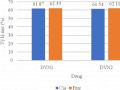 Effects of Factors on Reproductive Performance of Dvn1 and Dvn2 Sows
Table 1.5. Results of some studies using regression function 19
Table 1.6. Heritability coefficients of growth traits and meat yield of 20 year old cattle
Table 1.7. Heritability of beef quality traits 25
Table 2.1. Dry matter, crude protein and metabolizable energy of feeds used by farmers for Brahman 43 cows
Table 2.2. Experimental layout diagram of content 4 46
Table 2.3. Chemical composition of the foods used in experiment 47
Table 2.4. Mixing ratio and nutritional value of feed mixture 47
Table 3.1. Resource characteristics of surveyed households 54
Table 3.2. Size, age and breed structure of cattle herds of surveyed households 55
Table 3.3. Management, care and feeding of cattle herds of surveyed households 56
Table 3.4. Types of feed used for cows by surveyed households 58
Table 3.5. Reproductive performance of Brahman crossbred cows mated with Brahman bulls .59
Table 3.6. Cumulative weight (kg) of Brahman × Brahman crossbred cattle over the age of 63 months
Table 3.7. Chest circumference (cm) of Brahman × Brahman crossbred cattle at different months of age 64
Table 3.8. Diagonal body length (cm) of Brahman × Brahman crossbred cattle at different months of age 65
Table 3.9. Fin height (cm) of Brahman × Brahman crossbred cattle at different ages...66
Table 3.10. Body composition index (%) of Brahman × Brahman crossbred cattle at different months of age 67
Table 3.11. Types of feed and percentage of households (%) used as feed for Brahman crossbred cows when mating with Charolais, Droughtmaster and Red Angus bulls 70
Table 3.12. Daily feed intake by gestation and lactation stage of Brahman crossbred cows when mating with Charolais, Droughtmaster and Red Angus bulls 71
Table 3.13. Reproductive performance of Brahman crossbred cows when mated with Charolais, Droughtmaster and Red Angus bulls 73
Table 3.14. Daily feed intake of crossbred cattle combinations between Charolais, Droughtmaster and Red Angus bulls and Brahman females at different age stages 77
Table 3.15. Cumulative weight (kg) of crossbred cattle combinations between Charolais, Droughtmaster and Red Angus bulls and Brahman females over the age of 80 months
Table 3.16. Weight gain (grams/head/day) of crossbred combinations of Charolais, Droughtmaster and Red Angus bulls with Brahman females over months of age 82
Table 3.17. Relative growth (%) of crossbred cattle combinations between Charolais, Droughtmaster and Red Angus bulls and Brahman females at different months of age 85
Table 3.18. Chest girth (cm) of crossbred cattle between Charolais, Droughtmaster and Red Angus bulls and Brahman females at different months of age 87
Table 3.19. Diagonal length (cm) of crossbred cattle between Charolais, Droughtmaster and Red Angus bulls and Brahman females at different months of age 89
Table 3.20. Fin height (cm) of crossbred cattle between Charolais, Droughtmaster and Red Angus bulls and Brahman females at different months of age 91
Table 3.21. Body length index (%) of crossbred cattle combinations between Charolais, Droughtmaster and Red Angus bulls and Brahman females at different months of age 93
Table 3.22. Body weight index (%) of crossbred cattle combinations between Charolais, Droughtmaster and Red Angus bulls and Brahman females at different months of age 95
Table 3.23. Weight index (%) of crossbred cattle combinations between Charolais, Droughtmaster and Red Angus bulls and Brahman females at different months of age 97
Table 3.24. Feed intake, weight gain and feed conversion ratio of crossbred cattle between Charolais, Droughtmaster and Red Angus bulls and Brahman females during the fattening period from 18 to 21 months of age 100
Table 3.25. Productivity and carcass composition of crossbred cattle between Charolais, Droughtmaster and Red Angus bulls and Brahman 103 females
Table 3.26. Meat pH values of crossbred cattle between Charolais, Droughtmaster and Red Angus bulls and Brahman 106 females
Table 3.27. Meat color of crossbred cattle between Charolais, Droughtmaster and Red Angus bulls and Brahman 107 females
Table 3.28. Storage water loss and processing water loss (%) of crossbred cattle between Charolais, Droughtmaster and Red Angus bulls and Lai Brahman 109 cows
Table 3.29. Meat toughness (N) of crossbred cattle between Charolais, Droughtmaster and Red Angus bulls and Brahman 110 females
Table 3.30. Chemical composition of sirloin muscle meat of crossbred cattle between Charolais, Droughtmaster and Red Angus bulls and Brahman 112 females
Table 3.31. Estimated economic efficiency of fattening crossbred cattle combinations between Charolais, Droughtmaster and Red Angus bulls and Brahman females from 18 to 21 months of age 113
LIST OF IMAGES
Figure 1.1. Total cattle herd and beef production in Vietnam in the period 2015 - 2019 5
Figure 3.1. Time from calving to successful mating of Brahman crossbred cows mating with Brahman 60 bulls
Figure 3.2. Litter interval of Brahman crossbred cows mated with Brahman 61 bulls
Figure 3.3. Weight development of Brahman × Brahman crossbred cattle from birth to 18 months of age 62
INTRODUCTION
1. URGENCY OF THE TOPIC
Cattle farming is a traditional occupation in our country. From ancient times to the present, it has always played a very important role in agricultural production, bringing high economic efficiency to farmers, and is a large source of red meat after pork for human food needs. In 2020, the whole country had 6,325,627 cows, of which 5,912,891 were beef cattle, accounting for 93.5% of the total herd, and cattle farming provided 441,511 tons of fresh meat (accounting for 6.1% of total fresh meat output of all kinds) for domestic meat consumption (Vietnam Statistics Office, 2021). However, currently, domestic beef production only meets 50% of consumers' meat consumption needs, meaning the remaining 50% must be imported (Department of Livestock Production, 2019). To meet the domestic beef consumption demand, in recent years our country has imported a large amount of live cattle as well as beef from countries such as Australia, however, the solution of importing live cattle is only temporary and increases the dependence of our country's economy on foreign countries. Therefore, the livestock development strategy for the period 2021 - 2030, vision 2045 of the Prime Minister in Decision No. 1520/QD-TTg dated October 6, 2020 is that by 2030 the beef cattle herd will be stable at a scale of 6.5 - 6.6 million heads, of which about 30% are raised on farms and the vision to 2045 Vietnam's livestock industry will be a modern technical economic sector and industrialized in most stages. Along with this reality and strategic orientation, creating quality cattle breeds and lines is very necessary.
Breeding is important in improving the stature of domestic cattle and is the shortest way to improve the productivity and quality of domestically produced beef. Genetic progress due to selection of domestic cattle to improve meat production capacity is small and slow while crossbreeding can create changes in domestic beef production capacity much faster. Because crossbreeding both takes advantage of complementary effects and creates hybrid advantages, thereby improving the production capacity of livestock (Bourdon, 1997). Crossbreeding beef cattle to improve productivity and meat quality while adapting to the production system of our country has been carried out for quite a long time. From the 1960s - 1970s, the program of Red Sindhi-ization of Yellow cattle and later Zebu-ization was carried out (Dinh Van Cai, 2007a). Using Zebu bulls or semen (e.g. Red Sindhi, Brahman) to breed selected Yellow cows to produce Zebu crossbreds with improved stature. The next step is that these Zebu crossbreds are used as a foundation for breeding meat-oriented cattle such as Charolais, Red Angus, Droughtmaster, Hereford, etc. to produce meat-oriented crossbreds to improve domestic beef production (Dinh Van Cai, 2017). Growth, productivity, and meat quality of crossbreds depend not only on the parent breeds but also on the care and rearing conditions of each specific production system. Therefore, in parallel with crossbreeding, improving care and rearing conditions is an important complementary solution to improve the meat production of domestic cattle.
In Vietnam, a number of studies on crossbreeding beef cattle and evaluating the growth, productivity and meat quality of the offspring have been carried out. Pham The Hue (2010) studied the growth, meat productivity and meat quality of crossbred Sind, Brahman × Lai Sind and Charolais × Lai Sind cattle raised in Dak Lak. Nguyen Xuan Tan (2016) studied the growth and meat productivity of crossbred cattle between Droughtmaster and Red Angus bulls and Brahman cows raised in Binh Dinh. Pham Van Quyen (2009) studied the growth and meat productivity of Droughtmaster × Lai Sind, Charolais × Lai Sind cattle raised in the Southeast region. The results of this study showed that when crossbred, the growth, productivity and meat quality of the crossbred generation were higher than that of local cattle.
Cattle farming plays an important role in the livelihood of Quang Ngai people. In 2019, the whole province had 177,333 cows, of which 199,680 were crossbred cows, accounting for 72% (Quang Ngai Provincial Statistics Office, 2020). In the crossbred cow group between Zebu and Vietnamese Golden cows, Brahman crossbreds have many advantages in adaptability and meat production, so they have been favored by breeders, especially in the South Central Coast provinces, including Quang Ngai province (Nguyen Huu Van, 2012). This proves that people have had great interest in developing crossbred cows to replace local cows. In terms of policy, Decision No. 628/QD-SNNPTNT dated October 29, 2015 of the Department of Agriculture and Rural Development of Quang Ngai province has set the goal of cattle farming in Quang Ngai to be developed into commercial cattle farming, with annual beef output not only providing enough for the meat demand in the province but also exporting to neighboring localities. In addition, the orientation for cattle farming development in Quang Ngai province until 2030 is to stabilize at a large scale.
300,000 - 320,000 heads, of which at least 15% must be raised on farms, and the crossbred rate must reach at least 78% (Quang Ngai Provincial People's Committee, 2021). In addition, the demand for beef consumption in terms of quantity and quality is increasing, so raising crossbred cows between Vang and Zebu cows for meat is no longer a strategic choice. Therefore, using the Brahman crossbred cow herd as a foundation cow to breed with specialized beef breeds such as Charolais, Droughtmaster, Red Angus... to improve the productivity and meat quality of local beef cattle, while bringing higher economic efficiency to beef cattle farmers is a necessary direction.
Charolais cattle are a temperate beef cattle breed originating from the Charolles region of France. The cattle have a well-proportioned body structure, prominent muscles and are world-famous for their fast growth and high meat production efficiency. Males weigh 1,200 - 1,300 kg, females 700 - 800 kg, with a meat yield of over 65%. This is good material for economic crossbreeding with other cattle breeds to create meat-oriented hybrids. Droughtmaster cattle were created in North Queensland (Australia) on the basis of crossbreeding between American Brahman bulls with humps ( Bos Indicus ) and British cows without humps ( Bos Taurus ). Mature males reach a weight of 900 kg.
– 1,000 kg, females 650 – 700 kg, meat yield over 55%. Cows adapt well to tropical regions. Red Angus cattle originate from the northern highlands of Scotland. The outstanding advantage is good meat quality, with fat marbling interspersed in the meat fibers, making the meat soft and fatty. Mature cows weigh 550 – 650 kg, bulls 800 – 950 kg, average meat yield 66% (Dinh Van Cai, 2007b). These breeds of cattle have been imported into Vietnam to improve the meat production capacity of the domestic cattle herd. However, there has been no research conducted in Quang Ngai in particular and the Central region in general to evaluate the reproductive performance of the Brahman crossbred cows when crossing with beef bull breeds such as Charolais, Droughtmaster or Red Angus, nor has there been any research to evaluate the growth ability, productivity and meat quality of the offspring raised in the farm.
From that scientific and practical basis, to contribute to improving the meat production of beef cattle in Quang Ngai province, we conducted the topic: " Reproductive capacity of Brahman crossbred cows bred with Droughtmaster, Charolais, Red Angus and meat production of offspring in Quang Ngai province"
2. RESEARCH OBJECTIVES OF THE TOPIC
2.1. General objectives
Providing a database on the reproductive performance of Brahman crossbred cows when mated with Charolais, Droughtmaster, Red Angus cows and the growth ability, productivity, and meat quality of the offspring under farming conditions in Quang Ngai, thereby providing recommendations on breed selection, contributing to improving productivity, meat quality and economic efficiency in cattle farming in Quang Ngai province.
2.2. Specific objectives
- Assess the current status of beef cattle farming in Quang Ngai province
- Evaluate the reproductive performance of Brahman crossbred cows when mated with Charolais, Droughtmaster and Red Angus cows in Quang Ngai province.
- Evaluate the growth ability, productivity and meat quality of crossbred combinations between Lai Brahman cows and Charolais, Droughtmaster and Red Angus bulls in Quang Ngai province.
3. SCIENTIFIC AND PRACTICAL SIGNIFICANCE OF THE TOPIC
3.1. Scientific significance
The research results of the project supplement scientific documents on the reproductive capacity of Brahman crossbred cows; growth capacity, productivity and meat quality of crossbred combinations between Brahman crossbred cows and Charolais, Droughtmaster and Red Angus bulls.
3.2. Practical significance
- The research results of the project are the basis for recommending and selecting crossbred cow combinations between Lai Brahman cows and Charolais, Droughtmaster, and Red Angus bulls raised in Quang Ngai province.
- Research results contribute to the development of high-quality beef production areas in Quang Ngai province.
- The research results are valuable reference documents contributing to research and teaching in the field of animal husbandry.