
escape, waste of mobilized capital.
- The Government needs to coordinate fiscal and monetary policies to stabilize the macro-economy, in order to mobilize capital through the issuance of government bonds for socio-economic development approved by the National Assembly; continue to pursue the goal of controlling inflation not exceeding the target approved by the National Assembly.
- Focus on developing the corporate bond market
Based on the analysis of the model measuring the impact of factors on the bond investment and trading activities of commercial banks in section 2.2.3, it has been shown that the scale of corporate bonds in the bond market has a positive relationship with the profitability of bond investment and trading activities of commercial banks. On that basis, the government needs to strengthen measures to expand and increase the scale of corporate bonds, reduce the proportion of government bonds in the Vietnamese bond market. The measures focus on the following contents:
Maybe you are interested!
-
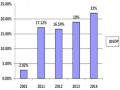
 Current status of investment activities in bond trading of Vietnam Commercial Bank
 -
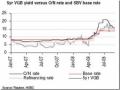 Compare Listed and Trading Bond Values at Hanoi Stock Exchange
 -
 Research Model of the Impact of Bond Investment Activities on Business Results of Commercial Banks
 -
 Securities Trading Activities of Investment Fund
 -
 Bond investment activities of Vietnamese commercial banks 1683880233 - 27
- Focus on building a central database of information on corporate bonds (the database includes information on both the primary and secondary markets) and building a trading market for corporate bonds.
- The government needs to take measures to limit the dominance of state-owned enterprises and large enterprises in the market, and at the same time encourage enterprises to issue convertible bonds with appropriate interest rates to attract public attention to corporate bonds and increase the liquidity of the corporate bond market [61].

- A number of domestic and foreign studies have shown that the Government needs to strengthen measures to stabilize exchange rates to help limit risks for investors in the corporate bond market, especially foreign investors. Therefore, a stable exchange rate with little fluctuation will encourage the development of the corporate bond market. On that basis, it is necessary to build and develop financial tools to prevent exchange rate risks for investors, especially foreign investors [46].
- It is necessary to make more transparent information about businesses such as information about issuances and how to use mobilized capital. This requires strengthening the role of
of credit rating agencies or independent monitoring companies. Along with that, businesses need to further diversify their bond types to increase their attractiveness to investors.
3.4.2. Recommendations to the State Bank , relevant departments and organizations
3.4.2.1 . Bad debt handling
- The State Bank and ministries, ministerial-level agencies, government agencies, and People's Committees of provinces and centrally run cities need to coordinate more actively in implementing the contents and responsibilities assigned in Decision No. 843/QD-TTg of the Prime Minister to handle bad debts in a synchronous and effective manner.
- Flexibly and cautiously manage monetary, credit and banking policies; implement solutions to handle inventories and outstanding debts in basic construction; encourage investment and consumption, remove difficulties for production and business; develop the real estate market; Proactively coordinate with relevant agencies to propose the development and promulgation of policies on exemption and reduction of corporate income tax and value added tax for asset management companies of Vietnamese credit institutions and activities of buying and selling secured assets to promote the development of the debt trading market and support the handling of bad debts of credit institutions as well as amend, supplement and perfect a number of regulations related to secured transactions, handling secured assets and the rights of creditors, obligations of borrowers and guarantors in the Civil Law, Land Law, Civil Procedure Law, and Law on Enforcement of Civil Judgments.
- Strengthen inspection and supervision of credit institutions in compliance with regulations on banking operations and bad debt handling; innovate the organization and operation of banking inspection and supervision in accordance with international practices and 17 standards; issue mechanisms and regulations on safe banking operations such as debt classification, risk provisioning and use, lending regulations, corporate bond purchase, and trust; thoroughly handle cross-ownership among credit institutions. In addition, inspection and supervision agencies need to be separated from the State Bank and the Securities Commission; strengthen coordination in remote supervision and on-site inspection; develop and put into operation a new system of supervision indicators and supervision procedures, and continue to improve the supervision database system; closely monitor the trend of capital flow shifts in the financial market and the shift of credit investment to the sector.
consumption, securities, real estate to have timely handling measures, limit risks.
- Reducing the rate of overlapping ownership in the banking system: Although there has been no specific research to prove the relationship between overlapping ownership and high bad debt, some economic experts believe that this relationship is entirely possible. Overlapping ownership creates incentives for banks to ignore requirements on credit appraisal and customer supervision, because the interests of the bank are closely tied to the interests of the enterprise with which it is affiliated, while the risks are shared equally among all bank shareholders, including minority shareholders and shareholders who do not have control over the bank. In other words, dealing with bad debt needs to be accompanied by stronger and more substantial measures to restructure banks, especially dealing with the issue of overlapping ownership with a series of tougher and more effective measures than what the Government and the State Bank are currently implementing.
- Regarding the purchase price of bad debt, investors should be allowed to buy bad debt at a price lower than the market price. The market price is the price determined by the market and is established through public auctions on the market.
- The Ministry of Finance and other ministries need to amend relevant legal documents to quickly resolve the bottleneck in handling secured assets; amend regulations on real estate ownership by foreigners, help develop the Vietnamese debt trading market, and increase VAMC's ability to sell bad debts. Currently, Vietnamese law does not allow foreign organizations and individuals to become mortgagees. Even domestic organizations and individuals are not allowed to become mortgagees if they are not credit institutions (according to Article 114 of the Housing Law, which stipulates real estate mortgages for credit institutions). Therefore, foreign investors will not buy bad debts from banks if they cannot become collateral recipients.
- Recommend the Ministry of Justice, Ministry of Natural Resources and Environment, Ministry of Construction, and the State Bank to consider expanding the scope of guarantees for future housing for customers' obligations (currently, Joint Circular 01/2014/TTLT/BTP-TNMT-XD-NHNN dated April 25, 2014 only allows mortgages for future housing for the purpose of borrowing capital to buy that house or project housing).
- To help speed up the progress of asset handling to recover bad debts, it is recommended that relevant ministries and branches promptly create a synchronous legal corridor allowing credit institutions to take full initiative in handling secured assets to quickly resolve bad debts.
- To be able to solve the problem of bad debt more effectively, VAMC needs to be able to buy and sell bad debt at the same time. While the legal framework has been established to support VAMC in buying bad debt, there is still a lack of tools to help VAMC sell bad debt effectively. To sell bad debt to foreign investors, a bad debt trading market needs to be established and the bad debts must be really attractive to investors in terms of price. VAMC buys bad debt at a high level (equivalent to the remaining book value of loans after deducting the provisioned provisions), equivalent to 70-75% of the face value of the debts. Therefore, even when a debt trading market is formed, the bad debts are not necessarily attractive to foreign investors due to the high price. In the long term, to be able to really solve the problem of bad debt of commercial banks, VAMC will need more "real" capital (debt and equity capital) and support from the government.
3.4.2.2 . Developing bond investment and trading activities at commercial banks
- Using Government Bonds (possibly with a discount rate - haircut) in calculating the required reserves of commercial banks at the State Bank of Vietnam today. This has been applied in a number of countries around the world, to increase the liquidity of Government bonds and improve the business efficiency of commercial banks.
- Increase a certain proportion of government-guaranteed bonds such as NHCSXH bonds, VEC bonds, etc. in participation in mortgages, overdrafts and transactions on the open market. In addition, the State Bank also needs to research and expand GTCG issued by reputable and high-quality enterprises and corporations as trading instruments on the open market. This will create liquidity and contribute to the development of the corporate bond market in Vietnam today on the basis of the State Bank's analysis and flexible adjustment of the list of corporate bonds allowed to participate and the appropriate discount rate (haircut) in each specific period.
- Promote the control role : Strengthen the control role of the State Bank over commercial banks in implementing relevant regulations issued by the State Bank. Thereby, grasp the current situation and difficulties of commercial banks for timely handling. In addition, the State Bank needs to strengthen strict control over the bond investment and trading strategy of each commercial bank to limit speculation and monopolization in this field of Vietnamese commercial banks.
- Develop guidance documents and allow commercial banks to participate in investing in bonds issued by the Vietnamese Government abroad, or issued by other countries.
- Regularly publish and update the summary data table of historical transactions on Government bond auctions through the State Bank and Open Market Operations auctions so that commercial banks can collect information and data to analyze and evaluate the developments of these activities. In addition, the publication of information on Open Market Operations auction results must be immediate after the results are available on the information systems of Reuters, Bloomberg, or the State Bank's website.
- The Vietnam Bond Association needs to promptly carry out the following activities to promote the bond market in general and the bond investment and trading activities of commercial banks in particular to develop and operate effectively:
Standardize commercial practices and market conventions for bond transactions and other debt instruments in the Vietnamese bond market.
Establish codes of conduct, practice and professional ethics to regulate relationships between partners in the Vietnamese bond market to ensure equality for market participants.
Act as a forum and bridge to exchange and update information, enhance cooperation and mutual understanding among members and between members and state management agencies as well as international market organizations. Contribute critical opinions and participate in supporting competent authorities in perfecting policies and legal frameworks for the bond market in Vietnam.
Building a standard bond trading contract: Currently bond trading
There is no standard for transaction contracts between investors in general and domestic commercial banks in particular. In other words, the parties involved in the transaction often agree on contracts with sketchy, incomplete terms and make it difficult to resolve disputes when they arise. Therefore, the Vietnam Bond Association needs to develop a standard bond transaction contract model, in accordance with international and Vietnamese practices, and applied uniformly in all bond transactions in Vietnam. This move is similar to the development of the ISDA standard contract applicable to derivative transactions that has been regulated for uniform use worldwide.
CONCLUSION OF CHAPTER 3
Based on the contents of Chapter 1 and Chapter 2, Chapter 3 of the thesis presents the forecast and development orientation of the Vietnamese economy and bond market in the coming time; at the same time, it also mentions the development orientation of the Vietnamese commercial banking system with general goals, specific goals and implementation solutions. In addition, Chapter 3 also mentions the development orientation for bond investment and trading activities of Vietnamese commercial banks in the domestic and international markets in the period from now to 2020. In addition, the thesis focuses on presenting solutions to develop bond investment and trading activities of the Vietnamese commercial banking system in the coming time with the main contents:
- A group of solutions to expand the scale of bond investment and trading of Vietnamese commercial banks on the basis of increasing the total asset scale and raising the awareness of the Board of Directors of commercial banks about the role and position of bond investment and trading activities.
- A group of solutions to increase the profitability of bond investment and trading activities of Vietnamese commercial banks on the basis of reducing the State ownership ratio, increasing the foreign ownership ratio in the ownership structure of Vietnamese commercial banks, and at the same time controlling and reducing the bad debt ratio of bank credit.
- Complete solutions for internal legal documents, operating mechanisms and evaluation criteria for bond investment and trading activities of Vietnamese commercial banks.
- Other solution groups focus on key areas such as: improving the general operational capacity and the self-trading capacity of commercial banks in particular; improving
providing information technology support systems; organizational structure and improving human resources; risk management; diversifying operations, new products, etc.
In addition, the thesis also proposes a system of recommendations to the Government, the State Bank and other relevant agencies to support the completion of the environment to maximize the effectiveness of the above-mentioned system of solutions. The recommendations focus on some main contents as follows:
- The group recommends amending regulations on limits on ownership structure in the commercial banking system.
- Group of recommendations on bond market development
- Group of recommendations on handling bad debt of bank credit
- Group recommendations on the development of bond investment and trading activities at commercial banks.
CONCLUDE
Bond investment and trading activities are an activity that plays an important role and significance to the banking system. Based on research and comparison with works and research topics in the same field, the author's research results presented in the thesis demonstrate the following contributions and new points:
- Systematize and clarify some theoretical issues on developing bond investment and trading activities of commercial banks.
- Identify the types and strategies, implementation directions to
promote the role of this activity for commercial banks.
- Develop and perfect the system of indicators to evaluate the development of bond investment and trading activities.
- The author selects an evaluation model and draws conclusions about the impact of a number of factors on the bond investment and trading activities of commercial banks. Within the scope of the thesis, the author selects a number of subjective factors and a number of objective factors to measure the level of impact on the bond investment and trading activities of commercial banks. In general, these are the main influencing factors, play an important role and need to be studied in depth; at the same time, they also fully reflect the impact of internal (internal) and external nature on the bond investment and trading activities of commercial banks.
+ Subjective factors : Bank ownership structure (through variables reflecting state ownership structure and foreign ownership structure); Banking performance capacity (through variables reflecting total bank asset size; bad credit debt ratio) .
+ Objective factors : Current status of the bond market (through variables reflecting the size of the bond market; size of the government bond market; size of the corporate bond market); status of the economy (through variables reflecting the GDP growth rate of the economy).
- Evaluate and analyze the investment and bond trading model of commercial banks in the world (focusing mainly on Chinese commercial banks and American commercial banks). On that basis, the thesis will synthesize and apply experiences of practical value.
into Vietnam to develop bond investment and trading activities of Vietnam Commercial Bank.
- Analyze and evaluate fully and generally the current status of bond investment and trading activities of Vietnamese commercial banks in the 5-year period 2009-2014, to help managers and experts in this field have a comprehensive and complete picture reflecting the current status of this activity of commercial banks in the past. On that basis, the thesis also mentions the shortcomings, limitations, strengths, weaknesses and solutions to develop this activity in the current period and the following period.
- The system of solutions is built synchronously, including short-term solutions and long-term solutions, with the best conditions for practical application to develop the bond investment and trading activities of Vietnamese commercial banks in both quantity and quality. At the same time, the thesis also proposes a system of supporting recommendations to perfect the environment to maximize the effectiveness of the above system of solutions.
- Although there have been many efforts in researching and explaining the contents of the thesis, because the research problem is quite new, the content is quite comprehensive, and the research capacity is still lacking, the thesis is inevitably flawed. The researcher hopes to receive comments from scientists to make the thesis more complete.
- Finally, I would like to express my sincere thanks to the scientific supervisors and scientists who have wholeheartedly helped, guided and contributed ideas to help the PhD student complete the thesis.
LIST OF WORKS RELATED TO THE THESIS
[1] Vu Hoang Nam (2010), “Development of Vietnam's bond market”, Journal of Banking Science and Training , (No. 99), pp. 1-5 .
[2] Vu Hoang Nam & Dinh Anh Dung (2011), “Risk management in bond trading activities of commercial banks and lessons learned” , Banking Magazine ( No. 11), pp. 35-38.
[3] Vu Hoang Nam (2011), “Bond investment and trading activities of world commercial banks – experience for Vietnam”, Banking Magazine ( No. 109), pp. 55-59.
[4] Vu Hoang Nam (2012), “Developing Agribank's bond investment and trading business”, Banking Magazine ( No. 14), pp. 50-54.
[5] Vu Hoang Nam (2015), “Bond investment and trading activities: Lessons learned from Chinese and American banks”, Banking Magazine ( No. 7 ) , pp. 46-51.
LIST OF REFERENCES
I. Vietnamese documents
[1] Hong Anh (2014), Creating change in banking restructuring, Nhan Dan Electronic Newspaper.
[2] ANZ (2015), Vietnam economic outlook update report 2015 - 2016.
[3] Asian Development Bank (2013), Asian Bond Monitor Report 2009-2013.
[4] Fulbright Economics Teaching Program, Panel Data Regression Models Damodar N. Gujarati 1, chapter 16.
[5] Bao Viet Securities Company (2013), 2013 Bond Report.
[6] Dr. Nguyen Due (2001), Banking Management Book, Statistical Publishing House, Hanoi.
[7] Huynh The Du (2005), State-State Enterprise-State Commercial Bank Relationship in Vietnam, Fulbright Economics Teaching Program.
[8] Huynh The Du, Do Thien Anh Tuan (2013), Regulations on safety ratios in banking activities in Vietnam - A bumpy road, Fulbright Economics Teaching Program.
[9] Master Nguyen Thi Anh Dao (2008) and research team, Participation of the commercial banking system in the Vietnamese stock market, research project, University of Economics - VNU.
[10] Frederic S.Mishkin (1995), Money, banking and financial markets, Science and Technology Publishing House, Hanoi.
[11] Tran Thanh Ha (2008), Strengthening investment activities of the Industrial and Commercial Bank in the stock market, master's thesis, Hanoi National Economics University.
[12] Quach Manh Hao (2012), Weaknesses of the current Vietnamese banking system, VNU Journal of Science, Economics and Business (28/2012)
[13] MSc. Phung Thi Hien (2015), Bond market: 5 outstanding successes, Finance Magazine (No. 01/2015).
[14] Assoc.Prof.Dr. Nguyen Van Hieu (2010), Raising the minimum capital safety ratio according to Basel 3 - roadmap to strengthen the financial and banking security wall, Banking Magazine (No. 22/2010).
[15] Nguyen Viet Hung (2008), Analysis of factors affecting the performance of Vietnamese commercial banks, PhD thesis, Hanoi National Economics University.
[16] Mac Quang Huy (2009), Investment Banking Handbook, Statistical Publishing House.
[17] Le Thi Huong (2003), Improving the efficiency of investment activities of Vietnamese commercial banks, PhD thesis in economics, Hanoi National Economics University.
[18] Dr. Nguyen Thi Thanh Huong and Associate Professor Vu Thien Thap (2007), Banking Accounting Book, Statistical Publishing House, Hanoi
[19] MSc. Nguyen Thanh Huyen (2014), Government bond market: Development imprint, Finance Magazine (No. 01/2014)
[20] Dr. Trinh Thanh Huyen (2013), Bright and dark colors of banking activities 2013, Vietinbank Webpage.
[21] Dr. Tran Dang Kham (2007), Developing bond market makers in
Vietnam, scientific research topic, Hanoi National Economics University.
[22] Do Le (2014), Increasing capital efficiency, Electronic Banking Times (August 2014).
[23] Securities Law 2006.
[24] Law amending and supplementing a number of articles of the Securities Law 2010
[25] Dr. Dao Le Minh (2013), Textbook on basic issues of securities and securities market, State Securities Commission, Labor Publishing House.
[26] Associate Professor, Dr. Nguyen Thi Mui (2013), Vietnam Banking System after 6 years of integration, Vietinbank Webpage.
[27] Associate Professor, Dr. Nguyen Van Nam & Associate Professor, Dr. Vuong Trong Nghia (2002), Stock market textbook, National Economics University, Finance Publishing House.