
- Using capital: capital is resources that can be mobilized and used in production and business activities to gain benefits for the investor. Investment capital can exist in three forms: tangible assets (factories, machinery, equipment, goods, raw materials, etc.), intangible assets (inventions, inventions, know-how techniques, business secrets, trademarks, land use rights...), financial assets (money, other valuable papers...), .
- Profitable: the purpose of investment is to bring profit or socio-economic benefits. Normally, private individuals and businesses pursue the goal of profit: the difference between the income that investment activities bring to the investor and the costs that the investor must spend to conduct that investment activity. . The government pursues the goal of socio-economic benefits: the difference between what society gains and what society loses from investment activities. Socio-economic benefits are evaluated through qualitative indicators and quantitative indicators.
- There is risk: investment activities usually take place over a long period of time so it is
adventurous. The longer the investment period, the higher the risk.
Maybe you are interested!
-

 Research on factors affecting the decision to choose savings deposit service of individual customers at Vietnam Joint Stock Commercial Bank for Investment and Development - Thua Thien Hue branch - 17
 -
 Identify Rating Levels and Rating Scales
zt2i3t4l5ee
zt2a3gstourism,quan lan,quang ninh,ecology,ecotourism,minh chau,van don,geography,geographical basis,tourism development,science
zt2a3ge
zc2o3n4t5e6n7ts
of the islanders. Therefore, this indicator will be divided into two sub-indicators:
a1. Natural tourism attractiveness a2. Cultural tourism attractiveness
b. Tourist capacity
The two island communes in Quan Lan have different capacities to receive tourists. Minh Chau Commune is home to many standard hotels and resorts, attracting high-income domestic and international tourists. Meanwhile, Quan Lan Commune has many motels mainly built and operated by local people, so the scale and quality are not high, and will be suitable for ordinary tourists such as students.
c. Time of exploitation of Quan Lan Island Commune:
Quan Lan tourism is seasonal due to weather and climate conditions and festivals only take place on certain days of the year, specifically in spring. In Quan Lan commune, the period from April to June and from September to November is considered the best time to visit Quan Lan because the cultural tourism activities are mainly associated with festivals taking place during this time.
Minh Chau island commune:
Tourism exploitation time is all year round, because this is a place with a number of tourist attractions with diverse ecosystems such as Bai Tu Long National Park Research Center, Tram forest, Turtle Laying Beach, so besides coming to the beach for tourism and vacation in the summer, Minh Chau will attract research groups to come for tourism combined with research at other times of the year.
d. Sustainability
The sustainability of ecotourism sites in Quan Lan and Minh Chau communes depends on the sensitivity of the ecosystems to climate changes.
landscape. In general, these tourist destinations have a fairly high level of sustainability, because they are natural ecosystems, planned and protected. However, if a large number of tourists gather at certain times, it can exceed the carrying capacity and affect the sustainability of the environment (polluted beaches, damaged trees, animals moving away from their habitats, etc.), then the sustainability of the above ecosystems (natural ecosystems, human ecosystems) will also be affected and become less sustainable.
e. Location and accessibility
Both island communes have ports to take tourists to visit from Van Don wharf:
- Quan Lan – Van Don traffic route:
Phuc Thinh – Viet Anh high-speed boat and Quang Minh high-speed boat, depart at 8am and 2pm from Van Don to Quan Lan, and at 7am and 1pm from Quan Lan to Van Don. There are also wooden boats departing at 7am and 1pm.
- Van Don - Minh Chau traffic route:
Chung Huong high-speed train, Minh Chau train, morning 7:30 and afternoon 13:30 from Van Don to Minh Chau, morning 6:30 and afternoon 13:00 from Minh Chau to Van Don.
f. Infrastructure
Despite receiving investment attention, the issue of infrastructure and technical facilities for tourism on Quan Lan Island is still an issue that needs to be resolved because it has a direct impact on the implementation of ecotourism activities. The minimum conditions for serving tourists such as accommodation, electricity, water, communication, especially medical services, and security work need to be given top priority. Ecotourism spots in Minh Chau commune are assessed to have better infrastructure and technical facilities for tourism because there are quite complete and synchronous conditions for serving tourists, meeting many needs of domestic and foreign tourists.
3.2.1.4. Determine assessment levels and assessment scales
Corresponding to the levels of each criterion, the index is the score of those levels in the order of 4, 3, 2, 1 decreasing according to the standard of each level: very attractive (4), attractive (3), average (2), less attractive (1).
3.2.1.5. Determining the coefficients of the criteria
For the assessment of DLST in the two communes of Quan Lan and Minh Chau islands, the students added evaluation coefficients to show the importance of the criteria and indicators as follows:
Coefficient 3 with criteria: Attractiveness, Exploitation time. These are the 2 most important criteria for attracting tourists to tourism in general and eco-tourism in particular, so they have the highest coefficient.
Coefficient 2 with criteria: Capacity, Infrastructure, Location and accessibility . Because the assessment area is an island commune of Van Don district, the above criteria are selected by the author with appropriate coefficients at the average level.
Coefficient 1 with criteria: Sustainability. Quan Lan has natural and human-made ecotourism sites, with high biodiversity and little impact from local human factors. Most of the ecotourism sites are still wild, so they are highly sustainable.
3.2.1.6. Results of DLST assessment on Quan Lan island
a. Assessment of the potential for natural tourism development
For Minh Chau commune:
+ Natural tourism attractiveness is determined to be very attractive (4 points) and the most important coefficient (coefficient 3), so the score of the Attractiveness criterion is 4 x 3 = 12.
+ Capacity is determined as average (2 points) and the coefficient is quite important (coefficient 2), then the score of Capacity criterion is 2 x 2 = 4.
+ Exploitation time is long (4 points), the most important coefficient (coefficient 3) so the score of the Exploitation time criterion is 4 x 3 = 12.
+ Sustainability is determined as sustainable (4 points), the important coefficient is the average coefficient (coefficient 1), so the score of the Sustainability criterion is 4 x 1 = 4 points
+ Location and accessibility are determined to be quite favorable (2 points), the coefficient is quite important (coefficient 2), the criterion score is 2 x 2 = 4 points.
+ Infrastructure is assessed as good (3 points), the coefficient is quite important (coefficient 2), then the score of the Infrastructure criterion is 3 x 2 = 6 points.
The total score for evaluating DLST in Minh Chau commune according to 6 evaluation criteria is determined as: 12 + 4 + 12 + 4 + 4 + 6 = 42 points
Similar assessment for Quan Lan commune, we have the following table:
Table 3.3: Assessment of the potential for natural ecotourism development in Quan Lan and Minh Chau communes
Attractiveness of self-tourismof course
Capacity
Mining time
Sustainability
Location and accessibility
Infrastructure
Result
Point
DarkMulti
Point
DarkMulti
Point
DarkMulti
Point
DarkMulti
Point
DarkMulti
Point
DarkMulti
CommuneMinh Chau
12
12
4
8
12
12
4
4
4
8
6
8
42/52
Quan CommuneLan
6
12
6
8
9
12
4
4
4
8
4
8
33/52
b. Assessment of the potential for humanistic tourism development
For Quan Lan commune:
+ The attractiveness of human tourism is determined to be very attractive (4 points) and the most important coefficient (coefficient 3), so the score of the Attractiveness criterion is 4 x 3 = 12.
+ Capacity is determined to be large (3 points) and the coefficient is quite important (coefficient 2), then the score of the Capacity criterion is 3 x 2 = 6.
+ Mining time is average (3 points), the most important coefficient (coefficient 3) so the score of the Mining time criterion is 3 x 3 = 9.
+ Sustainability is determined as sustainable (4 points), the important coefficient is the average coefficient (coefficient 1), so the score of the Sustainability criterion is 4 x 1 = 4 points.
+ Location and accessibility are determined to be quite favorable (2 points), the coefficient is quite important (coefficient 2), the criterion score is 2 x 2 = 4 points.
+ Infrastructure is rated as average (2 points), the coefficient is quite important (coefficient 2), then the score of the Infrastructure criterion is 2 x 2 = 4 points.
The total score for evaluating DLST in Quan Lan commune according to 6 evaluation criteria is determined as: 12 + 6 + 6 + 4 + 4 + 4 = 36 points.
Similar assessment with Minh Chau commune we have the following table:
Table 3.4: Assessment of the potential for developing humanistic eco-tourism in Quan Lan and Minh Chau communes
Attractiveness of human tourismliterature
Capacity
Mining time
Sustainability
Location and accessibility
Infrastructure
Result
Point
DarkMulti
Point
DarkMulti
Point
DarkMulti
Point
DarkMulti
Point
DarkMulti
Point
DarkMulti
Quan CommuneLan
12
12
6
8
9
12
4
4
4
8
4
8
39/52
Minh CommuneChau
6
12
4
8
12
12
4
4
4
8
6
8
36/52
Basically, both Minh Chau and Quan Lan localities have quite favorable conditions for developing ecotourism. However, Quan Lan commune has more advantages to develop ecotourism in a humanistic direction, because this is an area with many famous historical relics such as Quan Lan Communal House, Quan Lan Pagoda, Temple worshiping the hero Tran Khanh Du, ... along with local festivals held annually such as the wind praying ceremony (March 15), Quan Lan festival (June 10-19); due to its location near the port and long exploitation time, the beaches in Quan Lan commune (especially Quan Lan beach) are no longer hygienic and clean to ensure the needs of tourists coming to relax and swim; this is also an area with many beautiful landscapes such as Got Beo wind pass, Ong Phong head, Voi Voi cave, but the ability to access these places is still very limited (dirt hill road, lots of gravel and rocks), especially during rainy and windy times; In addition, other natural resources such as mangrove forests and sea worms have not been really exploited for tourism purposes and ecotourism development. On the contrary, Minh Chau commune has more advantages in developing ecotourism in the direction of natural tourism, this is an area with diverse ecosystems such as at Rua De Beach, Bai Tu Long National Park Conservation Center...; Minh Chau beach is highly appreciated for its natural beauty and cleanliness, ranked in the top ten most beautiful beaches in Vietnam; Minh Chau commune is also home to Tram forest with a large area and a purity of up to 90%, suitable for building bridges through the forest (a very effective type of natural ecotourism currently applied by many countries) for tourists to sightsee, as well as for the purpose of studying and researching.
Figure 3.1: Thenmala Forest Bridge (India) Source: https://www.thenmalaecotourism.com/(August 21, 2019)
3.2.2. Using SWOT matrix to evaluate Quan Lan island tourism
General assessment of current tourism activities of Quan Lan island is shown through the following SWOT matrix:
Table 3.5: SWOT matrix evaluating tourism activities on Quan Lan island
Internal agent
Strengths- There is a lot of potential for tourism development, especially natural ecotourism and humanistic ecotourism.- The unskilled labor force is relatively abundant.- resource environmentunpolluted, still
Weaknesses- Poorly developed infrastructure, especially traffic routes to tourist destinations on the island.- The team of professional staff is still weak.- Tourism products in general
quite wild, originalintact
general and DLST in particularalone is monotonous.
External agents
Opportunity- Tourism is a key industry in the socio-economic development strategy of the province and Van Don economic zone.- Quan Lan was selected as a pilot area for eco-tourism development within the framework of the green growth project between Quang Ninh province and the Japanese organization JICA.- The flow of tourists and especially ecotourism in the world tends toincreasing
Challenge- Weather and climate change abnormally.- Competition in tourism products is increasingly fierce, especially with other localities in the province such as Ha Long, Mong Cai...- Awareness of tourists, especially domestic tourists, about ecotourism and nature conservation is not high.
Through summary analysis using SWOT matrix we see that:
To exploit strengths and take advantage of opportunities, it is necessary to:
- Diversify products and service types (build more tourism routes aimed at specific needs of tourists: experiential tourism immersed in nature, spiritual cultural tourism...)
- Effective exploitation of resources and differentiated products (natural resources and human resources)
div.maincontent .p { color: black; font-family:"Times New Roman", serif; font-style: normal; font-weight: normal; text-decoration: none; font-size: 14pt; margin:0pt; } div.maincontent p { color: black; font-family:"Times New Roman", serif; font-style: normal; font-weight: normal; text-decoration: none; font-size: 14pt; margin:0pt; } div.maincontent .s1 { color: black; font-family:"Times New Roman", serif; font-style: normal; font-weight: normal; text-decoration: none; font-size: 13pt; } div.maincontent .s2 { color: black; font-family:"Times New Roman", serif; font-style: normal; font-weight: normal; text-decoration: none; font-size: 13pt; } div.maincontent .s3 { color: #0D0D0D; font-family:"Times New Roman", serif; font-style: normal; font-weight: bold; text-decoration: none; font-size: 14pt; } div.maincontent .s4 { color: black; font-family:"Times New Roman", serif; font-style: italic; font-weight: normal; text-decoration: none; font-size: 14pt; } div.maincontent .s5 { color: black; font-family:"Times New Roman", serif; font-style: italic; font-weight: bold; text-decoration: none; font-size: 14pt; } div.maincontent .s6 { color: black; font-family:"Times New Roman", serif; font-style: italic; font-weight: normal; text-decoration: none; font-size: 14pt; vertical-align: -3pt; } div.maincontent .s7 { color: black; font-family:"Times New Roman", serif; font-style: italic; font-weight: normal; text-decoration: none; font-size: 14pt; vertical-align: -2pt; } div.maincontent .s8 { color: black; font-family:"Times New Roman", serif; font-style: italic; font-weight: normal; text-decoration: none; font-size: 14pt; vertical-align: -1pt; } div.maincontent .s9 { color: black; font-family:"Times New Roman", serif; font-style: normal; font-weight: normal; text-decoration: none; font-size: 14pt; } div.maincontent .s10 { color: black; font-family:"Times New Roman", serif; font-style: normal; font-weight: bold; text-decoration: none; font-size: 14pt; } div.maincontent .s11 { color: black; font-family:"Times New Roman", serif; font-style: normal; font-weight: normal; text-decoration: none; font-size: 14pt; } div.maincontent .s12 { color: black; font-family:Symbol, serif; font-style: normal; font-weight: normal; text-decoration: none; font-size: 14pt; } div.maincontent .s13 { color: black; font-family:Wingdings; font-style: normal; font-weight: normal; text-decoration: none; font-size: 14pt; } div.maincontent .s14 { color: black; font-family:"Times New Roman", serif; font-style: normal; font-weight: normal; text-decoration: none; font-size: 9pt; vertical-align: 5pt; } div.maincontent .s15 { color: black; font-family:"Times New Roman", serif; font-style: normal; font-weight: normal; text-decoration: none; font-size: 9pt; vertical-align: 5pt; } div.maincontent .s16 { color: black; font-family:Cambria, serif; font-style: italic; font-weight: normal; text-decoration: none; font-size: 14pt; } div.maincontent .s17 { color: #080808; font-family:"Times New Roman", serif; font-style: normal; font-weight: bold; text-decoration: none; font-size: 14pt; } div.maincontent .s18 { color: #080808; font-family:"Times New Roman", serif; font-style: normal; font-weight: normal; text-decoration: none; font-size: 14pt; } div.maincontent .s19 { color: black; font-family:"Times New Roman", serif; font-style: normal; font-weight: normal; text-decoration: none; font-size: 11pt; } div.maincontent .s20 { color: black; font-family:"Times New Roman", serif; font-style: normal; font-weight: normal; text-decoration: none; font-size: 10pt; } div.maincontent .s21 { color: black; font-family:"Times New Roman", serif; font-style: normal; font-weight: bold; text-decoration: none; font-size: 11pt; } div.maincontent .s22 { color: black; font-family:"Times New Roman", serif; font-style: normal; font-weight: normal; text-decoration: none; font-size: 11pt; } div.maincontent .s23 { color: black; font-family:"Times New Roman", serif; font-style: italic; font-weight: normal; text-decoration: none; font-size: 14pt; } div.maincontent .s24 { color: #212121; font-family:"Times New Roman", serif; font-style: normal; font-weight: normal; tex
Identify Rating Levels and Rating Scales
zt2i3t4l5ee
zt2a3gstourism,quan lan,quang ninh,ecology,ecotourism,minh chau,van don,geography,geographical basis,tourism development,science
zt2a3ge
zc2o3n4t5e6n7ts
of the islanders. Therefore, this indicator will be divided into two sub-indicators:
a1. Natural tourism attractiveness a2. Cultural tourism attractiveness
b. Tourist capacity
The two island communes in Quan Lan have different capacities to receive tourists. Minh Chau Commune is home to many standard hotels and resorts, attracting high-income domestic and international tourists. Meanwhile, Quan Lan Commune has many motels mainly built and operated by local people, so the scale and quality are not high, and will be suitable for ordinary tourists such as students.
c. Time of exploitation of Quan Lan Island Commune:
Quan Lan tourism is seasonal due to weather and climate conditions and festivals only take place on certain days of the year, specifically in spring. In Quan Lan commune, the period from April to June and from September to November is considered the best time to visit Quan Lan because the cultural tourism activities are mainly associated with festivals taking place during this time.
Minh Chau island commune:
Tourism exploitation time is all year round, because this is a place with a number of tourist attractions with diverse ecosystems such as Bai Tu Long National Park Research Center, Tram forest, Turtle Laying Beach, so besides coming to the beach for tourism and vacation in the summer, Minh Chau will attract research groups to come for tourism combined with research at other times of the year.
d. Sustainability
The sustainability of ecotourism sites in Quan Lan and Minh Chau communes depends on the sensitivity of the ecosystems to climate changes.
landscape. In general, these tourist destinations have a fairly high level of sustainability, because they are natural ecosystems, planned and protected. However, if a large number of tourists gather at certain times, it can exceed the carrying capacity and affect the sustainability of the environment (polluted beaches, damaged trees, animals moving away from their habitats, etc.), then the sustainability of the above ecosystems (natural ecosystems, human ecosystems) will also be affected and become less sustainable.
e. Location and accessibility
Both island communes have ports to take tourists to visit from Van Don wharf:
- Quan Lan – Van Don traffic route:
Phuc Thinh – Viet Anh high-speed boat and Quang Minh high-speed boat, depart at 8am and 2pm from Van Don to Quan Lan, and at 7am and 1pm from Quan Lan to Van Don. There are also wooden boats departing at 7am and 1pm.
- Van Don - Minh Chau traffic route:
Chung Huong high-speed train, Minh Chau train, morning 7:30 and afternoon 13:30 from Van Don to Minh Chau, morning 6:30 and afternoon 13:00 from Minh Chau to Van Don.
f. Infrastructure
Despite receiving investment attention, the issue of infrastructure and technical facilities for tourism on Quan Lan Island is still an issue that needs to be resolved because it has a direct impact on the implementation of ecotourism activities. The minimum conditions for serving tourists such as accommodation, electricity, water, communication, especially medical services, and security work need to be given top priority. Ecotourism spots in Minh Chau commune are assessed to have better infrastructure and technical facilities for tourism because there are quite complete and synchronous conditions for serving tourists, meeting many needs of domestic and foreign tourists.
3.2.1.4. Determine assessment levels and assessment scales
Corresponding to the levels of each criterion, the index is the score of those levels in the order of 4, 3, 2, 1 decreasing according to the standard of each level: very attractive (4), attractive (3), average (2), less attractive (1).
3.2.1.5. Determining the coefficients of the criteria
For the assessment of DLST in the two communes of Quan Lan and Minh Chau islands, the students added evaluation coefficients to show the importance of the criteria and indicators as follows:
Coefficient 3 with criteria: Attractiveness, Exploitation time. These are the 2 most important criteria for attracting tourists to tourism in general and eco-tourism in particular, so they have the highest coefficient.
Coefficient 2 with criteria: Capacity, Infrastructure, Location and accessibility . Because the assessment area is an island commune of Van Don district, the above criteria are selected by the author with appropriate coefficients at the average level.
Coefficient 1 with criteria: Sustainability. Quan Lan has natural and human-made ecotourism sites, with high biodiversity and little impact from local human factors. Most of the ecotourism sites are still wild, so they are highly sustainable.
3.2.1.6. Results of DLST assessment on Quan Lan island
a. Assessment of the potential for natural tourism development
For Minh Chau commune:
+ Natural tourism attractiveness is determined to be very attractive (4 points) and the most important coefficient (coefficient 3), so the score of the Attractiveness criterion is 4 x 3 = 12.
+ Capacity is determined as average (2 points) and the coefficient is quite important (coefficient 2), then the score of Capacity criterion is 2 x 2 = 4.
+ Exploitation time is long (4 points), the most important coefficient (coefficient 3) so the score of the Exploitation time criterion is 4 x 3 = 12.
+ Sustainability is determined as sustainable (4 points), the important coefficient is the average coefficient (coefficient 1), so the score of the Sustainability criterion is 4 x 1 = 4 points
+ Location and accessibility are determined to be quite favorable (2 points), the coefficient is quite important (coefficient 2), the criterion score is 2 x 2 = 4 points.
+ Infrastructure is assessed as good (3 points), the coefficient is quite important (coefficient 2), then the score of the Infrastructure criterion is 3 x 2 = 6 points.
The total score for evaluating DLST in Minh Chau commune according to 6 evaluation criteria is determined as: 12 + 4 + 12 + 4 + 4 + 6 = 42 points
Similar assessment for Quan Lan commune, we have the following table:
Table 3.3: Assessment of the potential for natural ecotourism development in Quan Lan and Minh Chau communes
Attractiveness of self-tourismof course
Capacity
Mining time
Sustainability
Location and accessibility
Infrastructure
Result
Point
DarkMulti
Point
DarkMulti
Point
DarkMulti
Point
DarkMulti
Point
DarkMulti
Point
DarkMulti
CommuneMinh Chau
12
12
4
8
12
12
4
4
4
8
6
8
42/52
Quan CommuneLan
6
12
6
8
9
12
4
4
4
8
4
8
33/52
b. Assessment of the potential for humanistic tourism development
For Quan Lan commune:
+ The attractiveness of human tourism is determined to be very attractive (4 points) and the most important coefficient (coefficient 3), so the score of the Attractiveness criterion is 4 x 3 = 12.
+ Capacity is determined to be large (3 points) and the coefficient is quite important (coefficient 2), then the score of the Capacity criterion is 3 x 2 = 6.
+ Mining time is average (3 points), the most important coefficient (coefficient 3) so the score of the Mining time criterion is 3 x 3 = 9.
+ Sustainability is determined as sustainable (4 points), the important coefficient is the average coefficient (coefficient 1), so the score of the Sustainability criterion is 4 x 1 = 4 points.
+ Location and accessibility are determined to be quite favorable (2 points), the coefficient is quite important (coefficient 2), the criterion score is 2 x 2 = 4 points.
+ Infrastructure is rated as average (2 points), the coefficient is quite important (coefficient 2), then the score of the Infrastructure criterion is 2 x 2 = 4 points.
The total score for evaluating DLST in Quan Lan commune according to 6 evaluation criteria is determined as: 12 + 6 + 6 + 4 + 4 + 4 = 36 points.
Similar assessment with Minh Chau commune we have the following table:
Table 3.4: Assessment of the potential for developing humanistic eco-tourism in Quan Lan and Minh Chau communes
Attractiveness of human tourismliterature
Capacity
Mining time
Sustainability
Location and accessibility
Infrastructure
Result
Point
DarkMulti
Point
DarkMulti
Point
DarkMulti
Point
DarkMulti
Point
DarkMulti
Point
DarkMulti
Quan CommuneLan
12
12
6
8
9
12
4
4
4
8
4
8
39/52
Minh CommuneChau
6
12
4
8
12
12
4
4
4
8
6
8
36/52
Basically, both Minh Chau and Quan Lan localities have quite favorable conditions for developing ecotourism. However, Quan Lan commune has more advantages to develop ecotourism in a humanistic direction, because this is an area with many famous historical relics such as Quan Lan Communal House, Quan Lan Pagoda, Temple worshiping the hero Tran Khanh Du, ... along with local festivals held annually such as the wind praying ceremony (March 15), Quan Lan festival (June 10-19); due to its location near the port and long exploitation time, the beaches in Quan Lan commune (especially Quan Lan beach) are no longer hygienic and clean to ensure the needs of tourists coming to relax and swim; this is also an area with many beautiful landscapes such as Got Beo wind pass, Ong Phong head, Voi Voi cave, but the ability to access these places is still very limited (dirt hill road, lots of gravel and rocks), especially during rainy and windy times; In addition, other natural resources such as mangrove forests and sea worms have not been really exploited for tourism purposes and ecotourism development. On the contrary, Minh Chau commune has more advantages in developing ecotourism in the direction of natural tourism, this is an area with diverse ecosystems such as at Rua De Beach, Bai Tu Long National Park Conservation Center...; Minh Chau beach is highly appreciated for its natural beauty and cleanliness, ranked in the top ten most beautiful beaches in Vietnam; Minh Chau commune is also home to Tram forest with a large area and a purity of up to 90%, suitable for building bridges through the forest (a very effective type of natural ecotourism currently applied by many countries) for tourists to sightsee, as well as for the purpose of studying and researching.
Figure 3.1: Thenmala Forest Bridge (India) Source: https://www.thenmalaecotourism.com/(August 21, 2019)
3.2.2. Using SWOT matrix to evaluate Quan Lan island tourism
General assessment of current tourism activities of Quan Lan island is shown through the following SWOT matrix:
Table 3.5: SWOT matrix evaluating tourism activities on Quan Lan island
Internal agent
Strengths- There is a lot of potential for tourism development, especially natural ecotourism and humanistic ecotourism.- The unskilled labor force is relatively abundant.- resource environmentunpolluted, still
Weaknesses- Poorly developed infrastructure, especially traffic routes to tourist destinations on the island.- The team of professional staff is still weak.- Tourism products in general
quite wild, originalintact
general and DLST in particularalone is monotonous.
External agents
Opportunity- Tourism is a key industry in the socio-economic development strategy of the province and Van Don economic zone.- Quan Lan was selected as a pilot area for eco-tourism development within the framework of the green growth project between Quang Ninh province and the Japanese organization JICA.- The flow of tourists and especially ecotourism in the world tends toincreasing
Challenge- Weather and climate change abnormally.- Competition in tourism products is increasingly fierce, especially with other localities in the province such as Ha Long, Mong Cai...- Awareness of tourists, especially domestic tourists, about ecotourism and nature conservation is not high.
Through summary analysis using SWOT matrix we see that:
To exploit strengths and take advantage of opportunities, it is necessary to:
- Diversify products and service types (build more tourism routes aimed at specific needs of tourists: experiential tourism immersed in nature, spiritual cultural tourism...)
- Effective exploitation of resources and differentiated products (natural resources and human resources)
div.maincontent .p { color: black; font-family:"Times New Roman", serif; font-style: normal; font-weight: normal; text-decoration: none; font-size: 14pt; margin:0pt; } div.maincontent p { color: black; font-family:"Times New Roman", serif; font-style: normal; font-weight: normal; text-decoration: none; font-size: 14pt; margin:0pt; } div.maincontent .s1 { color: black; font-family:"Times New Roman", serif; font-style: normal; font-weight: normal; text-decoration: none; font-size: 13pt; } div.maincontent .s2 { color: black; font-family:"Times New Roman", serif; font-style: normal; font-weight: normal; text-decoration: none; font-size: 13pt; } div.maincontent .s3 { color: #0D0D0D; font-family:"Times New Roman", serif; font-style: normal; font-weight: bold; text-decoration: none; font-size: 14pt; } div.maincontent .s4 { color: black; font-family:"Times New Roman", serif; font-style: italic; font-weight: normal; text-decoration: none; font-size: 14pt; } div.maincontent .s5 { color: black; font-family:"Times New Roman", serif; font-style: italic; font-weight: bold; text-decoration: none; font-size: 14pt; } div.maincontent .s6 { color: black; font-family:"Times New Roman", serif; font-style: italic; font-weight: normal; text-decoration: none; font-size: 14pt; vertical-align: -3pt; } div.maincontent .s7 { color: black; font-family:"Times New Roman", serif; font-style: italic; font-weight: normal; text-decoration: none; font-size: 14pt; vertical-align: -2pt; } div.maincontent .s8 { color: black; font-family:"Times New Roman", serif; font-style: italic; font-weight: normal; text-decoration: none; font-size: 14pt; vertical-align: -1pt; } div.maincontent .s9 { color: black; font-family:"Times New Roman", serif; font-style: normal; font-weight: normal; text-decoration: none; font-size: 14pt; } div.maincontent .s10 { color: black; font-family:"Times New Roman", serif; font-style: normal; font-weight: bold; text-decoration: none; font-size: 14pt; } div.maincontent .s11 { color: black; font-family:"Times New Roman", serif; font-style: normal; font-weight: normal; text-decoration: none; font-size: 14pt; } div.maincontent .s12 { color: black; font-family:Symbol, serif; font-style: normal; font-weight: normal; text-decoration: none; font-size: 14pt; } div.maincontent .s13 { color: black; font-family:Wingdings; font-style: normal; font-weight: normal; text-decoration: none; font-size: 14pt; } div.maincontent .s14 { color: black; font-family:"Times New Roman", serif; font-style: normal; font-weight: normal; text-decoration: none; font-size: 9pt; vertical-align: 5pt; } div.maincontent .s15 { color: black; font-family:"Times New Roman", serif; font-style: normal; font-weight: normal; text-decoration: none; font-size: 9pt; vertical-align: 5pt; } div.maincontent .s16 { color: black; font-family:Cambria, serif; font-style: italic; font-weight: normal; text-decoration: none; font-size: 14pt; } div.maincontent .s17 { color: #080808; font-family:"Times New Roman", serif; font-style: normal; font-weight: bold; text-decoration: none; font-size: 14pt; } div.maincontent .s18 { color: #080808; font-family:"Times New Roman", serif; font-style: normal; font-weight: normal; text-decoration: none; font-size: 14pt; } div.maincontent .s19 { color: black; font-family:"Times New Roman", serif; font-style: normal; font-weight: normal; text-decoration: none; font-size: 11pt; } div.maincontent .s20 { color: black; font-family:"Times New Roman", serif; font-style: normal; font-weight: normal; text-decoration: none; font-size: 10pt; } div.maincontent .s21 { color: black; font-family:"Times New Roman", serif; font-style: normal; font-weight: bold; text-decoration: none; font-size: 11pt; } div.maincontent .s22 { color: black; font-family:"Times New Roman", serif; font-style: normal; font-weight: normal; text-decoration: none; font-size: 11pt; } div.maincontent .s23 { color: black; font-family:"Times New Roman", serif; font-style: italic; font-weight: normal; text-decoration: none; font-size: 14pt; } div.maincontent .s24 { color: #212121; font-family:"Times New Roman", serif; font-style: normal; font-weight: normal; tex -
 Investment-cash flow relationship in the context of state ownership and banking system reform in Vietnam - 3
 -
 Environmental impact assessment of Thanh Minh industrial cluster infrastructure investment project, Phu Tho town, Phu Tho Province - 2
 -
 About the Investment Situation in 2 Parks and Other Habitat Areas in Ninh Thuan:
1.1.2. Investment classification:
Based on the nature of investment, people divide investment into 2 types, which are direct investment
direct and indirect investment.
- Direct investment
According to the Vietnam Investment Law (2005), direct investment is a form of investment in which investors invest capital and participate in managing investment activities. The investor can be the Government through different channels to invest in society. This represents the Government's spending through investment in social projects and policies. In addition, investors can be private, collective... including foreign investors investing directly in Vietnam. Depending on each specific case, participating entities express their rights, obligations and responsibilities in the investment process.
- Indirect investment
According to the Vietnam Investment Law (2005), indirect investment is a form of investment through the purchase of shares, stocks, bonds, other valuable papers, securities investment funds and through institutions. Other financial intermediaries in which investors do not directly participate in managing investment activities
Thus, indirect investment is a type of investment in which the person who invests capital and the person who uses capital are not the same entity. Indirect investment is usually through credit channels or investment channels on the stock market.
There is a close relationship between direct investment and indirect investment in the investment process. Direct investment is the premise for developing indirect investment, which is reflected through the need for businesses to borrow capital from credit institutions or businesses issuing shares on the primary market to raise capital. mobilize capital. On the other hand, the expanded indirect investment environment will promote direct investment with the expectation of easy access to capital sources. Because once the financial market develops, investors have many opportunities to choose capital sources with low capital costs, and can also use this advantage to increase financial leverage to implement. your business intention.
1.2. Investment capital sources
1.2.1. Concept of investment capital
Investment capital is money accumulated by society, production, business and service units, people's savings and capital mobilized from different sources such as joint ventures, partnerships or foreign sponsorship. ... to: reproduce fixed assets, to maintain the operation of existing technical facilities, to innovate and supplement technical facilities for the economy, for industries or service business establishments, as well as carrying out the necessary expenses to facilitate the start of operation of newly added or renewed technical facilities.
From the above concept, the following characteristics of investment capital can be drawn:
- First, investment is considered a basic starting factor for development and profitability, but to start a production process or re-expand this process, investment capital must first be available. Thanks to the conversion of investment capital into business capital to conduct operations, thereby growing and making profits. Among the factors that create growth and profitability, investment capital is considered one of the basic factors. This characteristic not only speaks to the important role of investment capital in economic development but also points out an important motivation to stimulate investors for profit purposes.
- Second, investment requires a large amount of capital, a large amount of investment capital is often objectively necessary to create the necessary material and technical conditions to ensure economic growth and development. Because it uses a large amount of capital, if used
Ineffective use of capital will cause many harms to socio-economic development and the growth of businesses.
- Third, the investment process must go through a very long labor process before it can be put into use. Each construction and project has a different style and nature that depends on many factors and conditions. nature, operating locations change continuously and are dispersed, exploitation and use time is usually 10 years, 20 years, 50 years or longer depending on the nature of the project. The investment process usually includes three stages: project construction, project implementation and project exploitation. When considering investment efficiency, it is necessary to consider all three stages of the investment process, avoiding bias, focusing only on the project implementation stage without paying attention to the entire project exploitation period. Payback period is a very important indicator in measuring and evaluating the efficiency of investment capital use.
- Fourth, investment is an area with great risk. Risks in the investment field are mainly due to the long duration of the investment process. During this time, economic, political and natural factors will cause losses that investors do not fully anticipate when planning the project. Policy changes such as nationalization of production facilities, changes in tax policies, interest rates, market changes, and changes in product demand can also cause losses to investors. Avoiding or limiting risks will yield large profits, and this is the hope that stimulates investors. Characteristics show that if you want to encourage investment, you need to pay attention to the interests of investors. The benefit that investors are most interested in is the full return of their investment and the maximum profit obtained by limiting or avoiding risk.
1.2.2. Investment capital sources
There have been many studies proving that savings and investment are the driving force for economic growth in all countries. Savings determine the possible growth rate of productive power. There are many factors that influence savings rates: income growth rate, age structure of the population, and attitudes toward savings. Services the government provides, such as social grants, can affect savings as well as taxes and budget deficits.
The relationship between savings and investment shows that asset accumulation is an important source of economic growth and suggests that higher savings rates promote faster economic growth, because high savings rates also mean higher savings rates. with high investment rate. Although, in an open economy, external investment plays an important role in developing economies, high domestic savings remains a fundamental driving force for economic growth.
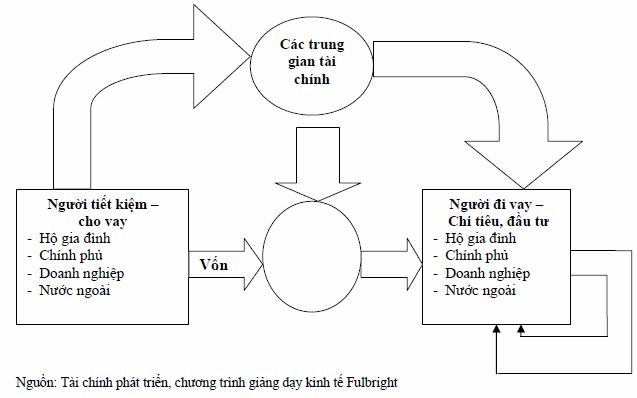
Figure 1.1 Flow diagram of savings and investment
According to the diagram above, we see that the sources to form investment capital include: domestic savings (savings of households, savings of businesses, savings of the Government) and foreign investment sources ( FDI, ODA and commercial loans). The financial system mediates only a portion of total national investment, as firms and households finance most of their investments directly from their own savings. The financial system has the role of transferring savings from surplus economic units to deficit units.
To have policies to attract investment capital for sustainable economic development, it is necessary to classify investment capital sources and properly evaluate the importance of each capital source. From the most general perspective within a country, investment capital is divided into two sources: domestic investment capital and foreign investment capital.
1.2.2.1. Domestic investment capital
Domestic capital represents the internal strength of a country. This capital source has the advantages of being sustainable, stable, low cost, minimizing risks and avoiding external consequences. Domestic capital sources include State capital, credit capital, capital of the private business sector and the population, mainly formed from savings sources in the economy.
Domestic savings are formed from the following areas:
- State budget savings: is the positive difference between total non-refundable revenues (mainly taxes) and total regular budget expenditures. Savings at this financial stage will form the state's investment capital. This means that the amount of financial income that the budget concentrates cannot immediately be considered a source of state investment capital, this also depends on the budget's spending policy. If the scale of consumption expenditure exceeds the amount of concentrated income, the state does not have the resources to create capital for investment.
For developing countries, because the economy's savings are limited by per capita income, to maintain economic growth and expand investment requires the state to increase economic growth. increase state budget savings, based on a combination of considering whether that policy will suppress the savings of businesses and people. Thus, to increase state budget savings, the economy must also pay a certain price due to the decrease in private sector savings. However, the decrease will not completely correspond to the increase in state budget savings if the budget savings are mainly realized by cutting budget consumption expenditures.
- Enterprise savings: is the net profit earned from business results. This is a basic source of savings for businesses to create capital for investment and development in breadth and depth. The size of a business's savings depends on direct factors such as business efficiency, tax policy, macroeconomic stability...
- Savings of households and social organizations (hereinafter referred to as the residential sector): is the remaining amount of income after distribution and use for consumption purposes. The scale of residential savings is influenced by direct factors such as the level of economic development, per capita income, interest rate policy, tax policy, macroeconomic stability...
In a market economy, the savings of the residential sector can be converted into capital for investment through forms such as depositing savings in credit institutions, buying securities on the financial market. , direct business investment... It can be said that residential savings hold a very important position in investment through the intermediary financial system. For example, if state budget savings do not meet investment spending needs, the State must look to this sector's savings capital to satisfy them by issuing Government bonds. Similarly, for the financial area
The same goes for businesses themselves, when there is a need for capital to expand business investment, through the financial market, businesses can mobilize savings from the residential sector in many diverse forms, such as developing issue stocks, bonds, borrow capital from credit institutions...
1.2.1.2. Sources of foreign investment capital
Compared with domestic capital, foreign capital has the advantage of supplementing investment capital for socio-economic development, thereby promoting economic and labor restructuring towards industrialization. - modernization, is an important bridge between the Vietnamese economy and the world economy, promoting businesses to improve competitiveness, innovate corporate governance methods as well as business methods; Many domestic resources such as labor, land, geo-economic advantages, and natural resources are exploited and used more effectively. In essence, foreign capital is also formed from savings of foreign economic entities and is mobilized through basic forms:
- Official development assistance (ODA):
ODA capital is a source of development capital provided by international organizations and foreign governments with the goal of assisting developing countries. ODA capital includes non-refundable aid, refundable aid or preferential credit from governments, United Nations organizations... ODA capital funded by governments is to promote economic growth. sustainable growth and poverty reduction in developing countries such as infrastructure construction, research investment... non-refundable elements of ODA loans of at least 25%, long loan period, volume Large loan, long grace period.
On the one hand, ODA is a source of additional capital for domestic capital for economic development, and on the other hand, it helps recipient countries quickly access modern scientific and technical achievements and technology. In addition, it facilitates the development of socio-economic infrastructure and human resource development training. However, aid-receiving countries often face huge challenges, including the burden of future national debt, accepting strict conditions and constraints on capital transfer procedures, and sometimes even including political conditions
- Foreign direct investment (FDI):
This is a source of capital from foreign investors bringing capital into a country to invest
directly by creating businesses. FDI has become a form of mobilization
Foreign capital mobilization is common in many developing countries when capital flows from developed countries seek investment opportunities abroad to increase income on the basis of exploiting comparative advantages between countries. family.
The main forms of FDI in our country are joint venture enterprises, 100% foreign-owned enterprises, and business cooperation contracts in the forms of BOT, BTO, and BT. Unlike ODA, FDI does not simply bring foreign currency into the host country, but is also accompanied by technology transfer, advanced management skills and the ability to access world markets, create jobs, and use financial resources. domestic raw materials…
Foreign direct investment is an important source of capital for development investment not only for poor countries but also for technologically developed countries. Foreign investment capital has a different characteristic from other capital sources in that receiving this capital does not incur debt for the receiving country. Instead of receiving interest on invested capital, investors will receive an appropriate profit when the project operates effectively. Foreign investment brings all business resources into the receiving country, so it can promote the development of new industries, especially those that require high technical, technological or capital requirements. Therefore, this source has an extremely great effect on the process of industrialization, economic restructuring and rapid growth of the investment recipient country.
However, foreign direct investment also has its downsides:
Firstly, FDI capital is essentially a debt, it is still not owned and controlled by the host country. In addition, investment recipient countries also suffer many disadvantages due to having to apply a number of incentives (such as incentives on corporate income tax, land rental prices, business location, resource exploitation rights... ) for investors are often charged higher prices than the international level for input factors by foreign investors, as well as being subject to the transfer of outdated technologies and techniques...
Second, foreign capital moving into the country increases the income of foreign capital in the domestic market and reduces the income of domestic capital. In essence, this is the redistribution of income from domestic capital to foreign capital, thus it can cause covert or overt conflicts in the relationship between domestic capital and foreign capital.
Third, foreign capital is invested heavily in resource exploitation, leading to a reduction in the long-term development ability of domestic capital. One of these
The motive of foreign investors is to exploit cheap and abundant natural resources in receiving countries. They can exploit it to bring it back to their home country for production or produce it into products right in their home country. There is another form of exploitation which is to exploit attractive tourist destinations that are available or in our potential form. But our resources are limited, if we continue to exploit them like that, we don't know how long it will take to run out. This will reduce the long-term development ability of domestic capital.
Fourth, market manipulation by foreign investors and imbalanced competition between domestic enterprises and foreign-invested enterprises can bankrupt domestic enterprises and cause unemployment.
Fifth, causing brain drain to foreign-invested areas: Foreign enterprises also compete with domestic enterprises in the field of attracting human resources because of salary, bonus and subsidy policies. Normally, due to many incentives and a better working environment, the majority of skilled people often work in foreign-invested enterprises. This has significantly reduced talent for the domestic sector, contributing to reducing the sector's ability to develop.
Sixth, increasing environmental pollution: the goal of foreign businesses is to recover capital quickly and gain a lot of profits, so it will increase environmental pollution due to the use of outdated technology and not interested in investing in waste treatment technology.
1.2.1.3. The relationship between domestic and foreign capital
With the above division, we need to consider the relationship between these two sources of capital for economic growth and development. For poor countries, in order to develop economically, and from there to get out of difficulties, a difficult problem from the beginning is the severe lack of capital and that leads to a lack of many other things necessary for development such as technology, infrastructure... Therefore, in the initial steps, to create the first push for development, to get initial domestic accumulation for investment in economic development, it is impossible Do not mobilize capital from abroad. There is no underdeveloped country on the path of development that does not take advantage of foreign investment capital, especially in the context of an open economy. However, the technical facilities are needed to be able to absorb and promote the effectiveness of investment capital