
Pay attention to attracting investment projects to develop infrastructure of industrial parks and transportation (Van Don airport, Mong Duong-Mong Cai highway); prepare to develop industrial parks associated with the Hanoi-Ha Long-Mong Cai highway to serve the period after 2010.
Regarding tourism and services: Large-scale projects to build tourism infrastructure and create new tourism products; high-end tourism projects; eco-tourism and adventure tourism service projects; tourist transportation service projects.
Resolution 06 NQ/TU, plan 08/KH_UB have set out the targets for foreign direct investment activities that the industrial park has achieved:
* By 2010:
Maybe you are interested!
-
 Identify Rating Levels and Rating Scales
zt2i3t4l5ee
zt2a3gstourism,quan lan,quang ninh,ecology,ecotourism,minh chau,van don,geography,geographical basis,tourism development,science
zt2a3ge
zc2o3n4t5e6n7ts
of the islanders. Therefore, this indicator will be divided into two sub-indicators:
a1. Natural tourism attractiveness a2. Cultural tourism attractiveness
b. Tourist capacity
The two island communes in Quan Lan have different capacities to receive tourists. Minh Chau Commune is home to many standard hotels and resorts, attracting high-income domestic and international tourists. Meanwhile, Quan Lan Commune has many motels mainly built and operated by local people, so the scale and quality are not high, and will be suitable for ordinary tourists such as students.
c. Time of exploitation of Quan Lan Island Commune:
Quan Lan tourism is seasonal due to weather and climate conditions and festivals only take place on certain days of the year, specifically in spring. In Quan Lan commune, the period from April to June and from September to November is considered the best time to visit Quan Lan because the cultural tourism activities are mainly associated with festivals taking place during this time.
Minh Chau island commune:
Tourism exploitation time is all year round, because this is a place with a number of tourist attractions with diverse ecosystems such as Bai Tu Long National Park Research Center, Tram forest, Turtle Laying Beach, so besides coming to the beach for tourism and vacation in the summer, Minh Chau will attract research groups to come for tourism combined with research at other times of the year.
d. Sustainability
The sustainability of ecotourism sites in Quan Lan and Minh Chau communes depends on the sensitivity of the ecosystems to climate changes.
landscape. In general, these tourist destinations have a fairly high level of sustainability, because they are natural ecosystems, planned and protected. However, if a large number of tourists gather at certain times, it can exceed the carrying capacity and affect the sustainability of the environment (polluted beaches, damaged trees, animals moving away from their habitats, etc.), then the sustainability of the above ecosystems (natural ecosystems, human ecosystems) will also be affected and become less sustainable.
e. Location and accessibility
Both island communes have ports to take tourists to visit from Van Don wharf:
- Quan Lan – Van Don traffic route:
Phuc Thinh – Viet Anh high-speed boat and Quang Minh high-speed boat, depart at 8am and 2pm from Van Don to Quan Lan, and at 7am and 1pm from Quan Lan to Van Don. There are also wooden boats departing at 7am and 1pm.
- Van Don - Minh Chau traffic route:
Chung Huong high-speed train, Minh Chau train, morning 7:30 and afternoon 13:30 from Van Don to Minh Chau, morning 6:30 and afternoon 13:00 from Minh Chau to Van Don.
f. Infrastructure
Despite receiving investment attention, the issue of infrastructure and technical facilities for tourism on Quan Lan Island is still an issue that needs to be resolved because it has a direct impact on the implementation of ecotourism activities. The minimum conditions for serving tourists such as accommodation, electricity, water, communication, especially medical services, and security work need to be given top priority. Ecotourism spots in Minh Chau commune are assessed to have better infrastructure and technical facilities for tourism because there are quite complete and synchronous conditions for serving tourists, meeting many needs of domestic and foreign tourists.
3.2.1.4. Determine assessment levels and assessment scales
Corresponding to the levels of each criterion, the index is the score of those levels in the order of 4, 3, 2, 1 decreasing according to the standard of each level: very attractive (4), attractive (3), average (2), less attractive (1).
3.2.1.5. Determining the coefficients of the criteria
For the assessment of DLST in the two communes of Quan Lan and Minh Chau islands, the students added evaluation coefficients to show the importance of the criteria and indicators as follows:
Coefficient 3 with criteria: Attractiveness, Exploitation time. These are the 2 most important criteria for attracting tourists to tourism in general and eco-tourism in particular, so they have the highest coefficient.
Coefficient 2 with criteria: Capacity, Infrastructure, Location and accessibility . Because the assessment area is an island commune of Van Don district, the above criteria are selected by the author with appropriate coefficients at the average level.
Coefficient 1 with criteria: Sustainability. Quan Lan has natural and human-made ecotourism sites, with high biodiversity and little impact from local human factors. Most of the ecotourism sites are still wild, so they are highly sustainable.
3.2.1.6. Results of DLST assessment on Quan Lan island
a. Assessment of the potential for natural tourism development
For Minh Chau commune:
+ Natural tourism attractiveness is determined to be very attractive (4 points) and the most important coefficient (coefficient 3), so the score of the Attractiveness criterion is 4 x 3 = 12.
+ Capacity is determined as average (2 points) and the coefficient is quite important (coefficient 2), then the score of Capacity criterion is 2 x 2 = 4.
+ Exploitation time is long (4 points), the most important coefficient (coefficient 3) so the score of the Exploitation time criterion is 4 x 3 = 12.
+ Sustainability is determined as sustainable (4 points), the important coefficient is the average coefficient (coefficient 1), so the score of the Sustainability criterion is 4 x 1 = 4 points
+ Location and accessibility are determined to be quite favorable (2 points), the coefficient is quite important (coefficient 2), the criterion score is 2 x 2 = 4 points.
+ Infrastructure is assessed as good (3 points), the coefficient is quite important (coefficient 2), then the score of the Infrastructure criterion is 3 x 2 = 6 points.
The total score for evaluating DLST in Minh Chau commune according to 6 evaluation criteria is determined as: 12 + 4 + 12 + 4 + 4 + 6 = 42 points
Similar assessment for Quan Lan commune, we have the following table:
Table 3.3: Assessment of the potential for natural ecotourism development in Quan Lan and Minh Chau communes
Attractiveness of self-tourismof course
Capacity
Mining time
Sustainability
Location and accessibility
Infrastructure
Result
Point
DarkMulti
Point
DarkMulti
Point
DarkMulti
Point
DarkMulti
Point
DarkMulti
Point
DarkMulti
CommuneMinh Chau
12
12
4
8
12
12
4
4
4
8
6
8
42/52
Quan CommuneLan
6
12
6
8
9
12
4
4
4
8
4
8
33/52
b. Assessment of the potential for humanistic tourism development
For Quan Lan commune:
+ The attractiveness of human tourism is determined to be very attractive (4 points) and the most important coefficient (coefficient 3), so the score of the Attractiveness criterion is 4 x 3 = 12.
+ Capacity is determined to be large (3 points) and the coefficient is quite important (coefficient 2), then the score of the Capacity criterion is 3 x 2 = 6.
+ Mining time is average (3 points), the most important coefficient (coefficient 3) so the score of the Mining time criterion is 3 x 3 = 9.
+ Sustainability is determined as sustainable (4 points), the important coefficient is the average coefficient (coefficient 1), so the score of the Sustainability criterion is 4 x 1 = 4 points.
+ Location and accessibility are determined to be quite favorable (2 points), the coefficient is quite important (coefficient 2), the criterion score is 2 x 2 = 4 points.
+ Infrastructure is rated as average (2 points), the coefficient is quite important (coefficient 2), then the score of the Infrastructure criterion is 2 x 2 = 4 points.
The total score for evaluating DLST in Quan Lan commune according to 6 evaluation criteria is determined as: 12 + 6 + 6 + 4 + 4 + 4 = 36 points.
Similar assessment with Minh Chau commune we have the following table:
Table 3.4: Assessment of the potential for developing humanistic eco-tourism in Quan Lan and Minh Chau communes
Attractiveness of human tourismliterature
Capacity
Mining time
Sustainability
Location and accessibility
Infrastructure
Result
Point
DarkMulti
Point
DarkMulti
Point
DarkMulti
Point
DarkMulti
Point
DarkMulti
Point
DarkMulti
Quan CommuneLan
12
12
6
8
9
12
4
4
4
8
4
8
39/52
Minh CommuneChau
6
12
4
8
12
12
4
4
4
8
6
8
36/52
Basically, both Minh Chau and Quan Lan localities have quite favorable conditions for developing ecotourism. However, Quan Lan commune has more advantages to develop ecotourism in a humanistic direction, because this is an area with many famous historical relics such as Quan Lan Communal House, Quan Lan Pagoda, Temple worshiping the hero Tran Khanh Du, ... along with local festivals held annually such as the wind praying ceremony (March 15), Quan Lan festival (June 10-19); due to its location near the port and long exploitation time, the beaches in Quan Lan commune (especially Quan Lan beach) are no longer hygienic and clean to ensure the needs of tourists coming to relax and swim; this is also an area with many beautiful landscapes such as Got Beo wind pass, Ong Phong head, Voi Voi cave, but the ability to access these places is still very limited (dirt hill road, lots of gravel and rocks), especially during rainy and windy times; In addition, other natural resources such as mangrove forests and sea worms have not been really exploited for tourism purposes and ecotourism development. On the contrary, Minh Chau commune has more advantages in developing ecotourism in the direction of natural tourism, this is an area with diverse ecosystems such as at Rua De Beach, Bai Tu Long National Park Conservation Center...; Minh Chau beach is highly appreciated for its natural beauty and cleanliness, ranked in the top ten most beautiful beaches in Vietnam; Minh Chau commune is also home to Tram forest with a large area and a purity of up to 90%, suitable for building bridges through the forest (a very effective type of natural ecotourism currently applied by many countries) for tourists to sightsee, as well as for the purpose of studying and researching.
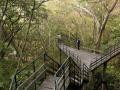
Figure 3.1: Thenmala Forest Bridge (India) Source: https://www.thenmalaecotourism.com/(August 21, 2019)
3.2.2. Using SWOT matrix to evaluate Quan Lan island tourism
General assessment of current tourism activities of Quan Lan island is shown through the following SWOT matrix:
Table 3.5: SWOT matrix evaluating tourism activities on Quan Lan island
Internal agent
Strengths- There is a lot of potential for tourism development, especially natural ecotourism and humanistic ecotourism.- The unskilled labor force is relatively abundant.- resource environmentunpolluted, still
Weaknesses- Poorly developed infrastructure, especially traffic routes to tourist destinations on the island.- The team of professional staff is still weak.- Tourism products in general
quite wild, originalintact
general and DLST in particularalone is monotonous.
External agents
Opportunity- Tourism is a key industry in the socio-economic development strategy of the province and Van Don economic zone.- Quan Lan was selected as a pilot area for eco-tourism development within the framework of the green growth project between Quang Ninh province and the Japanese organization JICA.- The flow of tourists and especially ecotourism in the world tends toincreasing
Challenge- Weather and climate change abnormally.- Competition in tourism products is increasingly fierce, especially with other localities in the province such as Ha Long, Mong Cai...- Awareness of tourists, especially domestic tourists, about ecotourism and nature conservation is not high.
Through summary analysis using SWOT matrix we see that:
To exploit strengths and take advantage of opportunities, it is necessary to:
- Diversify products and service types (build more tourism routes aimed at specific needs of tourists: experiential tourism immersed in nature, spiritual cultural tourism...)
- Effective exploitation of resources and differentiated products (natural resources and human resources)
div.maincontent .p { color: black; font-family:"Times New Roman", serif; font-style: normal; font-weight: normal; text-decoration: none; font-size: 14pt; margin:0pt; } div.maincontent p { color: black; font-family:"Times New Roman", serif; font-style: normal; font-weight: normal; text-decoration: none; font-size: 14pt; margin:0pt; } div.maincontent .s1 { color: black; font-family:"Times New Roman", serif; font-style: normal; font-weight: normal; text-decoration: none; font-size: 13pt; } div.maincontent .s2 { color: black; font-family:"Times New Roman", serif; font-style: normal; font-weight: normal; text-decoration: none; font-size: 13pt; } div.maincontent .s3 { color: #0D0D0D; font-family:"Times New Roman", serif; font-style: normal; font-weight: bold; text-decoration: none; font-size: 14pt; } div.maincontent .s4 { color: black; font-family:"Times New Roman", serif; font-style: italic; font-weight: normal; text-decoration: none; font-size: 14pt; } div.maincontent .s5 { color: black; font-family:"Times New Roman", serif; font-style: italic; font-weight: bold; text-decoration: none; font-size: 14pt; } div.maincontent .s6 { color: black; font-family:"Times New Roman", serif; font-style: italic; font-weight: normal; text-decoration: none; font-size: 14pt; vertical-align: -3pt; } div.maincontent .s7 { color: black; font-family:"Times New Roman", serif; font-style: italic; font-weight: normal; text-decoration: none; font-size: 14pt; vertical-align: -2pt; } div.maincontent .s8 { color: black; font-family:"Times New Roman", serif; font-style: italic; font-weight: normal; text-decoration: none; font-size: 14pt; vertical-align: -1pt; } div.maincontent .s9 { color: black; font-family:"Times New Roman", serif; font-style: normal; font-weight: normal; text-decoration: none; font-size: 14pt; } div.maincontent .s10 { color: black; font-family:"Times New Roman", serif; font-style: normal; font-weight: bold; text-decoration: none; font-size: 14pt; } div.maincontent .s11 { color: black; font-family:"Times New Roman", serif; font-style: normal; font-weight: normal; text-decoration: none; font-size: 14pt; } div.maincontent .s12 { color: black; font-family:Symbol, serif; font-style: normal; font-weight: normal; text-decoration: none; font-size: 14pt; } div.maincontent .s13 { color: black; font-family:Wingdings; font-style: normal; font-weight: normal; text-decoration: none; font-size: 14pt; } div.maincontent .s14 { color: black; font-family:"Times New Roman", serif; font-style: normal; font-weight: normal; text-decoration: none; font-size: 9pt; vertical-align: 5pt; } div.maincontent .s15 { color: black; font-family:"Times New Roman", serif; font-style: normal; font-weight: normal; text-decoration: none; font-size: 9pt; vertical-align: 5pt; } div.maincontent .s16 { color: black; font-family:Cambria, serif; font-style: italic; font-weight: normal; text-decoration: none; font-size: 14pt; } div.maincontent .s17 { color: #080808; font-family:"Times New Roman", serif; font-style: normal; font-weight: bold; text-decoration: none; font-size: 14pt; } div.maincontent .s18 { color: #080808; font-family:"Times New Roman", serif; font-style: normal; font-weight: normal; text-decoration: none; font-size: 14pt; } div.maincontent .s19 { color: black; font-family:"Times New Roman", serif; font-style: normal; font-weight: normal; text-decoration: none; font-size: 11pt; } div.maincontent .s20 { color: black; font-family:"Times New Roman", serif; font-style: normal; font-weight: normal; text-decoration: none; font-size: 10pt; } div.maincontent .s21 { color: black; font-family:"Times New Roman", serif; font-style: normal; font-weight: bold; text-decoration: none; font-size: 11pt; } div.maincontent .s22 { color: black; font-family:"Times New Roman", serif; font-style: normal; font-weight: normal; text-decoration: none; font-size: 11pt; } div.maincontent .s23 { color: black; font-family:"Times New Roman", serif; font-style: italic; font-weight: normal; text-decoration: none; font-size: 14pt; } div.maincontent .s24 { color: #212121; font-family:"Times New Roman", serif; font-style: normal; font-weight: normal; tex
Identify Rating Levels and Rating Scales
zt2i3t4l5ee
zt2a3gstourism,quan lan,quang ninh,ecology,ecotourism,minh chau,van don,geography,geographical basis,tourism development,science
zt2a3ge
zc2o3n4t5e6n7ts
of the islanders. Therefore, this indicator will be divided into two sub-indicators:
a1. Natural tourism attractiveness a2. Cultural tourism attractiveness
b. Tourist capacity
The two island communes in Quan Lan have different capacities to receive tourists. Minh Chau Commune is home to many standard hotels and resorts, attracting high-income domestic and international tourists. Meanwhile, Quan Lan Commune has many motels mainly built and operated by local people, so the scale and quality are not high, and will be suitable for ordinary tourists such as students.
c. Time of exploitation of Quan Lan Island Commune:
Quan Lan tourism is seasonal due to weather and climate conditions and festivals only take place on certain days of the year, specifically in spring. In Quan Lan commune, the period from April to June and from September to November is considered the best time to visit Quan Lan because the cultural tourism activities are mainly associated with festivals taking place during this time.
Minh Chau island commune:
Tourism exploitation time is all year round, because this is a place with a number of tourist attractions with diverse ecosystems such as Bai Tu Long National Park Research Center, Tram forest, Turtle Laying Beach, so besides coming to the beach for tourism and vacation in the summer, Minh Chau will attract research groups to come for tourism combined with research at other times of the year.
d. Sustainability
The sustainability of ecotourism sites in Quan Lan and Minh Chau communes depends on the sensitivity of the ecosystems to climate changes.
landscape. In general, these tourist destinations have a fairly high level of sustainability, because they are natural ecosystems, planned and protected. However, if a large number of tourists gather at certain times, it can exceed the carrying capacity and affect the sustainability of the environment (polluted beaches, damaged trees, animals moving away from their habitats, etc.), then the sustainability of the above ecosystems (natural ecosystems, human ecosystems) will also be affected and become less sustainable.
e. Location and accessibility
Both island communes have ports to take tourists to visit from Van Don wharf:
- Quan Lan – Van Don traffic route:
Phuc Thinh – Viet Anh high-speed boat and Quang Minh high-speed boat, depart at 8am and 2pm from Van Don to Quan Lan, and at 7am and 1pm from Quan Lan to Van Don. There are also wooden boats departing at 7am and 1pm.
- Van Don - Minh Chau traffic route:
Chung Huong high-speed train, Minh Chau train, morning 7:30 and afternoon 13:30 from Van Don to Minh Chau, morning 6:30 and afternoon 13:00 from Minh Chau to Van Don.
f. Infrastructure
Despite receiving investment attention, the issue of infrastructure and technical facilities for tourism on Quan Lan Island is still an issue that needs to be resolved because it has a direct impact on the implementation of ecotourism activities. The minimum conditions for serving tourists such as accommodation, electricity, water, communication, especially medical services, and security work need to be given top priority. Ecotourism spots in Minh Chau commune are assessed to have better infrastructure and technical facilities for tourism because there are quite complete and synchronous conditions for serving tourists, meeting many needs of domestic and foreign tourists.
3.2.1.4. Determine assessment levels and assessment scales
Corresponding to the levels of each criterion, the index is the score of those levels in the order of 4, 3, 2, 1 decreasing according to the standard of each level: very attractive (4), attractive (3), average (2), less attractive (1).
3.2.1.5. Determining the coefficients of the criteria
For the assessment of DLST in the two communes of Quan Lan and Minh Chau islands, the students added evaluation coefficients to show the importance of the criteria and indicators as follows:
Coefficient 3 with criteria: Attractiveness, Exploitation time. These are the 2 most important criteria for attracting tourists to tourism in general and eco-tourism in particular, so they have the highest coefficient.
Coefficient 2 with criteria: Capacity, Infrastructure, Location and accessibility . Because the assessment area is an island commune of Van Don district, the above criteria are selected by the author with appropriate coefficients at the average level.
Coefficient 1 with criteria: Sustainability. Quan Lan has natural and human-made ecotourism sites, with high biodiversity and little impact from local human factors. Most of the ecotourism sites are still wild, so they are highly sustainable.
3.2.1.6. Results of DLST assessment on Quan Lan island
a. Assessment of the potential for natural tourism development
For Minh Chau commune:
+ Natural tourism attractiveness is determined to be very attractive (4 points) and the most important coefficient (coefficient 3), so the score of the Attractiveness criterion is 4 x 3 = 12.
+ Capacity is determined as average (2 points) and the coefficient is quite important (coefficient 2), then the score of Capacity criterion is 2 x 2 = 4.
+ Exploitation time is long (4 points), the most important coefficient (coefficient 3) so the score of the Exploitation time criterion is 4 x 3 = 12.
+ Sustainability is determined as sustainable (4 points), the important coefficient is the average coefficient (coefficient 1), so the score of the Sustainability criterion is 4 x 1 = 4 points
+ Location and accessibility are determined to be quite favorable (2 points), the coefficient is quite important (coefficient 2), the criterion score is 2 x 2 = 4 points.
+ Infrastructure is assessed as good (3 points), the coefficient is quite important (coefficient 2), then the score of the Infrastructure criterion is 3 x 2 = 6 points.
The total score for evaluating DLST in Minh Chau commune according to 6 evaluation criteria is determined as: 12 + 4 + 12 + 4 + 4 + 6 = 42 points
Similar assessment for Quan Lan commune, we have the following table:
Table 3.3: Assessment of the potential for natural ecotourism development in Quan Lan and Minh Chau communes
Attractiveness of self-tourismof course
Capacity
Mining time
Sustainability
Location and accessibility
Infrastructure
Result
Point
DarkMulti
Point
DarkMulti
Point
DarkMulti
Point
DarkMulti
Point
DarkMulti
Point
DarkMulti
CommuneMinh Chau
12
12
4
8
12
12
4
4
4
8
6
8
42/52
Quan CommuneLan
6
12
6
8
9
12
4
4
4
8
4
8
33/52
b. Assessment of the potential for humanistic tourism development
For Quan Lan commune:
+ The attractiveness of human tourism is determined to be very attractive (4 points) and the most important coefficient (coefficient 3), so the score of the Attractiveness criterion is 4 x 3 = 12.
+ Capacity is determined to be large (3 points) and the coefficient is quite important (coefficient 2), then the score of the Capacity criterion is 3 x 2 = 6.
+ Mining time is average (3 points), the most important coefficient (coefficient 3) so the score of the Mining time criterion is 3 x 3 = 9.
+ Sustainability is determined as sustainable (4 points), the important coefficient is the average coefficient (coefficient 1), so the score of the Sustainability criterion is 4 x 1 = 4 points.
+ Location and accessibility are determined to be quite favorable (2 points), the coefficient is quite important (coefficient 2), the criterion score is 2 x 2 = 4 points.
+ Infrastructure is rated as average (2 points), the coefficient is quite important (coefficient 2), then the score of the Infrastructure criterion is 2 x 2 = 4 points.
The total score for evaluating DLST in Quan Lan commune according to 6 evaluation criteria is determined as: 12 + 6 + 6 + 4 + 4 + 4 = 36 points.
Similar assessment with Minh Chau commune we have the following table:
Table 3.4: Assessment of the potential for developing humanistic eco-tourism in Quan Lan and Minh Chau communes
Attractiveness of human tourismliterature
Capacity
Mining time
Sustainability
Location and accessibility
Infrastructure
Result
Point
DarkMulti
Point
DarkMulti
Point
DarkMulti
Point
DarkMulti
Point
DarkMulti
Point
DarkMulti
Quan CommuneLan
12
12
6
8
9
12
4
4
4
8
4
8
39/52
Minh CommuneChau
6
12
4
8
12
12
4
4
4
8
6
8
36/52
Basically, both Minh Chau and Quan Lan localities have quite favorable conditions for developing ecotourism. However, Quan Lan commune has more advantages to develop ecotourism in a humanistic direction, because this is an area with many famous historical relics such as Quan Lan Communal House, Quan Lan Pagoda, Temple worshiping the hero Tran Khanh Du, ... along with local festivals held annually such as the wind praying ceremony (March 15), Quan Lan festival (June 10-19); due to its location near the port and long exploitation time, the beaches in Quan Lan commune (especially Quan Lan beach) are no longer hygienic and clean to ensure the needs of tourists coming to relax and swim; this is also an area with many beautiful landscapes such as Got Beo wind pass, Ong Phong head, Voi Voi cave, but the ability to access these places is still very limited (dirt hill road, lots of gravel and rocks), especially during rainy and windy times; In addition, other natural resources such as mangrove forests and sea worms have not been really exploited for tourism purposes and ecotourism development. On the contrary, Minh Chau commune has more advantages in developing ecotourism in the direction of natural tourism, this is an area with diverse ecosystems such as at Rua De Beach, Bai Tu Long National Park Conservation Center...; Minh Chau beach is highly appreciated for its natural beauty and cleanliness, ranked in the top ten most beautiful beaches in Vietnam; Minh Chau commune is also home to Tram forest with a large area and a purity of up to 90%, suitable for building bridges through the forest (a very effective type of natural ecotourism currently applied by many countries) for tourists to sightsee, as well as for the purpose of studying and researching.
Figure 3.1: Thenmala Forest Bridge (India) Source: https://www.thenmalaecotourism.com/(August 21, 2019)
3.2.2. Using SWOT matrix to evaluate Quan Lan island tourism
General assessment of current tourism activities of Quan Lan island is shown through the following SWOT matrix:
Table 3.5: SWOT matrix evaluating tourism activities on Quan Lan island
Internal agent
Strengths- There is a lot of potential for tourism development, especially natural ecotourism and humanistic ecotourism.- The unskilled labor force is relatively abundant.- resource environmentunpolluted, still
Weaknesses- Poorly developed infrastructure, especially traffic routes to tourist destinations on the island.- The team of professional staff is still weak.- Tourism products in general
quite wild, originalintact
general and DLST in particularalone is monotonous.
External agents
Opportunity- Tourism is a key industry in the socio-economic development strategy of the province and Van Don economic zone.- Quan Lan was selected as a pilot area for eco-tourism development within the framework of the green growth project between Quang Ninh province and the Japanese organization JICA.- The flow of tourists and especially ecotourism in the world tends toincreasing
Challenge- Weather and climate change abnormally.- Competition in tourism products is increasingly fierce, especially with other localities in the province such as Ha Long, Mong Cai...- Awareness of tourists, especially domestic tourists, about ecotourism and nature conservation is not high.
Through summary analysis using SWOT matrix we see that:
To exploit strengths and take advantage of opportunities, it is necessary to:
- Diversify products and service types (build more tourism routes aimed at specific needs of tourists: experiential tourism immersed in nature, spiritual cultural tourism...)
- Effective exploitation of resources and differentiated products (natural resources and human resources)
div.maincontent .p { color: black; font-family:"Times New Roman", serif; font-style: normal; font-weight: normal; text-decoration: none; font-size: 14pt; margin:0pt; } div.maincontent p { color: black; font-family:"Times New Roman", serif; font-style: normal; font-weight: normal; text-decoration: none; font-size: 14pt; margin:0pt; } div.maincontent .s1 { color: black; font-family:"Times New Roman", serif; font-style: normal; font-weight: normal; text-decoration: none; font-size: 13pt; } div.maincontent .s2 { color: black; font-family:"Times New Roman", serif; font-style: normal; font-weight: normal; text-decoration: none; font-size: 13pt; } div.maincontent .s3 { color: #0D0D0D; font-family:"Times New Roman", serif; font-style: normal; font-weight: bold; text-decoration: none; font-size: 14pt; } div.maincontent .s4 { color: black; font-family:"Times New Roman", serif; font-style: italic; font-weight: normal; text-decoration: none; font-size: 14pt; } div.maincontent .s5 { color: black; font-family:"Times New Roman", serif; font-style: italic; font-weight: bold; text-decoration: none; font-size: 14pt; } div.maincontent .s6 { color: black; font-family:"Times New Roman", serif; font-style: italic; font-weight: normal; text-decoration: none; font-size: 14pt; vertical-align: -3pt; } div.maincontent .s7 { color: black; font-family:"Times New Roman", serif; font-style: italic; font-weight: normal; text-decoration: none; font-size: 14pt; vertical-align: -2pt; } div.maincontent .s8 { color: black; font-family:"Times New Roman", serif; font-style: italic; font-weight: normal; text-decoration: none; font-size: 14pt; vertical-align: -1pt; } div.maincontent .s9 { color: black; font-family:"Times New Roman", serif; font-style: normal; font-weight: normal; text-decoration: none; font-size: 14pt; } div.maincontent .s10 { color: black; font-family:"Times New Roman", serif; font-style: normal; font-weight: bold; text-decoration: none; font-size: 14pt; } div.maincontent .s11 { color: black; font-family:"Times New Roman", serif; font-style: normal; font-weight: normal; text-decoration: none; font-size: 14pt; } div.maincontent .s12 { color: black; font-family:Symbol, serif; font-style: normal; font-weight: normal; text-decoration: none; font-size: 14pt; } div.maincontent .s13 { color: black; font-family:Wingdings; font-style: normal; font-weight: normal; text-decoration: none; font-size: 14pt; } div.maincontent .s14 { color: black; font-family:"Times New Roman", serif; font-style: normal; font-weight: normal; text-decoration: none; font-size: 9pt; vertical-align: 5pt; } div.maincontent .s15 { color: black; font-family:"Times New Roman", serif; font-style: normal; font-weight: normal; text-decoration: none; font-size: 9pt; vertical-align: 5pt; } div.maincontent .s16 { color: black; font-family:Cambria, serif; font-style: italic; font-weight: normal; text-decoration: none; font-size: 14pt; } div.maincontent .s17 { color: #080808; font-family:"Times New Roman", serif; font-style: normal; font-weight: bold; text-decoration: none; font-size: 14pt; } div.maincontent .s18 { color: #080808; font-family:"Times New Roman", serif; font-style: normal; font-weight: normal; text-decoration: none; font-size: 14pt; } div.maincontent .s19 { color: black; font-family:"Times New Roman", serif; font-style: normal; font-weight: normal; text-decoration: none; font-size: 11pt; } div.maincontent .s20 { color: black; font-family:"Times New Roman", serif; font-style: normal; font-weight: normal; text-decoration: none; font-size: 10pt; } div.maincontent .s21 { color: black; font-family:"Times New Roman", serif; font-style: normal; font-weight: bold; text-decoration: none; font-size: 11pt; } div.maincontent .s22 { color: black; font-family:"Times New Roman", serif; font-style: normal; font-weight: normal; text-decoration: none; font-size: 11pt; } div.maincontent .s23 { color: black; font-family:"Times New Roman", serif; font-style: italic; font-weight: normal; text-decoration: none; font-size: 14pt; } div.maincontent .s24 { color: #212121; font-family:"Times New Roman", serif; font-style: normal; font-weight: normal; tex -
 Strengthening the attraction of foreign direct investment (FDI) into Nghe An province - 26
 -
 Assessing the Impact of FDI Capital Flows on the Socio-Economic Development of Quang Ninh
 -
 Foreign Direct Investment in Quang Ninh - 1
 -
 Local marketing to attract foreign direct investment FDI in Quang Nam province - 2
- Registered foreign direct investment capital: 1,200 million USD. Achieved the following targets:
+ Annual industrial production value increases by 15 - 16%.

+ Annual export turnover increases by 16 - 18%.
+ Annual local budget contribution increases by 18 - 20%.
+ Create jobs for 18,000 - 20,000 workers.
3.2. PROSPECTS OF FDI ATTRACTION IN QUANG NINH IN THE PROCESS OF INTERNATIONAL ECONOMIC INTEGRATION.
In the coming time, it is assessed that there will be many favorable conditions for investment activities, including the birth of the General Investment Law and the Unified Enterprise Law. These two legal documents have the common goal of continuing to innovate the legal system to meet the international economic integration process according to our State's commitment to the international community and to promote administrative procedure reform, creating a more open investment environment.
In addition, according to domestic and foreign experts, 2006 was the year of the beginning of a new wave of investment in Vietnam, which is considered a country with a stable investment environment and great potential. Particularly for Quang Ninh, after the project to establish and plan the integrated industrial parks was approved by the Government,
The economic zones will be attractive investment locations for foreign investors. The completion of important infrastructure projects (including Bai Chay bridge and industrial parks) will create more favorable conditions for investment activities.
The results of the 20-year renovation process have created for Quang Ninh province great material foundations in terms of social infrastructure, and the staff has gained more practical experience. Quang Ninh is located in the Northern key economic region and in the ASEAN-China economic corridor, receiving special attention from the Party and the State.
The economic cooperation between the Quang Ninh provincial government and the Guangxi provincial government of China in many fields has been promoted and achieved many positive results.
In particular, Vietnam has become an official member of the WTO. Vietnam must create a more open and transparent legal environment, and this is one of the conditions to attract more foreign investors to Vietnam.
3.3. SOME SOLUTIONS TO ATTRACT AND EFFECTIVELY USE FOREIGN DIRECT INVESTMENT CAPITAL FLOWS IN QUANG NINH
3.3.1. Solutions to attract FDI capital from Quang Ninh
* Carry out planning work well, especially allocating reasonable land funds to call for important projects, projects in the encouraged and especially encouraged investment categories, and carry out investment licensing in compliance with the proposed planning and land use plans .
Recently, there have been a number of foreign investors coming to Quang Ninh to learn about investing in some projects in the fields of metallurgy, stainless steel production, and wood products for export. These projects all have quite large capital, high-tech production lines, however, investors have encountered difficulties and the above projects have not been further promoted to be granted investment licenses. The main reason is that investors have to give up their intentions or find other places to invest.
This is because Quang Ninh is lacking a lot of land for project implementation. On the other hand, industrial projects require a very large land area. Places with land funds do not have or lack technical infrastructure and social infrastructure outside the fence. This is a huge contradiction in Quang Ninh, on the one hand, calling for investment, but on the other hand, the land is not ready for projects. Therefore, the province needs to have a plan to create and use land funds effectively to immediately meet the needs of investors when investors need it, creating favorable conditions for investors when choosing investment locations.
For priority industries calling for investment in the industrial sector, there must be a clear and complete industry development plan that is suitable for modernity and towards the future. Plan and arrange industries in accordance with available potential, in accordance with natural resources to exploit these advantages to the maximum efficiency.
One of the important solutions in developing land funds for projects is to invest in developing industrial parks in the province. This is an inevitable direction to ensure the goal of reasonable land funds, linking economic development with sustainable environmental protection. Projects in industrial parks and export processing zones ensure easy and convenient state management, simplify administrative procedures for investors, save costs on infrastructure investment, manage well in terms of planning and save on land. In addition, it also ensures the sustainability of projects in industrial parks.
Implement the goal of preparing land for production projects according to the principle of creating "clean" land funds to call for investment. The Management Board of Industrial Zones and Foreign Investment has proposed to the Provincial People's Committee a plan to develop concentrated industrial zones until 2010; orient the planning for the development of industrial zones - economic zones in 2010 - 2020; Organize the implementation of investment in technical infrastructure works outside the fence and industrial zones of Viet Hung, Dong Mai, Hai Yen and Chap Khe.
For Tourism, Agriculture-Forestry-Fisheries projects: Propose that the Provincial People's Committee direct sectors and localities to develop a good overall planning for sector development.
and reserve land for large projects. The Management Board of Foreign Investment Industrial Parks will contact and coordinate with sectors and localities to call for projects that are suitable for the planning of each sector and each locality.
* Infrastructure support, good implementation of site clearance for licensed projects and other incentives: selection of industrial park infrastructure investors.
For projects to be implemented smoothly, the most important thing is the accompanying technical infrastructure (roads, electricity, water, etc.). The Provincial People's Committee issued Decision 3467/2002/QD-UB dated September 30, 2002, on a number of mechanisms to encourage and guarantee foreign investment. It stated a number of types of projects and scales that the Provincial People's Committee guarantees to invest in infrastructure works up to the fence of the project. Regarding the subjects and support processes, it is necessary to re-study so that good support for the project is ensured, both ensuring support for the project and ensuring both economic and social efficiency, avoiding the situation of investment taking advantage of budget sources to reduce investment costs while the efficiency of the project is low.
Currently in Quang Ninh, some projects need to be invested or accelerated: Bai Chay Bridge, Mong Duong - Mong Cai Expressway; railway connecting from Dong Canal to Cai Lan Port; Van Don Airport. These projects, when completed, will increase their attractiveness to investors, helping investment enterprises in general and FDI enterprises in particular reduce many investment costs and production and business costs.
For investment projects in industrial zones, investment in accompanying social infrastructure is also very necessary. That is the construction of housing areas for workers to rent; construction of entertainment centers, development of school systems, medical stations. This is a great lesson learned through the development of industrial zones in some southern provinces such as Dong Nai, Binh Duong.
Regarding the current incentive mechanism for investors in industrial park infrastructure business, the policy of supporting industrial park investors with compensation costs for site clearance is not feasible and needs to be recalculated. For example, according to preliminary calculations, the compensation costs for the four industrial parks of Dong Mai, Viet Hung, Hai Yen, and Chap Khe are 170
billion VND. That is a very large number, the budget is difficult to balance. To solve this problem, there must be appropriate policies to ensure incentives for investors and to be consistent with general policies and specific local conditions in the direction of:
Support 30-50% of site clearance compensation costs;
Increase the exemption period or completely exempt land rent for industrial park infrastructure investors.
Reduce or exempt part of the land use fee for the business area of the urban service area accompanying the industrial park, and do not collect land rent for the area where the apartment building serving the industrial park is built.
No land use fees collected for urban land areas where ownership has not been exercised; Partial interest support for infrastructure investment loans.
On the other hand, in the current business conditions of industrial parks, the recovery of investment capital according to the occupancy rate of the industrial park often takes up to 5 years.
- 7 years, while the capital investment is hundreds of billions of VND but the rental price is very low, revolving around the investment cost, completely different from urban business projects. Therefore, to create conditions for the development of industrial parks, it is necessary to assign investors of industrial parks to be investors of urban service areas at the same time to ensure the synchronization and sustainability of the development process and consider this as a support policy of the province for investors of industrial parks - a field that is facing many difficulties. End the situation where when an industrial park has an investor, another enterprise jumps in to apply for an urban service project to do business in the land in the style of selling unripe rice, regardless of the interests and difficulties that industrial park investors have and will have to bear .
Regarding compensation and site clearance: According to the spirit of Decree 181/2004/ND-CP, from November 16, 2004, investors of important projects or investment projects in areas in accordance with approved planning do not have to negotiate directly with people to agree on compensation. Therefore, for projects located outside industrial zones, it is necessary to issue policies early so that localities can carry out compensation.
Normally, site clearance. Investors only need to commit to fulfilling financial obligations according to regulations and after a certain period of time, the project site will be handed over to the investor to implement the project according to the set schedule.
Implement other supports well: Review, reduce, and eventually eliminate price and cost discrimination for some types of goods and services (under the authority of the Provincial People's Committee) between domestic and foreign entities.
Amending support mechanisms and policies: To address the shortcomings in the implementation of current investment incentive policies and measures, the Provincial People's Committee needs to amend Decision 3467/2002/QD-UB and Decision 4047/2002/QD-UB, in which support mechanisms for compensation for site clearance and support for infrastructure investment outside the fence are proposed in accordance with general policies and specific local conditions to ensure feasibility. For industrial parks, the province's support policies must ensure that the province can intervene in the pricing of land leases, ensuring that land rental prices are competitive with other localities, creating favorable conditions for attracting investment capital.
For enterprises constructing and operating industrial park infrastructure, they need to be assigned to construct and operate urban areas and accompanying services. This not only ensures the consistency of industrial park development projects, but also provides indirect financial support for these enterprises.
Selecting investors in industrial park infrastructure as enterprises with real financial capacity. It is necessary to call on foreign investors to form joint ventures with domestic enterprises or invest in the form of 100% foreign capital in industrial parks "without investors" to ensure the feasibility of the project, at the same time this is a channel to promote and call on foreign entrepreneurs and enterprises to invest in industrial parks in Quang Ninh.
The province should soon have a plan to allocate capital to implement investment in infrastructure construction outside the fence in sync with the progress of FDI projects and economic zones.
industry (with list of FDI projects and progress of construction of industrial parks).
To soon implement land management, compensation and site clearance according to the Land Law, the province needs to:
+Establish land fund development organization.
+ Issue a complete, synchronous and timely land price framework and compensation unit price set.
* Preserve and promote heritages, link industry development with environmental protection and preservation, and focus on science and technology in attracting investment.
Preserving heritage, preserving the environment; As we know, Quang Ninh is a land with potential tourism resources with Ha Long Bay twice recognized by UNESCO as a world heritage, where there are many long, beautiful and clean beaches; there are 500 ranked historical and cultural relics. But Quang Ninh is also the largest coal region in the country. With anthracite coal reserves of more than 3.6 billion tons, in the period of 2005-2010, the coal industry can exploit 25-30 million tons/year. Thus, Quang Ninh province must both produce a lot of coal for the country and preserve heritage, protect all natural resources to strengthen and develop the tourism industry.
On the one hand, foreign direct investment activities in Quang Ninh must promote many industrial projects, projects with high technology content, attract many workers ... on the other hand, it must always ensure harmony with the work of protecting and preserving the sustainable environment to develop tourism and services. That is a mandatory requirement in building programs and plans to call for annual FDI capital in Quang Ninh.
Focus on attracting and encouraging foreign direct investment projects in the fields of mechanics, electricity, electronics, processing, garment, export production; projects with high technology content; investment projects in the field of tourism and services. In particular, pay attention to large-scale entertainment projects to build infrastructure and create more products for the tourism industry; encourage and create conditions for
Investment projects in agriculture, aquaculture and seafood processing - especially industrial farming, creating new disease-resistant and high-yielding varieties.
This is one of the tasks that need to be taken seriously in attracting investment because on the one hand, Quang Ninh must attract a lot of capital, on the other hand, it must attract projects that ensure the application of advanced science and technology to learn or receive transfer, on the other hand, the country will avoid the risk of becoming a "dumping ground" for developed industrial countries. That is a big contradiction in attracting foreign direct investment.
- The Management Board of Industrial Parks and Foreign Investment signed a coordination regulation with the Department of Natural Resources and Environment to coordinate the handling of environmental issues.
- Coordinate with the Department of Science and Technology to grasp more advanced information on science and technology, call for projects with high technology content or advanced technology to submit to the Provincial People's Committee for licensing. Doing this will ensure that income technology is not outdated compared to the region and the world.
* Strengthen and consolidate labor training facilities and vocational training centers of regional and international stature to train labor resources to supply enterprises in the province in general and enterprises in particular.
In reality, a problem that has a great influence on attracting industrial projects to the province is the issue of human resources. For small industrial projects, the level of technology is normal or not much, the demand for labor is very normal and the province is completely capable of meeting the needs of investors. However, to attract high-tech projects, large production projects, the province needs a strategy of sufficient scope to develop human resources. The same goes for tourism projects, the current tour guide force in Quang Ninh is not only lacking in quantity but also very weak in professional skills and foreign languages. For example, the recruitment of labor for large tourism projects such as Plaza Hotel, Ha Long