
of these legal documents is not high. Since 1960, implementing the Resolution of the Third Party Congress, the North began to build a centralized - planned economy with two main components: state-owned and collective, in which state-owned enterprises play a key role, dominating economic relations in the national economy. The State, as the owner of all means of production and capital, has set out a system of mandatory indicators in all stages: production, circulation, distribution... In 1976, Vietnam joined the World Intellectual Property Organization (WIPO). On December 14, 1982, the Council of Ministers issued Decree 197/HDBT promulgating the "Regulations on Trademarks". This is the first document, officially mentioning the issue of monopoly protection in industrial property. However, in a centrally planned economy, associational relationships and capital contributions do not have the conditions to develop and the legal system does not have regulations on intellectual property rights, so capital contributions to establish enterprises using intellectual property rights are not recognized by law.
Capital contribution by industrial property rights was first recorded in the Foreign Investment Charter in the Socialist Republic of Vietnam issued together with Decree No. 115-CP dated April 18, 1977 of the Government Council. By 1987, the Law on Foreign Investment in Vietnam 1987 was issued, mentioning the capital contribution to establish a joint venture enterprise between the Vietnamese party and the foreign party using a number of intellectual property rights. Specifically: the Vietnamese party participating in the joint venture enterprise contributes legal capital by patents, technical know-how, technological processes, and technical services (Article 7, Law on Foreign Investment in Vietnam 1987). This provision, although still in its infancy, has recorded the right to contribute capital to establish an enterprise using intellectual property rights.
After the 6th National Party Congress, the Party and State carried out economic innovation, opened the economy, abolished the old mechanism, and developed a multi-sector commodity economy. This innovation created the premise for the development of the private economy. Our Party and State not only recognized the existence of the private economy but also encouraged its development and affirmed that the existence of the private economy is objective, long-term and positive. The content of citizens' freedom of business includes: Establishing enterprises to conduct business activities, choosing suitable business lines, choosing business scale, organizing business management, refusing illegal requests from all other agencies, organizations and individuals, and having the right to request the court or competent State agencies to protect their legitimate rights and interests.
Maybe you are interested!
-

 Business Results of Quang Binh Tourism Industry in the Period 2014 - 2019
 -
 Business Performance of the Company in the Period 2009–2011 Table 2.1. Business Results of Viet Holiday Travel Company
 -
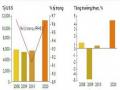
 Proportion of Some Economic Indicators of Business Sectors in the Period
 -
 World economic fluctuations in the period 2007 - 2008 and their impact on Vietnam's import-export business activities - 12
 -
 Business Performance Results of Agribank Bac Ninh in the Period 2015 - 2019
It was also at this stage that the Intellectual Property Law really took effect. The direction set forth by the Party Congress and institutionalized in Article 60 of the 1992 Constitution of the Socialist Republic of Vietnam: “ Citizens have the right to conduct scientific and technical research, to invent, create, innovate, improve techniques, rationalize production, create and criticize literature and art, and participate in other cultural activities. The State protects copyright and industrial property rights.”
In fact, before 1992, a series of documents related to intellectual property were issued, creating the premise for the development of innovation, such as the Trademark Regulation dated February 14, 1982; the Industrial Design Regulation dated May 13, 1988; the Ordinance on Technology Transfer from Foreign Countries to Vietnam dated December 5, 1988; Decree 49/HDBT dated March 4, 1991 guiding the implementation of the Ordinance on Technology Transfer from Foreign Countries to Vietnam; the Ordinance on Protection of Industrial Property Rights dated February 11, 1989; Decree 84/HDBT dated March 20, 1990 guiding the implementation of the Ordinance on Protection of Industrial Property Rights.

1.3.3 Period from 1995 to before 2005
Along with many policies on international economic integration and national economic development in new conditions, our Party has paid attention to directing the development of the intellectual property system. Resolution 2 of the 8th Central Committee raised the issue of "Perfecting the legal system on intellectual property protection and encouraging technology transfer..., launching a mass movement to go deeper into science, promoting technical innovation initiatives, inventions, and applying science and technology to all aspects of production and life; taking measures to promptly detect, prevent and stop the production and circulation of counterfeit goods". In that spirit, the Government's action program for 1997-2000 set out: "Perfecting and enhancing the effectiveness of the implementation of the industrial property protection system according to the standards of the World Trade Organization (WTO's TRIPS Agreement)". From such awareness and policies, in the process of economic integration of our country, intellectual property relations have been and are being formed.
In early 1995, the intellectual property protection system in our country was still operating mainly on the basis of "sub-law" documents, namely the Ordinance on the Protection of Industrial Property Rights (No. 131-LCT/HDNN dated February 11, 1989) and the Ordinance on the Protection of Copyright issued by the State Council in 1994. On October 28, 1995, the National Assembly passed the 1995 Civil Code, which included Part IV on intellectual property rights and technology transfer, including 61 Articles on intellectual property. The most important significance of the inclusion of intellectual property rights in the Civil Code is that for the first time in the history of our country, intellectual property rights have been recognized by the state as a type of civil right similar to property rights, and the recognition has been made by the highest authority, the National Assembly, not by a lower authority as before. However, within the scope of its regulation, the Civil Code
The 1995 Law only mentioned the subjects mentioned in two Ordinances: the Ordinance on Protection of Industrial Property Rights (No. 131-LCT/HDNN dated February 11, 1989) and the Ordinance on Protection of Copyright issued by the State Council in 1994. There are some other subjects such as: confidential information, geographical indications, trade names, rights against unfair competition, plant varieties, integrated circuit layout designs that have not been mentioned in the 1995 Civil Code. To supplement the protection documents for the above subjects, the Government has successively issued documents to regulate the above subjects.
Among these, it is necessary to mention those documents such as Decree 63/CP dated October 24, 1996 on Industrial Property (amended and supplemented by Decree 06/2001/ND-CP dated February 1, 2001) detailing the protection of inventions, utility solutions, industrial designs, trademarks and appellations of origin of goods. This document on the one hand specifies the provisions stated in Chapter 2, Part VI of the Civil Code; on the other hand, it further stipulates the administrative procedures and sequences, especially the procedures for registering rights to the above-mentioned subjects.
On October 3, 2000, the Government issued Decree 54/2000/ND-CP dated October 3, 2000 on the protection of industrial property rights for trade secrets, geographical indications, trade names and protection against unfair competition related to industrial property. Then, on April 20, 2001, Decree 13/2001/ND-CP on the protection of new plant varieties was issued. Regarding copyright and related rights, on November 29, 1996, the Government issued Decree 76/CP with the content of guiding and explaining the provisions stated in Chapter I, Part VI of the Civil Code. Then, on May 2, 2003, the Government issued Decree 42/2003/ND-CP on the protection of industrial property rights for semiconductor integrated circuit layout designs. Although during this period, intellectual property rights were
Our State recognizes it as a type of civil right similar to the right to own other properties.
Also at the 8th session, the 8th National Assembly of the Socialist Republic of Vietnam passed the Enterprise Law on December 21, 1990. This was an important milestone in the development of private enterprises. Only after this law was promulgated were many private companies established in Vietnam. And also in the Enterprise Law, for the first time, capital contribution to establish an enterprise was recognized by our State.
In which, intellectual property rights have been considered a type of asset used to contribute capital to establish an enterprise. Capital contribution by industrial property rights was first recorded in the Foreign Investment Charter in the Socialist Republic of Vietnam issued together with Decree No. 115-CP dated April 18, 1977 of the Government Council. However, this right is only reserved for foreign investors and is not recognized by Vietnam. It was not until the Enterprise Law 1999 that intellectual property rights were recognized as capital contribution assets for domestic investors. According to the provisions of Clause 4, Article 3 of the Enterprise Law 1999, "Capital contribution" is the act of bringing assets into an enterprise to become the owner or joint owners of the enterprise. Assets to be contributed as capital can be Vietnamese currency, freely convertible foreign currency, gold, land use rights value, intellectual property rights value, technology, technical know-how, other assets recorded in the Enterprise Charter contributed by members to form the enterprise's capital . Here, our country's law has specific regulations on capital contribution to establish an enterprise and has listed the types of assets contributed as capital to establish an enterprise. In particular, intellectual property rights have been recognized by our State as a type of civil right used by the owner to contribute capital to establish an enterprise.
The 1999 Enterprise Law was born on the basis of experience gained after many years of implementing the Private Enterprise Law and the Enterprise Law truly created a strong reform step to promote the development of the private economic sector and open up new opportunities for domestic investors in using intellectual property rights to contribute capital to establish enterprises.
1.3.4 Period from 2005 to present
After 5 years of implementing the 1999 Enterprise Law, in response to the requirements of economic development and international economic integration, the system of regulations of enterprise law has revealed many limitations, there are still regulations that discriminate between types of enterprises belonging to economic sectors, between domestic enterprises and enterprises with foreign investment capital. Each separate law on enterprises itself has also revealed limitations, affecting the competitiveness of enterprises, failing to meet the requirements of national economic development and international economic integration. The Resolution of the 9th National Party Congress and a number of Resolutions of the Central Executive Committee have affirmed the policy of building a unified Law on enterprises. The Enterprise Law 2005 was promulgated to replace the Enterprise Law 1999. The Enterprise Law 2005 was passed by the 11th National Assembly of the Socialist Republic of Vietnam, 8th session, on November 29, 2005, effective from July 1, 2006, and is considered a step forward in perfecting the legal framework for the operation of all types of enterprises. Along with that, the Civil Code 2005 was passed by the 11th National Assembly, 14th session, on June 14, 2005, replacing the Civil Code 1995. In the Civil Code 2005, the provisions on intellectual property have been simplified and narrowed down. They only play a general guiding role, showing that intellectual property rights on
is essentially a civil right, with civil law regulations, but also has its own characteristics.
Also in the 8th session of the 11th National Assembly, the Vietnamese National Assembly passed the Law on Intellectual Property, effective from July 1, 2006. Thus, the Law on Intellectual Property has become an independent branch of law in the Vietnamese legal system. The law has absorbed the values of many legal norms in the Vietnamese legal system on intellectual property rights and has been assessed in practice. The legal norms are compatible with most relevant factors, bilateral agreements ensure favorable integration into the international community. Thus, this is the first time Vietnam has a separate law on intellectual property promulgated at the highest level. The 2005 Law on Intellectual Property has a broader scope of regulation than the 1995 Civil Code. If the 1995 Civil Code is only a substantive law, regulating personal and property relationships, the Law on Intellectual Property is both a substantive law and a formal law. The Law on Intellectual Property stipulates the rights and obligations of intellectual property rights holders, the procedures for establishing rights, and the methods for enforcing rights. To specify and guide the implementation of the Civil Code and the 2005 Intellectual Property Law, the Government has issued 2 directives and 5 decrees; relevant ministries and branches have issued 4 circulars and 4 decisions. The current legal system has created a safe legal corridor, encouraged creative activities, and protected the fruits of creative labor crystallized in intellectual property. Legal regulations on intellectual property have entered life and promoted their role. The enforcement activities of competent authorities and the self-protection activities of rights holders have made significant progress.
After 3 years of implementation, the 2005 Intellectual Property Law still has some shortcomings reflected in articles and clauses that are not compatible with international law and reveal limitations.
In order to resolve the above shortcomings and inadequacies in the law and enforcement of intellectual property rights, on June 19, 2009, the 12th National Assembly, 5th session, passed the Law amending and supplementing a number of articles of the Law on Intellectual Property No. 50/2005/QH11. The 2009 amended Law on Intellectual Property creates more favorable conditions for organizations and individuals to access a complete, modern, and practical legal system; strengthens the capacity of competent state agencies in management and enforcement, and agencies supporting enforcement, contributing to creating positive and effective changes in intellectual property protection activities in the country and international integration.
Thus, in the period of innovation, the legal system on capital contribution to establish enterprises using intellectual property rights has been recognized and increasingly improved.