
CHAPTER 2
CREDIT QUALITY AT JOINT STOCK COMMERCIAL BANK FOR FOREIGN TRADE OF VIETNAM
2.1. OVERVIEW OF JOINT STOCK COMMERCIAL BANK FOR FOREIGN TRADE OF VIETNAM
2.1.1. Overview of the history of formation and development of Joint Stock Commercial Bank for Foreign Trade of Vietnam
On April 1, 1963, the Foreign Trade Bank was officially established under Decision No. 115/CP issued by the Government Council on October 30, 1962 on the basis of separation from the Foreign Exchange Management Department under the Central Bank (now the State Bank). According to the above Decision, the Foreign Trade Bank acted as the first and only specialized bank in Vietnam at that time operating in the field of foreign economic relations including lending to finance import and export and other foreign economic services (transportation, insurance, etc.), international payment, foreign exchange trading, management of foreign currency capital deposited at foreign banks, acting as an agent for the Government in payment relations, borrowing, and aid with (former) socialist countries, etc. In addition, the Foreign Trade Bank also advised the Board of Directors of the State Bank on policies on foreign currency management, gold and silver, management of the State's foreign currency fund and on relations with the Central Banks of other countries and international monetary and financial organizations.
On September 21, 1996, authorized by the Prime Minister, the Governor of the State Bank signed Decision No. 286/QD-NH5 on re-establishing the Foreign Trade Bank according to the model of Corporations 90 and 91 as stipulated in Decision No. 90/QD-TTg dated March 7, 1994 of the Prime Minister. The Foreign Trade Bank was the first state-owned commercial bank selected by the Government to pilot equitization. The Joint Stock Commercial Bank for Foreign Trade of Vietnam (Vietcombank-VCB) officially began operating on June 2, 2008, after successfully implementing the equitization plan through the initial public offering of shares on December 26, 2007. In December 2007, VCB successfully conducted its initial public offering (IPO) in accordance with the law, with a total number of shares offered for initial public offering (IPO) of 6.5% of charter capital (equivalent to 97,500,000 shares) through the Ho Chi Minh City Stock Exchange, officially converting the mechanism from a state-owned enterprise to a joint stock company named Vietnam Joint Stock Commercial Bank for Foreign Trade.
Over 47 years of establishment and development, Joint Stock Commercial Bank for Foreign Trade of Vietnam has made important contributions to the stability and development of the country's economy, promoting the role of a key foreign bank, effectively serving the development of the domestic economy, and creating important influences on the regional and global financial community. With extensive experience in foreign banking operations, VCB has maintained a key role in the Vietnamese commercial banking system and is the leading commercial bank in Vietnam in the fields of trade finance, international payments, foreign exchange trading and application of advanced technology in banking operations. The VCB brand is known by the domestic and international communities as a symbol of the Vietnamese commercial banking system. Up to now, VCB has had correspondent banking relationships with about 1,200 banks and financial institutions in 85 countries and territories around the world, ensuring good service to customer requirements globally.
With extensive experience and a team of highly skilled staff, with 11,415 employees, well-trained in the fields of finance and banking, with knowledge of market economy, foreign language proficiency, the ability to adapt quickly to the modern and highly integrated business environment..., VCB is always the first choice for large corporations, domestic and foreign enterprises as well as 5.2 million individual customers.
With its technological strength, VCB is a pioneer in applying modern technology to automatically process banking services and constantly launching electronic products and services to "bring banking closer to customers" such as: Internet banking, VCB-Money (Home banking), SMS Banking, Phone banking... From a specialized bank serving foreign economic affairs, VCB has now developed nationwide with a network including Headquarters in Hanoi, 1 Transaction Office, nearly 400 branches and transaction offices nationwide, 3 subsidiaries in Vietnam, 2 subsidiaries abroad, 1 representative office in Singapore, 4 joint ventures, 2 associates. In addition, VCB has also developed an Autobank system with nearly 16,300 ATMs and card payment acceptance points (POS) nationwide. The Bank's operations are also supported by a network of more than 1,300 correspondent banks in 100 countries and territories.
2010 marked the success of VCB in changing its business strategy from a wholesale bank to a multi-purpose bank, maintaining its position as a wholesale bank while promoting retail activities to diversify operations and maximize profits. VCB gradually affirmed its target position as one of the top 5 banks in retail banking services. Total assets: as of December 31, 2010 reached


307,496 billion VND, an increase of 20.4% compared to 2009. Total charter capital in 2010 reached: 13,224 billion VND and increased by 33% in February 2011 with total charter capital at 17,588 billion VND. In 2010, along with the high appreciation of international organizations voting VCB as "Best Bank in Vietnam" in many fields of operation, Vietnam Report in coordination with Tax Magazine (General Department of Taxation) also announced and voted VCB as the largest income tax paying bank in Vietnam, the 4th largest income tax paying enterprise in the country. VCB also continues to gradually develop the bank in a modern, professional and effective direction, with the strategic goal of making VCB a multi-functional financial group in the Top 70 largest financial institutions in Asia and maintaining the leading position in Vietnam.


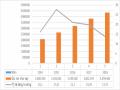
Chart 2.1: Representing total assets and equity of VCB from 2006 - 2010
Source: Financial reports of Vietnam Joint Stock Commercial Bank for Industry and Trade from 2006 - 2010
Table 2.1: Summary of VCB's performance indicators
Unit: Billion VND
2006 | 2007 | 2008 | 2009 | 2010 | |
TOTAL ASSETS | 167,128 | 197,363 | 222,090 | 255,496 | 307,496 |
Equity | 11,228 | 13,528 | 13,946 | 16,710 | 20,669 |
Total liabilities | 155,825 | 183,751 | 208,041 | 238,676 | 286,707 |
Minimum shareholder benefits | 75 | 84 | 103 | 109 | 120 |
Capital raising | 102,695 | 144,810 | 159,989 | 169,457 | 208,320 |
Credit balance | 67,743 | 97,631 | 112,793 | 141,621 | 176,814 |
Number of branches | 59 | 59 | 63 | 70 | 72 |
Total number of employees | 7,277 | 9,190 | 9,212 | 10,401 | 11,415 |
Common stock (million shares) | - | - | 1,210 | 1,210 | 1,322 |
Maybe you are interested!
-

 Overview of the History of Formation and Development of Vietnamese Criminal Law from the August Revolution in 1945 to the Present on the Crime of Property Theft
 -
 Retail Credit Quality at Bidv-Hcm Period 2008 – 09/2012:
 -
 Current Status of Credit Quality at Vietnamese Joint Stock Commercial Banks
 -
 Overview of the Formation and Development Process of Vietcombank
 -
 History of Formation and Development of Thanh Hoa Province
Source: Financial reports of Vietnam Joint Stock Commercial Bank for Industry and Trade from 2006 - 2010
75
2.1.2. VCB organizational model
General Meeting of Shareholders Board of Directors
Board of Control
Activity monitoring
Internal Audit
Risk Management Committee General Director
Secretary of ALCO Board of Directors Central Credit Council
Deputy General Manager
Secretary of the Board of Directors
Secretary of the Board of Directors
Secretary of the Board of Directors
Secretary of the Board of Directors
Secretary of the Board of Directors
Secretary of the Board of Directors
Secretary of the Board of Directors
Chief Accountant
Secretary of the Board of Directors
Secretary of the Board of Directors
Secretary of the Board of Directors
Secretary of the Board of Directors
Secretary of the Board of Directors
Secretary of the Board of Directors
Secretary of the Board of Directors
Financial Management
Secretary of the Board of Directors
Operational risk management
Secretary of the Board of Directors
Secretary of the Board of Directors
Secretary of the Board of Directors
Operational risk management
Secretary of the Board of Directors
Summary & Accounting Regime
Head Office Financial Accounting
Administration
Secretary of the Board of Directors
Secretary of the Board of Directors Secretary of the Board of Directors Secretary of the Board of Directors
Secretary of the Board of Directors Secretary of the Board of Directors Secretary of the Board of Directors
Secretary of the Board of Directors
Secretary of the Board of Directors Secretary of the Board of Directors Secretary of the Board of Directors
Secretary of the Board of Directors Secretary of the Board of Directors Secretary of the Board of Directors
Secretary of the Board of Directors Secretary of the Board of Directors Secretary of the Board of Directors
International Accountant Secretary of Board of Directors
Customer Account Services Secretary of the Board of Directors
Debt Management
Transaction office & 71 branches
Vietcombank Tower
Vinafico Hongkong Company
Financial Leasing Company Securities Company
Singapore Representative Office
Vietcombank money transfer company
Joint venture company Associate company
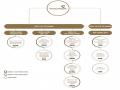
Diagram 2.1: Organizational model of Vietnam Joint Stock Commercial Bank for Industry and Trade
Source: Financial report of Vietnam Joint Stock Commercial Bank for Industry and Trade 2010
2.1.3. VCB's business performance from 2006 - 2010
2.1.3.1. Capital mobilization situation
Table 2.2: Capital mobilization situation of VCB from 2006 - 2010
Target
2006 | 2007 | 2008 | 2009 | 2010 | |
Deposits of the State Bank and other Other credit institutions | 31,430 | 33987 | 35,963 | 61,414 | 69,612 |
Mobilization from customers | 120,695 | 144,810 | 159,989 | 169,458 | 208,320 |
and valuable papers | |||||
TCKT deposits | 84,486 | 91,230 | 99,146 | 90,216 | 108,172 |
Personal Deposit | 36,209 | 53,580 | 57,242 | 76,965 | 98,880 |
Capital mobilization speed (%) | 13.83 | 17.2 | 10.5 | 5.9 | 23 |
Other debts | 3.625 | 4,870 | 11,986 | 7,695 | 8,655 |
Minimum shareholder benefits | 75 | 84 | 103 | 109 | 120 |
Total liabilities | 155,825 | 183,751 | 208,041 | 238,676 | 286,707 |
Source: Author's analysis based on VCB's annual report


In the past year, facing the complicated developments of the capital market and fierce competition among commercial banks, VCB has thoroughly implemented throughout the system to consider capital mobilization as one of the top priority tasks in the system in order to focus resources on capital mobilization and trading. The specific results are as follows:


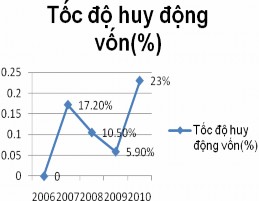
Chart 2.2: Representation of capital mobilization - capital mobilization speed of VCB from 2006 - 2010
Source: Financial reports of Vietnam Joint Stock Commercial Bank for Industry and Trade from 2006 - 2010. The fluctuations of the financial and monetary market in 2007 had a significant impact on the capital mobilization activities of the Bank for Industry and Trade. Firstly, competition among commercial banks has become increasingly fierce with the expansion of the scale of operations, increasing deposit interest rates, implementing a series of new products, and promotion programs.
Second, USD mobilization activities are facing difficulties, especially from the population, due to the tendency of USD interest rates to decrease because the US Federal Reserve continuously cuts interest rates while the exchange rate is unfavorable for money holders due to USD depreciation. In 2007, VCB attracted VND 175,436 billion, an increase of 17.2% compared to 2006. Capital mobilized from economic organizations and individuals reached VND 144,810 billion, accounting for 82.5% of total mobilized capital.
Total mobilized capital as of December 31, 2008 reached VND 196,507 billion, up 10.2% compared to 2007, of which capital mobilized from the economy reached VND 159,989 billion, up 10.5% compared to the plan. In 2008, to cope with the situation of high inflation, the State Bank applied a tight monetary policy, controlling the growth rate of total means of payment. The high general interest rate level made capital mobilization activities of banks encounter many difficulties. During the period of liquidity tension in 2008, VCB not only maintained the most stable liquidity status in the market but also played a key role in timely capital support for other banks, thereby ensuring the stability of the Vietnamese banking system, while increasing capital business profits for VCB itself.
In 2009, mobilization from the economy reached 169,457 billion VND, up 5.9% compared to the end of 2008. In the context of fierce competition, mobilization of deposits from economic organizations decreased (-9%), but mobilization from the population had a fairly good growth rate thanks to mobilization programs spread throughout the year and the efforts of most branches in the system. VCB still maintained a stable liquidity status, while also actively and promptly supporting capital for other banks, helping to stabilize the banking system and ensuring increased capital business profits for VCB.
In the face of fierce competition among credit institutions in capital mobilization activities. In 2010, VCB assigned capital mobilization targets to each branch, while actively diversifying capital mobilization products with reasonable interest rates, along with promotional programs, investing in appropriate technology systems, helping to improve the competitiveness of capital mobilization. As a result, VCB's capital sources grew very well. Mobilization from the economy reached more than 208,320 billion VND, an increase of 23% compared to the end of 2009 - this is the highest level in the past 5 years. VND capital mobilization continuously grew strongly and steadily. Especially in 2010, capital mobilization from the population achieved quite positive results with a balance of 98,880 billion VND, an increase of 28.5% compared to the previous year. The balance mobilized from economic organizations reached 108,172 billion, an increase of 16.3%. Capital mobilization from interbank reached 69,600 billion VND, up 13.3% compared to 2009.
2.1.3.2. Import and export payments
With its leading strength in international payments and a global network of correspondent banks, despite facing increasing competitive pressure from other commercial banks, VCB continued to maintain its solid No. 1 position in 2006, with import-export payments reaching 22.8 billion USD, up 8.6% compared to 2005, accounting for 27% of the country's market share. In particular, export payment turnover reached 12.7 billion USD, up 35% compared to the previous year, much higher than the country's overall export turnover growth of 22% and accounting for 32% of the country's export market share. However, import payment turnover in 2006 was only 10.1 billion USD, down 8.2% compared to 2005 and accounting for 22.8% of the country's import market share. In 2007, in the context of the market having more and more banks participating with competitive policies to attract customers, the import-export payment turnover through the Joint Stock Commercial Bank for Foreign Trade of Vietnam was still maintained at a high level, continuing to affirm its position as the leading import-export payment bank in Vietnam.
Table 2.3: Import-export activities of Vietnam Joint Stock Commercial Bank for Foreign Trade from 2006-2010
Unit: Billion USD
Target
2006 | 2007 | 2008 | 2009 | 2010 | |
Export payment turnover import | 22.8 | 26,323 | 32,501 | 25.62 | 31 |
Export payment turnover | 12.7 | 14,163 | 16,831 | 13.32 | 16.5 |
Sales of goods import | 10.1 | 12.16 | 15,670 | 12.3 | 14.5 |
Export market share nationwide | 32% | 29.3% | 25% | 23% | 23% |
Import market share nationwide | 22.8% | 20% | 20.7% | 17.8% | 17% |
Import and export market share nationwide | 27% | 24.1% | 22.7%. | 20.4% | 20% |
Source: Financial reports of Vietnam Joint Stock Commercial Bank for Industry and Trade from 2006 - 2010
The import-export situation of the whole country in 2008 had many complicated developments due to strong fluctuations in prices of major import-export goods such as crude oil, iron and steel, food, etc. as well as unusual changes in supply and demand of goods in the world market due to the global economic recession. However, VCB has played a good role in import payment and foreign currency balance, so the import-export payment turnover through VCB in 2008 still reached 32,501 million USD, an increase of 23.5% compared to the previous year. VCB's import-export payment market share reached 22.7%. Export payment turnover reached 16,831 million USD, an increase of 18.3% compared to the same period in 2007. Import payment turnover reached 15,670 million USD, an increase of 28.9% compared to 2007.
In 2009, the country was heavily affected by the economic crisis and global recession, causing difficulties and declines in import and export activities. In the general context, VCB's payment activities could not avoid the decline. VCB's import and export payment turnover reached 25.62 billion USD, down 23.8% compared to 2008. However, VCB still maintained a large market share in import and export payment activities: accounting for 20.4% of the total import and export turnover of the country in 2009.
In 2010, VCB improved the process of processing trade finance transactions in the direction of: focusing on processing trade finance transactions for a number of small and medium branches at the Head Office instead of processing them in a decentralized manner as before, thus improving the efficiency of trade finance operations, contributing to increasing import-export payment turnover through VCB. VCB's total import-export payment turnover in 2010 reached 31 billion USD, an increase of nearly 21% compared to 2009, exceeding the plan by 12%, and maintaining a market share of 20% of the country's import-export turnover. Export payment turnover in 2010 through VCB reached 16.5 billion USD, an increase of 31.6% compared to 2009, accounting for 23% of the export payment market share. Import payment turnover reached 14.5 billion USD, up 10% compared to 2009, accounting for more than 17% of the total import turnover of the country. The main trading markets through Vietcombank are the US, Taiwan, Hong Kong, Singapore, Japan, Korea, China and Europe.
2.1.3.3. Foreign exchange trading
Table 2.4: Foreign currency trading turnover of Vietnam Joint Stock Commercial Bank for Foreign Trade
Unit: Billion USD
Year
2006 | 2007 | 2008 | 2009 | 2010 | |
Purchase volume sell foreign currency | 30.2 | 26.1 | 46 | 39.42 | 35.2 |
Source: Financial reports of Vietnam Joint Stock Commercial Bank for Industry and Trade from 2006 - 2010
With the ability to meet the diverse needs of customers for foreign exchange transactions, VCB continues to be the leading bank in foreign exchange trading. In 2006, VCB developed new products such as interest rate SWAP (IRS) with foreign countries, foreign currency option products - VND, forward interest rate contracts (FRA). Participation in interest rate derivative contracts with foreign partners and foreign exchange derivative contracts has provided the bank with more methods of risk prevention and timely response to customers' foreign exchange needs. Foreign exchange trading turnover reached 30.2 billion USD. In 2007, foreign exchange rates had many large fluctuations. The domestic market has