
Home | The toilets | The toilets | The | Company | Station | Institute | The | |||||||
machine | career | career | base | invest | deliver | research | home | |||||||
muscle | agriculture | link | regime | & Import & Export | receive | rescue | machine | |||||||
gas | labour | fit | variable | tea | foreign | tea | ||||||||
tea | career | tea | love |
Maybe you are interested!
-
 Organizational Structure and Functions of Each Department of the Joint Stock Commercial Bank for Industry and Trade - Kien Giang Branch
 -
 Organizational Structure of Joint Stock Commercial Bank for Foreign Trade of Vietnam - Bac Ninh Branch
 -
 Current Status of Ownership Structure and Performance of Vietnam's Banking Industry
 -
 Organizational Structure of Son Ha Garment Joint Stock Company
 -
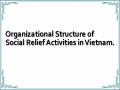 Organizational Structure of Social Relief Activities in Vietnam.

Vietnam's tea price reached 961 USD/ton (0.961 USD/kg). Black tea averaged 876 USD/ton; green tea reached 1,308 USD/ton.
By the end of September 2006, the average price was 1,066 USD/ton. The average selling price is still low, but many companies have produced high-priced products, although the quantity is still small. The Maritime Trading and Service Company sells at 34.2 USD/1kg (5kg); Tan Dai Phat Company sells at 11,345 USD/1kg (68kg); Truc Phuong Trading and Service Company sells at 10 USD/1kg. There are 10 enterprises producing specialty green tea and Oolong tea from 30-45 tons, with an average selling price of 4.5-7 USD/1kg. [22]
II. CURRENT STATE OF TEA INDUSTRY MANAGEMENT
1. Tea industry management before innovation
After the liberation of the North of our country (October 1954), the tea industry received attention for development. But the milestone to show its maturity must be from the birth of the Union of Tea Enterprises under the Ministry of Food and Foodstuffs (in 1974), the predecessor of the Vietnam Union of Tea Agricultural and Industrial Enterprises (VINATEA - 1979). The Union helps the Ministry manage most of the key business units in the industry. (see figure 2.2)
STATE MANAGEMENT APPARATUS FOR TEA INDUSTRY (MINISTRY OF FOOD AND FOOD PRODUCTS, MINISTRY OF INDUSTRY...)
Figure 2.2: Organizational structure of the tea industry before renovation
NON-UNION UNITS
UNION OF VIETNAM TEA AGRICULTURAL AND INDUSTRIAL ENTERPRISES
Source: [23]
The process of organizing and managing the tea industry before the renovation can be divided into the following three periods:
1.1. The period from 1974 to 1980
This period began with the establishment of the Tea Processing Enterprises Union in 1974. This was the first industrial union in our country.
When it was first established, the Union had only one processing facility (including 4 workshops) in Phu Tho, one foreign trade forwarding station (transferred by Kim Anh), one tea factory in Hanoi, and other processing facilities (Tran Phu, Yen Bai, Quan Chu, Tan Trao, etc.) had not yet been put into operation. After 5 years (until June 1979), the Union included all fully equipped black tea processing facilities in the North, a number of green tea and scented tea facilities in Phu Tho, Saigon, Hanoi and all processing facilities in Lam Dong (later transferred to the locality). Although these processing facilities were still few, they were very valuable to the tea industry in its initial step from manual production to machine production.
During this period, all work from production organization to management was arranged from above due to the centralized subsidy management mechanism . The plan to expand the tea growing area, the cost for each hectare were all regulated by the state, the price was decided by the state, and the profit and loss were decided by the state. Processing facilities and tea growers mainly focused on implementing the production plan and delivering the products. But there were many problems between them, first of all the price issue. Regulations on the purchase price of fresh tea buds for processing that were too high or too low would harm the interests of one of the two parties: either the tea processor or the tea grower. Reality shows that the purchase price of tea raw materials
These years were too low compared to the expenses of tea growers, thus causing negative effects in production. In the late 1970s, tea trees suffered a serious decline. The area of new plantings each year was not equal to the area of tea fields that were due for liquidation, and the newly planted tea fields fell into a state of dry cultivation, causing the processing industry to stagnate due to lack of raw materials. In 5 years of operation (1974-1979), the Vietnam Tea Enterprise Union only processed 7,500 tons/year, exporting an average of 5,000-5,500 tons per year, although the potential could have been higher.
1.2. Period from June 1980 to June 1983
The characteristic of the tea industry is that industry and agriculture have a close, close relationship and influence each other. Therefore, the first problem for the Vietnamese tea industry is to resolve the relationship of interests between raw material producers and processors. Innovating the management mechanism and satisfactorily resolving the relationship of interests between tea growers and processors is also to make agriculture and the processing industry closely linked together, creating conditions for the tea industry to develop.
Realizing that requirement, the Tea Enterprise Union on the one hand proposed to the State to establish the Vietnam Tea Industrial and Agricultural Enterprise Union to merge the two stages of production and processing. On the other hand, establish joint enterprises in regions and sub-regions, by merging one enterprise and one farm or several enterprises and several farms near each other into one industrial and agricultural production enterprise. This is the period of economic experimentation, initially unifying production and processing in the state-owned sector in the form of inter-sectoral agricultural and industrial production unions; taking processed products as the purpose and direction of operation, promoting agricultural development.
Thanks to those initial changes in management organization, the tea industry has created some positive changes:
Firstly , the organization of production and management in joint-stock enterprises and agricultural and industrial enterprises has had a general coordination, which has a certain influence on the production and management activities of member units, thereby having a number of positive effects such as: centralization of stages (planning, finance, science and technology, supply, organization, etc.); members are initially assigned to specialize in the stages of production organization, processing organization, secondary occupations, general business and repair and transportation. Because important stages such as "strategy" and "foreign affairs" are undertaken by joint-stock enterprises, members have the conditions to focus on production.
Second , due to the unification of production and processing, and the determination of the goal of industrial and agricultural activities as the final product, the tea growing stage has complied with the regulation of raw materials for the processing stage, both in terms of quality and quantity; tea productivity has increased significantly, on average increasing by 5-6%/year.
Third , initially solving the income balance between members of the enterprise union, stimulating production and workers in the agricultural sector.
After three years of experimenting in the above direction, the tea industry has had some initial encouraging results: tea productivity has increased, especially in joint-venture enterprises; the tea industry has had some initial experience in managing the type of joint-venture production; a number of young, dynamic directors have been trained; and thinking about a larger development in the future has begun. At the end of this period, the tea industry has exported more than 8,000 tons/year (of which the Vietnam Tea Union accounts for 65-70%), the proportion of exported products of the two joint-venture enterprises is equal to nearly half of the total tea exported by the union and equal to 1/3 of the tea exported nationwide.
However, in the management organization of the joint enterprises and the tea agricultural-industrial enterprises, there are still some weaknesses: the organization of the agricultural-industrial association was previously carried out mainly by administrative measures, which caused some obstacles in the operation of the enterprises such as the scale of the joint enterprises being too large, poor information hindering the general management activities, the members of the joint enterprises felt "lost autonomy" in management as well as in the distribution of the products made; the management apparatus, although reduced in quantity, was of poor quality due to many levels, and the staff's qualifications were still weak; internal accounting (reporting) caused some difficulties for member units, especially units far from the center; The coordination of the Union over the activities of joint enterprises and industrial-agricultural enterprises is essentially still caught up in affairs, subsidies, and planning rather than organization... Members of joint enterprises have legal status and are allowed to open special spending accounts, but still need authorization from the joint enterprise; in agricultural-industrial enterprises, there is nominally a common apparatus, but in essence there are still two "apparatuses" existing in parallel, etc. Therefore, the issue of tea industry management continues to be raised.
1.3. Period from June 1983 to June 1987
Due to the subsidized business model - handing over, following the plan, at the end of 1983, tea growers faced a huge challenge. Tea continued to decline, although tea trees in the state-owned sector under the direction of the union were doing better. In addition, the price situation was escalating, the raw materials subsidized by the state were shrinking, while the plan to hand over products was still higher year after year. In this situation, the Union had many documents amending the policy mechanism, reorganizing production in the industry, and submitting them to the state. However, the main ideology of the
That text is still within the framework of "subsidy" and reform in terms of method, so the results obtained are very meager.
From this difficult and deadlocked reality, the tea industry was forced to rethink to find an answer. Reality shows that the problem of reorganizing production and innovating management is not simply a problem solved by establishing a few joint enterprises or agricultural-industrial enterprises, but needs to be raised more broadly, that is, in the economic relationship of commodity production in all economic sectors to attract economic sectors into a unified tea development program of the whole country according to a common goal, at the same time to achieve the entire connection of the process of planting - processing - import - export and circulation of tea products. The important thing is that the union and its member units must be autonomous in production and business. This viewpoint was implemented starting from August 1984, when the State allowed the tea industry (along with the coal and textile industries) to pilot the innovation of economic and management mechanisms.
During the four years of the pilot, the tea industry has done two major things: First , it has focused its forces on investigating, researching and outlining the industry's development strategy for the years 1990-1995 and 2005, in order to serve as a basis for the tea industry in establishing projects to organize production and manage in a reasonable manner. Second , it has gradually shifted from a centralized bureaucratic subsidy mechanism to a business accounting mechanism, self-financing, self-responsibility, and self-reimbursement.
To carry out the first task, the Union has organized a group of experts, operating in the form of advisory services, including economic and management experts with capacity and enthusiasm for the tea industry inside and outside the Union to study and innovate tea industry management. The content of the activities of this group of experts is: Building drafts of target programs for tea industry development until 2005, and shorter until 1990-1995; establishing a general diagram for the development of productive forces, projects on production organization, and organization of ministries.
management apparatus to resolve the relationship between central and local, between industry and territory, as well as import-export projects, investment cooperation, synchronous proposals on innovation of financial plans, prices, economic accounting and science and technology development programs.
For the second group of work , to move to the new management mechanism, the Union has carried out the following tasks:
Firstly, gradually reduce the assignment of legal targets. By the end of August 1987, the Union only had one target, which was to produce the main product (tea) in balance with the materials included in the plan. As for the general business, consumed products, products exceeding the plan, and self-balanced products, the enterprise would consume them itself. If the enterprise could not find a place to consume, the Union would find a source of consumption. Through this mechanism, some units were gradually able to cover some of their needs.
In addition to continuing to maintain the two joint enterprises in the previous stage and consolidating the established agro-industrial enterprises, the Union converted all farms into agro-industrial enterprises in the transitional period, in which the majority of products were semi-processed tea (instead of fresh buds), by zoning the raw material purchasing areas of cooperatives and households, associating a processing factory with 4 specific farms. At the same time, through various forms of association (advance investment, capital contribution, technical services and supply, etc.) to link the activities of this enterprise with the activities of cooperatives and households. To expand the industry's services, the Union has taken over the Tea Research Institute, established a transportation materials enterprise, the Hanoi Tea Blending and Refining Center, and at the same time changed the direction of operation of the Tea Mechanical Factory, turning the design departments into construction and production preparation units, etc. The formula for economic components to participate in tea growing and trading is 3 + 4 + 3 (30% state-owned, 40% cooperative, 30% household).
The Union gradually allowed member units in joint enterprises to account independently, and the enterprises gradually began to account for their own profits and losses, but the Union still regulated capital from surplus areas to shortage areas. The “internal price” mechanism was still used as the basis for calculating the “transferred” materials and raw materials to have an orientation to encourage production. Due to changes in the planning mechanism, the financial and accounting mechanisms also began to change, although slowly.
Enterprises are allowed to organize their own management apparatus. The indirect payroll of most enterprises is reduced to only 10%. Large production teams are divided into smaller ones. The team management apparatus is reduced by 1/4, in some places by 1/3. This is essentially a way to divide the production scale to suit the management level in order to produce more effectively.
The most notable thing of this period was the establishment of VINATEA (Vietnam Tea Import-Export Company). And immediately after its establishment, within just 3 months, the Company completed a volume of work equal to the previous 9 months combined, completing the export plan of more than 10 thousand tons of products with a turnover of more than 15 million rubles - USD.
At the end of this period, tea export output was higher than in 1984 (the pilot period started, with the largest export index ever of 700 tons), export turnover increased by nearly 4 million rubles - USD, an increase of 27%.
However, those results are still limited, not as expected. Difficulties and bottlenecks in production and business are still not few, especially in terms of capital and food. The reason is that the innovations in the organization and management of the tea industry, although having positive impacts on the entire activities of the industry, on each worker, have not yet escaped the framework of the subsidy mechanism, still have a "reformist" and "half-hearted" nature; autonomy in