
1.3. ANALYZE THE BUSINESS ENVIRONMENT OF THE ENTERPRISE
Macro environment :
1. Economic factors
2. Political and legal factors.
3. Social factors
4. Natural elements
5. Technological factors
Operating environment (industry)
1. Competitors
- The macro environment includes external factors that affect the business.
- Working environment
The purpose of business environment analysis is to identify opportunities and risks for the business, including the macro and micro environment. It is the process of considering different environmental factors and determining the level of impact of opportunities or risks on the business. Environmental judgment is based on analysis and assessment of the environment to take advantage of opportunities or control risks affecting the business. Environmental analysis includes: macro environmental analysis and micro environmental analysis (also known as industry environment).
2. | Client | ||
business, orientation | 3. | Provider | |
industry competition | 4. | Potential competitors | |
there. | 5. | Substitute goods | |
- Internal environment includes including internal resources of the enterprise | 0 | 1 2 3 4 5 6 | IS |
Maybe you are interested!
-

 Analysis of External Environment Affecting Travel Business Operations
 -
 Analysis and evaluation of the current business strategy of Hanoi Beer Alcohol Beverage Corporation (habeco) - 1
 -
 Business registration under Vietnam Enterprise Law - Current situation and some recommendations - 1
 -
 Current Status of Business Registration Regulations According to the 2014 Enterprise Law
 -
 Improving the business environment for Vietnamese tourism enterprises in the globalization process - 18
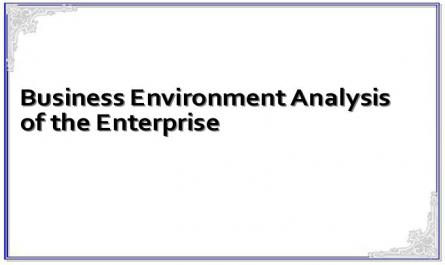
Figure 1.2: Simulating the business environment of the enterprise
1.3.1 Macro-environment analysis
1.3.1.1 Economic environment
The state of the economy and future trends influence the success and strategy of a business, the main factors being: the growth rate of the economy
economy, interest rates, inflation, unemployment, exchange rates. Fluctuations in these factors all affect businesses.
- Economic growth rate : High economic growth reflects the growth rate of the market, thus contributing to reducing competitive pressure. High purchasing power of the overall market creates favorable conditions for business development.
- Interest rate: interest rate is one of the factors of monetary policy. High or low interest rate directly affects business and market demand. High deposit interest rate will encourage people and businesses to deposit money, leading to the market's ability to pay being contracted, reducing purchasing power, which is a risk for businesses.
- Exchange rate: Exchange rate has a great impact on businesses operating in fields related to import and export activities.
- When inflation rate increases, price control and labor wages cannot be controlled, and the threat to businesses also increases.
1.3.1.2 Political and legal environment
Socio-economic institutions such as policies, regulations, laws, salary regimes, administrative procedures, etc. set forth by the Government can create opportunities for businesses but can also be real risks for businesses.
Political stability, government sustainability, and consistency in policy views always attract investors. A well-established and complete legal system is the basis for a stable business. Decisions on taxes and fees can create opportunities but can also be a brake on production development. Labor laws and recruitment regulations are also things that businesses are concerned about.
1.3.1.3 Socio-cultural environment
For strategic management, cultural and social factors are the most sensitive and changeable. People's lifestyles change rapidly according to the trend of adopting new lifestyles, leading to changes in consumer attitudes. The level of education is higher, so
Consumers' increasing demands for quality and variety of products will be higher. This is a challenge for manufacturers.
Every business operates in a certain socio-cultural environment. Businesses and socio-cultural environments are closely related and have mutual impacts. Society provides the resources that businesses need and consumes the products and services that businesses produce. The socio-cultural environment can influence strategic decisions such as: choosing fields and products, choosing brands, colors, designs, and changing distribution channels.
Concept of life value and consumption value: Concept of life value will give rise to concept of consumption value and influence the decision to purchase this product and refuse or reduce the purchase of other products, creating opportunities or threats for businesses.
1.3.1.4 Natural environment
The natural environment includes geographical, climatic and ecological factors. The threat of climate change has a great impact on businesses. Therefore, predicting the changes in weather and climate makes businesses more proactive in making decisions about their products.
The deteriorating natural environment is a challenge for most businesses operating in different fields; that is, the supply of raw materials and energy is depleted, the level of pollution is increasing, the weather is complicated, floods and droughts cause great losses. These things make business costs increase due to additional expenses, additional equipment for waste treatment, and higher taxes due to environmental protection requirements.
1.3.1.5 Technological environment
Technology factors have a great influence on the business strategies of enterprises as well as industries. The present time is the time of industrial development, so predicting industrial trends is a very important issue.
important to business growth. Technological change greatly affects the life cycles of products and services.
Trends/events in technology can be opportunities for businesses that can raise investment capital, but can also be threats for businesses that are tied to old technology.
Therefore, businesses need to have correct assessments of technology, in order to create opportunities for businesses in developing products and services.
1.3.2 Industry environment analysis
Industry competitors
Client
The operating environment includes all the factors that directly influence the decisions of a business in an industry. An industry consists of many businesses offering similar or substitute products and services; the problem is to analyze and judge the competitive forces in the industry environment to determine the opportunities and threats for your business. Here is a very popular model of Michael Porter with 5 competitive forces:
Potential new competitors
Supplier
Alternative products and services
Figure 1.3 – M.Porter's 5 forces model
1.3.2.1 Analyze current competitors
The first force in M. Porter's model is the scale of competition among businesses that have the opportunity to increase selling prices and earn more profits. Competition between businesses in the manufacturing industry often focuses on the following main contents:
- Competitive nature : between products that are substitutes for each other to satisfy the same desire, that is, competition in terms of priority when shopping between products with different uses in relation to income; competition within the same product type; competition between brands.
- Competitive pressure in an industry : The competitive industry structure is the number and size of companies competing in the same industry. If businesses are small and there is no dominant business, the competitive structure will be dispersed. If market demand is large, competitive pressure will decrease, on the contrary, if market demand is small, competition becomes fierce.
- Barriers to exiting the industry : When business conditions in the industry deteriorate, business difficulties force businesses to consider withdrawing from the industry; The costs of withdrawing from the industry cause businesses to suffer losses and even bankruptcy, including:
+ Investment costs: factory, equipment, technology...
+ Direct costs of investment preparation, administrative procedures...
+ Social costs: worker training, worker dismissal...
1.3.2.2 Analyze potential competitors
Potential competitors are businesses that are likely to enter the industry in the future, posing a threat to existing businesses. Existing businesses often try to prevent potential competitors from entering the industry, because the market competition will be more fierce, the market and profits will be shared, and even the position of the business may change. The level of profit of potential competitors depends mainly on the high or low cost of entering the industry (industrial barriers), including:
- The higher the initial investment , the less likely new competitors will enter the industry. When starting a business, investors must spend a certain amount of money to purchase input factors such as machinery, equipment, raw materials, etc. to create output products. Thus, the larger the initial investment, the greater the risk.
- Cost advantage: When a business possesses high technology that allows it to produce and supply products at low cost, it will have a competitive advantage. To maintain this advantage, the business must always be at the forefront of technology, must focus on business administration, to reduce costs, and improve production and business efficiency.
- Advantages of product, goods and service brands: When customers are familiar with the current commonly used product brand, the cost of building a new product brand is often time-consuming and expensive.
- Advantages due to production scale: When the production scale is large, the average fixed cost per unit of product decreases, and large-scale enterprises have more competitive advantages over new competitors.
- Legal barriers: are the State's regulations on conditions for participating in business such as capital, equipment, labor force qualifications... the more stringent the regulations, the more it will hinder businesses from entering the industry and vice versa.
1.3.2.3 Supplier pressure
Suppliers can pose a threat to the manufacturing industry when they increase prices, limit quantity, or do not guarantee quality. Businesses need to pay attention to negative impacts from suppliers. However, suppliers can only exert pressure on businesses in the following cases:
- There are few suppliers for the manufacturing industry.
- There are few substitute products and services.
- Has advantages in product and service specialization.
- Capable of vertical integration, closed product.
1.3.2.4 Customer pressure
Customers is a general noun referring to people or organizations that use the products or services of a business. Customers can be divided into the following five groups: final consumers; intermediary distributors: agents, wholesalers; industrial buyers.
Customers are the main subjects involved in the process of product consumption, identifying customers and influencing customers to have a basis for determining the product and service market and the necessary investment structure. Customer demand is the most basic factor that manufacturers and businesses are interested in to decide whether or not to maintain a long-term competitive advantage for that product. The higher the customer's ability to exert pressure, the greater the risk of disadvantage for the business.
Customers often put pressure on businesses in situations where
after:
- They are large volume buyers.
- There are many suppliers of the same product, there are many choices.
- Ability to integrate backward to own all or part of the production
product release
When customers have an advantage over sellers, it is inevitable to reduce prices and increase the quality of products and services, which means profits will decrease.
1.3.2.5 Substitute products
Substitute products that are not highly competitive but can affect the profitability of the market are a threat to the business. Special attention should be paid to substitute products that are easily modified and transformed by technological advances.
Most new substitute products are the result of the technological explosion. To be successful in their business, businesses need to devote the necessary resources to developing new technologies into their development strategies.
1.3.3 Analysis of the internal business environment
The internal environment of a business is everything that belongs to the business itself, directly related to the business's production and business activities to identify the strengths and weaknesses of that business, creating a basis for strategic planning and implementing business strategies. The objects considered are the main factors occurring inside the business,
within the control of the business. The main factors are: human resources, finance, accounting, marketing, information systems, organizational systems ...
1.3.3.1 Human resources
Human resources play a very important role in the success of a business. People provide input data to plan goals, analyze the environmental context, select, implement and test business strategies. Only effective people can create efficiency for the business, the factors of human resources include:
- Leadership, professional qualifications and leadership experience.
- Appropriate organizational and management structure.
- Professional qualifications, ethics of staff, flexible and effective personnel policies.
Training and retraining of human resources ensure the quality of human resources for the enterprise as well as in improving the competitiveness of the enterprise. Due to the decisive influence of human resources, enterprises always focus on ensuring the quantity, quality, and structure of the labor force, which are senior managers, middle managers and skilled workers. In addition, enterprises must organize labor, ensure the necessary material and technical conditions to fully develop the capacity of this labor force.
1.3.3.2 Organizational structure of the enterprise
Organizational structure is the organizational foundation of a business. Organizational structure is a synthesis of specialized departments, with certain responsibilities and authorities, with connections and interdependencies arranged at each level.
The organizational structure is designed to provide a level of specialization, standardization of activities within the organization, coordination of activities, a degree of decentralization and delegation of authority, and a span of control. A good organizational structure coordinates the activities of employees so that they can work together and implement strategies effectively to create a competitive advantage. In addition, the organizational structure encourages and motivates employees to learn new working methods.