
LAO CAI PROVINCE PEOPLE'S COMMITTEE LAO CAI COLLEGE
PROFESSIONAL COURSE: MOTORCYCLE REPAIR
LEVEL: ELEMENTARY VOCATION
Lao Cai, 2017
Preface
Motorcycles are widely used in our country today, it is a personal means of transportation. With the economic development of the country, life is improved, the number of motorcycles increases rapidly, along with it is the need for a team of maintenance and repair workers. The Motorcycle Repair and Maintenance textbook is compiled with the aim of providing learners with the knowledge and skills to repair motorcycles. The textbook is compiled based on the current practical conditions used in primary vocational training.
The content of the course is compiled with 4 modules integrating theory and practice including:
MD 01: Motorcycle engine repair
MD 02: Repairing the fuel, starting and ignition systems of motorbikes MD 03: Repairing the transmission system and chassis of motorbikes
MD 04: Repairing electrical systems on motorbikes
The textbook is compiled for elementary students. Although we have tried, it is inevitable that there are shortcomings. We look forward to receiving comments from the review board to improve the textbook.
AUTHOR
Index
TT number
Module name and lessons in the module | Page | |
MD 01 | Motorcycle engine repair | 02- 57 |
1 | Lesson 1. Concept, general structure of motorbikes, overview of repair profession motorcycle repair | 5 |
2 | Lesson 2. Structure and operating principle of the engine | 36 |
3 | Lesson 3. Repairing the Air Distribution Mechanism | 41 |
4 | Lesson 4. Repairing the crankshaft connecting rod mechanism | 57 |
MD 02 | Repair of motorcycle fuel, starting and ignition systems | 83-119 |
1 | Lesson 1. Repairing the fuel system using a carburetor on a motorbike | 86 |
2 | Lesson 2. Repairing electronic fuel injection systems on motorbikes | 99 |
3 | Lesson 3. Repairing the motorcycle starting system | 113 |
4 | Lesson 4. Repairing motorcycle ignition system | 119 |
MD 03 | Motorcycle frame and transmission repair | 136-194 |
1 | Lesson 1. Clutch repair | 139 |
2 | Lesson 2. Gearbox repair | 152 |
3 | Lesson 3. Repairing the CVT transmission | 158 |
4 | Lesson 4. Repairing the wheel brake system | 172 |
5 | Lesson 5. Repairing shock absorber system and vehicle seals | 194 |
MD 04 | Motorcycle electrical system repair | 207-229 |
1 | Lesson 1. Overview of the electrical system and maintenance of the vehicle's power source | 209 |
2 | Lesson 2: Repairing the lighting system | 217 |
Maybe you are interested!
-
 Maintenance and repair of internal combustion engines Rural Electromechanical Profession - Lao Cai Community College - 21
 -
 Maintenance and repair of asynchronous motors Rural Electromechanical Profession - Lao Cai Community College - 12
 -
 Text editing - Lao Cai Community College - 8
 -
 Organizing and implementing the Lao Cai Community College tourism program - 2
 -
 Tour guide Tourism and travel services management profession - College level - Lao Cai Community College - 14
Lesson 3: Repairing the signal system | 221 |
3
MODULE PROGRAM
Module Name: Motorcycle Engine Repair
Module code: MD 01
Module implementation time: 60 hours: (Theory: 17 hours; Practice: 39 hours; Test 04 hours)
I. Location and properties of modules:
- Position: The module is arranged to be taught first.
- Properties: Required module.
II. Module objectives:
- Knowledge
+ Present the concept and general structure of motorbikes, overview of motorbike repair profession.
+ Describe the structure, operating principles of motorcycle engines and the mechanisms in motorcycle engines.
+ Describe the causes of damage to the gas distribution mechanism, crankshaft connecting rod mechanism, and cooling lubrication system.
+ Correctly explain the phenomena and causes of common vehicle failures
machine
- Skill
+ Select and use the correct disassembly, assembly, testing tools and equipment
+ Check, maintain and repair motorcycle engine failures according to regulations
process, technical and safety assurance
+ Present basic knowledge of occupational safety and industrial hygiene and occupational safety in motorcycle repair.
+ Operate and use machine tools for repair work.
- Ability to be autonomous and responsible
+ Comply with procedures and regulations in the repair profession
+ Train students' discipline, carefulness and meticulousness.
+ Have a high sense of responsibility and autonomy as well as self-responsibility in learning and practice.
TT number
Names of the lessons in the module | Time | ||||
Total | Theory | Practice | Check | ||
1 | Lesson 1. Concept, general structure of motorbikes, overview of motorbike repair profession | 6 | 4 | 2 | |
1. Concept and general structure of motorbikes. | 1 | 1 | |||
2. Labor safety and industrial hygiene in repair | 1 | 1 | |||
3. Use of tools and equipment in repair | 2 | 1 | 1 | ||
4. Maintenance and repair work | 2 | 1 | 1 | ||
2 | Lesson 2. Structure and operating principle of the engine | 4 | 3 | 1 | |
1. Concepts and terms commonly used in engines | 1 | 1 | |||
2. Structure and operating principle of motorcycle engine. | 3 | 2 | 1 | ||
3 | Lesson 3. Repairing the Air Distribution Mechanism | 16 | 4 | 10 | 2 |
1. Structure diagram and working principle of cam drive. | 1 | 1 | |||
2. Repair the details of the gas distribution mechanism | 9 | 2 | 7 | ||
3. Repair the machine cover | 4 | 1 | 3 | ||
Check | 2 | 2 | |||
4 | Lesson 4. Repairing the crankshaft connecting rod mechanism | 34 | 6 | 26 | 2 |
1. Piston - ring and cylinder repair | 16 | 3 | 13 | ||
2. Repair connecting rod - crankshaft | 8 | 1 | 7 | ||
3. Repair lubrication system | 8 | 2 | 6 | ||
Check | 2 | 2 | |||
Add | 60 | 17 | 39 | 4 |
Lesson 1. Concept, general structure of motorbikes, overview of motorbike repair profession
1. Concept and general structure of motorbikes.
1.1. General concept of motorbikes
A motorcycle is a two-wheeled motor vehicle powered by an engine that drives the rear wheel to propel the vehicle forward. The rider controls the vehicle by using a handlebar connected to the front wheel. Controls on the handlebars control speed, the clutch (for manual clutch vehicles) and the front brake, while two foot pedals allow gear changes and the rear brake.
In terms of classification, there are many ways to classify motorbikes. It can be classified by the number of wheels, although the basic concept of a motorbike is a two-wheeled vehicle, but some variants of motorbikes with 3 or 4 wheels such as hack (a type of motorbike with a passenger seat on the side) are still classified as motorbikes.
In addition, it can be classified by cylinder capacity: vehicles under 50cc, vehicles from 50-175cc and vehicles over 175cc (large displacement vehicles).
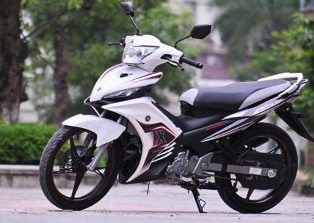
However, the most common classification is based on the nature, structure and function of the vehicle. We have popular motorbikes commonly seen in Vietnam, which are the Underbone and Scooter models. In which, Underbone is a type of motorbike, such as Wave, Future, Sirius, Exciter...
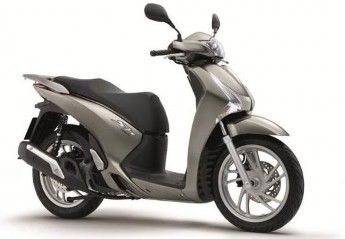
The main feature of this type of vehicle is that the engine is located under the frame, the fuel tank is under the seat. With this design, the center of gravity of the vehicle is moved back or in the middle, the front of the vehicle is light.
Scooter, also known as scooter, because it uses a continuously variable transmission (there are also some Scooter models that use a manual transmission with the gears and clutch integrated in the left handlebar). The main features of Scooter are the engine located at the rear of the vehicle, the rear of the vehicle is quite large with a large trunk, comfortable front space, it also has a smaller wheel diameter than most other models. Underbone and Scooter also use many different technologies that we will learn about in the following sections.
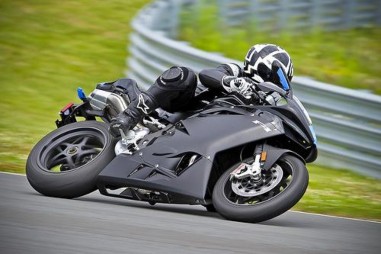
There are also large displacement motorcycles divided into main lines such as Naked, Sport, Cruiser, Touring and Motocross.
1.2. General structure of motorbikes
Normally a motorbike consists of the following parts:
a. Engine:
It is a machine consisting of many parts and closely connected assembly systems, where fuel is burned, heat is converted into mechanical energy and then generates power that is transmitted to the transmission system.
make the car move. To do this, the engine must have the following parts and systems:
+ Fixed and mobile details.
+ Details of the gas distribution system.
+ Lubrication and cooling system.
+ Fuel system.
+ Ignition system.
b. Transmission system:
Its task is to transmit motion from the engine to the driving wheel, changing the speed and torque of the driving wheel depending on the load and road. This system includes: Clutch, gearbox, chain puller wheel (front sprocket); chain disc (rear sprocket), load chain.
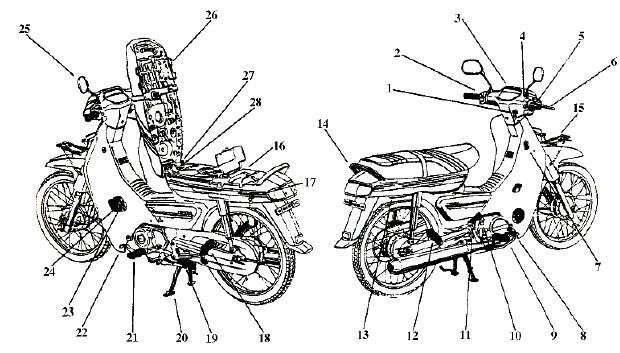
Figure 1.1: General structure of the vehicle
1. Engine switch with neck lock, saddle key 2. Low beam switch, high beam switch, horn switch, turn switch 3. Speedometer 4. Main light switch, starter button
5. Throttle 6. Front brake lever 7. Fairing, screw to mount hanger
8. Rear brake pedal 9. Footrest 10. Stop light switch 11. Pedal 12. Footrest 13. Rear fender 14. Frame for holding or pushing the bike 15. Front luggage rack 16.
Tool storage 17. Seat lock 18. Footrest mounting frame 19. Side stand 20. Vertical stand 21. Footrest 22. Gear shift lever
23. Fuel lock 24. Fuel filter 25. Rearview mirror 26. Saddle 27. Saddle shock absorber rubber 28. Fuel cap