
c. Current status of economic sector development
Agricultural production
Crop production:
* Rice production : has developed steadily, from producing only 01 crop/year, by 2002 there were 13,000 hectares producing 03 rice crops/year, 3,256 hectares producing 02 crops/year, average rice yield of 45.0 quintals/ha, food output of 180,000 tons. In 2011, the rice growing area reached 33,090 hectares, average yield of 53.4 quintals/ha, output of 176,742 tons.
* Color crops, food: With the advantage of some types of specialized land for growing color crops of the district, including communes with large areas such as Tan Tay, Tan Dong, Binh Nghi, Tan Thanh, Kieng Phuoc, Tan Dien, Tang Hoa..., specialized areas for growing special types of vegetables of each land have been formed such as areas for growing celery, onions, coriander; areas for growing reed mustard, turnips; areas for growing eggplant, chili; areas for growing watermelon, squash, and loofah... In particular, color crops for food have been developed in the past year, planted at the foot of the fields, with a total of 493 hectares, of which the largest are watermelon and cantaloupe with an area of 287 hectares. Currently, the district's safe vegetable areas have been formed in the communes of Tan Tay, Tan Dong, Binh Nghi and 2 cooperatives for safe vegetable production have been established in Hamlet Van Thanh Binh Nghi and Hamlet 6 Tan Tay to create favorable conditions for output.
* Fruit trees : With an area of 1,730 hectares and a harvest of 30,000 tons. The problem of product consumption by people is still difficult for most types of fruit in the district due to the lack of product brands (except for the existing cherry tree), production is still sporadic and fragmented, farmers still use unsafe pesticides, labor costs, high prices of fertilizers and materials... Therefore, the income of gardeners is not high. Particularly for cherry trees, in the past year, due to competition from purchasing enterprises and farmers growing new varieties (Brazilian sour cherry rich in vitamin C), prices have been more stable and growers have initially felt secure.
* Coconut trees : Care and harvest on the remaining 20 hectares, yielding 160 tons of products. Most of the land for growing coconuts is taken advantage of from roads, fields, river banks... In particular, in 2011, the price of fruits from drinking coconuts to dry coconuts was high. Currently, farmers have a direction to care for, restore and plant new coconut trees.
Livestock industry:
The pig farming industry in 2011 had a relatively stable output, except for the period in September and October when prices dropped sharply (due to the impact of floods and the import of livestock and poultry meat). In general, the pig farming industry had a good income during the year; the price of piglets also depended on the price of pork. For herbivores such as cows and goats, the output price was relatively stable and had a high output, making farmers excited. Regarding poultry, although the herd was restored in conditions with the risk of an influenza outbreak, under the strict control of the functional sectors and the majority of farmers were experienced, in addition to a good output and profit, people were still assured of production.
Fisheries industry
Fishery production is receiving investment attention with the most promising development, especially in the field of aquaculture. By 2011, the district maintained an annual aquaculture area of 3,566 hectares. In which, tiger shrimp farming still plays a leading role with the number of released shrimp fry of nearly 300 million, creating a significant source of income. The number of fishing vessels has decreased due to the depletion of coastal aquatic resources, and fishermen lack the accumulated capital to invest in renovating and building new offshore fishing vessels. The total annual seafood output of the district is 55,140 tons. To exploit the potential of fisheries, the district is seeking investment from superiors to put into operation the Northern Go Cong shrimp farming project areas, and the low-yield rice fields along the dike into aquaculture.
Industrial and handicraft sector
Production and business establishments continue to actively seek and expand markets, maintain traditional relationships with customers, and
Enterprises proactively seek stable sources of input materials at a high level; although affected by the adjustment of gasoline and electricity prices, the production situation of enterprises continues to maintain and grow quite well, the most invested facilities are upgrading, expanding and newly established seafood processing facilities. In addition to the achieved results, there are still difficulties and limitations such as: attracting investment in industrial parks is still slow, connecting infrastructure is limited, most of the production and business establishments are small-scale, low technology level, low competitiveness of products and enterprises, in addition, the input material prices of some essential goods fluctuate strongly, as well as high credit interest rates have caused many difficulties for some production establishments.
Trade and service sector
The management of activities in central markets is of interest, ensuring business order, environmental sanitation and fire prevention. Arranging and organizing the business locations of small traders and putting into operation Bien - Tan Thanh market, Go Cong Dong fruit market; determining the list of market and supermarket projects invested in the period 2011-2015, and at the same time determining the land location to call for investment in Den Do - Tan Thanh seafood market. Building the orientation for the development of the petroleum network in the district to serve the petroleum development planning for the period 2010-2015 with a vision to 2020; agreeing to open 2 new petroleum retail points in Kieng Phuoc and Binh An communes and restore one point in Vam Lang town.
- Regarding tourism activities: Tan Thanh beach resort operates stably, organizes the listing of goods prices, checks food hygiene and safety; buying and selling, business are arranged stably to facilitate tourists to visit, have fun and entertain. Especially during holidays and Tet, it has attracted about 28,000 visitors from inside and outside the province to visit and have fun (mainly from districts, Ho Chi Minh City and neighboring provinces).
3.1.2.3. Infrastructure includes technical infrastructure and social infrastructure.
a. Transportation and irrigation
The field of rural infrastructure construction has been focused on. By mobilizing investment capital sources, the district has basically completed the internal irrigation system . After the district was established, in 1986, the Central Government approved the Go Cong freshwater project, turning this long-salted land into a stable rice production area. The dyke system was upgraded and completed over 32km, large canals such as Sallisette, Champeaux, Tran Van Dong were dredged and expanded, the internal canal system was completely formed, providing enough fresh water for production and daily life.
Regarding transportation, the network of district and commune roads is asphalted and concreted, increasingly developing. The whole district has 7 district roads with a total length of 40km, 3 routes have been asphalted (DH01, DH02, DH03) with a total length of 18.479km, reaching 46.19% of the total length of existing district roads .
b. Power system: The whole district has installed 284 km of medium voltage power and 332 km of low voltage power to meet the needs of 31,964 households, reaching 98.98% of which 19,283 use main electricity meters, accounting for 57.6%, contributing significantly to the development of production and improving the lives of rural households.
c. Information and communication system: the whole district has 10,432 subscribers, well-managed 25 public telephone agents, 03 post offices , 30 Internet agents. Average landline density is 7 phones/100 people.
3.2. FORECASTING THE IMPACT OF SEA LEVEL RISING ON FIRE CULTIVATION LAND
3.2.1. Assessment of the current status of rice cultivation land and rice land use in Go Cong Dong district
3.2.1.1. Assessment of changes in rice cultivation area
According to the land assessment report of the Department of Natural Resources and Environment of Go Cong Dong district (2010), due to the conversion of rice land for urbanization, industrialization, technical and social infrastructure development..., the area of rice cultivation land has continuously decreased in recent years: In 2009, the area of rice cultivation land in the district was 11,442.83 hectares. In 2010, the area of rice cultivation land in the district was 10,858.0 hectares, a decrease of 584.83 hectares compared to 2009.
Cultivated land area by type of use: 3-crop cultivated land area is 10,528.01 ha, accounting for 96.96% of cultivated land area; 2-crop cultivated land area is 330 ha, accounting for 3.04% of cultivated land area. Thus, it can be said that 3-crop cultivated land area accounts for the majority of cultivated land area.
3.2.1.2. Area of cultivated land regularly affected by high tides
Because the rice cultivation area of Go Cong Dong district is located within the sea dike, protected by the sea dike and coastal mangrove forest system, the rice cultivation area of Go Cong Dong district is not affected by high tides.
3.2.1.3. Area of rice cultivation land affected by salinity intrusion
Go Cong Dong district has a coastal area with a coastline of more than 32 km. Therefore, salinity penetrates deep into the fields, in a natural state, in which rice cultivation land is most affected. Saline intrusion also significantly affects the socio-economic development process. However, there are also advantages such as creating a diverse ecosystem, large resources of aquatic products, and mangrove forests.
The saline intrusion situation in Go Cong Dong is very complicated and related to many factors, both natural (such as hydrology, flow, climate) as well as human impacts (such as production development, irrigation development). The coastal area of Go Cong Dong is a land with a lot of potential, rich and diverse ecosystem, but is very sensitive and susceptible to any development exploitation. The saline intrusion problem has a great impact on the coastal area, on the other hand, the impacts in the coastal area also have a great impact on the saline intrusion situation.
The most severely affected rice cultivation area was in 2002. In the communes of Phuoc Trung, Tan Phuoc, Ben Chua, Vam Kinh, Tan Thanh, Tan Hoa... in the sweetening area of Go Cong Dong district. Although 3-4 sowings were done, nearly 700 hectares of rice died or yield was reduced by 40-80%. The causes of salinity intrusion: Firstly, the two salinity prevention sluices No. 1 and No. 2 on the sea dike of Cua Tieu river, in Tan Xuan and Nghia Chi areas, due to long-term construction, have seriously degraded, unable to retain fresh water and also unable to prevent salt water during high tides. The second cause is that the irrigation construction units of the province have blocked the main water flow from Go Cong to Phuoc Trung, Tang Hoa, Tan Thanh to construct the Cong Dong sluice on provincial road 862 Tan Hoa - Tan Thanh. The construction progress is too slow, causing a large area to lose its fresh water source. The third reason belongs to farmers. Areas damaged by saltwater intrusion have long been advised to grow two rice crops per year, but farmers still grow three crops per year.
In addition, rice growing areas near the sea are often affected by salty winds blowing in from the sea, causing the rice flowers to partially burn, affecting rice productivity. Rice productivity in this area is from 35 to 40 quintals/ha (the average rice productivity of the whole district in 2011 was 53.41 quintals/ha).
Thus, it can be said that rice productivity in areas affected by salinity is much lower than in normal production areas. The reasons for this situation include both objective (natural) causes such as being affected by salty sea breezes; the remaining causes are due to the deterioration of irrigation systems such as salinity prevention sluices causing salinity leakage and households deliberately cultivating 3 rice crops in areas affected by salinity.
3.2.1.4. Brief assessment of rice production situation
As a district where the majority of people work in agricultural production. In the cultivation sector, rice plays a key role, being the main source of income for agricultural production households, and at the same time contributing to stabilizing food security for Go Cong Dong district in particular.
and Tien Giang province in general. In the recent period, due to the need for socio-economic development, a part of the rice land area was converted to non-agricultural purposes, the rice land cultivation area decreased from 41,119 ha in 2005 to 33,090 ha in 2011.
Rice productivity has been increasing steadily over the years. In 2005, the average yield per hectare was 43.15 hectares, and in 2011, it reached 53.41 hectares (an increase of 10.26 quintals compared to 2005). The reason for the increase in rice productivity is that: Farmers' cultivation skills have been constantly improved, the level of intensive investment has become more and more reasonable and effective, science and technology have been increasingly developed, which has had a positive impact on rice production, new varieties with high yield and good quality are increasingly used, so the average rice yield of the district has been continuously increasing; Active investment in infrastructure serving rice production has been focused on, such as: internal irrigation systems, local salinity treatment.
Winter-Spring rice yield is always greater than Summer-Autumn and Autumn-Winter crops because Winter-Spring crops are more favorable in terms of irrigation and weather.
Table 3.6. Rice production developments in Go Cong Dong district during the period 2005-2011
STT
Category | Unit | Year | |||||
2005 | 2007 | 2009 | 2010 | 2011 | |||
All year | |||||||
Acreage | Ha | 41,119 | 42,058 | 33,368 | 33,090 | 33,090 | |
Productivity | Tons/ha | 43.15 | 45.75 | 49.23 | 50.51 | 53.41 | |
Output | Ton | 177,437 | 192,410 | 164,276 | 167,153 | 176,742 | |
1 | Winter-Spring crop | ||||||
Acreage | Ha | 13,608 | 14,007 | 11,272 | 11,262 | 11,159 | |
Productivity | Tons/ha | 51.68 | 55.10 | 54.82 | 58.6 | 62.0 | |
Output | Ton | 69,512 | 77,176 | 61,794 | 65,994 | 69,186 | |
2 | Summer-Fall Crop | ||||||
Acreage | Ha | 13,511 | 14,148 | 11,371 | 10,492 | 11,200 | |
Productivity | Tons/ha | 40.38 | 42.14 | 46.74 | 47.8 | 51.0 | |
Output | Ton | 51,925 | 59,618 | 53,148 | 50,147 | 57,121 | |
3 | Fall Winter Crop | ||||||
Acreage | Ha | 14,000 | 13,904 | 10,725 | 11,336 | 10,731 | |
Productivity | Tons/ha | 40.0 | 40.00 | 46.00 | 45.0 | 47.0 | |
Output | Ton | 56,000 | 55,616 | 49,334 | 51,012 | 50,435 | |
Maybe you are interested!
-
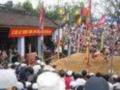
 Solutions for tourism development in Tien Lang - 10
zt2i3t4l5ee
zt2a3gstourism, tourism development
zt2a3ge
zc2o3n4t5e6n7ts
- District People's Committees and authorities of communes with tourist attractions should support, promote, and provide necessary information to people, helping them improve their knowledge about tourism. Raise tourism awareness for local people.
*
* *
Due to limited knowledge and research time, the thesis inevitably has shortcomings. Therefore, I look forward to receiving guidance from teachers, experts as well as your comments to make the thesis more complete.
Chapter III Conclusion
Through the issues presented in Chapter II, we can come to some conclusions:
Based on the strengths of available tourism resources, the types of tourism in Tien Lang that need to be promoted in the coming time are sightseeing and resort tourism, discovery tourism, weekend tourism. To improve the quality and diversify tourism products, Tien Lang district needs to combine with local cultural tourism resources, at the same time combine with surrounding areas, build rich tourism products. The strengths of Tien Lang tourism are eco-tourism and cultural tourism, so developing Tien Lang tourism must always go hand in hand with restoring and preserving types of cultural tourism resources. Some necessary measures to support and improve the efficiency of exploiting tourism resources in Tien Lang are: strengthening the construction of technical facilities and labor force serving tourism, actively promoting and advertising tourism, and expanding forms of capital mobilization for tourism development.
CONCLUDE
I Conclusion
1. Based on the results achieved within the framework of the thesis's needs, some basic conclusions can be drawn as follows:
Tien Lang is a locality with great potential for tourism development. The relatively abundant cultural tourism resources and ecological tourism resources have great appeal to tourists. Based on this potential, Tien Lang can build a unique tourism industry that is competitive enough with other localities within Hai Phong city and neighboring areas.
In recent years, the exploitation of the advantages of resources to develop tourism and build tourist routes in Tien Lang has not been commensurate with the available potential. In terms of quantity, many resource objects have not been brought into the purpose of tourism development. In terms of time, the regular service time has not been extended to attract more visitors. Infrastructure and technical facilities are still weak. The labor force is still thin and weak in terms of expertise. Tourism programs and routes have not been organized properly, the exploitation content is still monotonous, so it has not attracted many visitors. Although resources have not been mobilized much for tourism development, they are facing the risk of destruction and degradation.
2. Based on the results of investigation, analysis, synthesis, evaluation and selective absorption of research results of related topics, the thesis has proposed a number of necessary solutions to improve the efficiency of exploiting tourism resources in Tien Lang such as: promoting the restoration and conservation of tourism resources, focusing on investment and key exploitation of ecotourism resources, strengthening the construction of infrastructure and tourism workforce. Expanding forms of capital mobilization. In addition, the thesis has built a number of tourist routes of Hai Phong in which Tien Lang tourism resources play an important role.
Exploiting Tien Lang tourism resources for tourism development is currently facing many difficulties. The above measures, if applied synchronously, will likely bring new prospects for the local tourism industry, contributing to making Tien Lang tourism an important economic sector in the district's economic structure.
REFERENCES
1. Nhuan Ha, Trinh Minh Hien, Tran Phuong, Hai Phong - Historical and cultural relics, Hai Phong Publishing House, 1993
2. Hai Phong City History Council, Hai Phong Gazetteer, Hai Phong Publishing House, 1990.
3. Hai Phong City History Council, History of Tien Lang District Party Committee, Hai Phong Publishing House, 1990.
4. Hai Phong City History Council, University of Social Sciences and Humanities, VNU, Hai Phong Place Names Encyclopedia, Hai Phong Publishing House. 2001.
5. Law on Cultural Heritage and documents guiding its implementation, National Political Publishing House, Hanoi, 2003.
6. Tran Duc Thanh, Lecture on Tourism Geography, Faculty of Tourism, University of Social Sciences and Humanities, VNU, 2006
7. Hai Phong Center for Social Sciences and Humanities, Some typical cultural heritages of Hai Phong, Hai Phong Publishing House, 2001
8. Nguyen Ngoc Thao (editor-in-chief, Tourism Geography, Hai Phong Publishing House, two volumes (2001-2002)
9. Nguyen Minh Tue and group of authors, Hai Phong Tourism Geography, Ho Chi Minh City Publishing House, 1997.
10. Nguyen Thanh Son, Hai Phong Tourism Territory Organization, Associate Doctoral Thesis in Geological Geography, Hanoi, 1996.
11. Decision No. 2033/QD – UB on detailed planning of Tien Lang town, Hai Phong city until 2020.
12. Department of Culture, Information, Hai Phong Museum, Hai Phong relics
- National ranked scenic spot, Hai Phong Publishing House, 2005. 13. Tien Lang District People's Committee, Economic Development Planning -
Culture - Society of Tien Lang district to 2010.
14.Website www.HaiPhong.gov.vn
APPENDIX 1
List of national ranked monuments
STT
Name of the monument
Number, year of decisiondetermine
Location
1
Gam Temple
938 VH/QĐ04/08/1992
Cam Khe Village- Toan Thang commune
2
Doc Hau Temple
9381 VH/QĐ04/08/1992
Doc Hau Village –Toan Thang commune
3
Cuu Doi Communal House
3207 VH/QĐDecember 30, 1991
Zone II of townTien Lang
4
Ha Dai Temple
938 VH/QĐ04/08/1992
Ha Dai Village –Tien Thanh commune
APPENDIX II
STT
Name of the monument
Number, year of decision
Location
1
Phu Ke Pagoda Temple
178/QD-UBJanuary 28, 2005
Zone 1 - townTien Lang
2
Trung Lang Temple
178/QD-UBJanuary 28, 2005
Zone 4 – townTien Lang
3
Bao Khanh Pagoda
1900/QD-UBAugust 24, 2006
Nam Tu Village -Kien Thiet commune
4
Bach Da Pagoda
1792/QD-UB11/11/2002
Hung Thang Commune
5
Ngoc Dong Temple
177/QD-UBNovember 27, 2005
Tien Thanh Commune
6
Tomb of Minister TSNhu Van Lan
2848/QD-UBSeptember 19, 2003
Nam Tu Village -Kien Thiet commune
7
Canh Son Stone Temple
2160/QD-UBSeptember 19, 2003
Van Doi Commune –Doan Lap
8
Meiji Temple
2259/QD-UBSeptember 19, 2002
Toan Thang Commune
9
Tien Doi Noi Temple
477/QD-UBSeptember 19, 2005
Doan Lap Commune
10
Tu Doi Temple
177/QD-UBJanuary 28, 2005
Doan Lap Commune
11
Duyen Lao Temple
177/QD-UBJanuary 28, 2005
Tien Minh Commune
12
Dinh Xuan Uc Pagoda
177/QD-UBJanuary 28, 2005
Bac Hung Commune
13
Chu Khe Pagoda
177/QD-UBJanuary 28, 2005
Hung Thang Commune
14
Dong Dinh
2848/QD-UBNovember 21, 2002
Vinh Quang Commune
15
President's Memorial HouseTon Duc Thang
177/QD-UBJanuary 28, 2005
NT Quy Cao
Ha Dai Temple
Ben Vua Temple
Tien Lang hot spring
div.maincontent .p { color: black; font-family:"Times New Roman", serif; font-style: normal; font-weight: normal; text-decoration: none; font-size: 14pt; margin:0pt; } div.maincontent p { color: black; font-family:"Times New Roman", serif; font-style: normal; font-weight: normal; text-decoration: none; font-size: 14pt; margin:0pt; } div.maincontent .s1 { color: black; font-family:"Times New Roman", serif; font-style: normal; font-weight: normal; font-size: 16pt; } div.maincontent .s2 { color: black; font-family:"Times New Roman", serif; font-style: italic; font-weight: bold; text-decoration: none; font-size: 14pt; } div.maincontent .s3 { color: black; font-family:"Times New Roman", serif; font-style: italic; font-weight: normal; text-decoration: none; font-size: 14pt; } div.maincontent .s4 { color: black; font-family:"Times New Roman", serif; font-style: normal; font-weight: normal; font-size: 14pt; } div.maincontent .s5 { color: black; font-family:"Times New Roman", serif; font-style: normal; font-weight: bold; font-size: 14pt; } div.maincontent .s6 { color: black; font-family:"Times New Roman", serif; font-style: normal; font-weight: normal; text-decoration: none; font-size: 14pt; } div.maincontent .s7 { color: black; font-family:"Times New Roman", serif; font-style: normal; font-weight: bold; text-decoration: none; font-size: 14pt; } div.maincontent .s8 { color: black; font-family:"Times New Roman", serif; font-style: normal; font-weight: normal; text-decoration: none; font-size: 9pt; vertical-align: 6pt; } div.maincontent .s9 { color: black; font-family:"Times New Roman", serif; font-style: normal; font-weight: bold; text-decoration: none; font-size: 12pt; } div.maincontent .s11 { color: black; font-family:"Times New Roman", serif; font-style: normal; font-weight: normal; tex
Solutions for tourism development in Tien Lang - 10
zt2i3t4l5ee
zt2a3gstourism, tourism development
zt2a3ge
zc2o3n4t5e6n7ts
- District People's Committees and authorities of communes with tourist attractions should support, promote, and provide necessary information to people, helping them improve their knowledge about tourism. Raise tourism awareness for local people.
*
* *
Due to limited knowledge and research time, the thesis inevitably has shortcomings. Therefore, I look forward to receiving guidance from teachers, experts as well as your comments to make the thesis more complete.
Chapter III Conclusion
Through the issues presented in Chapter II, we can come to some conclusions:
Based on the strengths of available tourism resources, the types of tourism in Tien Lang that need to be promoted in the coming time are sightseeing and resort tourism, discovery tourism, weekend tourism. To improve the quality and diversify tourism products, Tien Lang district needs to combine with local cultural tourism resources, at the same time combine with surrounding areas, build rich tourism products. The strengths of Tien Lang tourism are eco-tourism and cultural tourism, so developing Tien Lang tourism must always go hand in hand with restoring and preserving types of cultural tourism resources. Some necessary measures to support and improve the efficiency of exploiting tourism resources in Tien Lang are: strengthening the construction of technical facilities and labor force serving tourism, actively promoting and advertising tourism, and expanding forms of capital mobilization for tourism development.
CONCLUDE
I Conclusion
1. Based on the results achieved within the framework of the thesis's needs, some basic conclusions can be drawn as follows:
Tien Lang is a locality with great potential for tourism development. The relatively abundant cultural tourism resources and ecological tourism resources have great appeal to tourists. Based on this potential, Tien Lang can build a unique tourism industry that is competitive enough with other localities within Hai Phong city and neighboring areas.
In recent years, the exploitation of the advantages of resources to develop tourism and build tourist routes in Tien Lang has not been commensurate with the available potential. In terms of quantity, many resource objects have not been brought into the purpose of tourism development. In terms of time, the regular service time has not been extended to attract more visitors. Infrastructure and technical facilities are still weak. The labor force is still thin and weak in terms of expertise. Tourism programs and routes have not been organized properly, the exploitation content is still monotonous, so it has not attracted many visitors. Although resources have not been mobilized much for tourism development, they are facing the risk of destruction and degradation.
2. Based on the results of investigation, analysis, synthesis, evaluation and selective absorption of research results of related topics, the thesis has proposed a number of necessary solutions to improve the efficiency of exploiting tourism resources in Tien Lang such as: promoting the restoration and conservation of tourism resources, focusing on investment and key exploitation of ecotourism resources, strengthening the construction of infrastructure and tourism workforce. Expanding forms of capital mobilization. In addition, the thesis has built a number of tourist routes of Hai Phong in which Tien Lang tourism resources play an important role.
Exploiting Tien Lang tourism resources for tourism development is currently facing many difficulties. The above measures, if applied synchronously, will likely bring new prospects for the local tourism industry, contributing to making Tien Lang tourism an important economic sector in the district's economic structure.
REFERENCES
1. Nhuan Ha, Trinh Minh Hien, Tran Phuong, Hai Phong - Historical and cultural relics, Hai Phong Publishing House, 1993
2. Hai Phong City History Council, Hai Phong Gazetteer, Hai Phong Publishing House, 1990.
3. Hai Phong City History Council, History of Tien Lang District Party Committee, Hai Phong Publishing House, 1990.
4. Hai Phong City History Council, University of Social Sciences and Humanities, VNU, Hai Phong Place Names Encyclopedia, Hai Phong Publishing House. 2001.
5. Law on Cultural Heritage and documents guiding its implementation, National Political Publishing House, Hanoi, 2003.
6. Tran Duc Thanh, Lecture on Tourism Geography, Faculty of Tourism, University of Social Sciences and Humanities, VNU, 2006
7. Hai Phong Center for Social Sciences and Humanities, Some typical cultural heritages of Hai Phong, Hai Phong Publishing House, 2001
8. Nguyen Ngoc Thao (editor-in-chief, Tourism Geography, Hai Phong Publishing House, two volumes (2001-2002)
9. Nguyen Minh Tue and group of authors, Hai Phong Tourism Geography, Ho Chi Minh City Publishing House, 1997.
10. Nguyen Thanh Son, Hai Phong Tourism Territory Organization, Associate Doctoral Thesis in Geological Geography, Hanoi, 1996.
11. Decision No. 2033/QD – UB on detailed planning of Tien Lang town, Hai Phong city until 2020.
12. Department of Culture, Information, Hai Phong Museum, Hai Phong relics
- National ranked scenic spot, Hai Phong Publishing House, 2005. 13. Tien Lang District People's Committee, Economic Development Planning -
Culture - Society of Tien Lang district to 2010.
14.Website www.HaiPhong.gov.vn
APPENDIX 1
List of national ranked monuments
STT
Name of the monument
Number, year of decisiondetermine
Location
1
Gam Temple
938 VH/QĐ04/08/1992
Cam Khe Village- Toan Thang commune
2
Doc Hau Temple
9381 VH/QĐ04/08/1992
Doc Hau Village –Toan Thang commune
3
Cuu Doi Communal House
3207 VH/QĐDecember 30, 1991
Zone II of townTien Lang
4
Ha Dai Temple
938 VH/QĐ04/08/1992
Ha Dai Village –Tien Thanh commune
APPENDIX II
STT
Name of the monument
Number, year of decision
Location
1
Phu Ke Pagoda Temple
178/QD-UBJanuary 28, 2005
Zone 1 - townTien Lang
2
Trung Lang Temple
178/QD-UBJanuary 28, 2005
Zone 4 – townTien Lang
3
Bao Khanh Pagoda
1900/QD-UBAugust 24, 2006
Nam Tu Village -Kien Thiet commune
4
Bach Da Pagoda
1792/QD-UB11/11/2002
Hung Thang Commune
5
Ngoc Dong Temple
177/QD-UBNovember 27, 2005
Tien Thanh Commune
6
Tomb of Minister TSNhu Van Lan
2848/QD-UBSeptember 19, 2003
Nam Tu Village -Kien Thiet commune
7
Canh Son Stone Temple
2160/QD-UBSeptember 19, 2003
Van Doi Commune –Doan Lap
8
Meiji Temple
2259/QD-UBSeptember 19, 2002
Toan Thang Commune
9
Tien Doi Noi Temple
477/QD-UBSeptember 19, 2005
Doan Lap Commune
10
Tu Doi Temple
177/QD-UBJanuary 28, 2005
Doan Lap Commune
11
Duyen Lao Temple
177/QD-UBJanuary 28, 2005
Tien Minh Commune
12
Dinh Xuan Uc Pagoda
177/QD-UBJanuary 28, 2005
Bac Hung Commune
13
Chu Khe Pagoda
177/QD-UBJanuary 28, 2005
Hung Thang Commune
14
Dong Dinh
2848/QD-UBNovember 21, 2002
Vinh Quang Commune
15
President's Memorial HouseTon Duc Thang
177/QD-UBJanuary 28, 2005
NT Quy Cao
Ha Dai Temple
Ben Vua Temple
Tien Lang hot spring
div.maincontent .p { color: black; font-family:"Times New Roman", serif; font-style: normal; font-weight: normal; text-decoration: none; font-size: 14pt; margin:0pt; } div.maincontent p { color: black; font-family:"Times New Roman", serif; font-style: normal; font-weight: normal; text-decoration: none; font-size: 14pt; margin:0pt; } div.maincontent .s1 { color: black; font-family:"Times New Roman", serif; font-style: normal; font-weight: normal; font-size: 16pt; } div.maincontent .s2 { color: black; font-family:"Times New Roman", serif; font-style: italic; font-weight: bold; text-decoration: none; font-size: 14pt; } div.maincontent .s3 { color: black; font-family:"Times New Roman", serif; font-style: italic; font-weight: normal; text-decoration: none; font-size: 14pt; } div.maincontent .s4 { color: black; font-family:"Times New Roman", serif; font-style: normal; font-weight: normal; font-size: 14pt; } div.maincontent .s5 { color: black; font-family:"Times New Roman", serif; font-style: normal; font-weight: bold; font-size: 14pt; } div.maincontent .s6 { color: black; font-family:"Times New Roman", serif; font-style: normal; font-weight: normal; text-decoration: none; font-size: 14pt; } div.maincontent .s7 { color: black; font-family:"Times New Roman", serif; font-style: normal; font-weight: bold; text-decoration: none; font-size: 14pt; } div.maincontent .s8 { color: black; font-family:"Times New Roman", serif; font-style: normal; font-weight: normal; text-decoration: none; font-size: 9pt; vertical-align: 6pt; } div.maincontent .s9 { color: black; font-family:"Times New Roman", serif; font-style: normal; font-weight: bold; text-decoration: none; font-size: 12pt; } div.maincontent .s11 { color: black; font-family:"Times New Roman", serif; font-style: normal; font-weight: normal; tex -
 Tourism Technical Infrastructure System Indicators
 -
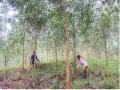 Technical Infrastructure Factors of the Enterprise
 -
 Investment in Infrastructure and Technical Facilities for Tourism Development
 -
 Current Status of Using Technical Facilities and Infrastructure for Agricultural Tourism Development.

Source: Department of Agriculture and Development of Go Cong Dong district, 2011.
* Crop arrangement: In order to be proactive in ensuring sufficient irrigation water and limiting diseases, especially brown planthoppers, yellow dwarf disease and rice leaf curl. Before each rice crop, the Department of Agriculture has organized seminars, training sessions and issued notices advising people to plant according to the crop calendar and apply concentrated measures to avoid planthoppers based on forecasts from competent agencies on plant protection. The results have been that over 95% of the district's planted areas strictly followed the crop calendar, so in the past year, no areas were affected by brown planthoppers, yellow dwarf disease and rice leaf curl.
* Rice variety structure: With the advantage of suitable land for producing good quality rice and the price of fragrant varieties is higher than that of normal varieties, so the rice variety structure of Go Cong Dong district through the seasons has the proportion of fragrant varieties and high-quality varieties accounting for 93.7% of the area, specifically in the Winter-Spring crop, fragrant rice accounts for 61.5%, high-quality varieties account for 32% and normal varieties account for 6.5% of the area; in the Summer-Autumn crop, fragrant varieties account for 70.10%, high-quality varieties account for 23.9% and normal varieties account for 6% of the area; in the Autumn-Winter crop, fragrant varieties account for 73.8%, high-quality varieties account for 20% and normal varieties account for 6.2% of the area. Rice varieties cultivated in different seasons throughout the year are commonly: OM 4900, OM 6162, OM 3536, VD 20, D 85, Nang Hoa 9, OM 2717, OM 2517... In each season, the ratio between varieties changes depending on adaptability, price, and growth time to ensure the highest efficiency.
3.2.2. Sea level rise scenarios and forecasted impacts on Go Cong Dong district
3.2.2.1. Choosing sea level rise scenarios
* Up to now, climate change scenarios that can be referenced for Vietnam include:
1. Abroad
- IPCC Third Assessment Report 2011.
- IPCC Fourth Assessment Report 2007.