
Loyal to clusters on the tuber, when cutting the tuber you can see the lines go deep into the tuber flesh with a characteristic foul smell and bitter taste.
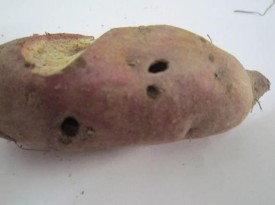
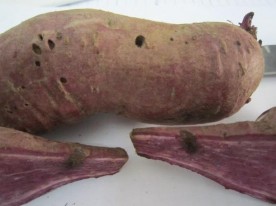
Figure 1.38: Damage symptoms of tuber borer
Maybe you are interested!
-
 Important Insect Pests on Legumes
 -
 Unanimous Awareness of the Important Role of Fdi.
 -
 Character System - An Important Element In Theme Development
 -
 Developing craft village tourism in Thai Nguyen specialty tea regions - 15
 -
 The Important Position And The Level Of Impact Of Risk Control In VAT Refund Management Of Tan Uyen Regional Tax Department
1.4 Important insect pests on taro
a) Stem hopper Tarophagus proserpina
Family Delphacidae - Order Homoptera
The leafhopper harms taro by sucking the sap, mainly damaging the underside of leaves and stems.
Taro plants infected with high density of leafhoppers may have wilting or growth inhibition.
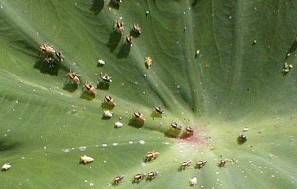
Figure 1.39: Adults and larvae of taro leafhoppers
b) Mealybug Planococcus minor
Family Pseudococcidae - Order Homoptera
Harmful symptoms
Taro mealybugs are usually found on the underside of leaves, between leaf veins, on roots and tubers.
On the roots, mealybugs gather into a white cotton mass, including both males and females mixed together, making it difficult to distinguish with the naked eye.
Mealybugs suck plant parts causing various symptoms, commonly deformed leaves, yellowing, growth inhibition, and sometimes wilting.
In addition to causing direct damage, the secretions from mealybugs attract sooty mold to coat the leaves and can transmit viral diseases. They live in symbiosis with ants, so when ants appear on the roots and leaves, it is a sign that the taro field is infected with mealybugs.
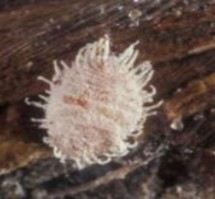
Figure 1.40: Mealybugs on taro
c) Omnivorous worm Spodoptera litura
* Harmful symptoms
Newly hatched larvae often gather in one place to eat the green part of the leaves. When they grow up, they will disperse and can eat the whole leaf. Initially, they attack the leaf flesh, creating stripes on the leaves. Later, they eat the veins and petioles of taro leaves.
Figure 1.41: Symptoms of damage and larvae of omnivorous pests
d) Aphid Aphis gossypii
Harmful symptoms
Taro aphids cause damage mainly by sucking plant sap, causing taro plants to wilt and inhibit growth, making leaves turn yellow and dry.
When taro aphids appear, they secrete a sweet-tasting liquid that attracts sooty mold to cover the leaf surface, reducing the plant's ability to photosynthesize, thereby reducing taro yield.
Taro aphids are also insects that transmit the virus that causes mosaic disease on taro.
If taro aphids are present in high density and rainfall is low, taro leaves will age faster than normal.
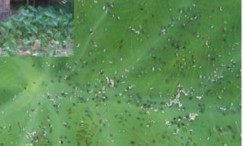
Figure 1.42: Aphids on taro
2. Measures to manage insect pests on food crops
2.1. IPM on rice
a. Cultivation measures
+ Early land preparation and field sanitation
Early tillage and field sanitation after each crop can kill many larvae and pupae of rice stem borers living in the stubble and rootstock; at the same time, it eliminates the habitat and food source of brown planthoppers, green planthoppers... which are the vectors of dangerous viral diseases for rice such as yellow blight, rice dwarf leaf curl and rice seedling blight. The principle of impact of field sanitation and post-harvest crop residue treatment is to cut off the cycle of pests from one crop to the next and limit the accumulation and spread of pests from the beginning of the crop.
+ Crop rotation
Rotating rice with other crops avoids disease accumulation on rice from one crop to the next.
+ Suitable planting season
Appropriate planting season ensures good growth and development of rice, high yield, and avoidance of weather risks. Determining the appropriate season must also be based on the characteristics of the harmful effects of important pests and diseases, ensuring that rice avoids peak disease outbreaks.
+ Use healthy seeds, pest-resistant seeds, short-term seeds
- Healthy, disease-free seeds help rice plants grow smoothly.
- Using resistant varieties reduces the use of chemical pesticides; reduces environmental pollution, protects natural enemies; maintains balance in the agricultural ecosystem.
- Short-term rice varieties with a growth period of about 100-110 days, planted in the early season can avoid stem borers and panicle biting worms. Extremely short-term rice varieties with a growth period of 80-90 days are also an effective measure to prevent brown planthoppers, because brown planthoppers do not have time to accumulate enough quantity to cause serious damage to extremely short-term varieties.
+ Planting at reasonable density
Sowing density and techniques depend on rice varieties, seasons, soil and nutrition, seedling age, seedling quality, level of intensive farming...
Too dense or too sparse a density affects productivity, and also affects the emergence and development of pests and weeds. Rice fields that are sown too densely often close rows early, causing high humidity, creating conditions for brown planthoppers and brown plant hopper disease to develop and cause severe damage at the end of the season.
+ Use fertilizer properly
Over-fertilization or improper fertilization will cause plants to grow abnormally and be susceptible to pests and diseases.
b. Physical measures
Use light traps to catch butterflies, break egg nests, use fences to scrub leaves and spray leaf rollers.
c. Biological measures
+ Create a favorable environment for beneficial organisms that are natural enemies of pests to develop to contribute to pest eradication:
- Protect natural enemies from toxicity caused by chemical pesticides by using selective pesticides, pesticides with a narrow spectrum of action, using pesticides when absolutely necessary and based on economic thresholds...
- Create habitat for natural enemies after planting by intercropping, planting legumes on the field banks, making stubble banks for natural enemies to hide...
- Apply appropriate farming techniques to create conditions for natural enemies to develop.
+ Priority is given to using biological pesticides:
Biological pesticides only have the effect of eliminating pests, are non-toxic to beneficial organisms, and are safe for human health and the environment.
Some beneficial organisms in rice fields: black wasps parasitize stink bug eggs; green wasps parasitize rice stem borer eggs; white cocoon wasps parasitize leaf roller larvae.
d. Chemical measures
+ Rational use of plant protection chemicals
- Using drugs at economic threshold: Save costs, maintain biological balance in the field, limit environmental pollution.
- Use safe drugs with natural enemies: Choose drugs that are less toxic, choose the time and method of treatment that has the least impact on natural enemies.
- Use medicine according to the 4 correct principles.
+ Use selective drugs: In integrated pest management, priority is given to drugs with a narrow spectrum of action, also known as selective drugs. However, to date, there have been very few studies on the selective effects and safety of drugs on natural enemies .
2.2 IPM on corn
a. Cultivation measures
+ Early land preparation and field sanitation
Early tillage and field sanitation after each crop can kill sources of pests such as larvae and pupae of cutworms, stem borers, corn leaf miners, etc., and at the same time eliminate the habitat and food sources of some pests at the end of the crop to move to the new crop. The principle of field sanitation and treatment of soil and crop residues after harvest is to cut off the cycle of pests from one crop to the next and limit the accumulation and spread of pests from the beginning of the crop.
+ Crop rotation
Rotate corn with rice and legumes or with other crops that are not hosts to some major corn pests to avoid accumulation of pests on corn from one crop to the next.
+ Suitable planting season
Appropriate planting season ensures good growth and development of corn, high yield, and avoidance of weather risks. Determining the appropriate season also depends on the characteristics of the harmful effects of important pests and diseases, ensuring that corn avoids peak disease outbreaks.
+ Use healthy seeds, disease-resistant seeds
- Healthy, disease-free seeds help corn plants grow smoothly.
- Using resistant varieties reduces the use of chemical pesticides; reduces environmental pollution, protects natural enemies; maintains the balance of the corn field ecosystem.
+ Planting at reasonable density
Planting density and techniques depend on corn varieties, seasons, soil and nutrition, and the farmer's intensive farming ability... Density that is too dense or too sparse affects productivity, and also affects the emergence and development of pests and weeds. Corn fields that are planted too densely and are not pruned often lack ventilation, have little light, and high humidity, creating favorable conditions for pests to develop and cause harm.
+ Use fertilizer properly
Over-fertilization or improper fertilization will cause plants to grow abnormally and be susceptible to pests. Corn fields fertilized with too much nitrogen fertilizer will cause plants to grow too well, the green color of the leaves attracts pests such as leaf miners, green worms, thorn worms, aphids, etc.
b. Manual measures
Remove egg nests and catch worms by hand. Clean weeds and hoe the fields to limit the shelter and secondary hosts of pests, in order to limit the number of pests in the fields.
c. Biological measures
+ Create a favorable environment for beneficial organisms that are natural enemies of pests to develop to contribute to pest eradication:
- Protect natural enemies from toxicity caused by chemical pesticides by using selective pesticides, pesticides with a narrow spectrum of action, using pesticides when absolutely necessary and based on economic thresholds...
- Apply appropriate farming techniques such as intercropping and overlapping planting to create conditions for natural enemies to develop.
+ Prioritize the use of biological and herbal pesticides: Biological pesticides only have the effect of eliminating pests, are not toxic to beneficial organisms, and are safe for human health and the environment. Use Bt pesticides (Basinlus thuringiensis) to eliminate some types of chewing worms. Biological products NPV, Beauveria and Metarhizium are capable of eliminating armyworms, green worms, locusts, etc.
d. Chemical measures
+ Rational use of plant protection chemicals
- Using drugs at economic threshold: Save costs, maintain biological balance in the field, limit environmental pollution.
- Use safe drugs with natural enemies: Choose drugs that are less toxic, choose the time and method of treatment that has the least impact on natural enemies.
- Use medicine according to the 4 correct principles:
+ Use selective drugs: In integrated pest management, priority is given to drugs with a narrow spectrum of action, also known as selective drugs. However, to date, there have been very few studies on the selective effects and safety of drugs on natural enemies.
2.3. Measures to manage pests on sweet potato plants
+ In the loam soil where sweet potatoes are grown, a lot of organic fertilizer should be added and sand should be mixed in to limit the growth of worms.
+ Ensure soil moisture, mound the tree roots and fill in cracks in the soil.
+ Clean the field, remove weeds and sweet potato residues. After harvesting, flood the field for 1-2 days to kill pests.
+ Treat cuttings by dipping them in Diazol insecticide for 30 minutes before planting, according to the spray concentration instructions on the package.
+ Using male flea attractants and microbiological drugs from Beauveria and Metarrhizium fungi is a good solution.
3. Practice
3.1. Purpose - requirements
Help students distinguish harmful symptoms and recognize the morphology of some common pests on food crops: rice, corn, sweet potatoes.
3.2. Materials
Pest samples are dry or soaked.
- On rice plants: 2-spot stem borer, brown planthopper, leaf roller, stink bug, armyworm, onion mosquito
- On Sweet Potato Plants: Mint, Vine Borer, Leaf-eating Caterpillar, Glass Fragments
- On corn plants: Stem borers, Fruit borers, Aphids, Thrips Handheld magnifying glass, stereo magnifying glass
A4 paper, pencil, sharpie.
3.3. Practice
With the guidance of the instructor, each student practices observing the symptoms of damage and morphological characteristics of pests on each type of plant.
3.4. Report
Record the characteristic features to identify each pest species.
SUGGESTED QUESTIONS
1. The first generation of corn stem borers and corn ear borers usually appear when the corn plant is still young (ear-shaped). So should we prevent and treat it right now, why and how?
2. What are the harmful habits of fruit borers on each type of plant?
3. What are the damage symptoms of leaf roller/stem borer on rice?
4. Explain the phenomenon of brown planthopper burning.