
“take a scoop of water and wash your feet” with the concept of washing your feet clean to go home, to start a new, happy life. Through this, we learn more about the beauty and uniqueness in the wedding customs and traditional costumes of the Tho people.
The Tho people also have quite special features in organizing funerals for the dead: keeping the body in the house; taking the soul for a walk around the village, taking it to visit relatives, taking the body to the water to wash its hair for the last time before going to the other world. On the way to take the soul for a walk, there are wrestling and lion dance competitions taking place around the tomb: “ A pair of adults and a pair of children. The drums beat loudly. The wrestlers tie red scarves, pull each other's hands, spin around, bend down, stand up straight, all following the rhythm of the drums... making the soul happy” [38, p.154]. Unlike the Kinh people, the Tho people do not have the custom of exhuming graves because they believe that the dead return to the earth and need to be left in peace, so they only visit graves near Tet or when burying the dead, clearing grass, covering the ground, and burning incense. By carefully describing many customs of ethnic minorities, La Quan Mien has brought readers new understandings about the customs of the mountain people with many unique and distinctive features.
But behind the good customs and practices, many backward and superstitious thoughts and concepts of the mountain people still silently and persistently exist, hindering life. As a mountain intellectual with the conditions to "look far and wide", La Quan Mien recognized those existing aspects and reflected them in his works: A Jump , A Hidden Birth , The Story in Chai-toc's House , My Brother Meets Again , The Person in Then Na Down ... In the story A Jump , although he already had five daughters, the character Ai-khang-to-linh still made a "jump" to have a son to continue the family line, otherwise he would "not be at peace even when he died". But ironically for him, that jump was a "missed jump" and the end of the work was a heartbreaking image of "Ai-linh looking at his six daughters and his bedridden wife, then looking up at the crooked house and crying out, then holding his head" ( A Jump ). Because he did not have a son, Mr. Chai-toc ( Story in
Chai-toc's family blamed his wife for not being able to give birth and threw himself into drinking and debauchery, causing the family's happiness to crack. When his wife gave birth to a son, it seemed that the family was happy and joyful again, but unexpectedly, a Muong Cho woman carrying her son came and asked his family to organize a wedding ceremony. As a result, both women left, leaving him with two sons in an empty, cold house. It was also that old-fashioned, backward ideology that pushed the character Ai-la-pom-po ( De hid ) to his wife's unjust death. Through the fate of the character, La Quan Mien expressed his critical thoughts on backward concepts in love and marriage, criticizing the male-dominated ideology that is still deeply rooted in the subconscious of many mountain people.
The exploitation of customs and beliefs of the mountainous people for personal gain by some shamans and sorcerers is also something that La Quan Mien and many ethnic minority writers have severely criticized. For example, the exploitation of the custom of tying the soul. Tying the soul is a custom of some ethnic groups such as Thai, Mong... People make a soul when they are sick, when they return from a long trip, when a girl goes to her husband's house, tie the soul for her son-in-law, tie the soul for a distinguished guest... to pray for good things to come to the person whose soul is being tied. But many people blindly believe and are then taken advantage of by shamans and sorcerers. La Quan Mien is also interested in learning and deeply reflecting this situation. Having no stance and trusting the gossip of those around her, the wife ( my brother met again ) invited shamans and fortune tellers to come to the house to pray for a cure for her husband: "The pig in the pen was taken out to be slaughtered. The wine jar in the house was opened, the tap was plugged in. The whole village, the elderly, the children crowded the house. The shaman spent several days chanting and praying (…). The remaining chickens and ducks in the coop were also taken out. Every jar of wine in the house was brought out. When he was full, the fortune teller prayed, lit incense, looked at the earth's veins, the direction of the house, and looked at each pillar and beam…” [33, pp. 14-15]. But the money was lost, the husband's illness did not improve, the house was devastated and desolate. The mother ( a person from Then-na Muong ) also believed that the
Maybe you are interested!
-
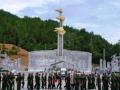
 Photos of Teaching Activities with Local Historical Relics in Nghe An
 -
 Current Status of Teaching Vietnamese History with Local Historical Relics at High Schools in Nghe An Province
 -
 Management of forestry land use in Dien Chau district, Nghe An province - 2
 -
 Activities to Visit Historical and Cultural Relics Associated with the Tran Dynasty
 -
 The Value of the Historical and Cultural Relic of Nghe Temple
Tying the soul will help his son get rid of headaches, tinnitus, and dizziness. Those old-fashioned, backward, and superstitious beliefs are also reflected in many other short stories by Thai ethnic writers: The Frustration of Physician Pan (Sa Phong Ba), The Frustration of Soul (Kha Thi Thuong), Going Down the Mountain (Vi Hoi)... The gullibility, trust, and confusion are favorable environments for shamans like Lau Nhia Xu ( Going Down the Mountain ), and old shaman Tang ( The Frustration of Physician Pan ) to use cunning, deceitful tricks, trying to collect and make illegal profits. When someone in the family was sick, the shaman Lau Nhia Xu ordered the killing of a buffalo, a pig, and offerings of silver bars... to exorcise the ghost. When he could not cure the disease, he said that the patient was too severely possessed by a ghost, and had to be beaten to make the ghost go away. Because of his lack of understanding and trust in Lau Nhia Xu's words, Mr. Chua Ba Ly beat his son to death. That superstition also easily took Mieng's life in the short story Boc via (Kha Thi Thuong). Blindly trusting and lacking knowledge, Mieng's father ignored the advice of the villagers and took her to the infirmary to get an injection. Because he thought: "Putting those things in your body will only cause pain, and you might die, and lose money. Staying home and worshiping the ghost will cure you" [70, p.126]. But after many days of worshiping the ghost of the shaman, Mieng still passed away. What caught the reader's attention in this short story was the love, worry and pain of Tun - Mieng's younger brother. Kha Thi Thuong let Tun doubt and resist like a child's nature: "...this was the third time he worshiped the ghost for Mieng. He began to suspect that there was no ghost, because Mieng's sister was getting sicker and sicker. (...). Tun did not believe that the black thread could tie the soul away from the body. That was Mieng's sister, she had just tied it that night, and the next morning she had died. So why do people do this?” [70, p.130]. Thus, conservative and backward thinking and perspectives have existed in the lives of people in the mountainous areas. This is also a major obstacle to the economic, cultural and social development of the mountainous areas, distorting the good meaning of customs, in order to gain personal benefits and must be eliminated. La Quan Mien and many ethnic minority writers have actively recognized and gradually eliminated that barrier with their compatriots to integrate into the new life of the country.
Thanks to his rich and practical life experience, and the process of studying and researching the culture and customs of the highland people in a meticulous manner, La Quan Mien has realistically and vividly expressed the customs and practices of ethnic minorities, especially the customs of the Thai ethnic group. These customs and practices on the one hand increase the appeal of the work, on the other hand, they are a testament to the author's deep understanding of the cultural life of the highlands. Besides his love for his homeland and his pride in the customs and practices imbued with the culture of the highland people such as: welcoming guests, weddings, funerals, beliefs, festivals, culinary culture, etc., the writer has boldly criticized the backward, old-fashioned, and superstitious ideas that still persist in the lives of the highland people and helped readers hope for change.

2.1.3. Historical vestiges in Nghe An land
Nghe An is the largest province in our country today, located in the North Central region. There are many ethnic groups living together in the province such as: Thai, Kinh, Tho, Muong, Kho Mu, O Du, Dan Lai, San Diu... Nghe An is known as a place of "Spiritual land and talented people"; with a proud historical and cultural tradition.
With deep love and pride in the tradition of fighting against foreign invaders of his homeland, La Quan Mien took historical events associated with the Lam Son uprising led by Le Loi as inspiration for his writings. Through the works: Pu-che Mountain, Chiet-chai Lake, Drowning the Ming army in the Nam Huong River, The land where I lived, ... readers have the opportunity to learn more about the events, characters and historical relics associated with the Lam Son uprising. As we know, in the early 15th century, our country fell under the domination of the Ming Dynasty. After conquering our country, they changed our country to Giao Chi district, considered it as one of their districts. The "crazy Ming army" carried out the plot to assimilate our nation, tried to plunder our wealth, and exploited the people extremely brutally. Through the short stories Cam Quy and Nha Pom , La Quan Mien's pen recalls a painful period of the nation: "The Ming Dynasty forced our people to mine gold and hunt elephants.
white, digging for pearls, forbidding our people to cook their own salt, paying tribute to white deer, nine-tailed turtles, white apes, big pythons, hunger everywhere…” [45, p.57], “They carried weapons, arrested, and beat anyone they met on the road” [46, p.87]. In addition, they recruited soldiers “Among the soldiers, there were also some Kinh and Thai people. They had to guard the outer perimeter, had to urge them to collect forest products, if they were late or disobeyed orders, Xac Han would yell and beat them. Some people who dared to escape were arrested and beheaded” [46, p.88]. Under the yoke of the Ming Dynasty, our people rose up to fight. Le Loi gathered heroes from all over the country and patriots everywhere to launch an uprising against foreign invaders. The Lam Son uprising quickly expanded its area of operation throughout the mountainous region of Thanh Hoa. In October 1424, after we won a resounding victory in the attack on Da Cang fort (Tho Xuan - Thanh Hoa), Lam Son insurgents marched into Nghe An according to the previously outlined plan. La Quan Mien deeply studied and recreated the situation, developments and results of the uprising in Nghe An: "the insurgents ambushed in Bo Lap, killed the governor Tran Trung and over 2,000 soldiers, and captured over 100 horses" [45, p.56]. The insurgents also advocated capturing Tra Long citadel (also known as Tra Lan citadel). Tra Lan citadel is located on the bank of Lam river connecting the mountainous and forested areas with the plains and on the upper road running through western Nghe An. Capturing Tra Lan citadel could control the entire mountainous and forested areas of western Nghe An, from here threatening Nghe An citadel. Tra Lan citadel was where the chief Cam Bang set up a mountain camp to fight against Lam Son insurgents. In October 1424, Lam Son army began to besiege Tra Long citadel, and sought to recruit Cam Bang. After more than two months of siege, without any reinforcements, "food in the citadel was exhausted, the soldiers were extremely confused, many people escaped and surrendered to the insurgents" [45, p.56] , Cam Bang was forced to surrender. The feats recreated through La Quan Mien's writings help readers feel more clearly the victorious spirit of Lam Son's insurgents "The battle of Bo Dang was filled with thunder and lightning/ Tra Lan region was filled with flying ashes" written by Nguyen Trai in Binh Ngo Dai Cao .
In the extremely arduous but heroic war of Lam Son uprising, the children of the mountainous region of Nghe An fought side by side with the Lam Son insurgents to achieve victory. That was Cam Quy - a Thai chieftain who previously held the position of district governor of Ngoc Ma district of the enemy - who brought 8,000 soldiers and 10 war elephants to join the uprising. This historical event was also reflected by La Quan Mien in the short story Cam Quy . These were the sacred calls of the chief Cam Quy: "Hey, my "red-shirted" insurgents of Ngoc Ma district! - Cam Quy jumped ashore and shouted: Prepare for me.
8,000 soldiers and 10 war elephants, let me ask to follow Le Loi. From now on, I no longer need the position of District Governor of Ngoc Ma! Hey, soldiers wearing the Xua Phang uniform! Join the Lam Son army to liberate our homeland Dai Viet from the oppression of the Xac Han" [45, p.60]. The girl from Tin Pu village (Khun Tinh village) was captured by the enemy and taken to the garrison to serve. She was brave and resourceful, and combined with a Lam Son army to attack and destroy the Pu Che garrison on Pu Xung mountain: "one late night, when the girl from Le village had tied her bag tightly so that the Ming army could sleep soundly, the army of seven people had already begun to march. They secretly advanced from the Heo May forest, quickly destroying the small garrison of Don village without letting a single one escape, so the enemy in Pu-che mountain did not know anything. After that, the army quickly crossed the Nam Huong River, advanced to Pu-che by two routes through Le village, Luom village and Mang Khung mountain with the support of young men and villagers. The army completely defeated the Pu-che fort, annihilating four or five dozen Ming troops" [33, p.24]. To remember the merits of the girl from Tin Pu village, the people named her "Nha Pom". La Quan Mien collected and recorded these heroic stories from folk tales that have been passed down for a long time in Nghe An.
As a person with a deep understanding of history and life experience, writer La Quan Mien introduced to readers historical relics related to the Lam Son uprising such as Bai Dinh relic, Pu-Che mountain, and Chet-Chai lake. In the article Once upon a time to Le Loi training ground , the author introduced in detail the Bai Dinh relic: “The
Bai Dinh relic is the barracks of Lam Son insurgents built after the victory at Bo Dang (Quy Chau) to train soldiers, preparing to advance to the battle of Tra Lan (Con Cuong)" , "Bai Dinh belongs to Dinh Thuong and Dinh Ha villages. Bai Dinh is located on the "upper road", which was originally a post station of ancient traffic. Dinh Thuong now has a field called Dong Tram (located next to road 48). Le Loi stationed troops and set up barracks here. To the north is Bai Tap, stretching from column 57 to 59 of road 48. Dinh Thuong still has the remains of a square trapezoidal rampart, the base is 290 meters long, the base is 220 meters short, the square side is 61.5 meters. The other side of the citadel is based on the mountainside, without ramparts. Dinh Ha still has a temple worshiping Kham Quan Cong, a local who assisted Le Loi..." [33, p.35]. Many other places have been researched, discovered and conveyed to readers by the writer. Pu Xung Mountain is called Pu Che Mountain (meaning the mountain with the enemy's fortifications). People call the deep lake in Heo May forest Nong Chet Chai (meaning Seven Boys Lake) to remember the merits of the young men who followed Lam Son's army to fight the Ming army's fortifications on Pu Che Mountain. Nowadays, on the 20th day of the 8th lunar month of the Thai people, people celebrate the Cam Pha Ky Moc ceremony (a vegetarian and fasting ceremony) to show their gratitude to Mrs. Nha Pom and the seven young men who fought the Ming invaders and brought peace to the village, etc.
Through the works written about historical events and traces related to the Lam Son uprising, both rich in memoirs and rich in literature, readers are enriched with historical and cultural knowledge and literary aesthetic emotions. The stories and memoirs written about historical traditions by La Quan Mien deeply expressed the writer's passionate love and pride for his homeland, while at the same time arousing pride and national consciousness in every Vietnamese person.
2.1.4. Some changes are not in the same direction
2.1.4.1. The destruction of the natural environment
When studying the reality of mountain life, La Quan Mien paid attention to the relationship between humans and nature. In the writer's perception, nature is both a living environment and a close friend to each person.
mountain people. But the writer realized the reality that the natural environment is being brutally destroyed by humans. Through his work, the writer wants to sound the alarm bell to everyone. This is an issue that many mountain writers are interested in reflecting (Cao Duy Son, Doan Lu, Ha Thi Cam Anh, Hlinh Nie, Nong Van Lap, Doan Ngoc Minh...).
In the stories and memoirs of La Quan Mien, we clearly see the relationship between humans and nature and the law of cause and effect of that relationship. The first aspect of the law of cause and effect in the relationship between humans and nature: gratitude . If humans live in harmony, respect and protect the natural environment, they will be protected and supported by nature and their lives will always be peaceful. To express that relationship, in some works, the author personified wild animals into characters who carry feelings, help or repay human gratitude. The tiger ( Tiger's Love ) loves Ms. Xao-ngam, who once saved the tiger from a trap; The wild boar protects the couple On Khon from the attack of a fierce tiger ( The Wild Boar ). The motif of wild animals not having a violent nature but knowing how to distinguish right from wrong, knowing how to repay kindness to kind people has been popular in Vietnamese literature. The story The Meaningful Tiger (a Vietnamese medieval story) tells about a midwife in Dong Trieu who was given more than ten taels of silver by a father tiger to repay her for helping her mother give birth; the novel Sacred Forest (Hoang The Sinh) tells the story of a lame tiger unexpectedly saving Dam's baby boy in a flood as a way to repay Dam for preventing him from killing the tiger in the past, etc. The gratitude and revenge in these works, although fantastical and absurd, truly reflect the nature of the relationship between humans and nature. Following that motif, La Quan Mien has had attractive short stories, suitable for the readers' psychology, promptly approaching a topical issue of life.
On the second side - revenge : if humans treat and interfere violently with the natural world, they will have to suffer the consequences of their own actions.