
Apricot trees grew gradually over the monitoring periods. In November, the final diameter of the trunk stopped growing when the tree formed buds. The trunk diameter on November 15 of the apricot varieties ranged from 3.92
- 4.2 cm, out of 10 varieties, 6 varieties have a diameter of 4 cm or more, including: MV1 (Yen Tu yellow apricot) 4.2 cm, MV2 (Hue apricot) 4.1 cm, MV4 (Sparrow apricot) 4.11 cm, MV5 (round five-petal yellow apricot) 4.09 cm, MV8 (Curly apricot) 4.05 cm and MV9 (Kem apricot) 4.03 cm. The remaining varieties smaller than 4 cm are MV3 (Cam apricot) 3.92 cm, MV6 (Giao apricot) 3.95 cm, MV7 (Vinh Hao apricot) 3.93 cm and MV10 (Buffalo apricot) 3.98 cm.
4.5
4
3.5
3
2.5
2
1.5
1
0.5
0
MV1
MV2 MV3 MV4 MV5 MV6 MV7 MV8
MV9 MV10
Tracking period Apr 15 Tracking period Jun 15
Tracking time Aug 15 Tracking time Nov 15
Figure 3.4. Growth dynamics of trunk diameter of apricot varieties (Gia Lam - Hanoi, 2016 - 2017)
Flowering is possible thanks to the majority of photosynthetic products stored in the leaves in the pre-bud stage and direct photosynthetic products in the post-bud stage. This study is consistent with the study of Doan Thu Thuy et al. (2021) that flower quality depends mainly on the amount of dry matter accumulated during photosynthesis from the leaves in the pre-bud stage.
Leaves are photosynthetic products for ornamental plants in general and apricot trees in particular. Leaves of the apricot varieties monitored have different widths and lengths depending on the genetic factors of the variety. The growth dynamics of leaf length and width are shown in Table 3.12.
The studied apricot varieties have a fairly uniform growth in leaf length and width at the monitoring times, leaf area increases rapidly, the surface exposed to light is large, the accumulation of photosynthetic products is more, this is a decisive factor for the growth and development of the tree.
Table 3.12. Leaf growth dynamics of apricot varieties studied in Gia Lam - Hanoi, 2016 - 2017
Unit: cm
Symbol
Generic Name | Tracking time (days) | ||||||||
10 | 30 | 50 | 70 | ||||||
Wide | Long | Wide | Long | Wide | Long | Wide | Long | ||
MV1 | Yen Tu yellow apricot | 2.2 | 6.1 | 3.2 | 9.4 | 5.3 | 12.4 | 5.7±0.1 | 16.1±0.1 |
MV2 | Mai Hue | 2.3 | 6.3 | 3.1 | 9.2 | 5.2 | 12.5 | 5.3±0.2 | 14.7±0.2 |
MV3 | Orange | 2.2 | 6.0 | 3.1 | 9.1 | 5.3 | 12.5 | 5.4±0.1 | 15.5±0.1 |
MV4 | Mai Se | 2.5 | 6.5 | 3.6 | 10.2 | 5.0 | 13.4 | 5.3±0.1 | 15.1±0.1 |
MV5 | Five-petal round yellow apricot | 2.3 | 6.0 | 3.2 | 9.0 | 4.2 | 12.5 | 5.4±0.1 | 15.3±0.2 |
MV6 | Mai Giao | 2.2 | 6.0 | 3.1 | 9.0 | 4.1 | 12.4 | 5.0±0.1 | 14.5±0.1 |
MV7 | Mai Vinh Hao | 2.2 | 6.2 | 3.1 | 9.2 | 4.3 | 12.6 | 5.2±0.2 | 15.5±0.1 |
MV8 | Curly Plum | 2.3 | 6.1 | 3.2 | 9.1 | 4.2 | 12.6 | 5.2±0.1 | 15.4±0.2 |
MV9 | Mai Kem | 2.3 | 6.3 | 3.2 | 9.3 | 4.3 | 12.5 | 5.1±0.1 | 14.7±0.1 |
MV10 | Mai Trau | 2.6 | 6.7 | 3.8 | 10.3 | 5.3 | 13.5 | 5.5±0.1 | 15.6±0.1 |
Maybe you are interested!
-
 Research on agrobiological characteristics of some apricot varieties and technical measures affecting the growth and flowering of Yen Tu yellow apricot in Hanoi - 22
 -
 Absolute growth rate of experimental chickens over weeks of age
 -
 Study on growth, reproduction, productivity and milk quality of purebred HF Holstein Friesian cows, F1, F2 and F3 crossbred generations between HF and Sind crossbred raised in Lam Dong province - 18
 -
 Growth Parameters of Plants in Strip No. 1 Growth Measurement Chart of Seedlings in Strip No. 1
 -
 VPBank's Credit Growth Compared to the Whole System
The growth dynamics of leaf width of the varieties during the period from 10 to 50 days all increased, at 10 days (start of monitoring) were all greater than 2 cm, at 50 days it fluctuated from 4.1 to 5.3 cm, at 70 days it showed that leaf width developed and fluctuated from 5.0 to 5.7 cm. The leaf with the largest width was MV1 leaf.
(Yen Tu yellow apricot) 5.7 cm and the lowest is MV6 (Mai Giao) 5.0 cm. After that, the width of the leaves tends to remain the same and may shrink due to aging.
The growth dynamics of leaf length during the period from 10 to 50 days showed that leaf length increased from 6 cm at 10 days to 12-13 cm at 50 days. At 70 days, leaf length ranged from 14.5 - 15.8 cm. The longest leaf was MV1 (Yen Tu yellow apricot) at 16.1 cm and the shortest was MV6 (Mai Giao) at 14.5 cm. After this period, leaf length almost stopped growing, remained the same or shrank when old.
3.1.3. Survival and flowering rates of apricot varieties in the study
Apricot trees are transferred from the ground to pots, so they need time to adapt. Therefore, evaluating the survival rate after planting, the time from planting to budding and flowering are very necessary indicators, closely related to productivity and flower quality. The results are presented in Table 3.13.
All apricot varieties have a high survival rate of over 80%, of which MV1 (Yen Tu yellow apricot) has the highest survival rate of 85.3% and the lowest is MV8 (Quăn apricot) 81.1%. In addition, other varieties also have similar survival rates such as MV4 (Sparrow apricot) 81.3%, MV10 (Buffalo apricot) 81.3%, and MV3 (Orange apricot) 82.2%.
and MV6 (Mai Giao) 82.2%. High survival rate will reduce costs of seeds, care and increase economic value on the planting area.
The planting time (from the time the apricot tree is moved from the ground to the pot) until 50% of the buds appear is very important. Based on this time, there will be measures to care for and treat the flowers to bloom on the desired occasion. This time is 7 days apart for the varieties, in which MV1 (Yen Tu yellow apricot) has the shortest time from planting to 50% buds at 330 days and the longest is MV4 (Sparrow apricot) at 337 days.
The varieties of apricot trees grown in natural conditions in Hanoi without any measures usually bloom after Tet. The time from planting to flowering 10% ranges from 370 - 380 days, the shortest is still MV1 (Yen Tu yellow apricot) 370 days and the longest is MV10 (Buffalo apricot) 380 days, the remaining varieties bloom differently from 1 - 10 days.
Table 3.13. Survival rate and flowering time of apricot varieties in Gia Lam - Hanoi, 2016 - 2017
Symbol
Generic Name | Survival rate after planting (%) | Time from planting to budding 50% (day) | Time from planting to flowering 10% (day) | Flowering day 10% | Flowering time 10% compared to Lunar New Year (days) | |
MV1 | Yen Tu yellow apricot | 85.3 | 330±1 | 370±1 | 11/2 | -15 |
MV2 | Mai Hue | 83.2 | 335±2 | 376±2 | 17/2 | -21 |
MV3 | Orange | 82.2 | 336±1 | 378±1 | 19/2 | -23 |
MV4 | Mai Se | 81.3 | 337±2 | 379±2 | 20/2 | -24 |
MV5 | Five-petal round yellow apricot | 82.4 | 333±1 | 377±2 | 18/2 | -22 |
MV6 | Mai Giao | 82.2 | 336±2 | 378±1 | 19/2 | -23 |
MV7 | Mai Vinh Hao | 83.0 | 332±1 | 375±2 | 16/2 | -20 |
MV8 | Curly Plum | 81.1 | 334±1 | 378±2 | 19/2 | -23 |
MV9 | Mai Kem | 82.2 | 334±2 | 377±1 | 18/2 | -22 |
MV10 | Mai Trau | 81.3 | 336±1 | 380±1 | 21/2 | -25 |
Note: - blooms after Lunar New Year
Monitoring the flowering date of the varieties in the study, the results in Table 3.13 show that 10% of the apricot varieties bloom from February 11 to February 21 and all varieties bloom 15 to 25 days after Tet. Of which, MV1 (Yen Tu yellow apricot) has a late flowering time after Tet, 15 days and MV10 (Buffalo apricot) after 25 days. The remaining varieties bloom from 20 to 24 days, which greatly affects the economic value of the variety. Therefore, to adjust the apricot to bloom on Tet, it is necessary to determine appropriate technical measures that affect the growth and development stage of the tree to be able to control the tree to bloom.
3.1.4. Pest and disease situation of studied apricot varieties
Like other crops, pests and diseases of flowers and ornamental plants are one of the factors affecting the productivity, quality, color, fragrance of flowers and the durability of decoration. Pests and diseases reduce the economic value, aesthetic value as well as the value of goods of flowers and ornamental plants on the market (Tran Van Mao, Nguyen The Nha, 2004).
For apricot trees, pests are the biggest threat. There are pests that cause harm at different times of the year, causing the tree to grow slowly, the leaves to curl, the flowers to be small, fall off easily, and the color to be pale...
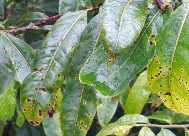
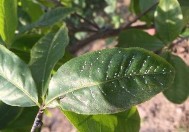
The results in Table 3.14 show that common and harmful diseases on apricot varieties are: leaf spots, rust, pink fungus, which usually cause damage from May to October every year.
Leaf spot disease ( Cercospora sojina ) initially appears as tiny dots, then spreads rapidly into spots. Young branches infected with the disease will have leaves fall off, shoots dry out, and the plant will grow slowly.
Rust ( Uromyces appendiculatus ) mainly affects leaves, sometimes young branches. The lesions are small orange-yellow spots with pale borders, diseased branches are shriveled, shoots develop poorly and may wither.
Pink fungus ( Macrophoma mangiferae ) mainly affects branches and trunks, causing tiny pink-red threads to appear, causing the sap vessels to dry and become blocked, making the branches and trunks brittle and easy to break.
|
| |
Leaf spot disease | Rust disease | Pink fungus |
Figure 3.5. Some diseases on apricot trees | ||
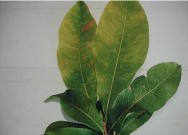
Research results show that rust and leaf spot diseases in apricot varieties cause insignificant damage, from mild (level 1) to moderate (level 3), and periodic spraying will control the disease.
Powdery mildew disease is very dangerous for the trunk and branches. Some varieties are severely affected (level 5) such as MV4 (Sparrow Apricot), MV6 (Garlic Apricot) and MV9 (Kem Apricot). Mildly affected (level 3) are MV1 (Yen Tu Yellow Apricot), MV2 (Hue Apricot).
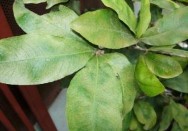
Evaluation of the pest situation of apricot varieties shows that red spider mites, thrips, and mealybugs are the three pests that often cause light to moderate damage to apricot trees and often cause damage in the hot and humid summer (from April to September).
Red spider ( Tetranychus sp . ) eats the epidermis and sucks the leaf sap when the leaves are in the young stage and later, creating yellow-white spots on the upper surface of the leaves. When severely damaged, the leaves become dry and hard, affecting the normal growth and development of the apricot tree.
Thrips ( Thrip palmi ) suck nutrients from young leaves. Damaged young shoots are often rough, hard and brittle, the edges and tips of the leaves are curled up. When severe, the leaves turn yellow and fall off easily, and the plant grows poorly.
Mealybugs ( Planococcus citri ) are vectors of viral diseases. They suck sap, causing the tips to curl, the leaves to turn yellow, the plant to grow poorly, accompanied by ants and black sooty mold. Mealybugs are also vectors of viral diseases for plants (Nguyen Van Dan et al., 2018).
The data in Table 3.14 also show that thrips and red spiders cause light to moderate damage (level 1 - 2) so they do not cause great damage to apricot varieties.
Mealybugs cause more damage from light to heavy (level 1 - 3), some varieties are severely affected such as MV4 (Mai Se), MV6 (Mai Giao), MV8 (Mai Quan) at this level of damage need to be sprayed with pesticides periodically to prevent spreading and damaging the plant. Among them, MV1 (Mai Vang Yen Tu) and MV10 (Mai Trau) have the lightest level of damage (level 1) in both thrips, red spiders and mealybugs.
|
| |
Leaf thrips | Red spider mites | Mealybugs |
Figure 3.6. Some pests on the apricot tree | ||
Assessment of the level and composition of harmful pests and diseases shows that the varieties with good growth and development ability and less susceptible to pests and diseases are MV1 (Yen Tu yellow apricot), MV5 (round five-petal yellow apricot), followed by MV3 (Cam apricot), MV7 (Vinh Hao apricot) and the most severe are MV6 (Giao apricot), MV9 (Kem apricot).
The best measure is to prevent pests and diseases from entering and spreading early. Take care, prune dry leaves, dense branches and eliminate pests and diseases in the early stages when they first appear (Nguyen Thi Kim Ly, 2009).
Table 3.14. Level of pests and diseases on apricot varieties in Gia Lam - Hanoi, 2016 - 2017
Symbol | Generic Name | Pest species | |||||
Leaf spot disease (Cercospora sojina) | Rust disease (Uromyces appendiculatus) | Pink fungus (Macrophoma mangiferae) | Arrange (Thrip palmi) | Red spider (Tetranychus sp) | Mealybug (Planococcus citri) | ||
MV1 | Yen Tu yellow apricot | 1 | 1 | 3 | 1 | 1 | 1 |
MV2 | Mai Hue | 3 | 1 | 3 | 1 | 2 | 1 |
MV3 | Orange | 3 | 1 | 3 | 1 | 2 | 1 |
MV4 | Mai Se | 1 | 3 | 7 | 1 | 2 | 3 |
MV5 | Five-petal round yellow apricot | 1 | 3 | 3 | 2 | 1 | 1 |
MV6 | Mai Giao | 3 | 3 | 7 | 1 | 1 | 3 |
MV7 | Mai Vinh Hao | 3 | 1 | 3 | 1 | 1 | 2 |
MV8 | Curly Plum | 1 | 3 | 3 | 1 | 2 | 3 |
MV9 | Mai Kem | 3 | 3 | 7 | 2 | 1 | 1 |
MV10 | Mai Trau | 3 | 3 | 5 | 1 | 1 | 1 |
76
- For pests: (Level 1-3) Level 1: Mild (sporadic appearance)
Level 2: Moderate (distribution <1/3 of plants) Level 3: Severe (distribution >1/3 of plants)
- For diseases: (Level 1-9) Level 1: < 1% of damaged area Level 3: from 1-5% of damaged area Level 5: > 5 - 25% of damaged area
Level 7: > 25 - 50% of damaged area Level 9: > 50% of damaged area