
Build
6.9 | 5.35 | 5.80 | 5.89 | 6.05 | 6.25 | 6.36 | 6.62 | 6.96 | 6.49 |
Maybe you are interested!
-

 Solutions for tourism development in Tien Lang - 10
zt2i3t4l5ee
zt2a3gstourism, tourism development
zt2a3ge
zc2o3n4t5e6n7ts
- District People's Committees and authorities of communes with tourist attractions should support, promote, and provide necessary information to people, helping them improve their knowledge about tourism. Raise tourism awareness for local people.
*
* *
Due to limited knowledge and research time, the thesis inevitably has shortcomings. Therefore, I look forward to receiving guidance from teachers, experts as well as your comments to make the thesis more complete.
Chapter III Conclusion
Through the issues presented in Chapter II, we can come to some conclusions:
Based on the strengths of available tourism resources, the types of tourism in Tien Lang that need to be promoted in the coming time are sightseeing and resort tourism, discovery tourism, weekend tourism. To improve the quality and diversify tourism products, Tien Lang district needs to combine with local cultural tourism resources, at the same time combine with surrounding areas, build rich tourism products. The strengths of Tien Lang tourism are eco-tourism and cultural tourism, so developing Tien Lang tourism must always go hand in hand with restoring and preserving types of cultural tourism resources. Some necessary measures to support and improve the efficiency of exploiting tourism resources in Tien Lang are: strengthening the construction of technical facilities and labor force serving tourism, actively promoting and advertising tourism, and expanding forms of capital mobilization for tourism development.
CONCLUDE
I Conclusion
1. Based on the results achieved within the framework of the thesis's needs, some basic conclusions can be drawn as follows:
Tien Lang is a locality with great potential for tourism development. The relatively abundant cultural tourism resources and ecological tourism resources have great appeal to tourists. Based on this potential, Tien Lang can build a unique tourism industry that is competitive enough with other localities within Hai Phong city and neighboring areas.
In recent years, the exploitation of the advantages of resources to develop tourism and build tourist routes in Tien Lang has not been commensurate with the available potential. In terms of quantity, many resource objects have not been brought into the purpose of tourism development. In terms of time, the regular service time has not been extended to attract more visitors. Infrastructure and technical facilities are still weak. The labor force is still thin and weak in terms of expertise. Tourism programs and routes have not been organized properly, the exploitation content is still monotonous, so it has not attracted many visitors. Although resources have not been mobilized much for tourism development, they are facing the risk of destruction and degradation.
2. Based on the results of investigation, analysis, synthesis, evaluation and selective absorption of research results of related topics, the thesis has proposed a number of necessary solutions to improve the efficiency of exploiting tourism resources in Tien Lang such as: promoting the restoration and conservation of tourism resources, focusing on investment and key exploitation of ecotourism resources, strengthening the construction of infrastructure and tourism workforce. Expanding forms of capital mobilization. In addition, the thesis has built a number of tourist routes of Hai Phong in which Tien Lang tourism resources play an important role.
Exploiting Tien Lang tourism resources for tourism development is currently facing many difficulties. The above measures, if applied synchronously, will likely bring new prospects for the local tourism industry, contributing to making Tien Lang tourism an important economic sector in the district's economic structure.
REFERENCES
1. Nhuan Ha, Trinh Minh Hien, Tran Phuong, Hai Phong - Historical and cultural relics, Hai Phong Publishing House, 1993
2. Hai Phong City History Council, Hai Phong Gazetteer, Hai Phong Publishing House, 1990.
3. Hai Phong City History Council, History of Tien Lang District Party Committee, Hai Phong Publishing House, 1990.
4. Hai Phong City History Council, University of Social Sciences and Humanities, VNU, Hai Phong Place Names Encyclopedia, Hai Phong Publishing House. 2001.
5. Law on Cultural Heritage and documents guiding its implementation, National Political Publishing House, Hanoi, 2003.
6. Tran Duc Thanh, Lecture on Tourism Geography, Faculty of Tourism, University of Social Sciences and Humanities, VNU, 2006
7. Hai Phong Center for Social Sciences and Humanities, Some typical cultural heritages of Hai Phong, Hai Phong Publishing House, 2001
8. Nguyen Ngoc Thao (editor-in-chief, Tourism Geography, Hai Phong Publishing House, two volumes (2001-2002)
9. Nguyen Minh Tue and group of authors, Hai Phong Tourism Geography, Ho Chi Minh City Publishing House, 1997.
10. Nguyen Thanh Son, Hai Phong Tourism Territory Organization, Associate Doctoral Thesis in Geological Geography, Hanoi, 1996.
11. Decision No. 2033/QD – UB on detailed planning of Tien Lang town, Hai Phong city until 2020.
12. Department of Culture, Information, Hai Phong Museum, Hai Phong relics
- National ranked scenic spot, Hai Phong Publishing House, 2005. 13. Tien Lang District People's Committee, Economic Development Planning -
Culture - Society of Tien Lang district to 2010.
14.Website www.HaiPhong.gov.vn
APPENDIX 1
List of national ranked monuments
STT
Name of the monument
Number, year of decisiondetermine
Location
1
Gam Temple
938 VH/QĐ04/08/1992
Cam Khe Village- Toan Thang commune
2
Doc Hau Temple
9381 VH/QĐ04/08/1992
Doc Hau Village –Toan Thang commune
3
Cuu Doi Communal House
3207 VH/QĐDecember 30, 1991
Zone II of townTien Lang
4
Ha Dai Temple
938 VH/QĐ04/08/1992
Ha Dai Village –Tien Thanh commune
APPENDIX II
STT
Name of the monument
Number, year of decision
Location
1
Phu Ke Pagoda Temple
178/QD-UBJanuary 28, 2005
Zone 1 - townTien Lang
2
Trung Lang Temple
178/QD-UBJanuary 28, 2005
Zone 4 – townTien Lang
3
Bao Khanh Pagoda
1900/QD-UBAugust 24, 2006
Nam Tu Village -Kien Thiet commune
4
Bach Da Pagoda
1792/QD-UB11/11/2002
Hung Thang Commune
5
Ngoc Dong Temple
177/QD-UBNovember 27, 2005
Tien Thanh Commune
6
Tomb of Minister TSNhu Van Lan
2848/QD-UBSeptember 19, 2003
Nam Tu Village -Kien Thiet commune
7
Canh Son Stone Temple
2160/QD-UBSeptember 19, 2003
Van Doi Commune –Doan Lap
8
Meiji Temple
2259/QD-UBSeptember 19, 2002
Toan Thang Commune
9
Tien Doi Noi Temple
477/QD-UBSeptember 19, 2005
Doan Lap Commune
10
Tu Doi Temple
177/QD-UBJanuary 28, 2005
Doan Lap Commune
11
Duyen Lao Temple
177/QD-UBJanuary 28, 2005
Tien Minh Commune
12
Dinh Xuan Uc Pagoda
177/QD-UBJanuary 28, 2005
Bac Hung Commune
13
Chu Khe Pagoda
177/QD-UBJanuary 28, 2005
Hung Thang Commune
14
Dong Dinh
2848/QD-UBNovember 21, 2002
Vinh Quang Commune
15
President's Memorial HouseTon Duc Thang
177/QD-UBJanuary 28, 2005
NT Quy Cao
Ha Dai Temple
Ben Vua Temple
Tien Lang hot spring
div.maincontent .p { color: black; font-family:"Times New Roman", serif; font-style: normal; font-weight: normal; text-decoration: none; font-size: 14pt; margin:0pt; } div.maincontent p { color: black; font-family:"Times New Roman", serif; font-style: normal; font-weight: normal; text-decoration: none; font-size: 14pt; margin:0pt; } div.maincontent .s1 { color: black; font-family:"Times New Roman", serif; font-style: normal; font-weight: normal; font-size: 16pt; } div.maincontent .s2 { color: black; font-family:"Times New Roman", serif; font-style: italic; font-weight: bold; text-decoration: none; font-size: 14pt; } div.maincontent .s3 { color: black; font-family:"Times New Roman", serif; font-style: italic; font-weight: normal; text-decoration: none; font-size: 14pt; } div.maincontent .s4 { color: black; font-family:"Times New Roman", serif; font-style: normal; font-weight: normal; font-size: 14pt; } div.maincontent .s5 { color: black; font-family:"Times New Roman", serif; font-style: normal; font-weight: bold; font-size: 14pt; } div.maincontent .s6 { color: black; font-family:"Times New Roman", serif; font-style: normal; font-weight: normal; text-decoration: none; font-size: 14pt; } div.maincontent .s7 { color: black; font-family:"Times New Roman", serif; font-style: normal; font-weight: bold; text-decoration: none; font-size: 14pt; } div.maincontent .s8 { color: black; font-family:"Times New Roman", serif; font-style: normal; font-weight: normal; text-decoration: none; font-size: 9pt; vertical-align: 6pt; } div.maincontent .s9 { color: black; font-family:"Times New Roman", serif; font-style: normal; font-weight: bold; text-decoration: none; font-size: 12pt; } div.maincontent .s11 { color: black; font-family:"Times New Roman", serif; font-style: normal; font-weight: normal; tex
Solutions for tourism development in Tien Lang - 10
zt2i3t4l5ee
zt2a3gstourism, tourism development
zt2a3ge
zc2o3n4t5e6n7ts
- District People's Committees and authorities of communes with tourist attractions should support, promote, and provide necessary information to people, helping them improve their knowledge about tourism. Raise tourism awareness for local people.
*
* *
Due to limited knowledge and research time, the thesis inevitably has shortcomings. Therefore, I look forward to receiving guidance from teachers, experts as well as your comments to make the thesis more complete.
Chapter III Conclusion
Through the issues presented in Chapter II, we can come to some conclusions:
Based on the strengths of available tourism resources, the types of tourism in Tien Lang that need to be promoted in the coming time are sightseeing and resort tourism, discovery tourism, weekend tourism. To improve the quality and diversify tourism products, Tien Lang district needs to combine with local cultural tourism resources, at the same time combine with surrounding areas, build rich tourism products. The strengths of Tien Lang tourism are eco-tourism and cultural tourism, so developing Tien Lang tourism must always go hand in hand with restoring and preserving types of cultural tourism resources. Some necessary measures to support and improve the efficiency of exploiting tourism resources in Tien Lang are: strengthening the construction of technical facilities and labor force serving tourism, actively promoting and advertising tourism, and expanding forms of capital mobilization for tourism development.
CONCLUDE
I Conclusion
1. Based on the results achieved within the framework of the thesis's needs, some basic conclusions can be drawn as follows:
Tien Lang is a locality with great potential for tourism development. The relatively abundant cultural tourism resources and ecological tourism resources have great appeal to tourists. Based on this potential, Tien Lang can build a unique tourism industry that is competitive enough with other localities within Hai Phong city and neighboring areas.
In recent years, the exploitation of the advantages of resources to develop tourism and build tourist routes in Tien Lang has not been commensurate with the available potential. In terms of quantity, many resource objects have not been brought into the purpose of tourism development. In terms of time, the regular service time has not been extended to attract more visitors. Infrastructure and technical facilities are still weak. The labor force is still thin and weak in terms of expertise. Tourism programs and routes have not been organized properly, the exploitation content is still monotonous, so it has not attracted many visitors. Although resources have not been mobilized much for tourism development, they are facing the risk of destruction and degradation.
2. Based on the results of investigation, analysis, synthesis, evaluation and selective absorption of research results of related topics, the thesis has proposed a number of necessary solutions to improve the efficiency of exploiting tourism resources in Tien Lang such as: promoting the restoration and conservation of tourism resources, focusing on investment and key exploitation of ecotourism resources, strengthening the construction of infrastructure and tourism workforce. Expanding forms of capital mobilization. In addition, the thesis has built a number of tourist routes of Hai Phong in which Tien Lang tourism resources play an important role.
Exploiting Tien Lang tourism resources for tourism development is currently facing many difficulties. The above measures, if applied synchronously, will likely bring new prospects for the local tourism industry, contributing to making Tien Lang tourism an important economic sector in the district's economic structure.
REFERENCES
1. Nhuan Ha, Trinh Minh Hien, Tran Phuong, Hai Phong - Historical and cultural relics, Hai Phong Publishing House, 1993
2. Hai Phong City History Council, Hai Phong Gazetteer, Hai Phong Publishing House, 1990.
3. Hai Phong City History Council, History of Tien Lang District Party Committee, Hai Phong Publishing House, 1990.
4. Hai Phong City History Council, University of Social Sciences and Humanities, VNU, Hai Phong Place Names Encyclopedia, Hai Phong Publishing House. 2001.
5. Law on Cultural Heritage and documents guiding its implementation, National Political Publishing House, Hanoi, 2003.
6. Tran Duc Thanh, Lecture on Tourism Geography, Faculty of Tourism, University of Social Sciences and Humanities, VNU, 2006
7. Hai Phong Center for Social Sciences and Humanities, Some typical cultural heritages of Hai Phong, Hai Phong Publishing House, 2001
8. Nguyen Ngoc Thao (editor-in-chief, Tourism Geography, Hai Phong Publishing House, two volumes (2001-2002)
9. Nguyen Minh Tue and group of authors, Hai Phong Tourism Geography, Ho Chi Minh City Publishing House, 1997.
10. Nguyen Thanh Son, Hai Phong Tourism Territory Organization, Associate Doctoral Thesis in Geological Geography, Hanoi, 1996.
11. Decision No. 2033/QD – UB on detailed planning of Tien Lang town, Hai Phong city until 2020.
12. Department of Culture, Information, Hai Phong Museum, Hai Phong relics
- National ranked scenic spot, Hai Phong Publishing House, 2005. 13. Tien Lang District People's Committee, Economic Development Planning -
Culture - Society of Tien Lang district to 2010.
14.Website www.HaiPhong.gov.vn
APPENDIX 1
List of national ranked monuments
STT
Name of the monument
Number, year of decisiondetermine
Location
1
Gam Temple
938 VH/QĐ04/08/1992
Cam Khe Village- Toan Thang commune
2
Doc Hau Temple
9381 VH/QĐ04/08/1992
Doc Hau Village –Toan Thang commune
3
Cuu Doi Communal House
3207 VH/QĐDecember 30, 1991
Zone II of townTien Lang
4
Ha Dai Temple
938 VH/QĐ04/08/1992
Ha Dai Village –Tien Thanh commune
APPENDIX II
STT
Name of the monument
Number, year of decision
Location
1
Phu Ke Pagoda Temple
178/QD-UBJanuary 28, 2005
Zone 1 - townTien Lang
2
Trung Lang Temple
178/QD-UBJanuary 28, 2005
Zone 4 – townTien Lang
3
Bao Khanh Pagoda
1900/QD-UBAugust 24, 2006
Nam Tu Village -Kien Thiet commune
4
Bach Da Pagoda
1792/QD-UB11/11/2002
Hung Thang Commune
5
Ngoc Dong Temple
177/QD-UBNovember 27, 2005
Tien Thanh Commune
6
Tomb of Minister TSNhu Van Lan
2848/QD-UBSeptember 19, 2003
Nam Tu Village -Kien Thiet commune
7
Canh Son Stone Temple
2160/QD-UBSeptember 19, 2003
Van Doi Commune –Doan Lap
8
Meiji Temple
2259/QD-UBSeptember 19, 2002
Toan Thang Commune
9
Tien Doi Noi Temple
477/QD-UBSeptember 19, 2005
Doan Lap Commune
10
Tu Doi Temple
177/QD-UBJanuary 28, 2005
Doan Lap Commune
11
Duyen Lao Temple
177/QD-UBJanuary 28, 2005
Tien Minh Commune
12
Dinh Xuan Uc Pagoda
177/QD-UBJanuary 28, 2005
Bac Hung Commune
13
Chu Khe Pagoda
177/QD-UBJanuary 28, 2005
Hung Thang Commune
14
Dong Dinh
2848/QD-UBNovember 21, 2002
Vinh Quang Commune
15
President's Memorial HouseTon Duc Thang
177/QD-UBJanuary 28, 2005
NT Quy Cao
Ha Dai Temple
Ben Vua Temple
Tien Lang hot spring
div.maincontent .p { color: black; font-family:"Times New Roman", serif; font-style: normal; font-weight: normal; text-decoration: none; font-size: 14pt; margin:0pt; } div.maincontent p { color: black; font-family:"Times New Roman", serif; font-style: normal; font-weight: normal; text-decoration: none; font-size: 14pt; margin:0pt; } div.maincontent .s1 { color: black; font-family:"Times New Roman", serif; font-style: normal; font-weight: normal; font-size: 16pt; } div.maincontent .s2 { color: black; font-family:"Times New Roman", serif; font-style: italic; font-weight: bold; text-decoration: none; font-size: 14pt; } div.maincontent .s3 { color: black; font-family:"Times New Roman", serif; font-style: italic; font-weight: normal; text-decoration: none; font-size: 14pt; } div.maincontent .s4 { color: black; font-family:"Times New Roman", serif; font-style: normal; font-weight: normal; font-size: 14pt; } div.maincontent .s5 { color: black; font-family:"Times New Roman", serif; font-style: normal; font-weight: bold; font-size: 14pt; } div.maincontent .s6 { color: black; font-family:"Times New Roman", serif; font-style: normal; font-weight: normal; text-decoration: none; font-size: 14pt; } div.maincontent .s7 { color: black; font-family:"Times New Roman", serif; font-style: normal; font-weight: bold; text-decoration: none; font-size: 14pt; } div.maincontent .s8 { color: black; font-family:"Times New Roman", serif; font-style: normal; font-weight: normal; text-decoration: none; font-size: 9pt; vertical-align: 6pt; } div.maincontent .s9 { color: black; font-family:"Times New Roman", serif; font-style: normal; font-weight: bold; text-decoration: none; font-size: 12pt; } div.maincontent .s11 { color: black; font-family:"Times New Roman", serif; font-style: normal; font-weight: normal; tex -
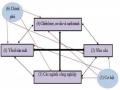 Structure of the Economic - Technical Industry and the Formation of the Industry Value Chain
 -
 The impact of financial market development on the capital structure of listed enterprises in the ASEAN Economic Community - 28
 -
 Concept of Economic Structure, Economic Structure Shift
 -
 Current Status of Ownership Structure and Performance of Vietnam's Banking Industry

Source: Statistical Yearbook 2000, 2007
If the GDP of the entire economic sector is 100%, then within the industry and construction sectors, the contribution of each sector to GDP is quite different in quantity (see table 2.13).
Table 2.13: GDP structure of the entire industry and construction sector of the economy in the period 1996 - 2008 (at actual prices)
Year
1995 | 2000 | 2001 | 2002 | 2003 | 2004 | 2005 | 2006 | 2007 | 2008 | |
GDP of the whole industry CN & XD | 100 | 100 | 100 | 100 | 100 | 100 | 100 | 100 | 100 | 100 |
Mining industry | 16.73 | 26.27 | 24.16 | 22.39 | 23.67 | 25.37 | 25.77 | 24.63 | 23.47 | 22.36 |
Processing industry | 52.14 | 50.53 | 51.88 | 53.48 | 51.82 | 50.69 | 50.36 | 51.17 | 51.42 | 53.21 |
Electricity and water industry | 7.13 | 8.63 | 8.74 | 8.83 | 9.18 | 8.35 | 8.39 | 8.26 | 8.37 | 8.17 |
Build | 24.00 | 14.57 | 15.22 | 15.30 | 15.33 | 15.59 | 15.48 | 15.94 | 16.74 | 16.26 |
Source: Statistical Yearbook 2000, 2007
Industry accounts for an increasingly large proportion of GDP in 1995 at 28.75%, from 2001 at 38.13%, increasing steadily to 41.58% in 2007 but decreasing to 39.90% in 2008. In the GDP structure of the whole industry, the mining industry accounts for a high proportion of over 50% compared to the remaining industries. The proportion of all industrial and construction sub-sectors has increased at different levels. The mining industry increased in the period 1995-2005 mainly due to the development of crude oil exploitation and has tended to decrease in the last 3 years in the industrial structure, due to the processing industry increasing faster in the same period, increasing from 5.21% of GDP in 1990 to 10.13% in 2007 to 9.76%, in 2008 the added value decreased by 3.8%. In the mining industry, the most notable is the oil mining industry, which is expected to grow rapidly in the coming years, creating the foundation for the development of other industries.
Other industries such as electricity, fertilizer, chemicals. In addition, some other mining industries with high growth rates are gradually taking an important position in industrial development in the coming years, which will be the industry of exploiting raw materials such as coal, metal ores, and rocks to serve the production of construction materials...
The processing industry plays a very important role in the Vietnamese industrial system. The proportion of the processing industry increased from 12.6% in 1990 to 21.23% in 2008, the proportion in GDP increased by 0.62% per year on average, by 2008 it accounted for 63.5% of the total industrial added value, but the added value was 10% lower than the increase of 12.8% in 2007. This industry includes:
- The industrial sector using raw materials from agriculture, forestry, aquaculture and seafood accounts for the highest proportion. The proportion of deeply processed agricultural raw materials is still low, only about 30% compared to the industrial sector.
- Labor-intensive industries such as textiles, footwear, food processing... account for over 40% of industrial production value. This group attracts foreign investment, mainly develops in the direction of export and becomes one of the industries with the largest export turnover.
- The automobile, motorbike and electronics assembly industry is also an industry that uses a lot of highly skilled workers. However, this group has not yet created a connection between assembly and manufacturing of components and spare parts and can participate in the regional production network.
The industries of electricity and water production and distribution, infrastructure for production and social consumption, have been given attention in recent years for development. The GDP growth rate in recent years has averaged about 0.13%/year, from 1.37% in 1990 to 3.51% in 2004 to 3.26% in 2008. Regarding the electricity industry, hydropower has been developed in combination with thermal power; water resources have also been invested in, so the synchronous implementation of the planning has been carried out.
Plan to supply electricity and water to industrial zones, increase water for consumption in urban areas. Considering the entire industry and construction sector, the electricity and water industry accounted for the lowest proportion from 1995 to 2008, about 9.67%.
In the total industrial production value, the value of processing industry accounts for a large proportion and tends to increase; on the contrary, the proportion of natural resource exploitation industry tends to decrease in the whole industry as well as in each economic region. According to the assessment of some experts, if in 17 years our processing industry still develops at the current pace, by 2020 it will only reach about 32%, still low compared to the level of 37% to be considered an agricultural country that has transformed into an industrial country.
The construction industry is related to production inputs, creating capacity and fixed assets of industries, creating the country's socio-economic infrastructure; is a large consumption channel for products created by manufacturing industries, increasing income and purchasing power of workers. In the 1990s, the proportion of this industry in GDP was low, only reaching 3.8%, by 1995 it increased to 6.9%, by 2007 it decreased to 6.69%, the proportion in GDP increased by 0.16% per year on average, in 2008 the added value of the construction industry did not increase while in 2007 this industry increased by 12%. The above results are mainly due to the implementation of the Enterprise Law, investment in the private sector increased at a high rate, contributing to increasing development investment capital. Compared to GDP, in 2003 alone the construction industry reached 36.3%, far exceeding the rate of 31.7% in 1995, and by 2007 it reached 41.58%.
The year 2008 marked the efforts of enterprises under the Ministry of Construction, when facing the fluctuations of the world and domestic economy. The growth rate of enterprises under the Ministry of Construction continued to be maintained higher than in 2007. The total value of production and business activities carried out
In 2008, the investment value reached 105,607 billion VND, equal to 105% of the yearly plan, up 20% over the same period in 2007. The investment value was 31,570.5 billion VND, reaching 91.7% of the yearly plan, up 30.4% over the same period in 2007, with more than 450 projects being implemented.
Statistics show that, compared to other sub-sectors within the industry and construction sector, the proportion of value-added processing industry is the highest; equivalent to the average annual increase in the proportion of processing industry/GDP of some East Asian NICs during the "take-off" period.[33].
Analysis of the industry structure shows that the industries that play a key role in the future are developing slowly and account for a very small proportion. For example, the information technology industry in our country is still developing very slowly. Other high-tech industries in the total number of industries in our country are still at a low proportion compared to other countries in the region.
In the structure of major industrial products, there are products with high export rates such as textiles, footwear, etc. Some semi-processed products have become key exports. The group of industries with fast growth rates are the mining industries with high capital content such as steel, cement, oil and gas exploitation, etc. Assembled products with high technology, engineering and labor content such as electronic products, high-end household appliances, information technology, post and telecommunications, high-end food, etc. have been oriented towards export, although the proportion in the export turnover value is still small. In fact, the vast majority of industrial products are only oriented towards exploiting existing advantages, while manufactured products using high technology and engineering are identified as key products that are not competitive enough in the international market.
Vietnam's industry has been inward-looking since its inception; the State's policies on import substitution, protection of domestic industry through high import and export tariffs and barriers
non-tax. However, due to limitations in capital resources and the ability to develop the domestic market, the development of this industry has been limited, showing the contradiction between industrial policy and other policies.
In recent years, the position and role of industry in the national economy have increased, but the internal industry has changed slowly. In fact, the contribution to industrial growth in recent years has mainly been the mining industry, the proportion of the processing and manufacturing industry is still low. Meanwhile, new industries such as the electronics industry and the mechanical industry are still in the early stages of development, the CKD assembly stage. Industries that meet the input and output of agriculture are still small.
2.3.2.2. Economic restructuring of region II according to the United Nations' sub-sectors
According to the United Nations' sectoral classification, from 1990 to present, the proportion of sector II (processing industry) in our country is still very low and growing slowly; while sector I grows too high, unbalanced because mining industry and agriculture account for a large proportion, but that is an inevitable rule of developing countries.
Therefore, in the period of innovation, it is necessary to accelerate the process of economic restructuring in sector II, overcoming the "reverse shift" of imbalance in the economic structure of an industrial country by 2020. According to statistics from 1990 to 2008, sector II achieved significant growth in GDP, reaching 12.56% in 1990, increasing rapidly to 20.54% in 2003, then the growth rate tended to slow down until 2007 reaching 21.38%, decreasing slightly in 2008 reaching 21.23% (see table 2.14).
Table 2.14. Proportion of sector II in GDP (%) over the years
Year
1990 | 1995 | 2000 | 2003 | 2004 | 2005 | 2006 | 2007 | 2008 | |
GDP of the economy | 100 | 100 | 100 | 100 | 100 | 100 | 100 | 100 | 100 |
Region II
12.56 | 14.99 | 18.56 | 20.45 | 20.34 | 20.63 | 21.25 | 21.38 | 21.23 |
Source: Statistical Yearbook from 1996, 2002, 2007
Within region II, there has been a shift but it is still slow, the growth rate tends to decrease slightly, the proportion in GDP from 1990 to 2008 increased by an average of 0.47%/year. Within region II, the food and beverage production industry accounted for the highest value from 2000 to 2006, about 20%. Following is the textile production industry, which increased over the years, such as 4.0% in 2003 and 4.8% in 2006; chemical production accounted for about 5% of the entire industry.
On the other hand, the wood processing industry has positively contributed to the shift of the economic sector. Large-scale wood processing industrial clusters have been formed in Binh Duong, Dong Nai, Ho Chi Minh City, Binh Dinh and Quang Nam. Due to attracting a lot of FDI, Vietnamese wood enterprises have approached and applied modern wood processing technology to produce wood products for export to key markets such as the US, EU, Japan and are penetrating the markets of Eastern Europe, the Middle East and South America. In 2006, wood export turnover reached 1.93 billion USD, in 2007 it increased by 2.4 billion USD and in 2008 it is estimated to reach 2.8 billion USD but the growth rate of export turnover in 2008 decreased compared to 2006 and 2007.
Food processing industry accounts for a high value in the processing industry but has not yet fully exploited the country's strengths and potentials. In 2005, the output of processed seafood for export was 705,759 thousand tons. Seafood processing enterprises are distributed throughout the country, striving to achieve an export output of 891,000 tons in 2010.
Evaluating the growth rate of region II and GDP of Vietnam in the later period compared to Japan, Korea and Taiwan (%) in the previous period shows that
big difference. Vietnam in the period 1990-2004 was 10.88% while in 1960 Korea was 17.2% and Taiwan was 14.7%.
According to the two methods of calculation, the sector II in our country both grows slowly and accounts for a low proportion of the GDP of the economy. According to the United Nations' sub-sector, the proportion of sector II is always lower than that of the General Statistics Office, which is the industry and construction sector. In 2000, according to the General Statistics Office's sub-sector, it reached 18.56% and according to the United Nations' sub-sector, it was 36.73%; by 2008, according to the General Statistics Office's sub-sector, it was 21.23% and according to the United Nations' sub-sector, it was 39.91%, so the difference between the two methods of calculation has not tended to narrow (see table 2.15).
Table 2.15: Growth rate of region II and GDP of Japan, Korea, Taiwan (%)
Water/
territory
Time | Growth rate Region II (A) | Speed of increase GDP growth (B) | Difference: (A): (B) times | |
Vietnam | 1991- 2004 | 11.97 | 7.48 | 1.47 |
Vietnam * | 1991- 2004 | 10.88 | 7.48 | 1.45 |
Japan | 1950s | 13.70 | 8.00 | 1.71 |
1960s | 10.90 | 10.90 | 1.00 | |
1970s | 5.50 | 5.00 | 1.10 | |
Korea | 1950s | 12.30 | 5.10 | 2.41 |
1960s | 17.20 | 8.60 | 2.0 | |
1970s | 15.40 | 9.50 | 1.62 | |
Taiwan | 1950s | 10.70 | 7.60 | 1.41 |
1960s | 14.70 | 9.60 | 1.53 | |
1970s | 12.50 | 8.80 | 1.42 |
Vietnam *: According to the United Nations sectoral classification Vietnam: According to the Vietnam Statistics sectoral classification Source: General Statistics Office, 2007
The table above shows that the growth rate of the processing industry sector in Vietnam in recent times is basically similar to that of the East Asian NICs countries in the industrialization stage, with rapid economic growth. A detailed comparison of the growth rate of sector II (processing industry) with the GDP growth rate of Vietnam in the period 1991-2004 is equal to that of Taiwan and inferior to that of
South Korea in the 1950s and 1960s was inferior to Japan in the 1950s. Moreover, the economies of Japan, South Korea, and Taiwan all maintained high industrial growth rates of over 10% per year for two or three decades, turning the three countries into newly industrialized economies.
According to the United Nations standards, our country's industrial growth rate in the period 1991-2004 was 10.88%, lower than the calculation of Vietnam's statistics at 11.97% and that of East Asian NICs, which is a challenge in the coming years. Through the study of the two above-mentioned classifications, it can be seen that the structure of the processing industry in our country accounts for a low proportion of GDP. Calculating the structure of sector II according to the United Nations' classifications has great significance for the economy in our country in the current period; more accurately assessing the reality of the processing industry in our country and through comparing the development of sector II in our country is still low, shifting slowly with countries in the region and the world. On the other hand, due to the lack of synchronous policies, the potential strengths of this sector have not been exploited effectively and the application of scientific and technological advances in production is still limited, so the competitiveness of this sector in foreign markets still faces many difficulties.
Therefore, maintaining a sustainable high growth rate of the processing industry is a huge task; in the immediate future, it is necessary to propose policies and measures to promote the development of the processing industry, contributing to the implementation of the law of economic restructuring in our country in the current period; the reality for our country's economy is that we should choose the United Nations' sectoral classification to properly assess the actual strength, exploit the potential and strengths of this sector.