
Training in high mountains stimulates and makes athletes understand the meaning of exerting themselves when the body is tired so that they try to overcome the stress of training.
1.6. Factors affecting endurance training for middle distance runners
In endurance training for CLTB runners, there are many factors that are determined to directly affect training effectiveness such as: psychological and physiological exercises, equipment, support conditions, performance motivation... Below, we will analyze in depth the following factors:
1.6.1. Exercise factors affecting endurance training for middle-distance runners
As we know, exercises are the basic means of specialization in sports training. The difference between the sports chosen for specialization is one of the most important bases for classifying exercises in sports training. According to Nguyen Toan and Pham Danh Ton, sports training exercises can be divided into two main types: competition exercises and training exercises. In which, training exercises are divided into general training exercises and specialized training exercises [54].
1.6.1.1. General development exercises
With general development exercises, the athlete's physical capacity, motor coordination and tactics are comprehensively developed and the endurance of the LVĐ is systematically improved. General development exercises create the foundations for building long-term and solid achievements. These foundations create the ability for the athlete to perform well the high and complex requirements of LVĐ. Therefore, general development exercises have the greatest significance in the training stage of young athletes [59].
According to Nguyen Toan and Pham Danh Ton's viewpoint in sports training, exercises are divided into three main types: General training exercises, specialized training exercises, and competition exercises [54].
General training exercises are intended to prepare athletes in general, and are different in principle from the above exercises because the components of general training exercises are often broad and diverse. In nature, general training exercises can have a coincident or non-coincidental effect on specialized training exercises. In theory, the scope of these exercises is almost unlimited. But in practice, it is limited by time consumption, physical conditions, techniques and other factors.
When selecting general training exercises, the following requirements must be followed: First of all, general training for athletes must include comprehensive physical education means, especially exercises that effectively affect the development of physical qualities and enrich the necessary skills and techniques. Second, the content of general training for athletes must reflect the characteristics of sports specialization. In the process of improving training levels, positive and negative effects may arise between different aspects. Therefore, the general training means for athletes must also be specialized to maximize the positive changes in physical fitness levels and try to eliminate or minimize the effects of negative changes. Thus, the content of general training for athletes must also reflect the characteristics of sports specialization [71].
General training exercises during sports training have the following functions:
Formation, consolidation or recovery of skills and techniques that have a complementary effect on the chosen sport (i.e. laying the foundation for skills, techniques, technical-tactical skills) that have a cumulative effect (according to the mechanism of good transfer of skills), or when necessary for the proper implementation of exercises in the direction of developing physical capacity.
As a means of educating underdeveloped physical abilities in the chosen sport, improving or maintaining the level of general performance capacity.
Act as an active rest element, which has a significant impact on recovery after high volumes of exercise and prevents monotony in training.
General training exercises and specialized training exercises are closely related to each other. First of all, these exercises originate from the main purpose of sports activities, which is to serve practical life. General training exercises, on the one hand, create the premise for specialized training exercises, and at the same time reflect the characteristics of sports specialization [19].
On the contrary, specialized training exercises always start from the premises provided by general training exercises. That is, the exercises have the same form of movement as the competition exercises, but are different in the way and mode of implementation. It is these exercises that ensure a close relationship between general training and specialized training for athletes.
1.6.1.2. Professional training exercises
As exercises support the acquisition of competition techniques as well as support the development of specialized physical qualities, they are divided into two types: technical support exercises and physical support exercises.
Exercises that aid in the acquisition of new, difficult movement techniques are also known as introductory exercises.
Physical support exercises that mainly aim to develop physical qualities are also called developmental exercises.
Professional preparation exercises are very diverse, they can be details of competition exercises, or options of competition exercises as well as movements that have a similar form to competition exercises.
According to the current classification method that is widely recognized and popular in practice, there are 4 types of classification according to motor qualities:
Strength and speed exercises that are typically characterized by maximum muscle effort or intensity, such as sprinting, weightlifting, and throwing.
Endurance exercises in cycle activities, CLTB running, long distance running, swimming, walking, rowing, cycling.
Exercises that combine movements according to a strict standard program such as competitive gymnastics, acrobatics, and artistic gymnastics.
Comprehensive exercises in changing movement situations (wrestling, boxing, ball sports).
In biomechanics, exercise is divided into 3 types: Periodic exercise;
Non-periodic exercises; Mixed exercises.
In physiology, it is divided into 4 types:
Maximum power exercise is an exercise with maximum frequency of movements in a time not exceeding 20 seconds - 30 seconds. Including exercises with a maintenance time: From 10 seconds to 30 seconds. Speed 9-10m/second (running 100m, 200m, 300m, swimming 25m, 50m, cycling 200m-500m).
Submaximal power training is a lower frequency exercise than maximal power training, although still very high with a performance time of 40 seconds to 4-5 minutes. Speed 7-8m/s. Exercises of this type include (running 400m, 800m, 1500m, swimming 100m, 200m; speed racing 500m-1000m-2000m).
High-power exercise is an exercise with a lower frequency of movements than maximum and sub-maximum power exercise, although in the sprints the athlete still develops high speed and requires relatively large nervous excitement with a time of 4 minutes to 40 minutes, including subjects such as: Running 3km-10km, swimming 800m-1500m, racing 5km-30km.
Medium-intensity exercise is an exercise with an average frequency of movements. Here, it needs to be understood relatively. Therefore, although the intensity of the activity is not high, due to the long duration, it still has a very strong impact on the body and can cause deep exhaustion and fatigue, such as (cross-country running, sports walking, etc.).
According to Trinh Trung Hieu and Nguyen Sy Ha, physical exercises in sports training (sports training tools) are divided into the following four groups:
General preparatory exercises (general exercises) are exercises aimed at comprehensively developing the functional systems of the athlete's body. They can be suitable for the characteristics of the chosen sport, or they can have certain contradictions with it.
Complementary exercises are exercises that include motor activities that create a specialized foundation for further improvement in a particular sport.
Specialized preparatory exercises (specialized exercises) are exercises that occupy a central place in the training system of high-level athletes, and cover a range of means including components of competitive activity, as well as activities similar to it in form, structure and characteristics of expressed qualities and functioning of the body's functional systems.
Competition exercises are a combination of motor activities, selected as the subject of sports specialization, performed in accordance with current competition rules [28], [35].
1.6.1.3. Competition exercises
A competition exercise consists of complete movements, used as a basic means to conduct a competition in sports according to the rules of competition. In this sense, the concept of "competition exercise" completely coincides with the concept of "sport".
It is important to distinguish between real competition exercises and training forms that use competition exercises. As mentioned above, competition exercises must be performed in real sports competitions, while training forms, although using competition exercises, only solve training purposes.
Looking at sports (which demonstrate concentration through competitive activities), it is easy to see the similarities or differences between some sports. There are sports that have a relatively narrow direction of movement and limited movement components (such as running, jumping, and throwing in athletics), but there are also sports that are a complex of movements and exercises that are very diverse and change flexibly depending on the conditions of the opponent or teammates (such as football, martial arts, etc.).
There are sports that are a complex of relatively independent and special competitive exercises (such as dance sports, fencing, skiing...).
According to specialized researchers, there are 4 main factors that directly affect the performance of CLTB runners: SBC, specific endurance, maximum speed and running strategy [49], [50].
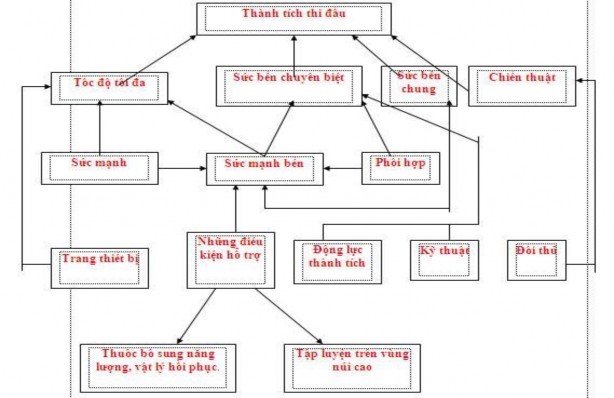
Figure 1.1. Structure of factors affecting the performance of CLTB runners [50]
1.6.2. Physiological factors affecting endurance training for middle-distance runners
1.6.2.1. Maximum oxygen uptake (VO 2 max)
In cyclical endurance sports, athletic performance is largely determined by the magnitude of maximal oxygen uptake, so VO 2 max is an important objective indicator for assessing endurance qualities. Pulse oximetry (VO 2 max pulse) also assesses the economy of respiratory and cardiac function during endurance activity [24]. However, maximal oxygen uptake is greatly influenced by genetic factors. Based on the results
According to research by foreign scientists in this field, the rate of genetic influence on maximum oxygen absorption accounts for over 80%.
VO2 max
Pulse oximetry =
Heart rate at VO 2 max
Table 1.1. Age-related dynamics of pulse oximetry and VO 2 max in adolescent athletes [4]
Year old
VO2 max (ml / min) | Maximum pulse oximetry (ml/time) | |||
Male | Female | Male | Female | |
11 | 1,790 | 1,610 | 9.1 | 9.0 |
12 | 2,060 | 1,960 | 10.1 | 10.2 |
13 | 2,440 | 2,119 | 12.2 | 11.3 |
14 | 3,550 | 2,360 | 17.6 | 11.9 |
15 | 4,850 | 2,660 | 19.7 | 13.2 |
16 | 3,600 | 2,710 | 24.7 | 14.0 |
Maybe you are interested!
-

 Factors Affecting the Training Activities to Improve State Administrative Management Capacity for Secondary School Principals of the Department of Education -
 -
 Factors Affecting the Organization of School Counseling Skills Training for High School Teachers in Particularly Difficult Areas
 -
 Factors affecting student satisfaction with the quality of training services at the Faculty of Tourism, Ho Chi Minh City University of Food Industry - 2
 -
 Endurance Training Methods for Middle Distance Runners
 -
 Factors Affecting Training and Development of Civil Servants
The results in Table 1.1 show that: When the body is active, the natural development of the body's oxygen supply system at different stages of adolescence is not the same. The maximum oxygen demand of males can reach 1,790 ml/min at age 11 and increases to 3,600 ml/min at age 16, while that of females can range from 1,610 ml/min at age 11 to 2,710 ml/min at age 16. Looking at the data in Table 1.1, it can be seen that the oxygen-circulation reflects the economy of the respiratory and cardiac activities, which is also gradually improved.
As we know, in cyclical sports, endurance quality is determined by the increase and decrease of maximum oxygen absorption, but maximum oxygen absorption does not increase with the level of training but increases with the body's working capacity. The body's working capacity is not only determined by the increase in the capacity of gas exchange, but also by many other comprehensive factors, including the capacity to supply energy for anaerobic metabolism, such as the capacity to use oxygen, the time to maintain slow and fast supply rates, and whether the supply is sufficient or not when the muscles are working.
These three factors determine the process of saving energy of various types of mechanical energy and they have a great influence on endurance [24].
1.6.2.2. Minute flow of cardiac circulation
The minute flow of the heart is the amount of blood passing through the heart in a unit of time, which is the dynamic efficiency of the heart circulation. This factor is the most important factor in promoting the body's working capacity and the aerobic exchange process. The minute flow of the heart is determined by changes in the quiet condition of the parasympathetic nerve, the thickening of the myocardium, and the size of the heart chambers. The size of the heart and each part of the heart is determined by age and training level.
According to (Mader), the contribution ratio of energy systems in each running distance of Athletics is as follows:
Table 1.2. Contribution ratio of energy systems in each running distance of Athletics
Distance
Anaerobic non-lactic acid | Anaerobic lactic acidosis | Aerobic | |
% | % | % | |
30m | 80 | 19 | 1 |
60m | 55 | 43 | 2 |
100m | 25 | 70 | 5 |
200m | 15 | 60 | 25 |
400m | 12 | 43 | 45 |
800m | 10 | 30 | 60 |
1500m | 8 | 20 | 72 |
3000m | 5 | 15 | 80 |
5000m | 4 | 10 | 86 |
10000m | 3 - 2 | 12 - 8 | 85 - 90 |
42195m | 0 | 5 - 2 | 95 - 98 |
Observing the table, we see that the level of influence of aerobic capacity of athletes accounts for 60-72%. Therefore, in training aerobic capacity in recent years, I have always considered aerobic exercises as the first basic importance and the foundation for developing other motor qualities. [8], [22], [48].