
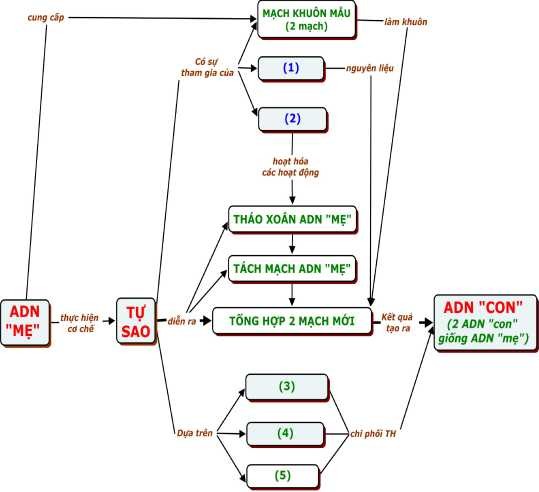
Figure 2.5. Missing knowledge map about "DNA replication" (review of 9th grade knowledge)
Question 1. State the main events in DNA replication, name the components involved and their roles in DNA replication.
Maybe you are interested!
-
 Applied microbial genetics - 1
 -
 Types of Literary Materials That Can Be Used in Teaching Vietnamese History Grade 10 in High Schools
 -
 Review of Research Status Related to the Topic
 -
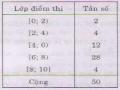 The Average Scores of Grade 10A Students in Semester 1 Are Recorded in the Following Table:
 -
 Designing and using concept maps in teaching the part "Genetics" contributes to improving the quality of teaching Biology for grades 12 - 27
Question 2. According to what principles does DNA replicate ? What role does the complementary pairing principle of nitrogen bases play in DNA replication?
Task 2 (focus):
+ Ask students to study the content of the textbook (Grade 12, pp. 8-9), observe the drawing of the DNA replication process (Figure 1.2 , Grade 12) and state :
Question 1. Point out the enzymes and the roles of enzymes in carrying out the main events in DNA replication?
Question 2. What are the similarities and differences between leading strand synthesis and lagging strand synthesis? Why is there such a difference?
Question 3. Explain why the two daughter DNAs created are similar to the parent DNA . What is the significance of that similarity?
+ Require students to identify new skills and complete the missing skills map.
“DNA replication” SH 12 (Figure 2.6).
- Students (individual or group activities) perform tasks to acquire knowledge:
+ Students recall knowledge of SH 9, study the missing knowledge map and answer the questions.
+ Students fill in the knowledge in the knowledge map (figure 2.5): from answering question 1, fill in knowledge 1 and knowledge 2 (nucleotide, enzyme); answering question 2, fill in knowledge 3, knowledge 4 and knowledge 5 (complementary principle, semi-conservation principle, template principle).
+ Students think and arrange the concepts in positions 1-5 on the concept map to put the concepts into the system, completing the concept "DNA replication" in lesson 9.
+ Students perform task 2, through which they acquire new knowledge: events such as "Unwinding the mother DNA", "Synthesizing the new strand"... in which there is a role of enzymes such as the unwinding enzyme (Helicase) catalyzing the "mother" DNA activity of unwinding and separating the strands; the DNA Pol enzyme catalyzing the synthesis of the leading and trailing strands, the ligase enzyme (Ligaza) connecting the Okazaki fragments . The two new DNA strands are synthesized according to the complementary principle and are extended in the 5'-3' direction in an antiparallel manner to the "mother" DNA strand. The difference in the synthesis of the two new DNA strands is that one strand is synthesized continuously and the other strand is synthesized in segments in the opposite direction. The result is 2 "daughter" DNAs similar to the "mother" DNA (because DNA synthesis occurs according to the complementary principle, the template principle and the semi-conservative principle).
+ Students identify the new concepts that have just been clarified: "Helicaza enzyme" concept,
“DNA Polymerase enzyme”, KN “Ligaze enzyme” with related functions such as synthesizing “leading strand”, synthesizing “lagging strand” and joining “Okazaki fragments ” .
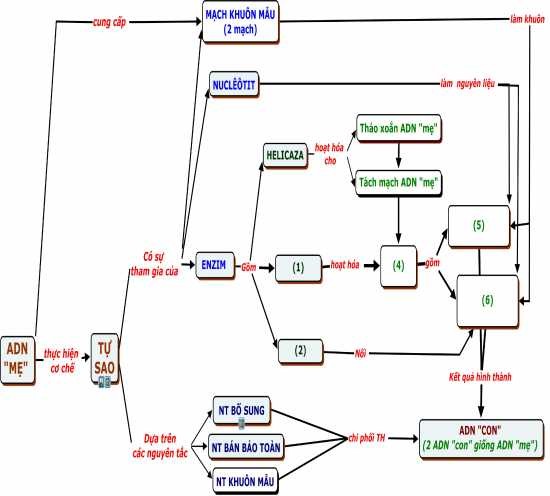
+ Students fill in the concepts (from concepts 1 - 6) in figure 2.6 to complete the concept map "DNA replication" in lesson 12.
Figure 2.6. The missing "DNA replication" genetic map in SH 12
- The teacher organizes for students to report and discuss the results they have done. The teacher can supplement knowledge or explain in more detail some difficult content (explain why the synthesis of 2 new DNA A chains is different) .
- Teacher adjusts, concludes and provides complete concept map (appendix 1.3.2 ).
Step 3 : Practiceand apply the knowledge . You can use the following exercise topractice and apply the knowledge of “DNA replication ” .
Exercise: Given a DNA segment (containing 1 structural gene) with the following nucleotide sequence:
5' ATGGXTAAA...GGXTTATAG 3'
3' TAXXGATTT...XGGAATATX 5'
Determine the structure of the two "daughter" DNAs formed (note that it is necessary to clearly indicate the parent DNA strand and the newly synthesized strand) .
Step 4: Propose directions for further development of knowledge for students to research on their own . During class, teachers can only organize students to acquire basic knowledge about "DNA replication". Teachers show students that : allorganisms have a process of " DNA replication" to create "daughter" DNA similar to "mother" DNA. This is a mechanism for transmitting genetic information at the molecular level and all take place with the participation of factors and governing principles. If during the DNA replication process, there is a violation of the complementary principle, what will be the consequences? What does that mean? Or "DNA replication" in eukaryotes has different characteristics from "DNA replication" in prokaryotes and viruses. So what are those characteristics and why do they exist? By posing the problem like this, it will stimulate and create interest for students to continue researching the documents, helping students actively self-study to develop the skill of "DNA replication" in different biological objects such as prokaryotes, eukaryotes and viruses.
Thus, in the process of teaching new lessons, the concept map is used as a tool to support teachers in organizing students to review related knowledge as well as supporting teachers in organizing students to master new concepts in relation to previously learned concepts . Thereby helping students grasp and understand more about concepts and the relationship between concepts, thereby helping students remember better and apply them better. Through organizing new lessons using concept maps, teachers will train students in scientific logical thinking methods and effective learning methods, thereby creating interest in learning and improving the quality of learning the subject for students. However, it should be noted that depending on the content of the lesson, depending on the level of students, teachers will organize teaching in different forms and different levels accordingly.
2.4.2. Using knowledge maps in perfecting knowledge
2.4.2.1. Using the knowledge map to organize review activities and consolidate knowledge
The general process includes the following steps:
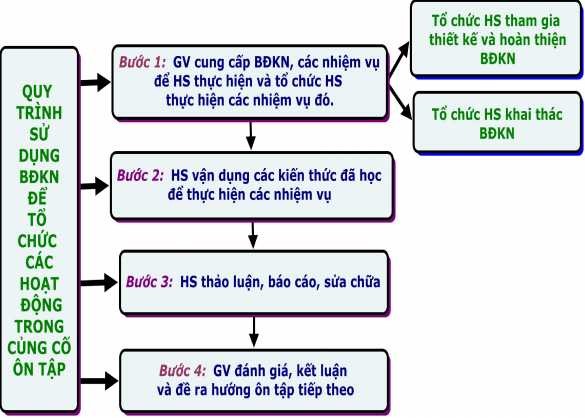
Figure 2.7. Process of using the knowledge map to organize review activities and consolidate students' knowledge
Step 1: The teacher providesthe concept map and tasks for students toperform and organizes students to apply the knowledge they have learned to perform those tasks.
The tasks are usually provided in the form of study sheets with a system of questions at levels appropriate to the students. At this step, the teacher needs to perform two main tasks:
Task 1: The teacher organizes for students to consolidate knowledge (systematize knowledge ) through participating in designing and completing the concept map. Specifically , the teacher guides students to:
+ Identify the skills learned in the consolidated knowledge content.
+ Identify the missing concepts in the concept map and complete the map.
+ Determine the accuracy of the concepts as well as their positions in the concept map. If there are any errors, correct them.
Task 2: Organize students to complete the concept map and exploit the concept map to answer questions and exercises to master knowledge (essentially guiding students to switch from "map" language to "semantic" language for application).
+ Guide students to use knowledge in the knowledge map to answer questions and exercises.
+ Answer related questions to consolidate and review knowledge.
+ Ask yourself questions to consolidate and review.
Step 2: Students (individual or group activities) apply the knowledge they have learned to perform tasks such as reading the map content, completing the map, correcting errors and answering related questions... Thereby, they gain a deeper understanding and mastery of the knowledge.
Step 3: Students discuss, report, and make corrections.
Step 4: The teacher evaluates, concludes and suggests the next review direction for students to self- study and perfect their knowledge.
For example: Using the missing concept map about the "Translation " mechanism in the consolidation activity after teaching lesson 2 (SH 12) .
Step 1: The teacher provides a concept map of the “Translation” mechanism (Figure 2.8), sets out tasks for students to perform, and organizes students to apply their acquired knowledge to perform those tasks. The tasks are shown in the study sheet attached to thequestion system . In this step, the teacher needs to perform two main tasks:
- Teachers organize for students to systematize knowledge about translation mechanism through participating in designing and completing the concept map about translation mechanism .
- Organize students to exploit the completed "Translation" concept map to answer questions and exercises to master the knowledge.
STUDY FORM
Use what you have learned about the “Translation” mechanism to complete the following tasks in 5 minutes:
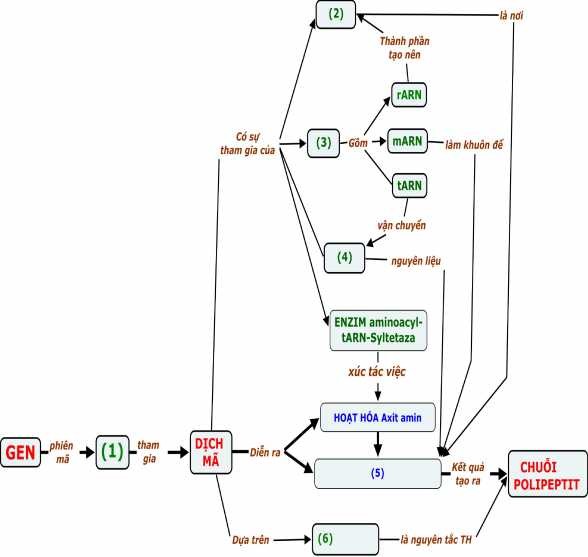
Task 1: Study the missing knowledge map of the "Translation" mechanism (Figure 2.8). From the knowledge you have learned , check the accuracy of the existing knowledge and supplement the missing knowledge from knowledge 1-6 to complete the knowledge map.
Figure 2.8. Defective “ Translation” mechanism
Task 2: From the completed BĐKN, find the answers to the following questions:
Question 1. What is translation? What are the roles of the basic factors involved in translation?
Question 2. What is the result of the translation process ? Explain why the synthesized polypeptide chain is an accurate translation from mRNA?
Question 3. State the relationship between DNA (gene) - mRNA - Protein - Traits. Step 2: Students (individual or group activities) apply the knowledge they have learned about translation to perform tasks such as identifying the concepts in the translation mechanism ; identifying the missing concepts ( RNA, ribosomes, amino acids, polypeptide chain formation , complementary principles ) ; completing the map , reading the map content , correcting errors and answering related questions... Thereby, understanding deeply and
Master knowledge of translation mechanism.
Step 3: Students discuss, report, and make corrections.
Step 4: The teacher evaluates, concludes and suggests the next review direction for students to self-study and perfect their knowledge.
2.4.2.2. Organize students to review and consolidate by designing their own knowledge maps.
The general process includes the following steps:
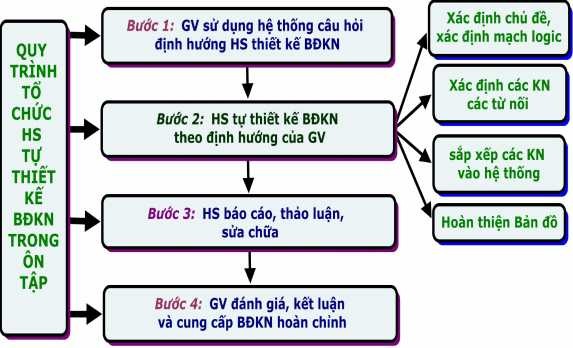
Figure 2.9. Process of organizing students to design their own knowledge maps in consolidation and review
Step 1: Teachers use a system of questions to guide students in designing the concept map.