
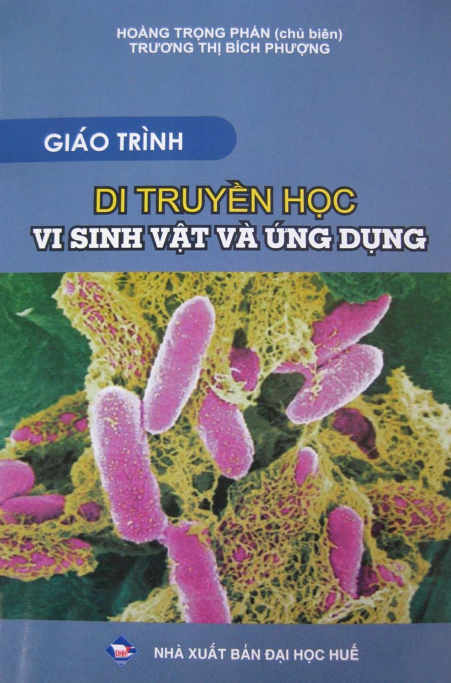
HOANG TRUNG PHAN (Editor) TRUONG THI Bich PHUONG
Maybe you are interested!
-

 Designing and using concept maps in teaching the part "Genetics" contributes to improving the quality of teaching Biology for grades 12 - 27
 -
 Reference Values Drawn From Practice That Can Be Applied To Dak Mil District, Dak Nong Province
 -
 Local industrial development policy research applied to Bac Ninh province - 25
 -
 Lessons Learned That Can Be Applied to Vietnam
 -
 Penalties and Judicial Measures Applied to Minors Who Commit Crimes According to the Provisions of the 1999 Penal Code
Curriculum
GENETICS AND MICROBIOLOGY
MATERIALS AND APPLICATIONS
HUE UNIVERSITY PUBLISHING HOUSE - 2008
Preface
Up to now, genetics has been around for just over a hundred years, but it has developed at an extremely rapid pace. Especially, in the past 50 years since James Watson and Francis Crick discovered the molecular structure of DNA, April 25, 1953. The completion of the Genetic Code by the research teams of Marshall Nirenberg and Gobind Khorana in June 1966, and the birth of Genetic Engineering in the mid-1970s are the two most prominent events since Molecular biology was born. The development and achievements of genetics in recent times are truly enormous!
To contribute to innovating the content of the Microbial Genetics and Applications curriculum in the direction of updating knowledge as well as methods of teaching and learning the subject at the university level, we have consulted many different documents and made efforts. efforts to compile textbooks in that spirit. We hope that this textbook will partly meet the teaching and learning needs of lecturers and students, and can also be used as a useful reference for high school Biology teachers. in the context of current educational innovation.
The textbook content includes an introductory lesson and 8 chapters: Chapter 1 introduces the characteristics of microbial genetics . Chapter 2 - Molecular basis of heredity - presents an overview of the structure and organization of microbial genomes and the mechanisms of genetic information transmission, mainly in prokaryotes. Chapter 3 analyzes in depth aspects of the principles of gene expression regulation in bacteria. Chapter 4 - Variation in microorganisms - deals with the processes of changing genetic material in microorganisms (gene mutations, DNA repair and mobile genetic elements). Chapter 5 focuses on the genetics of viruses. Chapter 6 presents the principles of bacterial genetics - conjugation, transformation and transduction. Chapter 7 introduces new general insights into fungal and microalgal genetics. And chapter 8 focuses on presenting concepts, methods and achievements in the field of recombinant DNA technology - gene cloning in microorganisms, as well as applications of genetic engineering principles related to microbiology. organisms in creating genetically modified organisms (GMOs) and releasing them
into the environment.
At the end of each chapter there are Questions , Exercises and References for readers to conveniently review and look up. And, to the extent possible, common scientific terms are used in English or annotated in parentheses to help learners more easily access information through foreign books or the internet.
Textbook of Microbial Genetics and Applications by MSc. Hoang Trong Phan and PhD. Compiled by Truong Thi Bich Phuong - lecturers working at the Department of Biology, University of Education and University of Science, Hue University, with the following assignment:
MSc. Hoang Trong Phan edited the Introduction and chapters 1, 2, 3, 6, and 8; Dr. Truong Thi Bich Phuong compiled chapters 4, 5 and 7.
We would like to thank the Hue Higher Education Project for sponsoring the compilation of textbooks within the framework of the Level B Higher Education Project.
We would like to express special thanks to Associate Professor. Dr. Pham Thanh Ho - University of Natural Sciences, Vietnam National University, City. Ho Chi Minh diligently read the manuscript and gave many valuable comments.
Due to limited abilities, the curriculum certainly has many shortcomings. We look forward to receiving criticism and advice from colleagues and readers to make the textbook more complete in the next printing.
Thank you very much!
Hue, May 10, 2006
Authors, HOANG TRUNG PHAN
TRUONG THI Bich Phuong
Opening article
Microbial Genetics and the Biotechnological Revolution
I. The birth and development of genetics and recombinant DNA technology
The birth and development of genetics is associated with the name of Gregor Mendel in 1865 and went through the following stages.
1. The birth and development of Mendelian genetics
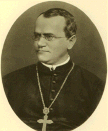
From peas ( Pisum sativum ), with unique ideas and research methods, in 1865 Gregor Mendel (Figure 1) discovered the first basic laws of genetics and thereby deduced the existence of all The characteristics of specific units of transmission - genetic factors - determine the characteristics that are transmitted from one generation to the next, which are later called genes . However, the scientific community is
The time did not understand and therefore could not appreciate the greatness of this invention.
Figure 1 G. Mendel
It was not until 1900 that three botanists, Carl Correns (Germany), Hugo de Vries (Netherlands) and Erich von Tschermak (Austria), independently rediscovered Mendel's laws of inheritance. And genetics was officially born from here, whose founder was Mendel.
2. The birth and development of the chromosomal theory of inheritance
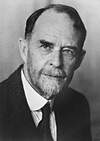
Since 1910, Thomas Hunt Morgan (Figure 2) along with three colleagues, Alfred H.Sturtevant, Calvin Bridges and Herman J. Muller, successfully built the chromosomal theory of inheritance based on research subjects. The rescue is the fruit fly Drosophila melanogaster . This theory asserts that genes are the basic units of heredity located on chromosomes (in
core); on which the genes are arranged in a straight line
Figure 2 TH Morgan
create a link group. The significant contributions of Morgan's outstanding disciples were: building a genetic map (Sturtevant 1913), showing the mechanism for determining sexual phenotypes in fruit flies (Bridges 1916), and developing
developed X-ray mutagenesis (Muller 1927). For that great contribution, Morgan was awarded the Nobel Prize in 1933 and Muller in 1946.
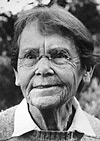
In 1931, Barbara McClintock (Figure 3) and Harriet Creighton obtained direct physical evidence of recombination in maize. Later, this phenomenon was also observed in Drosophila by C. Stern . Thus recombination can be detected both physically and genetically in animals as well as in plants. By 1944, McClintock discovered transposable genetic elements , and she was awarded the Nobel Prize in 1983 for discovering
this break. Figure 3 B. McClintock
3. The birth and development of molecular genetics
The birth of molecular genetics is associated with the discoveries of DNA (deoxyribonucleic acid) since the mid-twentieth century on research objects mainly microorganisms. However, before that Friedrich Miescher (1869) discovered a mixture in the cell nucleus called nuclein, the main component of which was later known as DNA.
Figure 4 Beadle, Tatum, Jacob and Monod (from left)
Regarding the relationship between genes and proteins, since 1902 Archibald Garrod, through research on alcaptonuria in humans, has suggested that this is a recessive Mendelian trait, possibly related to the defect of an enzyme. By mutating experiments on genes related to biochemical pathways on the mold Neurospora , in 1941 George Beadle and ELTatum (Figure 4) confirmed that each gene controls the synthesis of a specific enzyme. It was this famous one gene-one enzyme hypothesis that paved the way for the birth of biochemical genetics, and the two men were awarded the Nobel Prize along with Joshua Lederberg in 1958. Later , this hypothesis is precised as a gene that determines only a polypeptide chain - the primary structure of proteins, including enzymes.
So what is the nature of genes? In 1944, Oswald Avery (Figure 5) and
Collaborators MacLeod and McCarty demonstrated through in vitro transformation experiments that DNA is the carrier of genetic information. In 1949, Erwin Chargaff published the first results on the chemical composition of the DNA of some species.
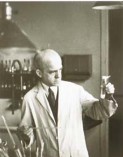
Figure 5 OT Avery, MacLeod and McCarty (from left)
The study of DNA molecular structure began in 1951 with the X-ray diffraction data of Rosalind Franklin and Maurice Wilkins (Figure 6). These chemical and physical data were the basis from which James Watson and Francis Crick (Figure 7) successfully built a model of the DNA molecular structure in 1953, also known as the double helix . This great invention opened a new era for the development of genetics and biology in general. For that invention, Watson and Crick, along with Wilkins, were awarded the Nobel Prize in 1962. Since then, there has been a series of research projects in the field of molecular biology, notably the decoding of the genetic code completed in June 1966 by two research groups of M. Nirenberg and H. Khorana (Nobel Prize 1968).
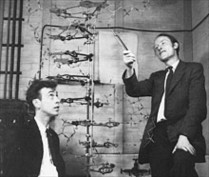
Figure 6 R.Franklin (left), M.Wilkins. Figure 7 JDWatson (left) and FHCCrick
4. The birth and development of recombinant DNA technology
It can be said that the foundation of recombinant DNA technology was established in 1972 when Paul Berg (Figure 8) created the first recombinant DNA molecule in a test tube (recombinant DNA in vitro) .
vitro ). A year later Herbert Boyer and Stanley Cohen (Figure 8) first used plasmids to clone DNA. This new application field of molecular biology has created a new revolution in biology. Significant contributions in this field were the discovery of restriction enzymes from 1961-1969 by Werner Arber, Daniel Nathans and Hamilton Smith (Nobel Prize 1978; Figure 8); proposed methods for determining base sequences in nucleic acids in 1977 by P.Berg, W.Gilbert and Frederick Sanger (Nobel prize in chemistry 1980; Figure 8); the discovery of split genes in 1977 by Phillip Sharp and Richard Robert (Nobel Prize 1993; Figure 8); the invention of the PCR ( polymerase chain reaction ) method by Kary B.Mullis in 1985 (Figure 8) and the site-directed mutagenesis method by Michael Smith from 1978-1982 (Nobel prize in chemistry 1993 )...
Figure 8A Scientists who won the Nobel Prize in medicine related to genetic engineering. From left to right: D.Nathans, H.Smith, W.Arber, P.Sharp and R.Robert.
Figure 8B Nobel Prize-winning scientists in chemistry involved in genetic engineering. From left to right: H.Boyer, S.Cohen, P.Berg, W.Gilbert, F.Sanger and K.Mullis.
Along with thrilling application achievements in production and social life, such as the production of biomedical products using recombinant DNA technology, and the use of gene therapy in disease treatment. genetics, creating new species of organisms through genetic modification (genetically modified organisms = GMOs), human genome project (Human Genome Project = HGP)... cause a lot of skepticism and controversy surrounding the issues of bioethics and biosafety .