
Expressing the attitude of people when they want to break through, find a new horizon to improve the suffocating and oppressive living environment. Although the road to the destination is still full of hardships, but the determination is like an urge to move forward, the poet used the idiom in the form of an abbreviated form:
One go three seven also go
Morning is the North mountain, afternoon is the South sea
(One go…)
Maybe you are interested!
-
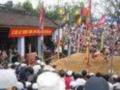
 Solutions for tourism development in Tien Lang - 10
zt2i3t4l5ee
zt2a3gstourism, tourism development
zt2a3ge
zc2o3n4t5e6n7ts
- District People's Committees and authorities of communes with tourist attractions should support, promote, and provide necessary information to people, helping them improve their knowledge about tourism. Raise tourism awareness for local people.
*
* *
Due to limited knowledge and research time, the thesis inevitably has shortcomings. Therefore, I look forward to receiving guidance from teachers, experts as well as your comments to make the thesis more complete.
Chapter III Conclusion
Through the issues presented in Chapter II, we can come to some conclusions:
Based on the strengths of available tourism resources, the types of tourism in Tien Lang that need to be promoted in the coming time are sightseeing and resort tourism, discovery tourism, weekend tourism. To improve the quality and diversify tourism products, Tien Lang district needs to combine with local cultural tourism resources, at the same time combine with surrounding areas, build rich tourism products. The strengths of Tien Lang tourism are eco-tourism and cultural tourism, so developing Tien Lang tourism must always go hand in hand with restoring and preserving types of cultural tourism resources. Some necessary measures to support and improve the efficiency of exploiting tourism resources in Tien Lang are: strengthening the construction of technical facilities and labor force serving tourism, actively promoting and advertising tourism, and expanding forms of capital mobilization for tourism development.
CONCLUDE
I Conclusion
1. Based on the results achieved within the framework of the thesis's needs, some basic conclusions can be drawn as follows:
Tien Lang is a locality with great potential for tourism development. The relatively abundant cultural tourism resources and ecological tourism resources have great appeal to tourists. Based on this potential, Tien Lang can build a unique tourism industry that is competitive enough with other localities within Hai Phong city and neighboring areas.
In recent years, the exploitation of the advantages of resources to develop tourism and build tourist routes in Tien Lang has not been commensurate with the available potential. In terms of quantity, many resource objects have not been brought into the purpose of tourism development. In terms of time, the regular service time has not been extended to attract more visitors. Infrastructure and technical facilities are still weak. The labor force is still thin and weak in terms of expertise. Tourism programs and routes have not been organized properly, the exploitation content is still monotonous, so it has not attracted many visitors. Although resources have not been mobilized much for tourism development, they are facing the risk of destruction and degradation.
2. Based on the results of investigation, analysis, synthesis, evaluation and selective absorption of research results of related topics, the thesis has proposed a number of necessary solutions to improve the efficiency of exploiting tourism resources in Tien Lang such as: promoting the restoration and conservation of tourism resources, focusing on investment and key exploitation of ecotourism resources, strengthening the construction of infrastructure and tourism workforce. Expanding forms of capital mobilization. In addition, the thesis has built a number of tourist routes of Hai Phong in which Tien Lang tourism resources play an important role.
Exploiting Tien Lang tourism resources for tourism development is currently facing many difficulties. The above measures, if applied synchronously, will likely bring new prospects for the local tourism industry, contributing to making Tien Lang tourism an important economic sector in the district's economic structure.
REFERENCES
1. Nhuan Ha, Trinh Minh Hien, Tran Phuong, Hai Phong - Historical and cultural relics, Hai Phong Publishing House, 1993
2. Hai Phong City History Council, Hai Phong Gazetteer, Hai Phong Publishing House, 1990.
3. Hai Phong City History Council, History of Tien Lang District Party Committee, Hai Phong Publishing House, 1990.
4. Hai Phong City History Council, University of Social Sciences and Humanities, VNU, Hai Phong Place Names Encyclopedia, Hai Phong Publishing House. 2001.
5. Law on Cultural Heritage and documents guiding its implementation, National Political Publishing House, Hanoi, 2003.
6. Tran Duc Thanh, Lecture on Tourism Geography, Faculty of Tourism, University of Social Sciences and Humanities, VNU, 2006
7. Hai Phong Center for Social Sciences and Humanities, Some typical cultural heritages of Hai Phong, Hai Phong Publishing House, 2001
8. Nguyen Ngoc Thao (editor-in-chief, Tourism Geography, Hai Phong Publishing House, two volumes (2001-2002)
9. Nguyen Minh Tue and group of authors, Hai Phong Tourism Geography, Ho Chi Minh City Publishing House, 1997.
10. Nguyen Thanh Son, Hai Phong Tourism Territory Organization, Associate Doctoral Thesis in Geological Geography, Hanoi, 1996.
11. Decision No. 2033/QD – UB on detailed planning of Tien Lang town, Hai Phong city until 2020.
12. Department of Culture, Information, Hai Phong Museum, Hai Phong relics
- National ranked scenic spot, Hai Phong Publishing House, 2005. 13. Tien Lang District People's Committee, Economic Development Planning -
Culture - Society of Tien Lang district to 2010.
14.Website www.HaiPhong.gov.vn
APPENDIX 1
List of national ranked monuments
STT
Name of the monument
Number, year of decisiondetermine
Location
1
Gam Temple
938 VH/QĐ04/08/1992
Cam Khe Village- Toan Thang commune
2
Doc Hau Temple
9381 VH/QĐ04/08/1992
Doc Hau Village –Toan Thang commune
3
Cuu Doi Communal House
3207 VH/QĐDecember 30, 1991
Zone II of townTien Lang
4
Ha Dai Temple
938 VH/QĐ04/08/1992
Ha Dai Village –Tien Thanh commune
APPENDIX II
STT
Name of the monument
Number, year of decision
Location
1
Phu Ke Pagoda Temple
178/QD-UBJanuary 28, 2005
Zone 1 - townTien Lang
2
Trung Lang Temple
178/QD-UBJanuary 28, 2005
Zone 4 – townTien Lang
3
Bao Khanh Pagoda
1900/QD-UBAugust 24, 2006
Nam Tu Village -Kien Thiet commune
4
Bach Da Pagoda
1792/QD-UB11/11/2002
Hung Thang Commune
5
Ngoc Dong Temple
177/QD-UBNovember 27, 2005
Tien Thanh Commune
6
Tomb of Minister TSNhu Van Lan
2848/QD-UBSeptember 19, 2003
Nam Tu Village -Kien Thiet commune
7
Canh Son Stone Temple
2160/QD-UBSeptember 19, 2003
Van Doi Commune –Doan Lap
8
Meiji Temple
2259/QD-UBSeptember 19, 2002
Toan Thang Commune
9
Tien Doi Noi Temple
477/QD-UBSeptember 19, 2005
Doan Lap Commune
10
Tu Doi Temple
177/QD-UBJanuary 28, 2005
Doan Lap Commune
11
Duyen Lao Temple
177/QD-UBJanuary 28, 2005
Tien Minh Commune
12
Dinh Xuan Uc Pagoda
177/QD-UBJanuary 28, 2005
Bac Hung Commune
13
Chu Khe Pagoda
177/QD-UBJanuary 28, 2005
Hung Thang Commune
14
Dong Dinh
2848/QD-UBNovember 21, 2002
Vinh Quang Commune
15
President's Memorial HouseTon Duc Thang
177/QD-UBJanuary 28, 2005
NT Quy Cao
Ha Dai Temple
Ben Vua Temple
Tien Lang hot spring
div.maincontent .p { color: black; font-family:"Times New Roman", serif; font-style: normal; font-weight: normal; text-decoration: none; font-size: 14pt; margin:0pt; } div.maincontent p { color: black; font-family:"Times New Roman", serif; font-style: normal; font-weight: normal; text-decoration: none; font-size: 14pt; margin:0pt; } div.maincontent .s1 { color: black; font-family:"Times New Roman", serif; font-style: normal; font-weight: normal; font-size: 16pt; } div.maincontent .s2 { color: black; font-family:"Times New Roman", serif; font-style: italic; font-weight: bold; text-decoration: none; font-size: 14pt; } div.maincontent .s3 { color: black; font-family:"Times New Roman", serif; font-style: italic; font-weight: normal; text-decoration: none; font-size: 14pt; } div.maincontent .s4 { color: black; font-family:"Times New Roman", serif; font-style: normal; font-weight: normal; font-size: 14pt; } div.maincontent .s5 { color: black; font-family:"Times New Roman", serif; font-style: normal; font-weight: bold; font-size: 14pt; } div.maincontent .s6 { color: black; font-family:"Times New Roman", serif; font-style: normal; font-weight: normal; text-decoration: none; font-size: 14pt; } div.maincontent .s7 { color: black; font-family:"Times New Roman", serif; font-style: normal; font-weight: bold; text-decoration: none; font-size: 14pt; } div.maincontent .s8 { color: black; font-family:"Times New Roman", serif; font-style: normal; font-weight: normal; text-decoration: none; font-size: 9pt; vertical-align: 6pt; } div.maincontent .s9 { color: black; font-family:"Times New Roman", serif; font-style: normal; font-weight: bold; text-decoration: none; font-size: 12pt; } div.maincontent .s11 { color: black; font-family:"Times New Roman", serif; font-style: normal; font-weight: normal; tex
Solutions for tourism development in Tien Lang - 10
zt2i3t4l5ee
zt2a3gstourism, tourism development
zt2a3ge
zc2o3n4t5e6n7ts
- District People's Committees and authorities of communes with tourist attractions should support, promote, and provide necessary information to people, helping them improve their knowledge about tourism. Raise tourism awareness for local people.
*
* *
Due to limited knowledge and research time, the thesis inevitably has shortcomings. Therefore, I look forward to receiving guidance from teachers, experts as well as your comments to make the thesis more complete.
Chapter III Conclusion
Through the issues presented in Chapter II, we can come to some conclusions:
Based on the strengths of available tourism resources, the types of tourism in Tien Lang that need to be promoted in the coming time are sightseeing and resort tourism, discovery tourism, weekend tourism. To improve the quality and diversify tourism products, Tien Lang district needs to combine with local cultural tourism resources, at the same time combine with surrounding areas, build rich tourism products. The strengths of Tien Lang tourism are eco-tourism and cultural tourism, so developing Tien Lang tourism must always go hand in hand with restoring and preserving types of cultural tourism resources. Some necessary measures to support and improve the efficiency of exploiting tourism resources in Tien Lang are: strengthening the construction of technical facilities and labor force serving tourism, actively promoting and advertising tourism, and expanding forms of capital mobilization for tourism development.
CONCLUDE
I Conclusion
1. Based on the results achieved within the framework of the thesis's needs, some basic conclusions can be drawn as follows:
Tien Lang is a locality with great potential for tourism development. The relatively abundant cultural tourism resources and ecological tourism resources have great appeal to tourists. Based on this potential, Tien Lang can build a unique tourism industry that is competitive enough with other localities within Hai Phong city and neighboring areas.
In recent years, the exploitation of the advantages of resources to develop tourism and build tourist routes in Tien Lang has not been commensurate with the available potential. In terms of quantity, many resource objects have not been brought into the purpose of tourism development. In terms of time, the regular service time has not been extended to attract more visitors. Infrastructure and technical facilities are still weak. The labor force is still thin and weak in terms of expertise. Tourism programs and routes have not been organized properly, the exploitation content is still monotonous, so it has not attracted many visitors. Although resources have not been mobilized much for tourism development, they are facing the risk of destruction and degradation.
2. Based on the results of investigation, analysis, synthesis, evaluation and selective absorption of research results of related topics, the thesis has proposed a number of necessary solutions to improve the efficiency of exploiting tourism resources in Tien Lang such as: promoting the restoration and conservation of tourism resources, focusing on investment and key exploitation of ecotourism resources, strengthening the construction of infrastructure and tourism workforce. Expanding forms of capital mobilization. In addition, the thesis has built a number of tourist routes of Hai Phong in which Tien Lang tourism resources play an important role.
Exploiting Tien Lang tourism resources for tourism development is currently facing many difficulties. The above measures, if applied synchronously, will likely bring new prospects for the local tourism industry, contributing to making Tien Lang tourism an important economic sector in the district's economic structure.
REFERENCES
1. Nhuan Ha, Trinh Minh Hien, Tran Phuong, Hai Phong - Historical and cultural relics, Hai Phong Publishing House, 1993
2. Hai Phong City History Council, Hai Phong Gazetteer, Hai Phong Publishing House, 1990.
3. Hai Phong City History Council, History of Tien Lang District Party Committee, Hai Phong Publishing House, 1990.
4. Hai Phong City History Council, University of Social Sciences and Humanities, VNU, Hai Phong Place Names Encyclopedia, Hai Phong Publishing House. 2001.
5. Law on Cultural Heritage and documents guiding its implementation, National Political Publishing House, Hanoi, 2003.
6. Tran Duc Thanh, Lecture on Tourism Geography, Faculty of Tourism, University of Social Sciences and Humanities, VNU, 2006
7. Hai Phong Center for Social Sciences and Humanities, Some typical cultural heritages of Hai Phong, Hai Phong Publishing House, 2001
8. Nguyen Ngoc Thao (editor-in-chief, Tourism Geography, Hai Phong Publishing House, two volumes (2001-2002)
9. Nguyen Minh Tue and group of authors, Hai Phong Tourism Geography, Ho Chi Minh City Publishing House, 1997.
10. Nguyen Thanh Son, Hai Phong Tourism Territory Organization, Associate Doctoral Thesis in Geological Geography, Hanoi, 1996.
11. Decision No. 2033/QD – UB on detailed planning of Tien Lang town, Hai Phong city until 2020.
12. Department of Culture, Information, Hai Phong Museum, Hai Phong relics
- National ranked scenic spot, Hai Phong Publishing House, 2005. 13. Tien Lang District People's Committee, Economic Development Planning -
Culture - Society of Tien Lang district to 2010.
14.Website www.HaiPhong.gov.vn
APPENDIX 1
List of national ranked monuments
STT
Name of the monument
Number, year of decisiondetermine
Location
1
Gam Temple
938 VH/QĐ04/08/1992
Cam Khe Village- Toan Thang commune
2
Doc Hau Temple
9381 VH/QĐ04/08/1992
Doc Hau Village –Toan Thang commune
3
Cuu Doi Communal House
3207 VH/QĐDecember 30, 1991
Zone II of townTien Lang
4
Ha Dai Temple
938 VH/QĐ04/08/1992
Ha Dai Village –Tien Thanh commune
APPENDIX II
STT
Name of the monument
Number, year of decision
Location
1
Phu Ke Pagoda Temple
178/QD-UBJanuary 28, 2005
Zone 1 - townTien Lang
2
Trung Lang Temple
178/QD-UBJanuary 28, 2005
Zone 4 – townTien Lang
3
Bao Khanh Pagoda
1900/QD-UBAugust 24, 2006
Nam Tu Village -Kien Thiet commune
4
Bach Da Pagoda
1792/QD-UB11/11/2002
Hung Thang Commune
5
Ngoc Dong Temple
177/QD-UBNovember 27, 2005
Tien Thanh Commune
6
Tomb of Minister TSNhu Van Lan
2848/QD-UBSeptember 19, 2003
Nam Tu Village -Kien Thiet commune
7
Canh Son Stone Temple
2160/QD-UBSeptember 19, 2003
Van Doi Commune –Doan Lap
8
Meiji Temple
2259/QD-UBSeptember 19, 2002
Toan Thang Commune
9
Tien Doi Noi Temple
477/QD-UBSeptember 19, 2005
Doan Lap Commune
10
Tu Doi Temple
177/QD-UBJanuary 28, 2005
Doan Lap Commune
11
Duyen Lao Temple
177/QD-UBJanuary 28, 2005
Tien Minh Commune
12
Dinh Xuan Uc Pagoda
177/QD-UBJanuary 28, 2005
Bac Hung Commune
13
Chu Khe Pagoda
177/QD-UBJanuary 28, 2005
Hung Thang Commune
14
Dong Dinh
2848/QD-UBNovember 21, 2002
Vinh Quang Commune
15
President's Memorial HouseTon Duc Thang
177/QD-UBJanuary 28, 2005
NT Quy Cao
Ha Dai Temple
Ben Vua Temple
Tien Lang hot spring
div.maincontent .p { color: black; font-family:"Times New Roman", serif; font-style: normal; font-weight: normal; text-decoration: none; font-size: 14pt; margin:0pt; } div.maincontent p { color: black; font-family:"Times New Roman", serif; font-style: normal; font-weight: normal; text-decoration: none; font-size: 14pt; margin:0pt; } div.maincontent .s1 { color: black; font-family:"Times New Roman", serif; font-style: normal; font-weight: normal; font-size: 16pt; } div.maincontent .s2 { color: black; font-family:"Times New Roman", serif; font-style: italic; font-weight: bold; text-decoration: none; font-size: 14pt; } div.maincontent .s3 { color: black; font-family:"Times New Roman", serif; font-style: italic; font-weight: normal; text-decoration: none; font-size: 14pt; } div.maincontent .s4 { color: black; font-family:"Times New Roman", serif; font-style: normal; font-weight: normal; font-size: 14pt; } div.maincontent .s5 { color: black; font-family:"Times New Roman", serif; font-style: normal; font-weight: bold; font-size: 14pt; } div.maincontent .s6 { color: black; font-family:"Times New Roman", serif; font-style: normal; font-weight: normal; text-decoration: none; font-size: 14pt; } div.maincontent .s7 { color: black; font-family:"Times New Roman", serif; font-style: normal; font-weight: bold; text-decoration: none; font-size: 14pt; } div.maincontent .s8 { color: black; font-family:"Times New Roman", serif; font-style: normal; font-weight: normal; text-decoration: none; font-size: 9pt; vertical-align: 6pt; } div.maincontent .s9 { color: black; font-family:"Times New Roman", serif; font-style: normal; font-weight: bold; text-decoration: none; font-size: 12pt; } div.maincontent .s11 { color: black; font-family:"Times New Roman", serif; font-style: normal; font-weight: normal; tex -
 Development Orientation of Universal Health Insurance in Phu Nhuan District, Ho Chi Minh City
 -
 Promoting universal health insurance to contribute to social security in Phu Nhuan district, Ho Chi Minh city by 2025 - 14
 -
 An investigation into teacher's beliefs and practice about developing supplementary materials for ielts learners at language centers in Ho Chi Minh city - 10
 -
 Using Ho Chi Minh Museum in teaching Vietnamese History from 1954 to 1975 at Tran Hung Dao High School - Ha Dong - Hanoi - 2
Sometimes it is a piece of advice to know how to behave in a way that is both respectful and respectful:
Don't pull up the plank when crossing the bridge.
Keep the village well clean so it can be used again.
(The wind carries the kitchen smoke…)
The lyrical subject affirms the consciousness of living freely, freely, innocently, and purely, not dominating anyone and not being dominated by anyone, not accepting to be a tool of others:
We live simply and naturally like Trees and Rocks.
Not a tool in anyone's hands to scare people
(We live simply)
Tran Nhuan Minh's poetry sometimes uses expressive language that repeats folk songs, but is innovated to achieve high efficiency in artistic creation:
Yesterday morning I came to visit you and saw my father standing on the porch watering the flowers.
Saw her preparing books in the house
(Yesterday morning he came…)
Reminds me of the folk song:
Yesterday I came to visit, I saw my mother weaving, I saw my father harrowing, I saw her busy spinning silk.
Also in the flow of world affairs, Tran Nhuan Minh's pen criticized the negative manifestations of morality and human behavior with a folk song-like language, both gentle, humorous but profound:
Last night the wind was cold in the temple yard
There were two nuns who cast a spell on the monk...
(The grasshopper asked…) Perhaps the poet took the idea from an old folk song:
Three girls carry rice to the temple. One girl in a red blouse casts a spell on the monk.
Sometimes the poet quotes the entire folk song into the poem to express the lyrical character's feelings of sorrow and regret before the vicissitudes of life, before the changes in people's hearts due to the changing events:
I go home I bathe in my pond
Listening to the old song makes my skin swell
(Moonrise)
When philosophizing about life and the change of social status, Tran Nhuan Minh also attracts readers by using idioms and folk songs:
The wise man will be unexpectedly foolish.
Before, I thought the sky was low, now I'm stooping. Square wood should not be carved round.
The old cat saw the little mouse bowing…
(On the proverb side)
And like folk songs, to enrich the world of characters, Tran Nhuan Minh personified trees, animals, objects... such as lemon trees, fish, grasshoppers or crickets:
Grasshopper asked grasshopper
How do fish live in water?
The chicken asked the lemon tree
Cut the reeds and make a communal house pillar, okay?
(The grasshopper asked…)
Expressing his poignant feelings about the life of a hard-working, miserable worker, the author also uses folk poetic rhetorical devices such as metaphors;
I look at the wind blowing on the bamboo bank, I feel sorry for the white stork flying back, lonely.
(Yesterday morning he came…)
Sometimes, we use a vague way of referring to time, creating a feeling of half-reality, half-ambiguity, the story can happen at any time, which is often used in folk songs and fairy tales:
This day, that month, that year
Accidentally went to a beer bar and met her.
(This day, that month…)
Using idioms, quoting folk songs and proverbs, Tran Nhuan Minh is very flexible and skillful. From idioms in common language to the use of folk songs and proverbs, everything is concise, easy to understand, creating a simple and familiar color on each page of the poet's book. It is these elements that create the folk language in Tran Nhuan Minh's poetry.
3.1.1.2. Use everyday language
Normally, people often see this layer of language in short stories, in novels and rarely see it mentioned in poetry. But Tran Nhuan Minh has a different point, the poet pays attention to the very ordinary aspects of current life, the layer of language the poet uses does not simply point out the reality outside it but recreates that reality within it. It can be said that part of the success in the field of poetry about personal life is because the poet knows how to filter simple, current everyday language to put into poetry.
The words "street" in The Escort Poet can be mentioned :
Once gave a "palm"
Those who come to "cut" the goods (...) freely chew chicken meat
(…)You “hit it all at once”
With such use of words, Tran Nhuan Minh depicts a portrait of his very ordinary poetic friend, behind which the poet's humorous smile can be seen. Or in Thoang is the image of people with degenerate morality and lifestyle:
A woman wears a straw bag, sunglasses , and shorts on the street. A guy is in prison for beating people and digging bricks.
Go to the bar and have a beer
These words have the ability to describe the character's portrait and personality, often going with the " storytelling poetry " style, especially appearing in portrait poems: Aunt Huu, Aunt Hai Vui, Phuc, Tu Lao ...
Or use spoken language to create a direct dialogue for the poem.
I raised my fists to cheer God.
A little joke but it becomes a thousand beautiful things
(Boating on Ha Long Bay) I stood still, face down in the darkness
Poor me, what can I say?
(Love poem without you)
The sun is white and pure like a small coin I don't bother to spend it
(In the mist of Cao Bang)
Sometimes it is informal language, with a strong colloquial style used in the direct dialogue of a story:
Ask wife: "My wife left me"
Ask the child: "He crossed the border" Ask the family: "My family is for sale"
Poetry question: “No one prints…”
(Old friend)
Suddenly today
Looking at his photo in the newspaper, they smiled and said
- That guy is young forever!
(Anveret)
However, many readers believe that using such words will destroy the poetic quality of the poem. It is necessary to see that poetry does not mean the smoothness and soaring of words and images; thorny reality also creates poetry because when recreating reality, poetry emerges from what is close to everyday life and vivid. In other words, putting these words into Tran Nhuan Minh's poetry has supplemented the "lack of poetry".
3.1.2. Deeply philosophical language
Reading Tran Nhuan Minh's poetry, we see that his poetic language is not only simple, clearly expressing folk and everyday characteristics, but his poetic language also has profound philosophical meaning. Philosophy is deeply embedded in language, in each sentence, each verse, each poem. In all his poetry collections, from "things seen" , Tran Nhuan Minh has opened his heart to contemplate, to gather effective, profound languages, containing philosophical meaning about life, the human world in the finite and before the infinite.
3.1.2.1. Using philosophical arguments
Argument is giving reasons or evidence to lead readers or listeners to a conclusion or accept a certain conclusion.
Tran Nhuan Minh often uses words that create contrasting but real images of everyday life to argue for the truth of life. To affirm the law of survival for everyone, the poet uses pairs of opposing words as arguments:
Live face down on the ground Die face up in the sky
Rich or poor or honor or disgrace
And the conclusion is the same: “It's the same around here . ”
Sometimes, we rely on the law of cause and effect to argue for human actions, whether intentional or unintentional, through pairs of conjunctions: "and - then", "if - then" :
And he who plants the Tree of Happiness will have a garden full of Happiness Fruit.
If you accidentally step on the back of a poisonous snake, the poisonous snake will turn into a rope...
(Wild Sonata)
The weight of Tran Nhuan Minh's poetry lies in his love for life, for people, and for everyday life embedded in his philosophy of life.
current events that carry with them the sentiments of world affairs. The poet has applied the laws of history to argue for the rise and fall of royal dynasties:
When the dynasty no longer pleases the people, even stone becomes mud.
The throne does not fall during the rainy season, the faces of invaders are everywhere in the capital.
(Standing on the Ho Dynasty Citadel in Thanh Hoa…)
Looking at the disastrous decline of the Qin Dynasty in feudal China, the poet summarized a philosophy for all times in affirmative language:
The most durable wall of
Every nation is the people's heart
(Great Wall Song)
With the same use of affirmative language, we can realize a simple truth, but many nations have had to pay a very high price in each historical period:
Having many heroes, a peaceful country is a great thing. Not needing many heroes,
The country is still peaceful, much greater
(Five songs on the banks of the Yangtze River)
Tran Nhuan Minh also explains seemingly contradictory and illogical phenomena in society, but in fact the issue is very reasonable in each situation. The poet uses the conjunctions "that - but" to express:
The master and the tenant
Is there ever equality? Life is so simple.
But wrong until gray hair
(City meeting)
The arguments are well-founded by using contrasting and opposing pairs of words, creating a highly effective way of expressing profound philosophical language.
3.1.2.2. Using implicit language to philosophize
The lyrical subject who is passionate about philosophy has maximized the implicit philosophical language in all his works. With his rich experience combined with his realistic sense and dialectical thinking, the poet stood next to the fate of the people and writhed to pour into the language the implicit philosophical sorrows of life:
People grow from struggles And evil gradually seeps into the blood
Marriage and land feuds
Still watching the secret behind the green bamboo fences
There was a rain that killed all the rice fields.
Sweet words but more people fall apart
To give a perception of the power of the mind being stronger than physical strength, the poet also used implicit language::
He who is good at felling trees does not need the strength of an axe.
And expressing the contrast between inner thoughts and outer actions in a person before life, Tran Nhuan Minh presents philosophy in an implicit way. Thanks to the context and the language used, readers can deduce the meaning that the poet conveys:
A wise man hides what he knows. His thoughts are in the east. His words are in the west. His feet are in the country lane. His hands are out on the street. His plans are hidden under full glasses of wine.
(45 pieces of the monochord by an anonymous person)
Tran Nhuan Minh draws a metaphorical and critical comment with profound philosophical implications:
When he stood with his back to the sun
Your own shadow will fall before you…
(When he stood…)
The inspiration for world affairs is born from the conclusions and contemplations of the multi-layered reality of life from all angles and on all social levels. To imply the ups and downs in human life, the author uses interrogative words: "how, how, how much" :
This is a section of a river.
Then after the twists and turns, how will life be?
How long can we hold hands…then we will part
(Night party)