
iii) Direct support policy
In Article 8, Decree 119/1999/ND-CP of the Government stipulates: The State supports enterprises with a maximum of no more than 30% of the total cost of implementing research projects to create new technologies in the fields prioritized by the State, encouraging enterprises to conduct them themselves or coordinate with scientific agencies to do so; at the same time, enterprises, when using technology that is the result of scientific and technological research projects funded by the State budget, only have to pay the author who researched that technology, with the amount to be paid equal to 30% of the technology transfer price according to the provisions of the Law on Technology Transfer (2006). Furthermore, the Ministry of Science and Technology is piloting direct support for a number of potential research groups in universities that cooperate in research with R&D organizations abroad, in order to perfect the technology and transfer it to Vietnamese enterprises. Enterprises are supported to form research units and carry out pilot production projects to create new technologies, serving the production of key products to enhance the competitiveness of enterprises and the country; the support level is specified in Joint Circular No. 22/2011/TTLT-BTC-BKHCN.
In terms of direct support under Decree 119, up to now, 95 scientific research topics of enterprises have received funding support from the state out of a total of 401 registrations. Of these, 53 topics create new products, new technologies, 18 research topics improve existing technologies and 14 research topics aim to replace imported spare parts, improve environmental pollution, with a total support budget of 91,633 billion VND. Research topics of Hanoi enterprises account for 50% of the total number of
funded topics in 2008 and 46.67% in 2009 20 ; most of the enterprises
Enterprises are supported from 500 million to 1 billion VND for a topic with the support rate not exceeding 30% of the total cost required to implement the topic.
For Hanoi: in addition to direct support according to Decree 119 mentioned above, the city also directly supports businesses participating in designing projects and researching scientific topics recognized by competent organizations, which will be considered.
20 According to http://nafosted.gov.vn/index.php/vi/danh-sach-tai-tro/ho-tro-doanh-nghiep-119/
support a part of the cost, but not more than 30% of the total cost of implementing that topic or project; at the same time support 70% of the cost for building and developing brands, with priority given to craft villages according to Decision No. 22/2008/QD-UBND on policies to support the development of occupations and craft villages in Hanoi, Decision No. 95/2009/QD-UBND on promulgating regulations on management of science and technology programs, projects, and proposals of Hanoi city. Furthermore, in Article 9, Decision No. 75/2009/QD-UBND, enterprises are supported 100% of the cost of research, application of modern technology, and trial production to perfect technology, produce raw materials and accessories to replace imported goods to serve the production of key industrial products.
In summary, through the above analysis, if we consider the business innovation activities as a process, credit incentives and direct support from the State will have an impact on the business right from the time the business starts to implement innovation; tax incentives, especially corporate income tax, often come later and are meaningful when the investment has been carried out and brought about efficiency. Economic policies are important in the business innovation activities (Hoang Xuan Long, 2011), at the same time, there are also different benefits between the business and the State shown in Table 4.6:
Table 4.6: Comparison of benefits between preferential forms of economic policy
The parties
Tax | Credit | Live Support | |
State | - No need to pay in advance - Associated with operational efficiency business action | - Must pay in advance (risky) - Recall after one period of time | - Must pay in advance - Unworthy recovery include or exclude |
Business | - Paid later - Number of offers is limited according to results | - Get funding in advance - Actively mobilize loan sources | - Get funding in advance - Get paid directly |
Maybe you are interested!
-
 Management and Innovation in Science and Technology
 -
 Directing Innovation in Training Methods for Engineering Technology Industry According to Competency Approach
 -
 For the people, all benefits should be done, all harms should be abandoned
 -
 Situation of Information Technology Application in Enterprises
 -
 Illustration of Linkage Forms of Textile and Garment Enterprises in Textile and Garment Industry in China
Source: Synthetic research from [39]
In general, the regulations for enjoying tax incentives, credit, and direct support are assessed by businesses as being complicated, and the actual enforcement of some legal documents is not guaranteed, so they have not really brought about positive results.
extremely as desired by enterprises (Duong Thi Ninh, 2007; Nguyen Viet Hoa, 2011). Furthermore, according to the assessment of enterprises in Hanoi, the State's economic policy has not really created good conditions for enterprises to invest in innovation (see criterion PH3.1, section 4.3.1.3).
4.2.2.3. Training, information and propaganda policies to promote technological innovation in enterprises
(i) Training policy
Since 2000, the Government has issued many policies to improve the capacity of technology human resources of enterprises. Specifically:
- Support for training and development of human resources for small and medium enterprises: Resolution 22/NQ-CP on the implementation of Decree No. 56/2009/ND-CP on supporting the development of small and medium enterprises, Joint Circular No. 05/2011/TTLT-BKHĐT-BTC guiding the support for training and development of human resources for enterprises, applicable subjects and support activities are specified in Articles 2 and 3 of this Joint Circular. Specific expenditure contents and levels are implemented according to the provisions of Circular No. 87/2001/TT-BTC, Circular No. 120/2007/TT-BTC, Circular No. 51/2008/TT-BTC, Circular No. 97/2010/TT-BTC and Circular No. 79/2003/TT-BTC of the Ministry of Finance. Accordingly, the Central Government will support 100% of the costs for developing, compiling, supplementing, and printing basic documents and specialized documents on human resource training for enterprises; support 100% of the costs for surveying and assessing training assistance needs under the expenditure tasks of the Central budget, assessing the impact and effectiveness of training assistance activities; support part of the costs for organizing training courses for enterprises implemented by ministries, branches, and associations. In addition, localities will support 100% of the costs for surveying and assessing human resource training assistance needs for enterprises under the expenditure tasks of the local budget; support part of the costs for organizing training courses for enterprises under the tasks of the locality.
- Improve the quality of human resources to serve business development, especially small and medium enterprises to achieve development goals.
Economic and social: Decision 1231/QD-TTg (September 7, 2012) on the plan for developing small and medium enterprises in the period of 2011-2015 (solution group 4: supporting human resource development, focusing on improving management capacity for small and medium enterprises); Decision 677/QD-TTg (May 10, 2011) on approving the national technology innovation program until 2020, according to which by 2015, about 30,000 and by 2020, about 80,000 engineers, technicians, and managers of small and medium enterprises will be trained in technology management, updating new technologies, etc.
For Hanoi: In order to overcome the shortage of knowledge and skills for businesses in the area, Hanoi has issued a number of policies to support human resource training to overcome the above weaknesses through short-term training courses.
- Decision No. 4635/QD-UBND (November 19, 2007) on approving the plan and budget for the pilot training program for executives for enterprises, Decision No. 5629/QD-UBND (November 12, 2010) on approving the plan to support small and medium enterprises in the period 2011-2015. Accordingly, Hanoi has supported training courses on business start-up, business administration classes, executive director classes, including training on enterprise technology management; funding standards are according to the guidance of Circular 09/2005/TT-BTC of the Ministry of Finance.
- Hanoi supports training costs, attracts good experts and leading scientists to participate in the development of the capital according to Decision 48/2007/QD-UBND, Decision No. 91/2009/QD-UB; at the same time, supports 100% of the costs for vocational training, career development, improving the qualifications of business leaders and owners of production facilities in craft villages according to Decision No. 22/2008/QD-UB, supports 100% of the costs for short-term training to improve the capacity and skills of trading key industrial products in Article 8, Decision No. 75/2009/QD-UBND.
(ii) Information and propaganda policy
Currently, information and propaganda policies in general, information and propaganda to promote businesses in particular through media such as television, radio, newspapers, social organizations, especially on websites: www.clst.ac.vn, www.techmartvietnam.com.vn, www.vistco.com, www.vista.vn,
www.truyenthongkhoahoc.vn and websites of the Government/ministries/sectors have brought about positive impacts. Along with that, the State has issued a number of specific policies such as: Directive 03/2003/CT-BKH&CN on disseminating laws on science and technology; solution group 6, Decision 1231/QD-TTg on providing information to support and promote market expansion for small and medium enterprises; Circular No. 11/2009/TT-BKHCN regulating the national quality award; Decision 1638/QD-BKHCN (June 8, 2011) on the regulations for awarding the Science and Technology Journalism Award to raise social awareness about the role of science and technology in economic and social development, etc.
For Hanoi: the city issued a policy to support information provision, market search, business partners, and participation in fairs and exhibitions according to Article 2, Decision No. 22/2008/QD-UB on supporting the development of occupations and craft villages; at the same time, the city supported activities to disseminate and propagate the clean development mechanism according to Decision No. 38/2010/QD-UBND of the Hanoi Environmental Protection Fund, accordingly, the city supported prices for products of clean development projects according to the provisions of law. In particular, the city issued a policy to popularize the application and innovation of clean technology in enterprises according to Section e, Project 3 of Decision 6374/QD-UB (December 27, 2010); Thereby, the city supports enterprises in demonstrating technology, popularizing technological innovation models, providing information, promoting technological innovation models annually on the internet, on television, etc. In addition, the city promulgates the Regulation on considering export rewards for enterprises with achievements in export activities in Hanoi according to Decision No. 58/2001/QD-UB; Decision No. 42/2008/QD-UBND (July 13, 2008) on promulgating the Regulation on honoring enterprises with achievements in exporting technological products in the area.
Thus, the above training, information and propaganda policies are only aimed at general S&T activities and have not emphasized training, information and propaganda activities for enterprises' innovation, so the results are not high (Tran Ngoc Ca, 2011). Enterprises in Hanoi, although
The awareness of policies to promote innovation is relatively high, but the understanding and application of policies is still limited (see criterion HL1.1, section 4.3.1.1), so the effectiveness and efficiency of policies have not been promoted, most clearly shown by the fact that currently very few enterprises are able to conduct R&D activities right at the enterprise, but most have to receive technology through technology transfer activities from abroad.
4.3. Evaluation of state policies to promote technological innovation by enterprises in Hanoi
4.3.1. Evaluation of state policies to promote technological innovation by enterprises in Hanoi according to criteria groups
4.3.1.1. Assessing the effectiveness of state policies to promote technological innovation by enterprises in Hanoi
The effectiveness of state policies to promote innovation in enterprises is described in section 2.2.5.2 of chapter 2. Thereby, the effectiveness of the policy is assessed through the following criteria: (i) criterion HL1.1: the ability of enterprises to recognize state policies on innovation in enterprises, (ii) criterion HL1.2: enterprises' awareness of the necessity of investing in innovation in enterprises, (iii) criterion HL1.3 : the level of investment in innovation in enterprises in the last three years.
(i) Criterion HL1.1: Ability to recognize state policies on innovation of enterprises
According to the survey results of 119 enterprises in Hanoi by the researcher processed by SPSS 16 software, the ability of enterprises to recognize the policy of innovation is shown in Table 4.7. The results are as follows:
- Firstly, 90.8% of enterprises are aware of legal documents issued through different channels (Government/ministry/branch/locality websites are 52.1%; TV/radio/newspapers are 47.9%; seminars/conferences/exhibitions are 34.5%; legal support and information organizations are 39.1%; other access channels such as organizations and professional associations are 35.3%).
Table 4.7: Awareness of enterprises in Hanoi when the policy on innovation is issued
TT
Business awareness of policies DMCN through access channels | Midpoint Mean | Standard deviation (Std. Deviation) | |
1 | Awareness of state policies on DMCN issued | .9076 | .29087 |
2 | Access time | 2.9580 | 1.60188 |
3 | Access channel from the Government website government/ministry/branch/locality | .5210 | .50167 |
4 | Access channels through TV/radio/newspaper | .4790 | .50167 |
5 | Access channel through seminars/conferences conference/exhibition | .3445 | .47723 |
6 | Access channel through support organization legal/information | .3193 | .46819 |
7 | Other outreach channels | .3529 | .47991 |
Source: Research results of graduate students (2012)
- Second, the general access time for all businesses in the area is at an average level (average score 2.9580); of which, 17.6% of businesses access information very quickly, 30.3% quickly, 15.1% average, 13.4% slow and 14.3% of businesses access information very slowly.
Although the number of enterprises aware of legal documents on FDI is at a high level (90.8%), understanding and applying the content of these legal documents is still limited (Table 4.8).
Table 4.8: Level of awareness of enterprises in Hanoi about policy content related to innovation
TT
Level of awareness of policy content DMCN | Midpoint Mean | Standard deviation (Std. Deviation) | |
1 | Get to know the tax incentives | 2.9916 | .95221 |
2 | Recognize credit benefits | 2.8151 | .88266 |
3 | Get to know the content about live support | 2.6639 | .81591 |
4 | Identify training support content | 2.5126 | .72329 |
5 | Identify content about market development support School of Technology | 2.5462 | .87088 |
6 | Identify the content of the final offers promote business innovation | 2.8908 | .86151 |
Source: Research results of graduate students (2012)
- Regarding the recognition of tax incentives for SMEs (Figure 4.7): 4.2% of enterprises do not know the content, 24.37% know but do not know the content, 47.9% know the content clearly but cannot use it, 15.13% know the content clearly, can use it but rarely, only 8.4% of enterprises know the content clearly and use it regularly (average score is 2.9916).
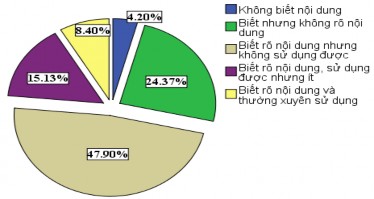
Figure 4.7: Level of awareness of enterprises in Hanoi about tax incentives for SMEs
Source: Research results of graduate students (2012)
- Regarding the recognition of credit incentives for SMEs (Figure 4.8): 2.52% of enterprises do not know the content, 38.66% know but do not know the content, 36.97% know the content clearly but cannot use it, 18.49% know the content clearly, can use it but rarely, only 3.36% of enterprises know the content clearly and use it regularly (average score is 2.8151).
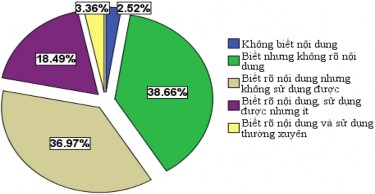
Figure 4.8: Level of awareness of enterprises in Hanoi about credit incentives for SMEs
Source: Research results of graduate students (2012)