
With a team of qualified staff who are always professionally trained, the tour guides at the company always complete their tasks quite well and leave a good impression on customers.
Thanks to the good relationship with suppliers, the travel programs sold at the company ensure quality that is highly appreciated by customers. All domestic travel programs are implemented by the company. The company can also organize international travel programs, mainly in border areas if the number is large. If the number is small, the company will combine customers with other travel businesses such as Danatour travel company, Viettravel travel company, Thanh Nien travel company... to satisfy the needs of customers.
7. Analyze the external environment affecting tourism business activities.
travel at ECOVICO travel company.
Maybe you are interested!
-
 Identify Rating Levels and Rating Scales
zt2i3t4l5ee
zt2a3gstourism,quan lan,quang ninh,ecology,ecotourism,minh chau,van don,geography,geographical basis,tourism development,science
zt2a3ge
zc2o3n4t5e6n7ts
of the islanders. Therefore, this indicator will be divided into two sub-indicators:
a1. Natural tourism attractiveness a2. Cultural tourism attractiveness
b. Tourist capacity
The two island communes in Quan Lan have different capacities to receive tourists. Minh Chau Commune is home to many standard hotels and resorts, attracting high-income domestic and international tourists. Meanwhile, Quan Lan Commune has many motels mainly built and operated by local people, so the scale and quality are not high, and will be suitable for ordinary tourists such as students.
c. Time of exploitation of Quan Lan Island Commune:
Quan Lan tourism is seasonal due to weather and climate conditions and festivals only take place on certain days of the year, specifically in spring. In Quan Lan commune, the period from April to June and from September to November is considered the best time to visit Quan Lan because the cultural tourism activities are mainly associated with festivals taking place during this time.
Minh Chau island commune:
Tourism exploitation time is all year round, because this is a place with a number of tourist attractions with diverse ecosystems such as Bai Tu Long National Park Research Center, Tram forest, Turtle Laying Beach, so besides coming to the beach for tourism and vacation in the summer, Minh Chau will attract research groups to come for tourism combined with research at other times of the year.
d. Sustainability
The sustainability of ecotourism sites in Quan Lan and Minh Chau communes depends on the sensitivity of the ecosystems to climate changes.
landscape. In general, these tourist destinations have a fairly high level of sustainability, because they are natural ecosystems, planned and protected. However, if a large number of tourists gather at certain times, it can exceed the carrying capacity and affect the sustainability of the environment (polluted beaches, damaged trees, animals moving away from their habitats, etc.), then the sustainability of the above ecosystems (natural ecosystems, human ecosystems) will also be affected and become less sustainable.
e. Location and accessibility
Both island communes have ports to take tourists to visit from Van Don wharf:
- Quan Lan – Van Don traffic route:
Phuc Thinh – Viet Anh high-speed boat and Quang Minh high-speed boat, depart at 8am and 2pm from Van Don to Quan Lan, and at 7am and 1pm from Quan Lan to Van Don. There are also wooden boats departing at 7am and 1pm.
- Van Don - Minh Chau traffic route:
Chung Huong high-speed train, Minh Chau train, morning 7:30 and afternoon 13:30 from Van Don to Minh Chau, morning 6:30 and afternoon 13:00 from Minh Chau to Van Don.
f. Infrastructure
Despite receiving investment attention, the issue of infrastructure and technical facilities for tourism on Quan Lan Island is still an issue that needs to be resolved because it has a direct impact on the implementation of ecotourism activities. The minimum conditions for serving tourists such as accommodation, electricity, water, communication, especially medical services, and security work need to be given top priority. Ecotourism spots in Minh Chau commune are assessed to have better infrastructure and technical facilities for tourism because there are quite complete and synchronous conditions for serving tourists, meeting many needs of domestic and foreign tourists.
3.2.1.4. Determine assessment levels and assessment scales
Corresponding to the levels of each criterion, the index is the score of those levels in the order of 4, 3, 2, 1 decreasing according to the standard of each level: very attractive (4), attractive (3), average (2), less attractive (1).
3.2.1.5. Determining the coefficients of the criteria
For the assessment of DLST in the two communes of Quan Lan and Minh Chau islands, the students added evaluation coefficients to show the importance of the criteria and indicators as follows:
Coefficient 3 with criteria: Attractiveness, Exploitation time. These are the 2 most important criteria for attracting tourists to tourism in general and eco-tourism in particular, so they have the highest coefficient.
Coefficient 2 with criteria: Capacity, Infrastructure, Location and accessibility . Because the assessment area is an island commune of Van Don district, the above criteria are selected by the author with appropriate coefficients at the average level.
Coefficient 1 with criteria: Sustainability. Quan Lan has natural and human-made ecotourism sites, with high biodiversity and little impact from local human factors. Most of the ecotourism sites are still wild, so they are highly sustainable.
3.2.1.6. Results of DLST assessment on Quan Lan island
a. Assessment of the potential for natural tourism development
For Minh Chau commune:
+ Natural tourism attractiveness is determined to be very attractive (4 points) and the most important coefficient (coefficient 3), so the score of the Attractiveness criterion is 4 x 3 = 12.
+ Capacity is determined as average (2 points) and the coefficient is quite important (coefficient 2), then the score of Capacity criterion is 2 x 2 = 4.
+ Exploitation time is long (4 points), the most important coefficient (coefficient 3) so the score of the Exploitation time criterion is 4 x 3 = 12.
+ Sustainability is determined as sustainable (4 points), the important coefficient is the average coefficient (coefficient 1), so the score of the Sustainability criterion is 4 x 1 = 4 points
+ Location and accessibility are determined to be quite favorable (2 points), the coefficient is quite important (coefficient 2), the criterion score is 2 x 2 = 4 points.
+ Infrastructure is assessed as good (3 points), the coefficient is quite important (coefficient 2), then the score of the Infrastructure criterion is 3 x 2 = 6 points.
The total score for evaluating DLST in Minh Chau commune according to 6 evaluation criteria is determined as: 12 + 4 + 12 + 4 + 4 + 6 = 42 points
Similar assessment for Quan Lan commune, we have the following table:
Table 3.3: Assessment of the potential for natural ecotourism development in Quan Lan and Minh Chau communes
Attractiveness of self-tourismof course
Capacity
Mining time
Sustainability
Location and accessibility
Infrastructure
Result
Point
DarkMulti
Point
DarkMulti
Point
DarkMulti
Point
DarkMulti
Point
DarkMulti
Point
DarkMulti
CommuneMinh Chau
12
12
4
8
12
12
4
4
4
8
6
8
42/52
Quan CommuneLan
6
12
6
8
9
12
4
4
4
8
4
8
33/52
b. Assessment of the potential for humanistic tourism development
For Quan Lan commune:
+ The attractiveness of human tourism is determined to be very attractive (4 points) and the most important coefficient (coefficient 3), so the score of the Attractiveness criterion is 4 x 3 = 12.
+ Capacity is determined to be large (3 points) and the coefficient is quite important (coefficient 2), then the score of the Capacity criterion is 3 x 2 = 6.
+ Mining time is average (3 points), the most important coefficient (coefficient 3) so the score of the Mining time criterion is 3 x 3 = 9.
+ Sustainability is determined as sustainable (4 points), the important coefficient is the average coefficient (coefficient 1), so the score of the Sustainability criterion is 4 x 1 = 4 points.
+ Location and accessibility are determined to be quite favorable (2 points), the coefficient is quite important (coefficient 2), the criterion score is 2 x 2 = 4 points.
+ Infrastructure is rated as average (2 points), the coefficient is quite important (coefficient 2), then the score of the Infrastructure criterion is 2 x 2 = 4 points.
The total score for evaluating DLST in Quan Lan commune according to 6 evaluation criteria is determined as: 12 + 6 + 6 + 4 + 4 + 4 = 36 points.
Similar assessment with Minh Chau commune we have the following table:
Table 3.4: Assessment of the potential for developing humanistic eco-tourism in Quan Lan and Minh Chau communes
Attractiveness of human tourismliterature
Capacity
Mining time
Sustainability
Location and accessibility
Infrastructure
Result
Point
DarkMulti
Point
DarkMulti
Point
DarkMulti
Point
DarkMulti
Point
DarkMulti
Point
DarkMulti
Quan CommuneLan
12
12
6
8
9
12
4
4
4
8
4
8
39/52
Minh CommuneChau
6
12
4
8
12
12
4
4
4
8
6
8
36/52
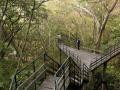
Basically, both Minh Chau and Quan Lan localities have quite favorable conditions for developing ecotourism. However, Quan Lan commune has more advantages to develop ecotourism in a humanistic direction, because this is an area with many famous historical relics such as Quan Lan Communal House, Quan Lan Pagoda, Temple worshiping the hero Tran Khanh Du, ... along with local festivals held annually such as the wind praying ceremony (March 15), Quan Lan festival (June 10-19); due to its location near the port and long exploitation time, the beaches in Quan Lan commune (especially Quan Lan beach) are no longer hygienic and clean to ensure the needs of tourists coming to relax and swim; this is also an area with many beautiful landscapes such as Got Beo wind pass, Ong Phong head, Voi Voi cave, but the ability to access these places is still very limited (dirt hill road, lots of gravel and rocks), especially during rainy and windy times; In addition, other natural resources such as mangrove forests and sea worms have not been really exploited for tourism purposes and ecotourism development. On the contrary, Minh Chau commune has more advantages in developing ecotourism in the direction of natural tourism, this is an area with diverse ecosystems such as at Rua De Beach, Bai Tu Long National Park Conservation Center...; Minh Chau beach is highly appreciated for its natural beauty and cleanliness, ranked in the top ten most beautiful beaches in Vietnam; Minh Chau commune is also home to Tram forest with a large area and a purity of up to 90%, suitable for building bridges through the forest (a very effective type of natural ecotourism currently applied by many countries) for tourists to sightsee, as well as for the purpose of studying and researching.
Figure 3.1: Thenmala Forest Bridge (India) Source: https://www.thenmalaecotourism.com/(August 21, 2019)
3.2.2. Using SWOT matrix to evaluate Quan Lan island tourism
General assessment of current tourism activities of Quan Lan island is shown through the following SWOT matrix:
Table 3.5: SWOT matrix evaluating tourism activities on Quan Lan island
Internal agent
Strengths- There is a lot of potential for tourism development, especially natural ecotourism and humanistic ecotourism.- The unskilled labor force is relatively abundant.- resource environmentunpolluted, still
Weaknesses- Poorly developed infrastructure, especially traffic routes to tourist destinations on the island.- The team of professional staff is still weak.- Tourism products in general
quite wild, originalintact
general and DLST in particularalone is monotonous.
External agents
Opportunity- Tourism is a key industry in the socio-economic development strategy of the province and Van Don economic zone.- Quan Lan was selected as a pilot area for eco-tourism development within the framework of the green growth project between Quang Ninh province and the Japanese organization JICA.- The flow of tourists and especially ecotourism in the world tends toincreasing
Challenge- Weather and climate change abnormally.- Competition in tourism products is increasingly fierce, especially with other localities in the province such as Ha Long, Mong Cai...- Awareness of tourists, especially domestic tourists, about ecotourism and nature conservation is not high.
Through summary analysis using SWOT matrix we see that:
To exploit strengths and take advantage of opportunities, it is necessary to:
- Diversify products and service types (build more tourism routes aimed at specific needs of tourists: experiential tourism immersed in nature, spiritual cultural tourism...)
- Effective exploitation of resources and differentiated products (natural resources and human resources)
div.maincontent .p { color: black; font-family:"Times New Roman", serif; font-style: normal; font-weight: normal; text-decoration: none; font-size: 14pt; margin:0pt; } div.maincontent p { color: black; font-family:"Times New Roman", serif; font-style: normal; font-weight: normal; text-decoration: none; font-size: 14pt; margin:0pt; } div.maincontent .s1 { color: black; font-family:"Times New Roman", serif; font-style: normal; font-weight: normal; text-decoration: none; font-size: 13pt; } div.maincontent .s2 { color: black; font-family:"Times New Roman", serif; font-style: normal; font-weight: normal; text-decoration: none; font-size: 13pt; } div.maincontent .s3 { color: #0D0D0D; font-family:"Times New Roman", serif; font-style: normal; font-weight: bold; text-decoration: none; font-size: 14pt; } div.maincontent .s4 { color: black; font-family:"Times New Roman", serif; font-style: italic; font-weight: normal; text-decoration: none; font-size: 14pt; } div.maincontent .s5 { color: black; font-family:"Times New Roman", serif; font-style: italic; font-weight: bold; text-decoration: none; font-size: 14pt; } div.maincontent .s6 { color: black; font-family:"Times New Roman", serif; font-style: italic; font-weight: normal; text-decoration: none; font-size: 14pt; vertical-align: -3pt; } div.maincontent .s7 { color: black; font-family:"Times New Roman", serif; font-style: italic; font-weight: normal; text-decoration: none; font-size: 14pt; vertical-align: -2pt; } div.maincontent .s8 { color: black; font-family:"Times New Roman", serif; font-style: italic; font-weight: normal; text-decoration: none; font-size: 14pt; vertical-align: -1pt; } div.maincontent .s9 { color: black; font-family:"Times New Roman", serif; font-style: normal; font-weight: normal; text-decoration: none; font-size: 14pt; } div.maincontent .s10 { color: black; font-family:"Times New Roman", serif; font-style: normal; font-weight: bold; text-decoration: none; font-size: 14pt; } div.maincontent .s11 { color: black; font-family:"Times New Roman", serif; font-style: normal; font-weight: normal; text-decoration: none; font-size: 14pt; } div.maincontent .s12 { color: black; font-family:Symbol, serif; font-style: normal; font-weight: normal; text-decoration: none; font-size: 14pt; } div.maincontent .s13 { color: black; font-family:Wingdings; font-style: normal; font-weight: normal; text-decoration: none; font-size: 14pt; } div.maincontent .s14 { color: black; font-family:"Times New Roman", serif; font-style: normal; font-weight: normal; text-decoration: none; font-size: 9pt; vertical-align: 5pt; } div.maincontent .s15 { color: black; font-family:"Times New Roman", serif; font-style: normal; font-weight: normal; text-decoration: none; font-size: 9pt; vertical-align: 5pt; } div.maincontent .s16 { color: black; font-family:Cambria, serif; font-style: italic; font-weight: normal; text-decoration: none; font-size: 14pt; } div.maincontent .s17 { color: #080808; font-family:"Times New Roman", serif; font-style: normal; font-weight: bold; text-decoration: none; font-size: 14pt; } div.maincontent .s18 { color: #080808; font-family:"Times New Roman", serif; font-style: normal; font-weight: normal; text-decoration: none; font-size: 14pt; } div.maincontent .s19 { color: black; font-family:"Times New Roman", serif; font-style: normal; font-weight: normal; text-decoration: none; font-size: 11pt; } div.maincontent .s20 { color: black; font-family:"Times New Roman", serif; font-style: normal; font-weight: normal; text-decoration: none; font-size: 10pt; } div.maincontent .s21 { color: black; font-family:"Times New Roman", serif; font-style: normal; font-weight: bold; text-decoration: none; font-size: 11pt; } div.maincontent .s22 { color: black; font-family:"Times New Roman", serif; font-style: normal; font-weight: normal; text-decoration: none; font-size: 11pt; } div.maincontent .s23 { color: black; font-family:"Times New Roman", serif; font-style: italic; font-weight: normal; text-decoration: none; font-size: 14pt; } div.maincontent .s24 { color: #212121; font-family:"Times New Roman", serif; font-style: normal; font-weight: normal; tex
Identify Rating Levels and Rating Scales
zt2i3t4l5ee
zt2a3gstourism,quan lan,quang ninh,ecology,ecotourism,minh chau,van don,geography,geographical basis,tourism development,science
zt2a3ge
zc2o3n4t5e6n7ts
of the islanders. Therefore, this indicator will be divided into two sub-indicators:
a1. Natural tourism attractiveness a2. Cultural tourism attractiveness
b. Tourist capacity
The two island communes in Quan Lan have different capacities to receive tourists. Minh Chau Commune is home to many standard hotels and resorts, attracting high-income domestic and international tourists. Meanwhile, Quan Lan Commune has many motels mainly built and operated by local people, so the scale and quality are not high, and will be suitable for ordinary tourists such as students.
c. Time of exploitation of Quan Lan Island Commune:
Quan Lan tourism is seasonal due to weather and climate conditions and festivals only take place on certain days of the year, specifically in spring. In Quan Lan commune, the period from April to June and from September to November is considered the best time to visit Quan Lan because the cultural tourism activities are mainly associated with festivals taking place during this time.
Minh Chau island commune:
Tourism exploitation time is all year round, because this is a place with a number of tourist attractions with diverse ecosystems such as Bai Tu Long National Park Research Center, Tram forest, Turtle Laying Beach, so besides coming to the beach for tourism and vacation in the summer, Minh Chau will attract research groups to come for tourism combined with research at other times of the year.
d. Sustainability
The sustainability of ecotourism sites in Quan Lan and Minh Chau communes depends on the sensitivity of the ecosystems to climate changes.
landscape. In general, these tourist destinations have a fairly high level of sustainability, because they are natural ecosystems, planned and protected. However, if a large number of tourists gather at certain times, it can exceed the carrying capacity and affect the sustainability of the environment (polluted beaches, damaged trees, animals moving away from their habitats, etc.), then the sustainability of the above ecosystems (natural ecosystems, human ecosystems) will also be affected and become less sustainable.
e. Location and accessibility
Both island communes have ports to take tourists to visit from Van Don wharf:
- Quan Lan – Van Don traffic route:
Phuc Thinh – Viet Anh high-speed boat and Quang Minh high-speed boat, depart at 8am and 2pm from Van Don to Quan Lan, and at 7am and 1pm from Quan Lan to Van Don. There are also wooden boats departing at 7am and 1pm.
- Van Don - Minh Chau traffic route:
Chung Huong high-speed train, Minh Chau train, morning 7:30 and afternoon 13:30 from Van Don to Minh Chau, morning 6:30 and afternoon 13:00 from Minh Chau to Van Don.
f. Infrastructure
Despite receiving investment attention, the issue of infrastructure and technical facilities for tourism on Quan Lan Island is still an issue that needs to be resolved because it has a direct impact on the implementation of ecotourism activities. The minimum conditions for serving tourists such as accommodation, electricity, water, communication, especially medical services, and security work need to be given top priority. Ecotourism spots in Minh Chau commune are assessed to have better infrastructure and technical facilities for tourism because there are quite complete and synchronous conditions for serving tourists, meeting many needs of domestic and foreign tourists.
3.2.1.4. Determine assessment levels and assessment scales
Corresponding to the levels of each criterion, the index is the score of those levels in the order of 4, 3, 2, 1 decreasing according to the standard of each level: very attractive (4), attractive (3), average (2), less attractive (1).
3.2.1.5. Determining the coefficients of the criteria
For the assessment of DLST in the two communes of Quan Lan and Minh Chau islands, the students added evaluation coefficients to show the importance of the criteria and indicators as follows:
Coefficient 3 with criteria: Attractiveness, Exploitation time. These are the 2 most important criteria for attracting tourists to tourism in general and eco-tourism in particular, so they have the highest coefficient.
Coefficient 2 with criteria: Capacity, Infrastructure, Location and accessibility . Because the assessment area is an island commune of Van Don district, the above criteria are selected by the author with appropriate coefficients at the average level.
Coefficient 1 with criteria: Sustainability. Quan Lan has natural and human-made ecotourism sites, with high biodiversity and little impact from local human factors. Most of the ecotourism sites are still wild, so they are highly sustainable.
3.2.1.6. Results of DLST assessment on Quan Lan island
a. Assessment of the potential for natural tourism development
For Minh Chau commune:
+ Natural tourism attractiveness is determined to be very attractive (4 points) and the most important coefficient (coefficient 3), so the score of the Attractiveness criterion is 4 x 3 = 12.
+ Capacity is determined as average (2 points) and the coefficient is quite important (coefficient 2), then the score of Capacity criterion is 2 x 2 = 4.
+ Exploitation time is long (4 points), the most important coefficient (coefficient 3) so the score of the Exploitation time criterion is 4 x 3 = 12.
+ Sustainability is determined as sustainable (4 points), the important coefficient is the average coefficient (coefficient 1), so the score of the Sustainability criterion is 4 x 1 = 4 points
+ Location and accessibility are determined to be quite favorable (2 points), the coefficient is quite important (coefficient 2), the criterion score is 2 x 2 = 4 points.
+ Infrastructure is assessed as good (3 points), the coefficient is quite important (coefficient 2), then the score of the Infrastructure criterion is 3 x 2 = 6 points.
The total score for evaluating DLST in Minh Chau commune according to 6 evaluation criteria is determined as: 12 + 4 + 12 + 4 + 4 + 6 = 42 points
Similar assessment for Quan Lan commune, we have the following table:
Table 3.3: Assessment of the potential for natural ecotourism development in Quan Lan and Minh Chau communes
Attractiveness of self-tourismof course
Capacity
Mining time
Sustainability
Location and accessibility
Infrastructure
Result
Point
DarkMulti
Point
DarkMulti
Point
DarkMulti
Point
DarkMulti
Point
DarkMulti
Point
DarkMulti
CommuneMinh Chau
12
12
4
8
12
12
4
4
4
8
6
8
42/52
Quan CommuneLan
6
12
6
8
9
12
4
4
4
8
4
8
33/52
b. Assessment of the potential for humanistic tourism development
For Quan Lan commune:
+ The attractiveness of human tourism is determined to be very attractive (4 points) and the most important coefficient (coefficient 3), so the score of the Attractiveness criterion is 4 x 3 = 12.
+ Capacity is determined to be large (3 points) and the coefficient is quite important (coefficient 2), then the score of the Capacity criterion is 3 x 2 = 6.
+ Mining time is average (3 points), the most important coefficient (coefficient 3) so the score of the Mining time criterion is 3 x 3 = 9.
+ Sustainability is determined as sustainable (4 points), the important coefficient is the average coefficient (coefficient 1), so the score of the Sustainability criterion is 4 x 1 = 4 points.
+ Location and accessibility are determined to be quite favorable (2 points), the coefficient is quite important (coefficient 2), the criterion score is 2 x 2 = 4 points.
+ Infrastructure is rated as average (2 points), the coefficient is quite important (coefficient 2), then the score of the Infrastructure criterion is 2 x 2 = 4 points.
The total score for evaluating DLST in Quan Lan commune according to 6 evaluation criteria is determined as: 12 + 6 + 6 + 4 + 4 + 4 = 36 points.
Similar assessment with Minh Chau commune we have the following table:
Table 3.4: Assessment of the potential for developing humanistic eco-tourism in Quan Lan and Minh Chau communes
Attractiveness of human tourismliterature
Capacity
Mining time
Sustainability
Location and accessibility
Infrastructure
Result
Point
DarkMulti
Point
DarkMulti
Point
DarkMulti
Point
DarkMulti
Point
DarkMulti
Point
DarkMulti
Quan CommuneLan
12
12
6
8
9
12
4
4
4
8
4
8
39/52
Minh CommuneChau
6
12
4
8
12
12
4
4
4
8
6
8
36/52
Basically, both Minh Chau and Quan Lan localities have quite favorable conditions for developing ecotourism. However, Quan Lan commune has more advantages to develop ecotourism in a humanistic direction, because this is an area with many famous historical relics such as Quan Lan Communal House, Quan Lan Pagoda, Temple worshiping the hero Tran Khanh Du, ... along with local festivals held annually such as the wind praying ceremony (March 15), Quan Lan festival (June 10-19); due to its location near the port and long exploitation time, the beaches in Quan Lan commune (especially Quan Lan beach) are no longer hygienic and clean to ensure the needs of tourists coming to relax and swim; this is also an area with many beautiful landscapes such as Got Beo wind pass, Ong Phong head, Voi Voi cave, but the ability to access these places is still very limited (dirt hill road, lots of gravel and rocks), especially during rainy and windy times; In addition, other natural resources such as mangrove forests and sea worms have not been really exploited for tourism purposes and ecotourism development. On the contrary, Minh Chau commune has more advantages in developing ecotourism in the direction of natural tourism, this is an area with diverse ecosystems such as at Rua De Beach, Bai Tu Long National Park Conservation Center...; Minh Chau beach is highly appreciated for its natural beauty and cleanliness, ranked in the top ten most beautiful beaches in Vietnam; Minh Chau commune is also home to Tram forest with a large area and a purity of up to 90%, suitable for building bridges through the forest (a very effective type of natural ecotourism currently applied by many countries) for tourists to sightsee, as well as for the purpose of studying and researching.
Figure 3.1: Thenmala Forest Bridge (India) Source: https://www.thenmalaecotourism.com/(August 21, 2019)
3.2.2. Using SWOT matrix to evaluate Quan Lan island tourism
General assessment of current tourism activities of Quan Lan island is shown through the following SWOT matrix:
Table 3.5: SWOT matrix evaluating tourism activities on Quan Lan island
Internal agent
Strengths- There is a lot of potential for tourism development, especially natural ecotourism and humanistic ecotourism.- The unskilled labor force is relatively abundant.- resource environmentunpolluted, still
Weaknesses- Poorly developed infrastructure, especially traffic routes to tourist destinations on the island.- The team of professional staff is still weak.- Tourism products in general
quite wild, originalintact
general and DLST in particularalone is monotonous.
External agents
Opportunity- Tourism is a key industry in the socio-economic development strategy of the province and Van Don economic zone.- Quan Lan was selected as a pilot area for eco-tourism development within the framework of the green growth project between Quang Ninh province and the Japanese organization JICA.- The flow of tourists and especially ecotourism in the world tends toincreasing
Challenge- Weather and climate change abnormally.- Competition in tourism products is increasingly fierce, especially with other localities in the province such as Ha Long, Mong Cai...- Awareness of tourists, especially domestic tourists, about ecotourism and nature conservation is not high.
Through summary analysis using SWOT matrix we see that:
To exploit strengths and take advantage of opportunities, it is necessary to:
- Diversify products and service types (build more tourism routes aimed at specific needs of tourists: experiential tourism immersed in nature, spiritual cultural tourism...)
- Effective exploitation of resources and differentiated products (natural resources and human resources)
div.maincontent .p { color: black; font-family:"Times New Roman", serif; font-style: normal; font-weight: normal; text-decoration: none; font-size: 14pt; margin:0pt; } div.maincontent p { color: black; font-family:"Times New Roman", serif; font-style: normal; font-weight: normal; text-decoration: none; font-size: 14pt; margin:0pt; } div.maincontent .s1 { color: black; font-family:"Times New Roman", serif; font-style: normal; font-weight: normal; text-decoration: none; font-size: 13pt; } div.maincontent .s2 { color: black; font-family:"Times New Roman", serif; font-style: normal; font-weight: normal; text-decoration: none; font-size: 13pt; } div.maincontent .s3 { color: #0D0D0D; font-family:"Times New Roman", serif; font-style: normal; font-weight: bold; text-decoration: none; font-size: 14pt; } div.maincontent .s4 { color: black; font-family:"Times New Roman", serif; font-style: italic; font-weight: normal; text-decoration: none; font-size: 14pt; } div.maincontent .s5 { color: black; font-family:"Times New Roman", serif; font-style: italic; font-weight: bold; text-decoration: none; font-size: 14pt; } div.maincontent .s6 { color: black; font-family:"Times New Roman", serif; font-style: italic; font-weight: normal; text-decoration: none; font-size: 14pt; vertical-align: -3pt; } div.maincontent .s7 { color: black; font-family:"Times New Roman", serif; font-style: italic; font-weight: normal; text-decoration: none; font-size: 14pt; vertical-align: -2pt; } div.maincontent .s8 { color: black; font-family:"Times New Roman", serif; font-style: italic; font-weight: normal; text-decoration: none; font-size: 14pt; vertical-align: -1pt; } div.maincontent .s9 { color: black; font-family:"Times New Roman", serif; font-style: normal; font-weight: normal; text-decoration: none; font-size: 14pt; } div.maincontent .s10 { color: black; font-family:"Times New Roman", serif; font-style: normal; font-weight: bold; text-decoration: none; font-size: 14pt; } div.maincontent .s11 { color: black; font-family:"Times New Roman", serif; font-style: normal; font-weight: normal; text-decoration: none; font-size: 14pt; } div.maincontent .s12 { color: black; font-family:Symbol, serif; font-style: normal; font-weight: normal; text-decoration: none; font-size: 14pt; } div.maincontent .s13 { color: black; font-family:Wingdings; font-style: normal; font-weight: normal; text-decoration: none; font-size: 14pt; } div.maincontent .s14 { color: black; font-family:"Times New Roman", serif; font-style: normal; font-weight: normal; text-decoration: none; font-size: 9pt; vertical-align: 5pt; } div.maincontent .s15 { color: black; font-family:"Times New Roman", serif; font-style: normal; font-weight: normal; text-decoration: none; font-size: 9pt; vertical-align: 5pt; } div.maincontent .s16 { color: black; font-family:Cambria, serif; font-style: italic; font-weight: normal; text-decoration: none; font-size: 14pt; } div.maincontent .s17 { color: #080808; font-family:"Times New Roman", serif; font-style: normal; font-weight: bold; text-decoration: none; font-size: 14pt; } div.maincontent .s18 { color: #080808; font-family:"Times New Roman", serif; font-style: normal; font-weight: normal; text-decoration: none; font-size: 14pt; } div.maincontent .s19 { color: black; font-family:"Times New Roman", serif; font-style: normal; font-weight: normal; text-decoration: none; font-size: 11pt; } div.maincontent .s20 { color: black; font-family:"Times New Roman", serif; font-style: normal; font-weight: normal; text-decoration: none; font-size: 10pt; } div.maincontent .s21 { color: black; font-family:"Times New Roman", serif; font-style: normal; font-weight: bold; text-decoration: none; font-size: 11pt; } div.maincontent .s22 { color: black; font-family:"Times New Roman", serif; font-style: normal; font-weight: normal; text-decoration: none; font-size: 11pt; } div.maincontent .s23 { color: black; font-family:"Times New Roman", serif; font-style: italic; font-weight: normal; text-decoration: none; font-size: 14pt; } div.maincontent .s24 { color: #212121; font-family:"Times New Roman", serif; font-style: normal; font-weight: normal; tex -
 Factors affecting the cooperative relationship of travel companies with suppliers in the tourism supply chain - 1
 -
 Assessment of Factors Affecting the Tourism Environment of Da Lat City.
 -
 Tourism and travel services Factors affecting domestic tourist satisfaction at tourist destinations in An Giang province - 1
 -
 Analysis of factors affecting the tourism brand value of Ho Chi Minh City - 1
Any business wants to survive and develop in today's increasingly competitive market, the core thing is that they must create their own direction, marketing strategies or business strategies... Theirs must be suitable for the external environment in which it operates. Therefore, analyzing the external environment is an important activity to develop a marketing strategy or business strategy for the company. From there, they can develop policies suitable for the operating situation of their business.
7.1. Economic environment.

Factors related to the economic environment such as: inflation, recession, unemployment ... greatly affect the business activities of Vietnamese enterprises, especially those operating in the tourism sector such as ECOVICO, SAIGONTOURISTS, DANATOURS ...
Currently, the world economy and Vietnam are being affected by the storm of economic crisis in some major countries in the world such as the US, UK, Japan ... this makes interest rates, exchange rates and inflation rates in some countries change rapidly and our country is no exception. In 2009, the economy of the East Asia region in general is forecast to continue to grow strongly, with the target of economic growth of 6.5% and inflation control (possibly reduced to single digits in 2009) set by the National Assembly in 2009, has created many favorable conditions for Vietnamese enterprises in their business activities and ECOVICO is no exception.
With such an economic situation, the exchange rate, an element of the economic environment, directly affects tourism. The exchange rate is a comparison between domestic and foreign currencies and is of great interest to foreign tourists when choosing to travel. Currently, the dollar exchange rate has increased again and is
The government has used every measure to maintain stability, so the number of international visitors to Vietnam is increasing.
In addition, the current economic situation will reduce the bank's lending interest rate, which is an important factor when customers have to borrow to finance their daily shopping and living activities, thereby creating favorable conditions for the company to improve its service capacity to meet the increasing needs of consumers. On the other hand, with the state's macro-regulation of the current economy, the economy has grown faster, stable exchange rate movements help Vietnamese enterprises in general and ECOVICO in particular have business strategies suitable to the economic situation of the country and the world.
7.2. Technological environment .
With the emergence and rapid development of wireless technology, internet technology, biotechnology, information technology... has strongly impacted the activities of businesses in general and travel businesses in particular in exploiting customer information: tourists can order products and services via the internet, via email, phone... without having to go directly to the company's headquarters or branches. At the same time, businesses can transmit information about themselves to tourists in a complete, fast and accurate manner. On the other hand, with the emergence of this information technology, it not only helps businesses automate their business but also helps businesses manage their staff through the internal network, can control partners and competitors to launch programs that are suitable for the market and attractive to customers.
7.3 Natural environment .
The natural environment includes the natural tourism resource system, climate and weather factors that deeply affect the business activities of travel businesses such as ECOVICO.
The company's headquarters is located in Da Nang city - a city on the banks of the Han River, the East reaches out to the East Sea with long beaches, and the wild Son Tra peninsula in the North and the West is surrounded by high mountains, the dangerous and steep Hai Van pass becomes the natural boundary between the city and Thua Thien Hue province. This is a favorable condition for the company to develop its tourism advantages, the tourism resources around the company's headquarters such as: Son Tra peninsula, Ngu Hanh Son mountain, Phong Nha cave, Ke Bang, Hai Van pass tunnel, Hoi An ancient town... creating for the company a rich and diverse product portfolio to meet all the needs of all tourists.
On the other hand, due to being located in a typical tropical climate zone, with high temperatures and little fluctuation, Da Nang's climate is a transitional place between the Northern and Southern climates, with the dominant tropical climate in the South. Each year there are two distinct seasons: the rainy season lasts from August to December and the dry season from January to July, with occasional cold spells in winter but not severe and long lasting.
With the above climate situation combined with the nature of business in travel and tourism activities will greatly affect the business activities of ECOVICO tourism company, with prolonged rain or cold spells will reduce the number of tourists coming to the company.
7.4. Political and legal environment.
Vietnam is a country with a stable political system, under the leadership and unification of a socialist-oriented market economy. That has created economic stability, creating favorable conditions for businesses to develop in many fields. Along with political stability, the legal system is constantly changing and supplementing, becoming more and more open, with many policies to encourage investment and development, creating a legal environment that ensures healthy competition between businesses, creating favorable conditions for domestic businesses to be able to expand their markets abroad, especially businesses operating in the tourism business such as ECOVICO and vice versa. This will create a fairer competitive environment, especially national protection, trade policies have helped businesses "take more risks" in business activities. As a business operating in the tourism sector, open legal policies will help businesses gain more advantages in the market thanks to the elimination of procedures. Laos visa for Vietnam and Thailand has created openness and convenience in circulation and travel between countries, visa exemption laws for entry and exit... tourists can freely exchange and do business, expand relationships and the core is to increase the demand for tourism in each citizen.
7.5. Socio-cultural environment .
As a factor showing the difference between this country and other countries, as a country with a culture imbued with national identity, each region has a distinct culture, for the Central region when compared to the country's carrying pole, the culture of the two regions of the North and South is interwoven, giving the Central region a diverse and rich culture but still has its own breath. With customs, festivals, pagodas, temples, cultural villages have created a multi-cultural environment that helps ECOVICO company have a market that attracts domestic and foreign tourists. In addition, local culture contributes to attracting visitors to the company.
The company builds a corporate culture environment with its own unique characteristics such as a professional working environment with full facilities, machinery... and the current state of office attire creates a difference from competitors to attract and create a good impression for visitors to the company.
7.6. Demographic environment
Vietnam is one of the developing countries with a young population structure, evenly distributed throughout the country with an average income of less than 1000 USD/person, most of whom have completed general education. This is an opportunity for domestic enterprises and especially tourism enterprises such as ECOVICO to move to this abundant labor source, reducing the social unemployment rate. Especially with the majority of the young population, with a fairly high income, these are factors that help the company develop its tourism business because they are people with time, income and love to explore interesting and mysterious things.
8. Some sample tour programs .
8.1 . Southern tour:
DANANG – NHA TRANG - HO CHI MINH CITY – CAN THO -
DA LAT – BINH DINH – DA NANG.
Time: 08 days 07 nights Vehicle: Tourist car
Day 1: DA NANG CITY – NHA TRANG (Lunch and dinner)
06:00' ECOVICO Travel Guide picks up the group at the meeting point, departs for Nha Trang, on the way stops to visit Sa Huynh beach . Lunch at Sa Huynh. Afternoon: arrive at Nha Trang city, check in and rest. Dinner and overnight in Nha Trang. In the evening, if you have a need, the car will take you for a walk on Tran Phu street to see Nha Trang bay, the PEARL of VIETNAM
Day 2: VISIT NHA TRANG coastal city (Breakfast, lunch and dinner)
Morning: Breakfast, car takes you to the pier, take a boat tour and swim in the sea
at Hon Tam tourist area . Return to the mainland to visit the Institute of Oceanography . Then return to the hotel to rest.
Afternoon: visit Ponagar Tower , relax and bathe in mineral springs at Thap Ba hot spring resort.
After dinner, you are free to walk around and shop.
Day 3: NHA TRANG – HO CHI MINH CITY (Breakfast, lunch and dinner)
Morning: Breakfast and check out. Car takes you to continue the journey.
Ho Chi Minh City visit Dai Nam tourist area.
In the afternoon, the car takes the group to visit the tourist and entertainment area.
Suoi Tien Theme Park . Check in, rest and have dinner.
In the evening you can take a walk along the Saigon River.
or go shopping at the supermarket .
Day 4: HO CHI MINH CITY – CAN THO (Breakfast, lunch and dinner)
Morning: Breakfast and check out, the group departs for Can Tho, stopping by My Tho on the way.
Visit Vinh Trang Pagoda and Dong Tam Snake Farm.
Have lunch.
Afternoon: continue the journey to Can Tho, you visit and take souvenir photos
My Thuan Bridge, cross Hau Giang Ferry to Can Tho City, check in and have dinner.
In the evening, the tour guide will take you to Ninh Kieu wharf to cruise along Hau river , have dinner, listen to Southern Cai Luong and admire the panoramic view of Can Tho city at night .
Day 5: CAN THO – DA LAT (Breakfast, lunch and dinner)
Breakfast, car and tour guide take you to Da Lat City. Lunch in Ho Chi Minh City.
Afternoon arrive in the city, check in, rest, visit Bao Dai Palace, Valley
Love . On the way back to the hotel
Visit and shop freely at Da Lat Market.
Dinner and rest. You are free to explore the Misty City at night.
Day 6: VISIT THE CITY OF THOUSANDS OF FLOWERS (Breakfast, lunch and dinner)
Wake up, have breakfast, the car takes you around Xuan Huong Lake to visit the Garden
Dalat City Flowers, Dream Hill with the Little Great Wall , Han Mac Tu Poetry Garden.
Lunch and rest at the hotel.
In the afternoon, the car will take you to visit the Golden Valley Tourist Area.
Return to the hotel for dinner and rest. At exactly 18:30, the car and tour guide will take the group to visit and exchange cultural activities, drink wine with ethnic people at Langbian Mountain (if requested).
Day 7: DA LAT – BINH DINH (Breakfast, lunch and dinner)
After breakfast, the car takes the group back to Quy Nhon to visit Ghenh Rang Tourist Area: Poet Hill, visit Han Mac Tu's tomb . Depart for
Tay Son Ha Dao visits Quang Trung Museum: Tay Son Tam Kiet Temple, tamarind tree, well.
Have lunch, rest, stop and enjoy and buy Binh Dinh specialties: Bau Da wine, Song Than noodles, Cho Huyen spring rolls...
In the evening, enjoy the Quang Trung war drums, watch the traditional martial arts performance of Binh Dinh, and the gong art of the Central Highlands of Tay Son Thuong Dao. Then return to the hotel to rest.
Day 8: BINH DINH – DA NANG (Breakfast and lunch) Morning: Have breakfast and check out of the hotel. Car and tour guide take you back to Da Nang city.
Stop by Quy Nhon City to visit Thi Nai Bridge
The longest sea-crossing bridge in Vietnam (7,500m).
Lunch in Quang Ngai.
In the afternoon, return to Da Nang, go along Son Tra - Dien Ngoc route to admire the scenery of Da Nang coastal city and end the program, say goodbye to the group, see you again in the next programs.
FULL TOUR PRICE FOR 01 GUEST: 2,050,000 VND
(Applicable for groups of 25 guests or more)
* Services include:
- Drinking water on the bus (bottle water) + cold towels
- Breakfast in hotel
- 2* hotel with full amenities (4 guests/room/2 beds)
- Eat according to the program
- Full tour insurance + travel gifts
- Tickets to visit the Institute of Oceanography, Po Nagar Tower, Dai Nam, Suoi Tien, Truc Lam Zen Monastery, Bao Dai Palace, Golden Valley, Ghenh Rang Tourist Area.
- Cable car or canoe to Hon Tam
- Enthusiastic, dynamic and experienced tour guide
- Management and organization fees.
* Not included:
- 30-seat vehicle for tour transportation.
- VAT and laundry, telephone charges at the hotel, drinks in the room
meals (beer, wine, soft drinks and other expenses.
- Tickets for services outside the program.
* Child mode:
- Children under 6 years old: free, baby sleeps in the same bed with parents (other expenses)
(If any additional costs arise for your baby, please pay for them yourself.)
- Children from 6-10 years old: calculated as half of an adult, children sleep in the same bed with parents.
- Children 11 years and older are considered adults.
* NOTE:
- Tour price varies depending on the number of guests in the group.
8.2. Tour program to explore the North TOUR PROGRAM “DISCOVERING THE NORTHWEST”
- Time: 09 days 08 nights
- Vehicle: New model tourist car
DAY 01: DA NANG - VINH
06:00 ECOVICO car and tour guide pick up guests at the meeting point to depart for Vinh. On the way, you will listen to the tour guide explain about Hai Van Tunnel - one of the longest road tunnels in Southeast Asia . Visit La Vang Holy Land (Quang Tri) Have lunch in Quang Tri
Afternoon departure to Vinh. Stop to take pictures and enjoy the scenery at Ben Hai Cau River.
Hien Luong
Arrive in Vinh in the evening, check in to the hotel, rest and have dinner. You are free to explore Vinh City at night. Visit Ho Chi Minh Square, Uncle Ho Statue .
DAY 02: VINH – HANOI
You have breakfast and check out of the hotel. The car and tour guide take you to visit Sen Village and Hoang Tru Village ( Uncle Ho's paternal and maternal hometowns ). Depart for Hanoi. Have dinner and check in to the hotel to rest.
DAY 03: HANOI – HOA BINH HYDROPOWER PLANT – MAI CHAU
You have breakfast and check out of the hotel and depart for Mai Chau. You visit Hoa Binh Hydropower Plant, then the car takes you to Mai Chau. You check in to the stilt house, rest, and have lunch in Mai Chau.
14:30 Tour guide takes you to visit Ban Lac, the village of the Black Thai and White Thai ethnic groups, learn about the daily life of ethnic people, participate in Brocade Weaving with Thai girls
18:30 Dinner at the stilt house, enjoy the specialty of Nuong rice and wild game meat. You will participate in the exchange program of making a campfire (holding hands together), drinking rice wine, dancing, singing with the hospitable Thai girls. Overnight at the stilt house.
DAY 04: LAI CHAU – DIEN BIEN PHU
You wake up early to exercise, have breakfast, the car and tour guide take you to Dien Bien Phu. On the way to Dien Bien, you will visit Son La prison, To Hieu peach tree, the ethnic museum, ethnic minorities, and admire the majestic mountains of Pha Din pass.
After lunch, the car and tour guide will take you to visit Dien Bien Museum, Dien Bien cemetery, General De Castries' command bunker. To witness and understand the hardships of the country during the war. Visit Muong Phang Command Area. Then the car will take you back to the hotel to check in.
Evening: You will have dinner at the restaurant, free to walk around and sightsee.
DAY 05: DIEN BIEN PHU - SAPA
After breakfast and check out of the hotel. The car will take you to Sapa - the place that the French used to call "the summer capital of the North" with an average altitude of 1600m . On the way to Sapa, you can see Fansipan peak known as the roof of Indochina, admire the terraced fields of ethnic people. Moreover, you can visit the ethnic minorities: H'Mong, Dao, Kho Mu.
Lunch on the way, to SaPa. ... on the hills, Sapa gradually appears in the morning mist with the peaceful, quiet features of ancient French villas hidden in the pine forest. Arriving in Sapa, you check in, have dinner and rest.
DAY 06: DISCOVER SAPA
Morning: After breakfast, the car and tour guide will take you to visit tourist attractions in Sapa: Ham Rong mountain tourist area, visit the orchid garden, central flower garden, Heaven Gate, admire Ham Rong peak, Cloud Yard, TV tower,....
Afternoon : Visit Cat Cat village, Sapa church, go to the market to buy souvenirs for friends and family.
relatives…
Evening: You are free to walk around. Especially on Saturday evening, you can join the exchange with the Red Dao people at the Sapa Love Market.