
develop this type of material in Vietnam. Studies on fatigue performance of dispersed fiber reinforced concrete have been published by author Bui Thien Lam [16] of Da Nang University of Technology. Studies on other types of fibers such as carbon fiber, basalt fiber, coconut fiber, glass fiber are shown in [18], [19]. [16]
In Vietnam, the issue of improving the quality and performance of concrete is receiving attention. Many scientific research and application projects of reinforced concrete have been carried out [20], [80], [103]. Reinforced concrete with the participation of steel fibers helps to significantly improve its performance. This material is often used in the transport construction industry such as: road bridges, pedestrian bridges, large-span bridges, arches, tunnel shell structures... Recently, Dr. Tran Ba Viet and his colleagues have researched and calculated the use of reinforced concrete in the design of simple-span bridges, load capacity HL93 [111] and have researched and manufactured reinforced concrete bridges for 2-wheel vehicles, simple span 18m in Hau Giang [5].
1.2. Mechanical properties of steel fiber reinforced concrete
1.2.1. Adhesion force between steel fibers and concrete matrix, adhesion of steel reinforcement and concrete
Steel fiber reinforced concrete is a composite material that improves the behavior of conventional concrete after cracking. The properties of concrete after cracking depend largely on the adhesion between the fiber and the concrete. The main role of steel fiber is to bridge cracks, limit the expansion of cracks, making steel fiber reinforced concrete more flexible and absorbing more energy than conventional concrete. Steel fiber reinforced concrete increases the tensile strength of concrete. The greater the adhesion between the steel fiber and the concrete, the greater the tensile strength of steel fiber reinforced concrete because the steel fiber is difficult to pull out of the concrete. The adhesion between the steel fiber and the concrete depends largely on the shape and type of steel fiber reinforced concrete. According to [22] and
[70] Steel fibers with large contact surfaces will have higher adhesion to concrete. Fibers with square cross-sections will adhere better than circular cross-sections with the same fiber length. Fibers with small diameters and large fiber shrinkage have better adhesion. The adhesion strength of fiber reinforcement is significantly improved when the fiber is manufactured so that the shape is not straight but has a curved end, wavy, twisted, or expanded end... Dramix steel fibers with 2-end hooks increase adhesion strength better than other types of steel fibers due to better friction between the fiber and concrete (Figure 1.1).
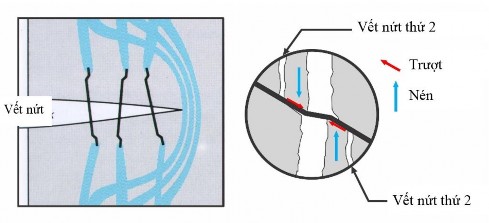
Figure 1.1 Behavior of Dramix steel fiber reinforcement in concrete
The adhesion force between steel fibers and concrete also depends on the characteristics of cement concrete. The greater the concrete strength, the greater the adhesion force [6], [22], [37], [48], [49], [93], so with high-strength concrete, the adhesion force with steel fibers will be greater than with normal concrete. The pull out test was conducted by Naaman and Nawy (1991) and concluded that: The greater the strength of the matrix (cement mortar), the greater the adhesion force. The experiment showed that the adhesion force of fibers with hooks at the ends was 4 times higher than that of straight fibers with the same diameter and length, and the same type of base concrete.
The adhesion between steel bars and steel fiber reinforced concrete is very large. Steel fibers help increase the adhesion between steel bars and concrete by increasing the resistance to pull-out and the ability to prevent separation of concrete.
When the experiment examined the adhesion factor between fiber reinforced concrete and steel bars, according to [105], there were two types of failure: due to pulling out and due to concrete splitting. According to this study, when increasing the fiber content, both the adhesion force and splitting strength increased significantly. According to this study, when the adhesion length was 10 times the bar diameter, the steel bars would not slip but would be pulled out. While that number for reinforced concrete is usually (20-30) times the bar diameter.
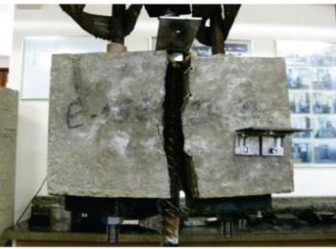
Figure 1.2 Experiment of pulling steel bars sliding out of concrete[105]
In the tensile test to separate concrete as shown in Figure 1.2. The authors confirmed that the fiber content significantly increased the tensile strength of concrete. With a fiber content of 1%, the strength increased by 100% at failure, with a fiber content of 2%, the maximum tensile force increased by 157%. At the same time, it was concluded that with a fiber content of 2%, the anchor length is 3.25 times the diameter of the bar, the steel will yield before the concrete separates. Thus, when steel fiber is present, the concrete will be less likely to break and the possibility of pulling off will be less likely to occur. At that time, the steel can only yield.
1.2.2. Direct tensile strength of reinforced concrete.
Direct tensile strength is an important property affecting the shear performance of reinforced concrete beams. Direct tensile test to determine the tensile strength of reinforced concrete beams was performed according to ACI 544 2R 99 [27] and RILEM TC 162 TDF [104].
The direct tensile strength test of reinforced concrete is a difficult process to perform. The problem is that the sample size is not large enough for the fibers to be arranged and distributed in the same way as a real-size beam [70]. The tests are not consistent, making it difficult to accurately evaluate the actual performance of reinforced concrete. When performing a direct tensile test, the sample is clamped tightly at the end of the sample, so the sample is prone to breakage or slippage due to insufficient clamping. In general, this test is very difficult to perform. Therefore, direct tensile tests are rarely performed. Previously, some studies used this test to evaluate the limit crack width, relative strain of reinforced concrete samples, and normal softening strain of the material.
Straight fiber
Crochet yarn
Double ended extension cord
Axial tensile strain, mm
Tensile strength, psi
Shah (1978) conducted direct tensile tests on cement concrete specimens reinforced with straight steel fibers, hooked fibers and fibers with extended ends. The results were used in ACI544-4R88 standard [32] as shown in Figure 1.3.
Figure 1.3. Yield-strain diagram of direct tensile test of BTCST sample [32]
Using standard test specimens, with a calculated length of 200mm, a calculated width at the measured section of 70mm, Lim and colleagues [83] conducted experiments to evaluate the properties of steel fiber reinforced concrete with two types of fibers: straight fibers and bent fibers hooked at both ends, concrete with the largest aggregate size of 10mm, the thickness of the sample is unknown. The results showed that, with the same type of hooked fiber, when the fiber content increased by 0.5%, 1%, 1.5% respectively, the tensile force at failure was: 6KN, 12 KN, 18 KN respectively. Similarly, the experiment kept the fiber content at 1%, increased the fiber length from 300mm to 500mm, the double force at failure was 12 and 17 KN respectively.
Longitudinal deformation.mmm
Tensile stress, MPa
Noghabai [97] tested a cylindrical tensile specimen with a notch of size: 70mm diameter, 85mm height as shown in Figure 1.4. The steel fiber used was a double-hook type, the concrete had high strength, the crack was measured on a 30mm long section in the middle of the specimen. The tensile strength after cracking and the strength at the beginning of cracking increased.
Figure 1.4. Test specimen and graph of stress-strain relationship after cracking [32]
+ The strength at the beginning of cracking and the elastic modulus of the BTCST material depend on the fiber content. When the fiber content increases, there is a slight increase in the strength at the first crack and the elastic modulus, about 5%.
+ Tensile strength after cracking of BTCST with fiber arrangement in two or three directions: After the matrix is cracked, the adhesion force is lost, the steel fibers tend to pull out of the matrix. Naaman and Reinhardt [34] proposed that the tensile strength after cracking can be calculated based on the average adhesion force, adhesion length and the number of fibers crossing the unit area as in equation (1-1)
V L
( L D ) f V f pc 1 ff 2 3 D 2 3 2 3 f D
f f
(1-1) |
Maybe you are interested!
-

 Assessment of the Current Status of the Policy on Developing Female Human Resources in the People's Public Security Force
 -
 Accounting determines business performance at HAMACO Concrete Joint Stock Company - 21
 -
 Practice Exercise 2: Welding “T” Corner Without Chamfer 2 Carbon Steel Plates Using Gmaw Welding Method At 3F Position (S=10Mm)
 -
 Designing teaching activities for the lesson Parallel force rule. Equilibrium conditions of solids under the action of three parallel forces and the lesson Caucasus's law. Absolute temperature Advanced Physics 10 textbook to promote students' initiative and autonomy in learning - 9
 -
 Practical Exercise No. 2: Butt Welding in Upside Down Position 4G with Chamfered Edge of Steel Plate with Thickness S= 10 mm.
In there:
1 , 2 are the coefficients affecting the length and direction of the fibers respectively at
post-cracking state; 3 is the combination factor of the number of fibers crossing the unit area, e.g. according to Naaman, 1972 and Aveston et al., 1974, if the anchor length
of steel wire is L f /4 then 1 is 0.25; 2
number of fibers passing through a unit area
is
2Vf
f
D 2
for the tridirectional distribution case; λ 3 is 2, the following fiber orientation factor
when cracked is 1.2 according to Naaman and Reinhardt; τ is the adhesion force between steel fiber and concrete ; L f is the length of steel fiber; D f is the diameter of steel fiber reinforcement; V f is the steel fiber content .
The ultimate strength after cracking of BTCST is determined as (1-2).
f
(1-2) |
1.2.3. Compressive strength
The compressive strength of the BTCST was determined according to ASTM C39. The effect of steel fiber reinforcement on the compressive strength of the concrete appeared to be negligible. However, the ductility was significantly enhanced due to the increase in volume and the proportion of the fiber used. Fanella and Naaman described a similar trend with both volume and proportion of the fiber.
up to 3%. Shah also demonstrated the effect of increasing fiber content on the ductility of reinforced concrete members subjected to compression.
Ductility is a measure of the ability to absorb energy during deformation. It can be estimated from the area under the load-deformation graph. The ductility index (TI) is calculated using the following formula.
TI = 1.421 RI + 1.035(1-3) |
In there:
RI - Steel fiber index, RI = V f (L f /D f ) ;
V f - Fiber content by volume, %;
L f /D f - Aspect ratio factor
L f - Fiber length, mm
D f - Fiber diameter, mm
The coefficient L f /D f represents the correlation between fiber length and fiber diameter. With steel fiber, this ratio can be 45/35, 65/60, 65/35, 80/60 with L f /D f =45, 65, 80. When the volume of the steel fiber reinforcement is fixed, if the type of steel is changed ( L f /D f changes), the toughness of the test sample also increases according to the ratio L f /D f .
1.2.4. Flexural strength
Deflection (mm)
Bending stress,
The specimens were tested in 4-point bending (round bearings) with prisms without notches. The length between the bearings is 3 times the height of the prism. This principle is adapted to the recommendations of the RILEM-162-TDF standard (France) in accordance with the NBN B15238 standard (UK), JSCE-SF4 (Japan). According to the instructions of ASTM C1018, the working model of the beam after cracking is confirmed to have elastic-plastic behavior. These observations are the basis for affirming that the working of the reinforced concrete after cracking is a gradual stress reduction.
Figure 1.5. Flexural behavior of steel fiber reinforced concrete [40]
Reinforcement fibers influence the magnitude of the flexural strength of concrete. The first stage is the cracking load stage in the load-deflection curve and the second controlling stage is the ultimate load stage. Both the first cracking load and the ultimate load are affected by the fiber content (V f ) and the size ratio ( L f /D f ). If the fiber content is less than 0.5% of the volume of the mortar and the size ratio is less than 50, the fibers have little effect on the flexural strength although they may still have an effect on the ductility of the concrete.
Research results at the University of Transport on reinforced concrete beam structures show that the bending tensile strength increases by 15-20% [15].
1.2.5. Shear strength
Due to the random distribution of fibers in the mortar mass, the main stress of the concrete beam is increased. When using 1.66% straight steel fibers instead of stirrups, the shear resistance increases by 45% [22]. When using steel fiber reinforcement with 2 deformed ends with a volume content of 1.1%, the shear resistance increases by 45-67%. Using fiber reinforcement with 2 bent ends increases the shear resistance by almost 100% [15].
According to Estefanía Cuenca [48], steel fiber reinforcement increases the shear strength of concrete. When using steel fiber reinforcement, the load-bearing capacity of the beam corresponds to the first crack. The influence of steel fiber on shear strength depends on factors such as: properties of the matrix, properties of the fiber, adhesion between the fiber and the substrate, fiber content, etc.
Narayanan and Darwish [95] stated that the ultimate shear strength increases with increasing fiber aspect ratio, and also asserted that increasing fiber content does not improve the shear strength much. Other authors such as Lim and Oh [99] have shown that the shear strength increases significantly with only very small fiber content. The fiber even changes the shear failure pattern. Many other authors as analyzed in the previous section have asserted that the shear strength increases with increasing fiber content. Lim and colleagues also asserted that with fiber content from 0%-2%, the shear strength of reinforced concrete increases up to 100% compared to normal concrete.
1.2.6. Shrinkage and creep
No improvement in concrete shrinkage and creep occurs with the addition of fibres but there may be a slight reduction due to the need for mortar in the mix when fibres are used. Drying shrinkage cracking in limiting factors may be slightly increased because cracks are limited in their development due to the bridging effect of the randomly distributed fibres.
1.2.7. Effect of steel fiber reinforcement on mechanical properties of reinforced concrete
The mechanical properties of fiber reinforced concrete are influenced by several main parameters such as: Fiber type; fiber length; fiber shape; fiber content by volume (V f ); distance between fibers (s); durability of mortar or concrete; size and shape of sample.
Standard fiber length: Length specification
If L f is the standard length of a broken and unstretched fiber when the crack bisects the fiber at its midpoint, it can be approximated by the following formula:
D f f 2 f
b
L(1-4) |
In there:
D f - fiber diameter;
ν b - surface adhesion strength of steel fiber and concrete;
σ f - tensile strength of fiber.
Effect of steel fiber length on the behavior of reinforced concrete
The fiber length factor is a parameter related to the deformation ( Ɛ ) and crack width ( w ). The fiber length represents the crack spacing that is included in the calculation formula. The fiber length depends on factors such as fiber type, fiber content, matrix strength, beam cross-section shape, participation of longitudinal reinforcement, and type of load, so it is difficult to achieve a consensus when calculating that length [48].