
pathogens, of which E.coli is the most commonly used indicator because it is characteristic of fecal contaminated environments and is easy to identify under field conditions.
Benthic invertebrates are used as bioindicators to assess water pollution due to the following causes:
Benthic animals (snails, mussels, clams, oysters, etc.) are used as biological indicators in water pollution monitoring because:
- Relatively common in rivers and lakes and diverse in species. Their development is characteristic of hydrological conditions, bottom structure and water quality.
- Relatively fixed at the bottom of rivers and lakes, affected by continuous changes in water quality and hydrological regime during the day.
- Development time is quite long (several weeks to several months).
- Easy to collect samples, easy to classify species.
Benthic invertebrates are used as bioindicators to assess water pollution due to the following causes:
- Organic pollution leads to dissolved oxygen depletion
- Pollution by nutrients
- Pollution caused by heavy metals and pesticides
- Pollution caused by these agents will change the benthic animal population.
In addition, pollution caused by heavy metals and pesticides can be easily detected by determining the residue of these chemicals in benthic animals.
Many countries in Europe are using the BMWP (Biological Monitoring Working Party) index to assess water quality. The BMWP index system is the determination of species and distribution of benthic invertebrates to classify the level of water pollution.
• Plankton (floating organisms)
Some plankton have the ability to indicate water pollution due to:
- Organic pollution (causing dissolved oxygen depletion)
- Eutrophication
- Pollution caused by toxic chemicals (heavy metals, pesticides, polycyclic hydrocarbons, etc.)
- Contamination by grease.
Biological indicators are simple but highly effective tools in monitoring water quality and assessing impacts on the aquatic environment in all localities. However, in each basin, a specific biological indicator system needs to be studied, summarized and applied.
5. Water environment quality standards
In the management and development of environmental standards, water is divided into the following 3 main subjects: Surface water: water from rivers, streams, canals, ditches, lakes, ponds... Groundwater: water below the ground. Coastal seawater: seawater along the coast, bays, lagoons, lagoons along the coast...
* Surface water standards
- Surface water quality standards
Surface water quality standards are the maximum limits allowed for the existence of pollutants in surface water, set to protect public health, ecological balance and the living environment in general. To develop standards and manage the surrounding water quality for the surface water environment, surface water is classified according to usage requirements into: surface water that can be used as a source of domestic water (but must go through a treatment process according to regulations), this type is denoted as type A water; surface water used for other purposes, such as bathing, washing, entertainment, sports, transportation... this type is denoted as type B water; and water used for agricultural irrigation and aquaculture.
However, in reality, a water body or a river section may have many simultaneous usage requirements, such as being used as a source of domestic water, agricultural irrigation water, industrial water supply, power generation, fisheries, transportation and entertainment, aesthetics, etc., so it is necessary to determine standards with the highest quality usage requirements as the benchmark.
In addition to the general water quality standards for all water bodies, there may be additional standard regulations for water bodies or surface water sources in localities with specific characteristics.
National technical regulation on surface water quality, QCVN 08:2008/BTNMT, issued in 2008, stipulates the maximum concentration limits of pollutants in the water environment of 32 parameters distinguishing type A and type B surface water sources.
- Standards for wastewater flowing into surface water environment
Wastewater standards stipulate the limit values of pollution parameters and maximum concentrations of pollutants in wastewater from production, processing, business, service, and domestic establishments (collectively referred to as industrial wastewater and domestic wastewater). These standards are used to control the level of pollution and the nature of industrial and domestic wastewater before discharging into water bodies. Pollutant discharge standards are regulations to control the discharge of pollutants to ensure ambient water quality standards.
On December 28, 2011, the Ministry of Natural Resources and Environment issued Circular No. 47/2011/TT-BTNMT promulgating the National Technical Regulation on Environment QCVN 40:2011/BTNMT - National Technical Regulation on Industrial Wastewater.
According to QCVN 40:2011/BTNMT, the value of pollution parameters in industrial wastewater (C value) is divided into 2 columns: A, B. Column A specifies the C value of pollution parameters in industrial wastewater when discharged into water sources used for domestic water supply purposes; Column B specifies the C value of pollution parameters in industrial wastewater when discharged into water sources not used for domestic water supply purposes; The purpose of use of the wastewater receiving source is determined at the wastewater receiving area.
- Types of licenses
In most countries, industrial and municipal wastewater dischargers are required to obtain a permit from the regulatory authority for a new national pollution control system.
are allowed to discharge wastewater into water bodies. To be granted a license by the regulatory authority, the discharger must meet effluent limits based on the wastewater treatment technology of each factory, enterprise or secondary treatment for general urban wastewater.
* Seawater quality standards
In 2008, the Ministry of Natural Resources and Environment issued the National Technical Regulation on coastal seawater quality: QCVN 10:2008/BTNMT. This regulation stipulates the limits of parameters and allowable concentrations of pollutants in coastal seawater and is used to assess the water quality of coastal seawater areas.
According to QCVN 10:2008/BTNMT, coastal seawater is divided into 3 types of use: Beach areas, water sports; Aquaculture areas, aquatic protection and other places. Each type of coastal seawater will have different limits for the concentration of pollutants.
- Standards for wastewater discharged into coastal seawater
Circular No. 47/2011/TT-BTNMT on promulgating the National Technical Regulation on Environment QCVN 40:2011/BTNMT - National Technical Regulation on Industrial Wastewater, which stipulates the coefficient of wastewater receiving source Kq. For wastewater receiving sources being coastal seawater areas used for the purpose of aquatic life protection, water sports and entertainment, coastal saltwater lagoons and brackish water, Kq = 1 is applied; Coastal seawater areas not used for the purpose of aquatic life protection, water sports or entertainment, Kq = 1.3 is applied.
1.3. Current status of water environment
1.3.1. Monitoring network
- The water environment monitoring network in the research area includes: 10 monitoring points, monitoring and analysis parameters include: Temperature, pH, DO, TSS, COD, As, Cd, Pb, Mn, Fe, Hg, Grease, Coliform.
- Monitoring locations are detailed in table 1.5 below.
Table 1.5. Network of water environment monitoring points
STT
Symbol | Monitoring location | Coordinates | ||
X | Y | |||
1 | N1 | Hekou Wastewater Treatment Plant | 2321632 | 420514 |
2 | N2 | Water over bridge K67 - Cao Xanh | 2320967 | 431188 |
3 | N3 | Cai Lan Industrial Park | 2320780 | 425212 |
4 | N4 | Dien Vong River at the thermal power plant discharge gate Quang Ninh electricity | 2324685 | 435755 |
5 | N5 | Concentrated slaughterhouse for livestock and poultry Ha Khanh ward | 2325091 | 436359 |
6 | N6 | After Hon Gai market | 231302 | 430402 |
7 | N7 | Between the drainage channel of Ha Khanh and the System Export system of Ha Long Cement | 232670 | 430240 |
8 | N8 | Wastewater from Ha Noi Wastewater Treatment Plant Khanh | 2320462 | 432223 |
9 | N9 | Sea water along the coast of Lang Khanh port | 2325156 | 436482 |
10 | N10 | Coastal sea water of Cua Luc Bay - Cau Bai On fire | 2318862 | 428763 |
Maybe you are interested!
-
 Assessment of the current status and changes in the water environment of Cua Luc Bay and proposed solutions to reduce pollution - 2
 -
 Building a system to monitor water level, temperature and send warnings via SMS/GSM network - 2
 -
 Water Quality Evolution of the Red River Flowing Through Lao Cai Province Between Different Monitoring Points, From Upstream to Downstream
 -
 Network monitoring with Zabbix software - 7
 -
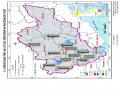 Location, Water Quality Monitoring Points of Dong Nai River Basin
1.3.2. Current status of some water environment indicators
Environmental pollution parameters are analyzed based on the results of periodic environmental monitoring of each quarter in 2012.
1. pH acidity
- For wastewater from industrial parks and wastewater treatment plants: At monitoring points, the pH is stable, the measured results fluctuate between 6.3 - 8.1, within the allowable limits of QCVN 40:2011/BTNMT (5.5 < pH < 9.5).
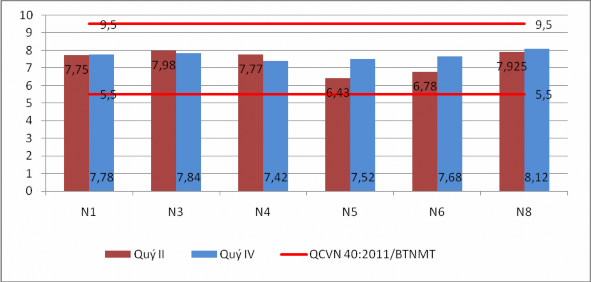
Figure 1.1: pH values at some monitoring points
- For coastal seawater : Coastal seawater at Lang Khanh port has a value of 7.81 - 8.04, within QCVN 10:2008/BTNMT on coastal seawater quality. The pH value varies seasonally throughout the year, in the rainy season the pH value tends to be higher than in the dry season due to the influence of surrounding currents. In addition, at two monitoring points at N2 and N7, the pH value also shows no signs of pollution.
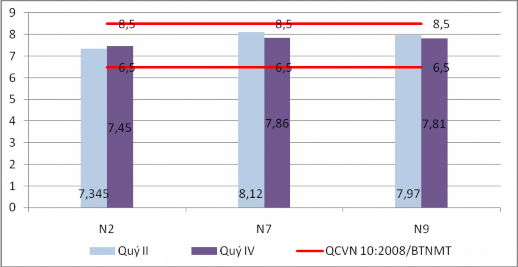
Figure 1.2: pH values of some coastal seawater samples
Thus, the pH values of all monitoring points are within the allowable limits according to QCVN and are not contaminated with acid or alkali.
2. Total suspended solids (TSS) content
Monitoring results at some locations around the bay show that: in general, coastal seawater in the study area is less affected by wastewater from surrounding development activities, but at some coal and cement transport ports in the East of the bay, the suspended solids content exceeds QCVN 10:2008/BTNMT.
- Impact of wastewater on coastal seawater of Cua Luc Bay : Socio-economic activities in the coastal area of Cua Luc Bay also contribute to the impact on turbidity in this area. The results of wastewater monitoring at a number of production facilities and wastewater treatment plants show that the wastewater after treatment is of good quality, the TSS content in wastewater at monitoring points is all less than 100 mg/l according to QCVN 40:2011/BTNMT on wastewater quality. Therefore, the impact on the quality of coastal seawater of Cua Luc Bay is not high.
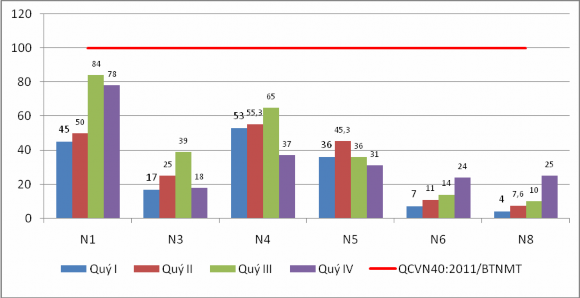
Figure 1.3: TSS content in wastewater of some production facilities
- Coastal seawater: The results of monitoring some coastal seawater samples around Cua Luc Bay showed that 2/4 of the monitored samples showed signs of pollution with TSS content ranging from 54 - 71 mg/l. The polluted samples were mainly affected by coal and cement transportation activities. For the sample "coastal seawater of Cua Luc Bay - Bai Chay Bridge" and the sample " water through K67 Bridge - Cao Xanh" there were no signs of pollution.
Suspended solid pollution signals, TSS content fluctuates between 5 - 10 mg/l and 19 - 32 mg/l respectively, much smaller than QCVN 10:2008/BTNMT.
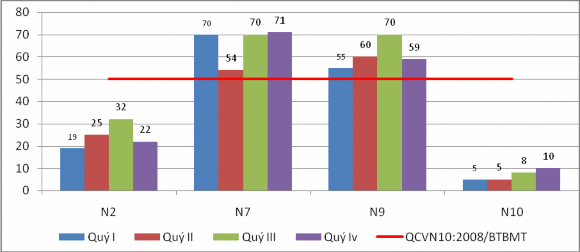
Figure 1.4: TSS content in some coastal seawater samples of Cua Luc Bay
3. Chemical oxygen demand (COD)
For industrial wastewater and production wastewater, the COD content is limited to 150 mg/l. Monitoring results of some production facilities around Cua Luc Bay show that the COD content in the water is many times lower than QCVN 40:2011/BTNMT. Thus, it can be seen that the impact and influence of industrial activities on the bay is insignificant.
Table 1.6: COD content in wastewater of some production facilities around Cua Luc Bay
STT
Monitoring location | COD (mg/l)) | ||||
Quarter I | Quarter II | Quarter III | Quarter IV | ||
1 | N1 | 3.3 | 4 | 5.4 | 4 |
3 | N3 | 2.78 | 3.5 | 6.5 | 5 |
4 | N4 | 3.4 | 5.4 | 5.2 | 4.3 |
5 | N5 | 6.7 | 6.4 | 7.6 | 5 |
6 | N6 | 3.2 | 3.6 | 3.5 | 3.3 |
8 | N8 | 4.2 | 4.2 | 5.6 | 4.2 |
QCVN 40:20011/BTNMT – B | 150 | ||||