
INTRODUCTION
1. Urgency of the thesis
Nowadays, tourism is an indispensable need and has become a popular socio-economic phenomenon in the world. Tourism economy has become an important economic sector in the development strategy of each country, because it not only brings a large source of income to the economy; creates more jobs; develops service industries and infrastructure systems but also contributes to promoting peace and cultural exchange. In countries with abundant tourism resources, efforts have been made to promote advantages, synchronously deploy solutions, especially sustainable development orientation (PTBV) to turn tourism into a spearhead economic sector of the country.
Maybe you are interested!
-
 Tourism economy towards sustainable development in Thua Thien Hue province - 27
 -
 Application of Science and Technology in the Development of Tourism Economy in the Northern Key Economic Zone
 -
 Ninh Binh Provincial Party Committee leads the development of tourism economy 1992 - 2008 - 17
 -
 Experience in Business Development According to the Sharing Economy Model of Enterprises in the Field of Online Tourism Services Around the World and Lessons Learned
 -
 The Party Committee of Ba Ria - Vung Tau province led the development of tourism economy from 1991 to 2015 - 19
Vietnam is located in a region with rapid tourism growth in recent years and is forecasted to be one of the world's key tourism development centers in the 21st century. From the potentials, strengths of tourism and the great benefits brought by the tourism industry, in the current socio-economic development trend of the country, tourism is considered a locomotive in the process of international economic integration. However, the development path of our country's tourism industry is still facing many difficulties and challenges that need to be overcome. In that situation, on January 16, 2017, the Politburo issued Resolution No. 08-NQ/TW on "Developing tourism into a spearhead economic sector" according to which the viewpoint of "Sustainable tourism development; preserving and promoting cultural heritages and fine traditional values of the nation; protecting the environment and nature; ..." was also put forward [4]. This is considered the responsibility of the whole society, whose role and mission first and foremost belong to the "leading birds", which are the localities that take the lead in tourism development, and are the cultural and tourism centers of the whole country.
Thua Thien Hue Province (TT-Hue) is a coastal province located in the North Central region, a locality located in the three key tourism development regions of the country, in which Hue city has been identified by the Government as one of the five tourism cities and a typical Festival city of the whole country. In particular, TT-Hue Province inherits the World Heritage of Hue Imperial City and Hue Royal Court Music along with Lang Co Bay which has been included in the list of the most beautiful bays in the world today... After 5 years of implementing Resolution 06-NQ/TU of the Provincial Party Committee on "Building TT-Hue worthy of being a center
"a unique cultural and tourism center of the country", up to now, the local tourism industry has achieved positive results. The number of tourists to Hue is increasing; the growth rate is quite good; tourism - services account for 55% of the province's GDP; tourism revenue increases by an average of nearly 16%/year. Hue has become an indispensable destination in the Vietnam tourism journey.
Although it has achieved many great achievements, the tourism industry of TT-Hue province is still facing many difficulties and challenges such as: tourism resources have not been fully exploited; awareness and participation of the community in tourism activities are still limited; challenges due to the increasingly fierce competition trend between domestic tourism destinations; facing the risk of climate change, unstable political and social situation... In particular, it can be seen that in the past 15 years, the tourism industry of TT-Hue province has not grown steadily, even developing backward compared to later and emerging localities such as Da Nang, Nha Trang - Khanh Hoa. Thereby, it must be frankly admitted that in the process of developing the local tourism industry, there is a risk of unsustainability. Besides, tourism business activities have caused many negative impacts on tourism resources; on the natural and social environment; on the preservation and promotion of tangible and intangible cultural values; and cause many negative externalities to the community.
Basically, the above manifestations reflect the unsustainable nature in the development process of the tourism industry on the scale of the whole Thua Thien Hue province. That problem has been directly affecting the immediate and long-term development of tourism in the locality. Therefore, to ensure the development orientation of tourism as a key economic sector on the basis of a system of synchronous solutions to promote tourism in an increasingly sustainable direction, contributing to the socio-economic development of Thua Thien Hue province is a strategic requirement and task that is both urgent and long-term. Based on the above problems, the author has chosen the topic "Tourism economy towards sustainable development in Thua Thien Hue province" as the research topic for his doctoral thesis in Political Economy.
2. Research purpose and tasks
2.1. Research purpose
On the basis of clarifying the theory of sustainable tourism development in the direction of sustainable development at the provincial level to evaluate the achievements and limitations of sustainable tourism development, from which to propose some recommendations.
Main directions and solutions to promote sustainable tourism in Thua Thien Hue province in the coming time.
2.2. Research tasks
- Clarifying the theoretical and practical basis of sustainable tourism including concepts, characteristics, roles, contents and factors affecting sustainable tourism.
- Studying successful experiences of sustainable tourism development in some countries and localities in the country to draw lessons for sustainable tourism development in the provincial level.
- Analyze and evaluate the achievements and limitations of sustainable tourism development in Thua Thien Hue province from 2006 to 2016 based on the established assessment criteria.
- Proposing directions and solutions to promote sustainable tourism in Thua Thien Hue province by 2025, with a vision to 2030.
3. Research object and scope
3.1. Research subjects
The thesis studies sustainable tourism development from the perspective of political economy. In particular, the thesis focuses on studying theoretical and practical issues related to sustainable tourism development in 3 aspects: economy, culture - society, resources - environment in Thua Thien Hue province.
3.2. Scope of research
- Regarding content: The thesis deeply studies the concept, characteristics, role, content, evaluation criteria and factors affecting tourism development in the direction of sustainable development. The research of the subject focuses on analyzing and evaluating the achievements and limitations of tourism development in the direction of sustainable development on 3 groups of contents to find solutions to promote tourism development in the direction of sustainable development until 2025, with a vision to 2030.
- About space: TT-Hue province of Vietnam
- About time: The thesis studies tourism development in the direction of sustainable development in Thua Thien Hue province in the period from 2006 to 2016.
4. Research questions
Question 1: What are the concepts, characteristics and roles of sustainable development-oriented tourism from the perspective of political economy research?
Question 2: Content and criteria for evaluating sustainable tourism development at the provincial level?
Question 3: What are the achievements and limitations of sustainable tourism development in Thua Thien Hue province in the period 2006 - 2016?
Question 4: What are the issues for sustainable tourism development in Thua Thien Hue province in the coming time?
Question 5: What are the basic solutions to promote sustainable tourism in Thua Thien Hue province in the future?
5. Theoretical basis and research methods
5.1. Theoretical basis
The thesis is based on the methodology of Marxism-Leninism, Ho Chi Minh thought; as well as the viewpoints, guidelines and policies of the Party, State, and Thua Thien Hue province on tourism in general and tourism in the direction of sustainable development in particular.
5.2. Research methods
- Scientific abstraction method: This is a specific method of political economy. In the thesis, this method is used to generalize the characteristics and roles of sustainable development-oriented tourism, and at the same time point out the causes of the limitations of sustainable development-oriented tourism in Thua Thien Hue province.
- Document research, synthesis and comparison methods: The thesis has studied a number of domestic and foreign works related to sustainable tourism development, thereby building a theoretical framework, and at the same time studying experiences in sustainable tourism development, thereby drawing lessons for Thua Thien Hue province.
- Data collection, statistics and modeling methods: The thesis used reliable secondary data sources collected from relevant Departments and Branches; General Statistics Office; conference and workshop summary reports; survey results of prestigious organizations... from which it was modeled in the form of tables and charts to evaluate the achievements and limitations of tourism in the direction of sustainable development in Thua Thien Hue province.
- Investigation and interview methods:
Used to conduct a practical survey of sustainable tourism development in the province.
The survey subjects were divided into two groups: tourists and residents.
The study selected samples using a convenient random method, with a confidence level requirement of 95%, and a sampling error (e) not exceeding 10% of the sample size. The sample size for the study was determined according to the formula (Mark Saunders, Philip Lewis, Adiean Thornhill, 2010):
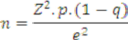
(n is the expected sample size, Z is the corresponding value of the statistical domain)
+ For tourists, with a significance level of α = 5%, Z = 1.96; p = 0.5 (for the largest sample size); e: allowable error (6%) for new research. The result of the number of observations in the sample according to the formula is 267. To ensure the number of questionnaires collected is complete and of good quality, to prevent the case of visitors not answering or not answering all the questions, the study conducted a survey of 334 tourists, collecting 290 valid questionnaires (183 domestic visitors and 117 international visitors). Because the number of domestic tourists is equivalent to 2/3 of the total number of visitors to TT-Hue province every year, the remaining 1/3 of visitors are international tourists. Therefore, the structure of the thesis's survey sample will also be adjusted according to the ratio of 2/3 domestic visitors and 1/3 international visitors, to ensure the representativeness of the sample for the whole.
+ For the people, with the significance level α = 5%, Z = 1.96; p = 0.5 (for the largest sample size); e: allowable error (8%) for new research. The result of the number of observations in the sample according to the formula is 150. To ensure the number of questionnaires collected is complete and of good quality, the study conducted a survey of 188 people, collecting 150 valid questionnaires. The questionnaires were distributed according to a classified sampling method, which is in the areas and prominent tourist spots of TT-Hue province.
In addition, the thesis also uses the Delphi method to interview and question and answer with research experts.
6. New contributions of the thesis
- Approaching the research problem from the perspective of political economy, the thesis contributes to clarifying the concept, characteristics, role, content and building criteria for evaluating sustainable tourism development in the direction of sustainable development at the provincial level. From the practical experience of sustainable tourism development in a number of countries and localities nationwide, the thesis has drawn valuable lessons for sustainable tourism development in the direction of sustainable development in Thua Thien Hue province.
- The thesis analyzes and evaluates the current status of sustainable tourism development in Thua Thien Hue province from 2006 to 2016 based on the contents and criteria that have been developed to point out the achievements and limitations, the causes leading to the limitations, especially raising some issues for sustainable tourism development in Thua Thien Hue province.
- The thesis explains the context and forecasts the development trend of tourism in the world as well as in Vietnam. At the same time, the thesis proposes directions and solutions to promote tourism in the direction of sustainable development in Thua Thien Hue province until 2025, with a vision to 2030.
7. Structure of the thesis
In addition to the introduction, conclusion, list of references and appendices, the thesis is structured into 4 chapters and 11 sections:
Chapter 1
OVERVIEW OF RELATED RESEARCH
TOWARDS SUSTAINABLE DEVELOPMENT OF TOURISM ECONOMY
1.1. PUBLISHED SCIENTIFIC WORKS RELATED TO THE THESIS
1.1.1. Studies on tourism economics
Nowadays, in many countries around the world, tourism has become a key economic sector, with an important position and role in the national economy, contributing significantly to increasing per capita income, solving employment for workers, preserving cultural values, raising people's awareness... Recognizing the importance and role of the tourism sector, many organizations and scientists have conducted in-depth research on this economic sector and made certain contributions both in theory and practice to the development of the tourism sector in particular and the economy in general.
1.1.1.1. Research projects abroad
Studies on tourism economics of countries around the world have proposed a number of concepts about tourism and tourism economics, focusing on explaining the categories reflecting the phenomenon of tourism business and services; components, forms of tourism services; supply-demand relations and operating mechanisms of tourism business activities, of which the following works are typical:
Hollier, R., & Lanquar, R. studied “Le Marketing Touristique ” - “Tourism Marketing”. In this study, the author analyzes and introduces the concept of tourism marketing, presents the history of tourism marketing through the periods, and evaluates the supply and demand of tourism activities. In addition, the author proposes a number of recommendations aimed at developing tourism marketing in countries such as: Building an effective tourist transportation system; improving public facilities at tourism destinations; enhancing support activities at tourism destinations in bad weather conditions; building appropriate pricing policies for peak and low seasons; the supply of tourism activities must be directed at specific customer groups [181].
Martin Oppermann and Kye Sung Chon study “ Tourism in Developing Countries”. The authors analyze the development
tourism development in countries and focusing on developing countries. In particular, in-depth research on the development process of the tourism industry in developing countries through the stages: from 1930 to 1960, from 1970 to 1985 and the period from 1985 to 1993. In addition, this study also evaluates the relationship between the government and the tourism industry in countries [190].
Dwyer, L., Forsyth, P., & Papatheodorou, A with the topic “ Economics of tourism ”. In this book, the authors used economic models to measure and analyze tourism supply and demand, thereby making forecasts about future tourism development trends. Assessing the impacts of the international economic integration process on the tourism industry. In addition, from the perspective of macroeconomics and microeconomics, the authors assess the impact of seasonal climate change on the development of the tourism industry [179].
Chheang, V. studied “ Tourism and regional integration in Southeast Asia ”. In this study, the author analyzed the general concept and the role of tourism development in countries during the Asian integration period. In addition, he analyzed the development policies for the tourism industry of Asian member countries. In general, Asian countries attach importance to the connection and cooperation in tourism development among countries in the region. Therefore, these countries need to have reasonable policies aimed at developing tourism in line with the general trend of the regional integration process [177].
Tisdell, CA with the topic “ Handbook of tourism economics: analysis , new applications and case studies”. In this book, the author studies important aspects of the tourism industry such as: tourism needs, the process of providing tourism services, in-depth research on opportunities and applications in the tourism industry. Besides, he studies the development process and the contribution of tourism to the economy of some countries such as: India, Japan, Australia, Portugal and China [196].
In general, the above studies have focused on theoretical and practical knowledge of economic and technical aspects in tourism activities, tourism business, tourism market and presented experiences in tourism development of some countries.