
Criminal proceedings, conducted by competent authorities by searching, searching, and coercing people, residences, workplaces, locations, letters, telegrams, parcels, and postal items to search for and collect traces of crimes, documents, evidence, or other objects related to the case according to the grounds, order, and procedures prescribed by law.
Thus, according to the above concept, investigation and search measures must include the following elements:
- Carried out by competent authorities when there is sufficient basis and according to a prescribed order and procedure.
- Search mainly includes the activities: searching, searching, and forcing.
- Specific search measures include: searching people, residences, workplaces, locations, letters, telegrams, parcels, and postal items.
Maybe you are interested!
-
 The Significance of the Regulation of Crimes in the Field of Land Management and Use in the Criminal Law
 -
 General Comments on the Significance of Khmer Culture in Tourism Exploitation in Kien Giang Province
 -
 Correlation Coefficient Results and Significance Level of Correlation Coefficient Test for Joint Stock Commercial Bank Group
 -
 Political and Legal Significance of Criminal Record Expungement
 -
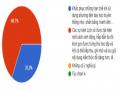 Chart of Teachers' Opinions on the Role and Significance of Applying Information Technology in Teaching History in High Schools (Unit %)
- The general purpose of search measures is to discover and collect evidence, documents or other objects related to the settlement of criminal cases.
1.1.2. Characteristics
Investigation and search measures have the following basic characteristics:
Firstly , search is an investigative measure in criminal proceedings with the purpose of discovering and collecting relevant evidence in a criminal case, thereby clarifying the objective truth of the case.
As analyzed above, in the process of solving criminal cases, there are many different investigative measures implemented and each measure has its own purposes and effectiveness. Regarding the search measure, when implemented, the competent authorities will discover and collect evidence and documents related to the case. These can be weapons, tools, means of committing crimes, properties seized by criminals, objects bearing traces of crimes, specimens for research, comparison or other papers and documents related to the case. In some cases, when the search activity
The search conducted at the residence, location, and workplace of the subject being searched also helps to detect wanted persons, corpses or parts of corpses, kidnapped persons, detained persons, etc. These documents and evidence are important bases for competent authorities to determine whether or not a crime has occurred. If there is a basis to determine that a crime has occurred, they will develop a plan, direction of investigation, and organize appropriate investigative activities, thereby gradually proving the crime and quickly clarifying the objective truth in the criminal case.
Second , search is a coercive investigative measure in criminal proceedings.
According to the 2003 Vietnamese Dictionary, coercion is " forcing others to follow one's thoughts or actions" [42, p.78]. Broadly speaking, coercion in criminal proceedings is based on the provisions of criminal procedure law to force the subjects to comply with certain orders and requests. In criminal proceedings, there are many different coercive measures recorded such as measures to prevent arrest of suspects and defendants for temporary detention, arrest of people in emergency cases, arrest of people caught red-handed or wanted, temporary detention, temporary detention, prohibition of leaving the place of residence, deposit of money as security... or investigative measures showing coercive nature such as search, seizure, temporary detention of objects as evidence and documents directly related to the case, examination of traces on the body, escort, escort, property seizure... When implementing these measures, competent authorities must base on the provisions of the Criminal Procedure Law and other relevant provisions to force the subjects to comply.
It can be seen that search is an investigative measure that has a strong impact on the basic rights of citizens protected by Vietnamese law. These are the inviolable rights to residence, safety and confidentiality of correspondence, telephone and telegrams.
The right to protection of citizens' lives, health, honor, dignity , and property is recognized in the Criminal Procedure Code: " No one is allowed to violate the residence, safety, and confidentiality of citizens' letters, telephones, and telegrams" [31, Article 8]; the right to protection of citizens' lives, health, honor, dignity, and property is recognized in the Criminal Procedure Code: " Citizens have the right to be protected by law regarding their lives, health, honor, dignity, and property. Any act of violating life, health, honor, dignity, and property shall be handled according to the law "... [31, Article 7].
However, in order to promptly prevent criminal plots and acts and promote the process of resolving criminal cases, the Criminal Procedure Code still recognizes the right of competent authorities to conduct searches if these authorities have sufficient grounds to determine that on the person, residence, workplace, or location of a person there are tools, means of committing crimes, objects, property obtained from crimes, other objects and documents related to the case or when it is necessary to detect wanted persons. The subjects subject to the search are obliged to fully comply with the requests of the search force. If the subjects subject to the search obstruct, resist or do not cooperate, depending on the nature of the act, they will have to bear certain legal consequences.
Third, search is an investigative measure with diversity in subjects and locations.
During the process of committing a crime, the criminal or the suspected criminal or other related persons may conceal documents, tools, and means related to the case in many locations, in many different objects, which can be on the person, at the residence, at the workplace or in parcels, postal items... Therefore, as an investigative measure to help competent investigating agencies search and detect documents and tools related to the case hidden by criminals, searches also have a variety of subjects. Accordingly, the subjects of the search measure include: people, residences, workplaces, locations, letters, telegrams, parcels, postal items...
Each different search object will help the competent authority collect different objects and documents, thereby synthesizing and evaluating evidence. The diversity in the objects of the search investigation measure not only creates objectivity in the search and collection of evidence, but also contributes to improving the effectiveness of the investigation as well as the process of solving criminal cases.
Fourth, searches must be conducted according to certain principles.
First of all, the search must be conducted in accordance with the provisions of law.
As analyzed, the inviolability of residence, safety and confidentiality of correspondence, telephone and telegrams are important rights of citizens protected and recognized by law. Meanwhile, the subjects of search activities are people, residences, locations, correspondence, telegrams... Therefore, when conducting these activities, competent authorities must strictly comply with the provisions of law. The content of this principle is expressed in the following: All searches must ensure the legality of the basis, order, procedures, and authority of the search and must not infringe upon the basic rights of citizens. Specifically:
- Searches may only be conducted when there are grounds to believe that the places to be searched are hiding evidence, objects, documents related to the case, or that there are wanted fugitives, kidnapped persons, corpses or parts thereof... If there are not enough grounds to issue a search warrant, the competent authorities must collect additional documents. If the collection of additional documents is still not enough grounds for the search, a search warrant cannot be issued.
- Must comply with the provisions of the Criminal Procedure Law on the authority to issue a search warrant: A search may only be conducted with a warrant from competent persons. Except in cases of arrest or when there is reason to believe that the person present at the place of search is hiding on his person objects or documents that need to be seized, a search may be conducted without a warrant.
- When conducting a search, competent authorities must comply with regulations on search procedures for specific search objects.
- During the search, those executing the search warrant must not commit acts that infringe upon the life, health, property, honor, and dignity of citizens. To ensure the implementation of this content, the search force must conduct the search seriously and in accordance with the law. Before conducting the search, the agencies executing the warrant must carefully and thoroughly prepare for the search, including: studying the case file, collecting, analyzing, and evaluating documents related to the search, and making a search plan (determining the time of the search, the composition of the search force, anticipating situations that may occur, and solutions). When conducting the search, the person in charge must explain and disseminate the search plan to the members of the search team, assign tasks to each person, and check their preparation. During the search, the search force must comply with the following principles: when searching a person, men search men, women search women, and there must be witnesses of the same sex; When searching a residence or location, the owner or an adult family member, a representative of the commune, ward or town and neighbors must be present; when searching a person's workplace, that person must be present (except in cases where it cannot be delayed) and a representative of the agency or organization where that person works must be present...
Search activities must ensure the professional requirements of secrecy, surprise, and safety for the person performing the search. To achieve the above requirements, the agency executing the search warrant must keep secret the policy, plan of the search, the preparation, deployment of forces to surround, monitor and create an element of surprise when appearing at the place to be searched. In addition, during the search process, these agencies must not reveal the secret of the support means, implementation methods and professional measures that have been applied, creating favorable conditions for the fight against crime in the short and long term. This is the basic factor for the search activity to achieve the goal.
purpose. Once this requirement is met, the criminal will have no opportunity to conceal, destroy evidence or flee.
1.2. The significance of regulating investigation and search measures in criminal procedure law
First , ensure the legality of evidence.
Evidence is what is real, collected according to the order and procedures prescribed by this Code, which the Investigation Agency, the Procuracy and the Court use as a basis to determine whether or not there is a crime, the person who committed the crime, as well as other details necessary for the proper resolution of the case [31, Article 64, Clause 1].
According to this concept, evidence is only considered legal and has evidentiary value when it fully satisfies the attributes of objectivity, relevance and legal collection. If one of these attributes is missing, the evidence will lose its evidentiary value, in which the attribute of legal collection is the attribute that needs to be focused on because it is the most vulnerable to infringement.
When conducting searches, to ensure the legality of evidence, competent authorities must avoid violating citizens' basic rights. In all of our country's Constitutions, citizens' rights to ensure safety of health, life, inviolability of residence, safety and confidentiality of correspondence, telegrams, etc. are always recognized. The 2013 Constitution stipulates: "Everyone has the right to physical inviolability, to be protected by law in terms of health, honor and dignity..." [35, Article 20]. The 2013 Constitution states: "Everyone has the right to inviolability of private life, personal secrets and family secrets; has the right to protect his or her honor and reputation" [35, Article 21]. This Constitution also stipulates: "Everyone has the right to inviolability of residence. No one may enter another person's residence without that person's consent. The search of residence is prescribed by law…” [35, Article 22]. If only based on the provisions
With this provision, the application of criminal coercive measures, including searches, on citizens will be considered illegal. However, when the provisions on search activities are recognized in the spirit of the Constitution as well as in the criminal procedure law, the search activities of competent authorities are guaranteed a legal basis, thereby affirming the legality of the evidence collected from search activities.
Second , ensuring human rights in criminal proceedings.
Human rights are understood as:
These are natural privileges that only humans can enjoy under certain political, economic, cultural and social conditions. Human rights are both natural and social, universal and specific, class and humanity, and are consistent with basic national rights [37, p.14].
Thus, human rights are a sacred and inalienable value. They are closely related to civil rights and exist in all areas of social life, including the field of criminal proceedings.
In criminal proceedings, search is an investigative measure conducted by one party, which is the representative of the State, empowered by the State, and the other party, which is the criminal or the person who is alleged to have committed a crime. This difference in legal status can easily lead to violations of human rights by those conducting the search. Therefore, the Criminal Procedure Code's adjustment of the investigation measure of search in terms of the grounds for search, the authority to issue orders, the procedures for conducting searches, etc. has contributed to limiting the arbitrariness and abuse of power by agencies and individuals conducting searches, thereby protecting citizens' rights and human rights in the spirit of the Criminal Procedure Code, which is " protecting the socialist regime, protecting the interests of the State, the legitimate rights and interests of citizens and organizations, protecting the socialist legal order... " [31, Article 1].
Third , contribute to resolving criminal cases more quickly and conveniently.
In fact, investigation activities show that the documents and evidence collected by competent authorities such as tools, means of committing crimes, objects, documents related to the case... play a decisive role in the time and effectiveness of resolving criminal cases. These are considered important evidence to prove whether or not there is a crime? Who committed the crime? How the crime was committed?... to bring the criminals to trial before the law. Meanwhile, search is a comprehensive investigation measure, including many search and search activities with the purpose of detecting and seizing tools, means of committing crimes, objects, assets obtained from crimes, other objects and documents related to the case or discovering corpses or wanted persons, kidnapped persons, thereby developing plans and directions for subsequent criminal proceedings. Thus, the law's recognition of search activities has helped competent investigative agencies promptly detect and collect evidence or documents related to the case, thereby quickly proving the crime, shortening the time and improving the efficiency in resolving criminal cases.
1.3. Development history of regulations on investigation and search measures from 1945 to before July 1, 2004
1.3.1. From 1945 to before 1975
The history of the development of regulations on search is closely linked to the history of the construction and completion of the Vietnamese Criminal Procedure Law. In 1945, the August Revolution succeeded, marking the birth of socialist law, but during this time, our country did not have a unified Criminal Procedure Code, criminal procedure law only included separate, single documents... Until before 1957, regulations on search were basically not mentioned.
However, the 1946 Constitution and then the 1959 Constitution had relatively clear provisions on a number of core contents to protect